 Los Feliz Nail Salon Walk In Finder for Broken Nail Repair
Neighborhood Guides
Sunset Strip: Free Architectural Landmark Walk in LA
Stroll along West Hollywood on a free architectural landmark walk past classic 1930s Art Deco apartment towers, Norman chateaux, and legendary hillside views.
The Sunset Strip occupies a legendary two-mile stretch of Sunset Boulevard nestled between Hollywood and Beverly Hills, celebrated globally for its vibrant entertainment lore and distinctive hillside urban topography. Historically sitting within an unincorporated pocket of Los Angeles County before the municipal incorporation of West Hollywood, the Strip developed with greater architectural and commercial freedom than the surrounding city. This unique geographic setting produced a magnificent self-guided architectural landmark walk, where soaring 1930s Art Deco luxury residences, romantic European period revivals, and mid-century hillside structures perch dramatically over the sweeping Los Angeles basin.
Zigzag Moderne Elegance at Sunset Tower
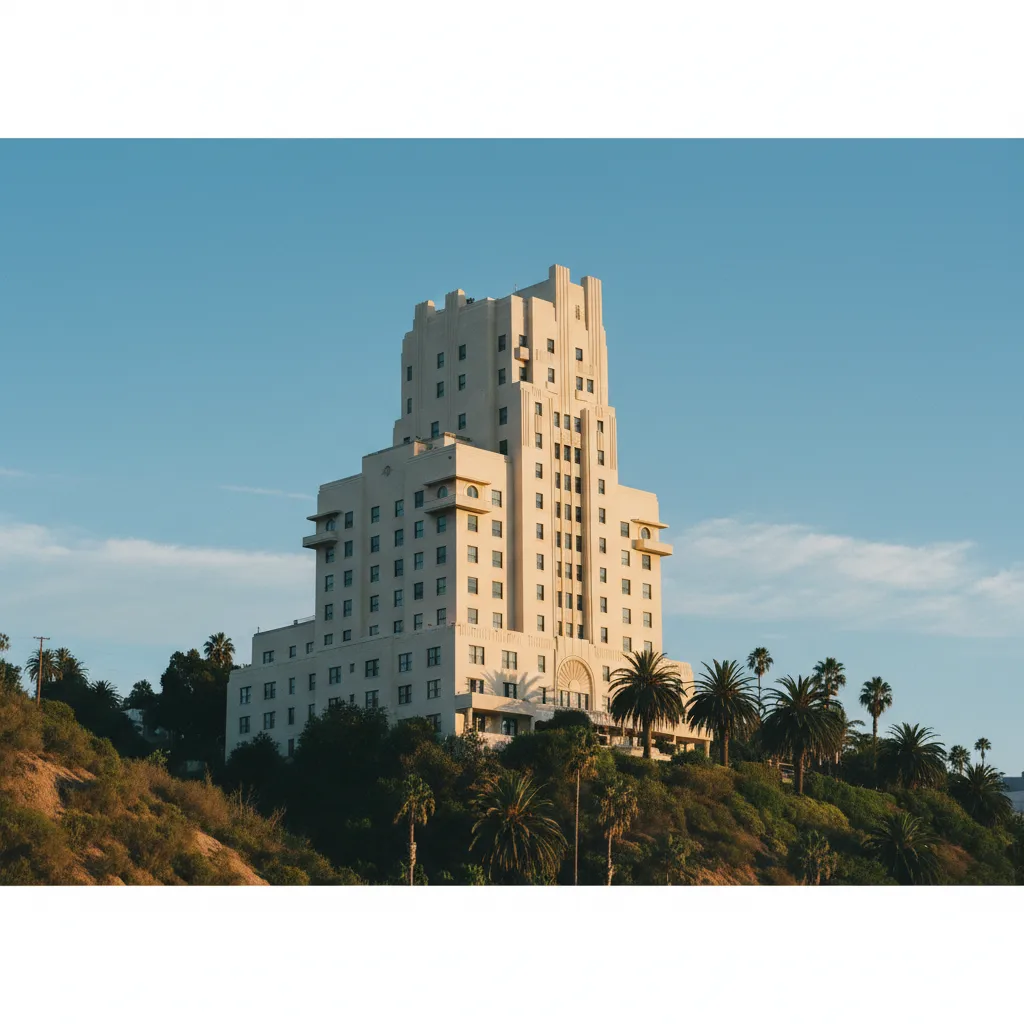
Begin your exploration along the northern side of the boulevard at 8358 Sunset Boulevard, home to the iconic Sunset Tower Hotel. Completed in 1931 and designed by prominent architect Leland A. Bryant, this fifteen-story residential skyscraper was marketed as Los Angeles's first earthquake-resistant all-concrete high-rise apartment building. Designed in the sophisticated Zigzag Moderne style, the tower quickly became the favored hillside residence for Hollywood luminaries such as John Wayne, Marilyn Monroe, and Howard Hughes, who valued its reinforced structural solidity, private high-altitude terraces, and commanding panoramic views over the Los Angeles plain. The hotel provided an elite oasis shielded from ordinary city traffic, complete with subterranean parking tunnels and discrete rear service entrances.
Study the building's exterior surfaces from the pedestrian sidewalk across Sunset Boulevard. The tower rises through dramatic stepped vertical setbacks that emphasize its hillside elevation above the street grid below. Bryant enriched the concrete surface with exquisite bas-relief plaster friezes depicting stylized technological achievements and mythological creatures, including zeppelins cruising through clouds, streamlined locomotives, speeding racing automobiles, and leaping stags that celebrate modern velocity, machine craft, and aerodynamic optimism.
French Norman Grandeur at Chateau Marmont
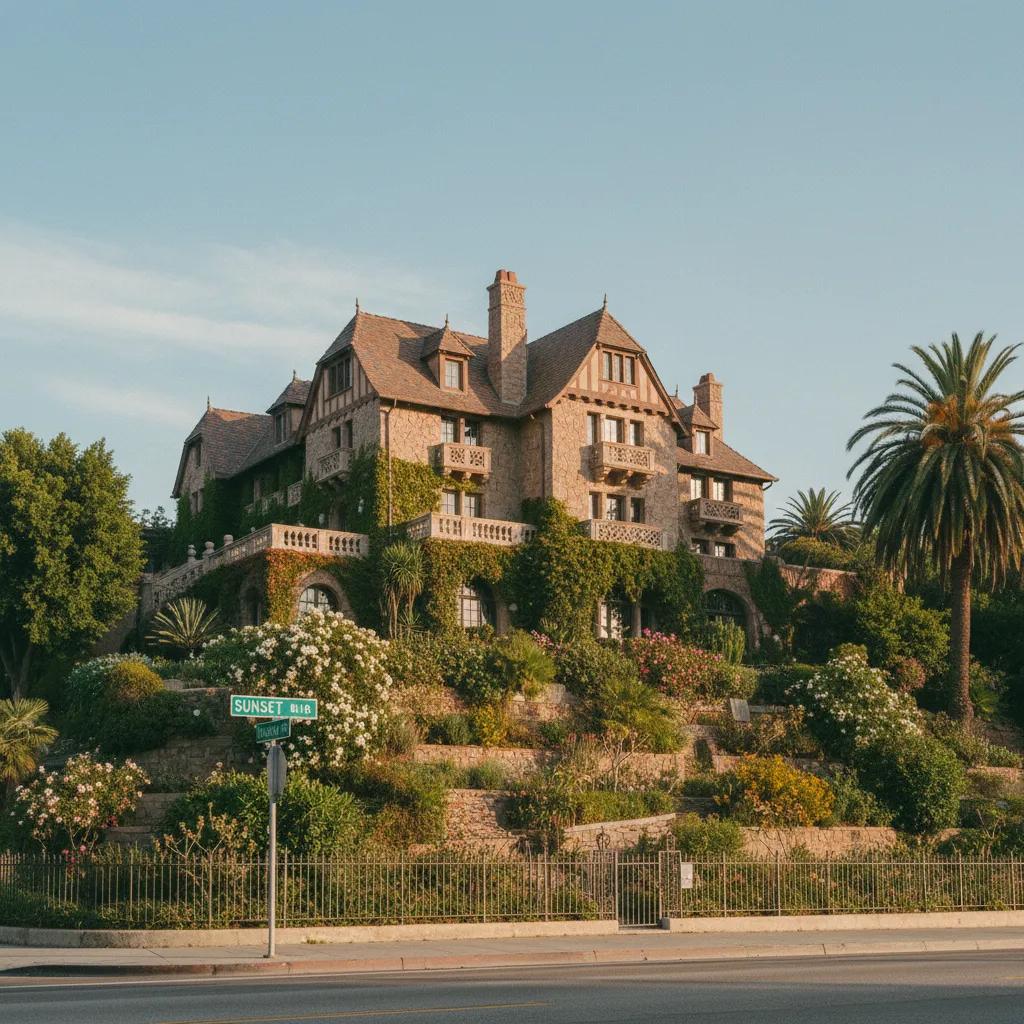
Walk two blocks eastward along Sunset Boulevard to 8221 Sunset Boulevard, where the legendary Chateau Marmont commands a wooded curve above the street. Erected in 1929 and designed by architect William Douglas Lee, the seven-story hotel and apartment complex was modeled closely after the royal Château d'Amboise in France's Loire Valley. The building was engineered as an earthquake-proof luxury apartment community constructed with thick poured-in-place reinforced concrete, providing soundproof privacy, acoustic isolation, and structural resilience for elite entertainment residents. Built directly into the steep hillside, the building incorporated subterranean concrete piers anchored deep into the granite bedrock of the Santa Monica mountains.
From the pedestrian walkway beneath the overhanging subtropical foliage, admire the building's romantic French Norman architectural vocabulary. Steep slate-gabled roofs, tall stone chimneys, pointed Gothic arched windows, and crenellated balcony parapets impart an enduring European fairy-tale silhouette against the palm trees of the Hollywood Hills. The building's intimate garden courtyards and terracotta-tiled terraces demonstrate how period revival architecture was tailored to private indoor-outdoor California living, seamlessly merging historical European romance with lush local botanical landscaping.
Mediterranean Elegance at Piazza del Sol
Retrace your steps westward to 8439 Sunset Boulevard to examine Piazza del Sol, originally opened in 1927 as the Hacienda Park Apartments. Designed by architect Charles E. Selkirk in an elaborate Italian Renaissance and Spanish Revival style, this grand four-story courtyard structure originally served as luxury residences for silent cinema stars and screenwriters before housing high-profile entertainment talent agencies, legal offices, and legendary music recording studios. The building served as a central cultural salon where European expatriates and Hollywood producers gathered for informal creative symposiums.
The exterior facade is characterized by deeply textured stucco, classical stone balustrades, carved window cartouches, and an elegant second-story loggia featuring rounded Roman arches. Step toward the gated central courtyard archway to observe the original hand-painted Spanish tiles, wrought-iron wall sconces, and carved decorative cornices. The building's symmetry and rich Mediterranean details illustrate the romantic European residential fantasies that swept Southern California during the late 1920s.
Leland Bryant Courtyard Masterpieces on Havenhurst
Take a brief detour just south of the Strip down Havenhurst Drive to discover an extraordinary cluster of historic apartment architecture designed by Leland A. Bryant. Foremost among these is the Colonial House at 1416 Havenhurst Drive, completed in 1927. Bryant utilized red brick veneer, white classical quoins, and delicate multi-paned dormer windows to create an authentic replica of an early American Georgian manor house, complete with circular carriage drive and elegant portico.
Just down the street stands the Mi Casa apartment complex and the nearby Ronda apartments, showcasing romantic Spanish Colonial Revival courtyards complete with outdoor staircases, tile fountains, and vibrant bougainvillea. These intimate garden courtyard enclaves demonstrate how 1920s architects achieved high urban residential density without sacrificing privacy, garden light, or picturesque human scale along narrow residential side streets, creating tranquil domestic sanctums just steps away from the boulevard's nightlife.
Sunset Plaza Sidewalks and Hillside Terraces
Return to Sunset Boulevard and proceed west toward Sunset Plaza, a cluster of low-rise Georgian Revival and Regency-style storefronts constructed in the late 1930s by developer Francis S. Montgomery. Conceived as the first shopping district in the nation with designated parking situated behind the retail buildings, Sunset Plaza features white-painted facades, pedimented doorways, and expansive plate-glass display windows designed for casual street strolling. Montgomery anticipated the growing sophistication of Southern California consumers, selecting architects Charles Selkirk and John Byers to curate refined storefronts with customized awnings, hand-painted signage, and delicate brick borders.
As you walk along the outdoor dining terraces of Sunset Plaza, turn your gaze southward to take in panoramic views extending across West Hollywood, Beverly Hills, and toward the Pacific Ocean on clear days. The juxtaposition of refined storefronts against the steep, rugged topography of the Hollywood Hills provides an unforgettable perspective on how developers carved public promenades out of mountainous Southern California terrain.
Practical Notes for Walking the Sunset Strip
This West Hollywood walking route spans roughly one and a quarter miles along Sunset Boulevard and features moderate uphill and downhill inclines along the hillside curves. Because Sunset Boulevard experiences steady vehicular traffic, walkers should utilize signalized pedestrian crosswalks at Olive Drive, Queens Road, and La Cienega Boulevard. Mid-morning from 9:30 am to 11:30 am offers tranquil walking conditions with shaded sidewalks and clear eastward light across the facades.
Access the eastern end of the Strip via Metro Line 2 or city transit routes connecting from Hollywood or Fairfax Avenue. While the hotels and private residences along this corridor maintain strict visitor policies, the historic facades and public courtyards are easily studied from public sidewalks. For detailed architectural commentary, historic landmark indexes, and curated neighborhood routes across Southern California, download the Karpo APP.
Ask Karpo for more information.
Keep reading
- Los Feliz Nail Salon Walk In Finder for Broken Nail Repair
 Highland Park Nail Salon Walk In Finder for Retro Manicures
 Koreatown Nail Salon Walk In Finder for K-Beauty Nail Looks