Most riders approach the Canarsie-Rockaway Parkway terminus as a mistake—the accidental last stop, a place to correct course. But the elevated platform at the L train's eastern edge rewards intentional arrival. Above Rockaway Parkway, the station holds its liminal position at the boundary between residential Canarsie and the marshlands stretching toward Jamaica Bay, a terminus that feels less like Brooklyn's conclusion than a patient pause before the long ride back. The appeal is atmospheric: wind, rooftops, the mechanical rhythm of train turnover, and the understanding that sometimes the best city guide strategy is to ride something all the way to its end.
The elevated approach
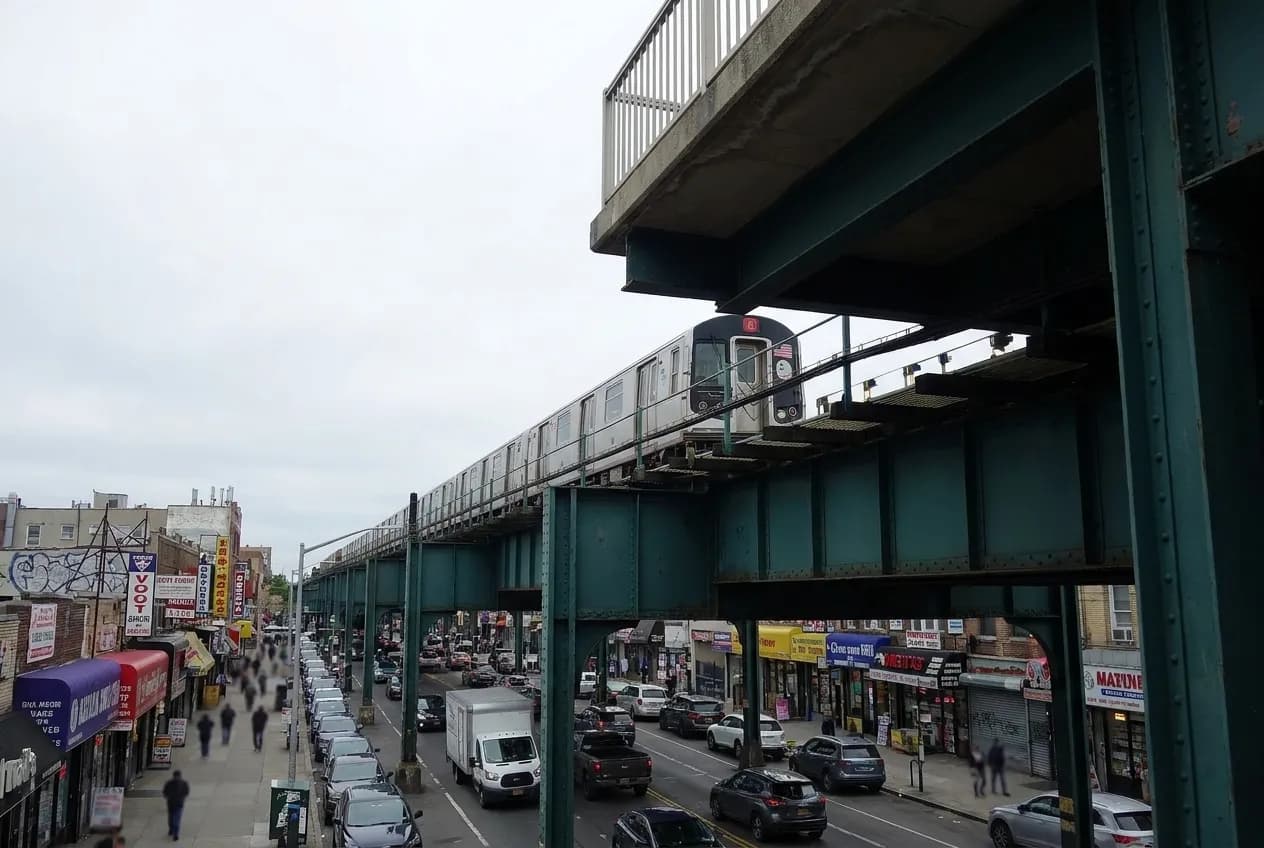
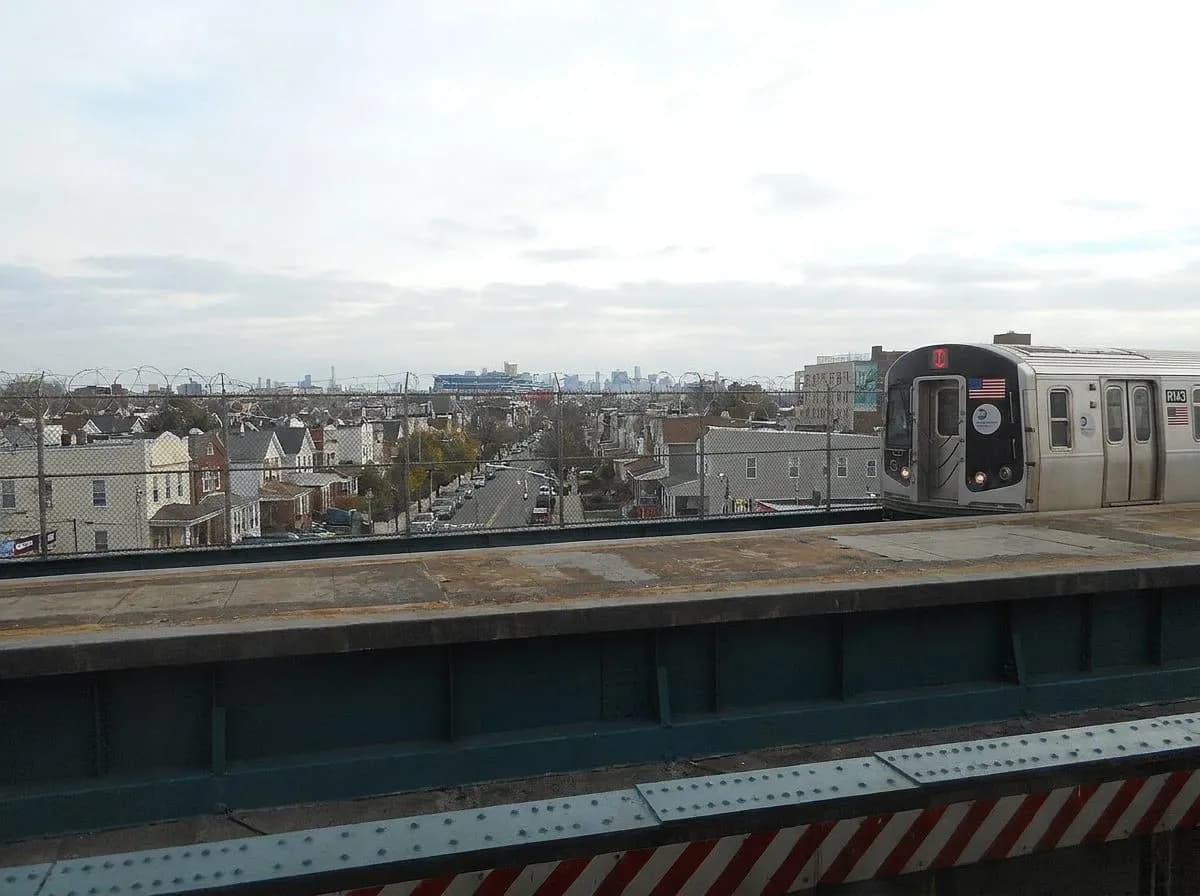
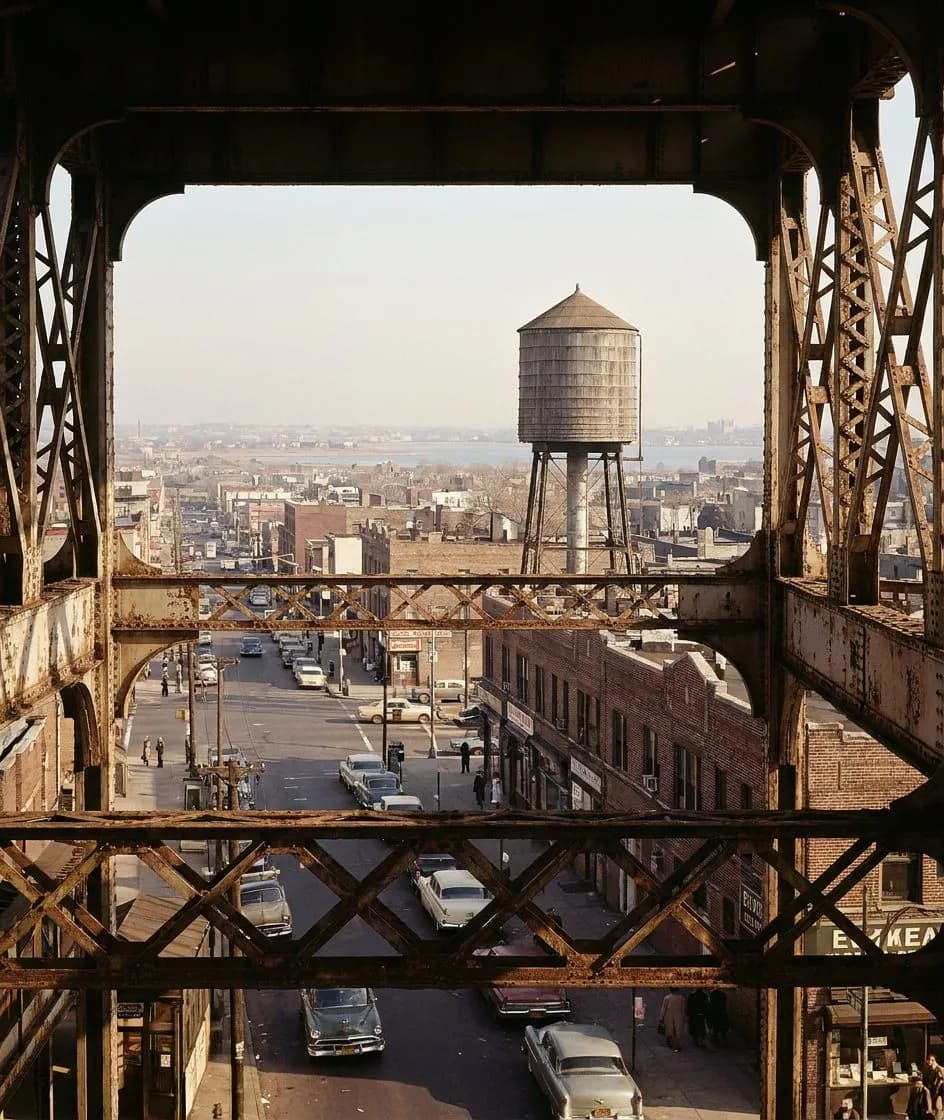
The L climbs to daylight after Atlantic Avenue, transitioning from tunnel to steel superstructure as it crosses East New York and enters Canarsie. By the time the train reaches Rockaway Parkway, the view opens over low-rise housing stock, flat roofs stippled with satellite dishes and backyard sheds. The terminal platform sits above the intersection of Rockaway Parkway and Glenwood Road, framed by chain-link, worn concrete, and the particular light that filters through elevated train canopies—direct in summer, slanted and golden by fall.
The station itself is utilitarian, a simple two-platform setup with bumper blocks at the eastern end. The architecture suggests 1920s bones with periodic updates that never fully disguised the original austerity. But austerity, in this context, reads as clarity. There are no retail kiosks, no newsstands, no buskers. The platform serves a single purpose: to mark the end of the line and prepare passengers for the return journey west.
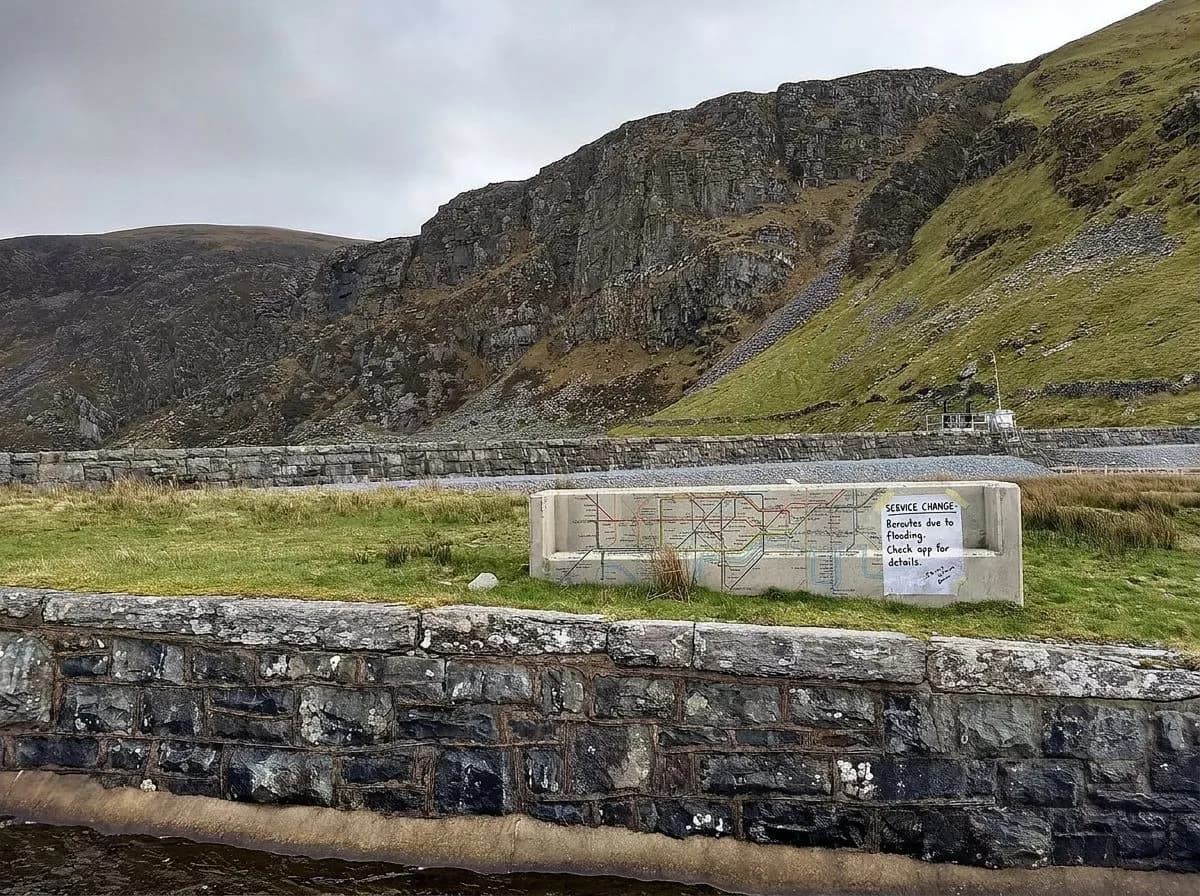
The platform wait and operator turnover
Trains may dwell at Rockaway Parkway for a brief operator changeover, and passengers may remain aboard rather than exit to the platform. This waiting period establishes the station's rhythm. The outgoing operator walks the length of the train; the incoming crew arrives via platform access. Announcements echo through the open-air structure. The train sits, patient and still, while the city hums quietly below.
For those who step onto the platform, the wait offers a rare chance to observe the choreography of transit labor—methodical, unhurried, practiced. The dwell time also invites a slower scan of the surroundings: the residential blocks spreading north and east, the glimpse of industrial yards, the faint scent of salt air when wind blows in from the bay. It's a moment suspended between departure and return, neither quite arrival nor embarkation.
Western edge and the Jamaica Bay view
The western end of the platform offers partial shelter from wind and the clearest view toward Jamaica Bay, approximately one mile south. The sightline is imperfect—interrupted by rooftops and the occasional tree canopy—but the openness is palpable, a suggestion of water and marshland just beyond the residential grid. In late afternoon, especially in fall, the western platform edge becomes a vantage point worth claiming.
The shelter is minimal: a section of canopy that blocks direct rain and tempers the gusts that sweep up from the south. On blustery days, the contrast between exposed platform and covered pocket is significant. The bay itself remains more felt than seen, an atmospheric presence that distinguishes Canarsie from denser Brooklyn neighborhoods to the west. Stand here long enough and the city reveals its coastal underpinnings, the wetland periphery that defines New York's outer edges.
The slow return through Brooklyn
The westbound L transforms the terminus into origin point, reframing the entire cross-Brooklyn route as deliberate itinerary. From Canarsie, the train traces the borough's full width: industrial East New York, the brownstone density of Bushwick, the commercial energy of Williamsburg, and finally the Manhattan crossing. Each neighborhood announces itself through shifts in roofline, facade material, and the changing demographics of platform crowds.
This is not express service—stations arrive in measured succession, each stop a chapter in Brooklyn's narrative arc. The ride takes roughly forty minutes to reach Union Square, longer if trains hold for signal clearance or passenger volume. But duration is the point. The return trip rewards attention: graffiti murals visible from elevated sections, the play of light through steel crossbeams, the quiet pleasure of watching the city assemble itself backward from periphery to core. It's the antidote to the efficient commute, the scenic route taken without apology.
Late-night variations
The L train does not run express between Broadway Junction and Myrtle-Wyckoff during late nights; late-night L service is typically all-local, with some schedules extending service past midnight rather than "until two in the morning." The express stretch compresses the middle portion of the journey, though the eastern terminus remains the same. Late-night service carries a different passenger mix—shift workers, evening revelers, insomniacs riding for the sake of motion. The elevated platform takes on sharper relief under sodium-vapor lamps, the residential streets below quieter, the bay wind more insistent.
Late-night Canarsie-Rockaway Parkway holds a particular solitude, the terminus stripped of daytime foot traffic and reduced to its essential form: platform, tracks, sky. For riders drawn to off-hour transit rituals, the late express offers a compressed return that still honors the full route's geography, a compromise between speed and the pleasure of crossing Brooklyn in the small hours.
Why ride to the end
The case for reaching Canarsie-Rockaway Parkway is less about destination amenities than the journey itself and the value of witnessing a transit line's bookend. Termini occupy a distinct place in urban geography—neither quite neighborhood hub nor mere transfer point, but rather the boundary marker that gives a route its shape. The L's eastern terminus performs that role with minimal adornment: it ends, it turns around, it begins again.
There's satisfaction in the completeness of it, the knowledge that you've traced the line from end to end. The elevated platform offers views, yes, and the dwell time creates space for observation. But the deeper reward is conceptual—understanding the city not as a series of destinations but as a continuous landscape best apprehended in full. The slow return westbound cements the experience, turning what might feel like wasted time into a deliberate act of urban attention. By fall 2026, when the line has long since resumed full service, the Canarsie terminus will remain what it has always been: a quiet edge worth seeking out, if only to turn around and watch Brooklyn reassemble itself one stop at a time.
Practical notes
Canarsie-Rockaway Parkway station sits at the intersection of Rockaway Parkway and Glenwood Road in Brooklyn. Access via the L train (eastern terminus). The station is elevated, with limited shelter on platform; dress for weather exposure. No food vendors on-site; Canarsie's commercial blocks lie north along Rockaway Parkway. Service runs until approximately 2 a.m. nightly, with late-night express patterns between Broadway Junction and Myrtle-Wyckoff. Station is ADA-accessible with elevator service, though verify operational status before travel. Bring layers for wind, a MetroCard for the return trip, and patience for the dwell period—the wait is part of the experience.
Tags: #LTrain #CanarsieRockawayParkway #TheLongWayHome #BrooklynTransit #ElevatedPlatform #NYCSubway #EndOfTheLine #UrbanExploration #TransitRituals #JamaicaBayViews #CrossBrooklyn #SlowTravel #NYC2026 #SubwayScenicRoute #TerminusStories
Sources consulted: L train service (Wikipedia) · MTA L Train Information · NYC Brooklyn Maps & Transit · NY Times: NYC Subway Coverage
All trademarks are the property of their respective owners.