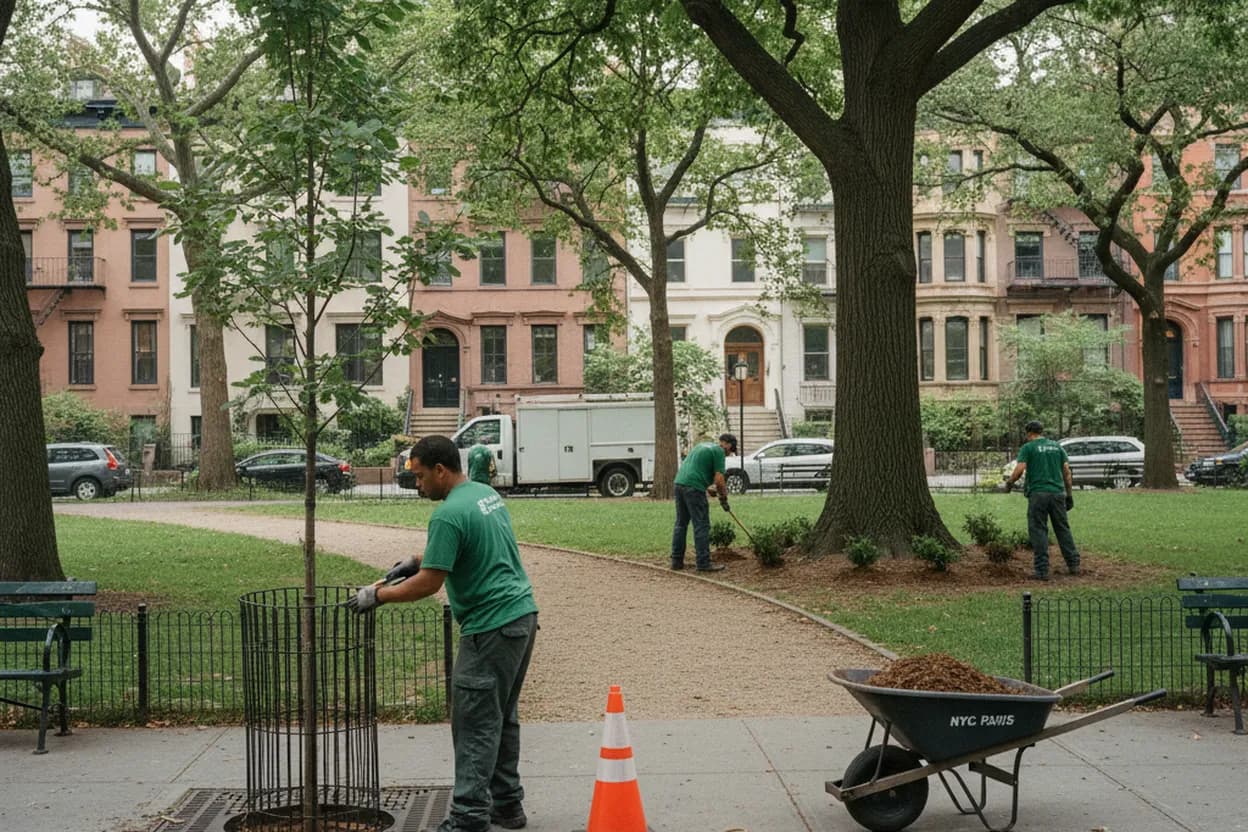
When kyle shanahan trends, the useful NYC takeaway is not whether a local teen team should copy an NFL playbook. It is whether parents, captains, and volunteer coaches are making disciplined decisions before a child takes a snap in a public park. NYC Parks fields can support informal workouts and permitted league play, but the safety work happens in plain view: field condition, heat, water, supervision, concussion removal rules, and a backup plan when a site is unavailable. For families who feel concerned rather than competitive, this guide treats football philosophy as a reason to slow down, verify the basics, and keep the session easy to exit.
Want a quick safety read before your next NYC park practice? Text Karpo with the field, time, age group, and concern, and ask for a before-you-go football check.

Use NYC Parks’ Field Map Before Choosing a Practice Spot
Start with the NYC Parks field and court availability map, because informal use only works when a space is actually open and not already assigned. The map lets users check fields and courts by sport, date, and time, and it marks permitted or unavailable space. That matters for youth football because a crowded field changes the safety equation fast: routes cross into another game, spectators drift onto sidelines, and a coach loses sight lines.
The tradeoff is that the map is an access screen, not a full safety inspection. Treat it as the first filter, then confirm conditions at the park entrance and on the playing surface. If the selected field is unavailable, do not improvise contact drills in a narrow lawn, playground edge, or walkway. Shift to walkthroughs, stretching, or non-contact footwork in a legal open area, then reschedule the full practice.
Match the Session to NYC Parks Permit Rules
NYC Parks says organized leagues or people reserving fields or courts need a permit, while informal use depends on available, non-permitted time. For parents, that distinction is a safety tool, not just paperwork. A permitted slot gives a team predictable space, reduces disputes, and helps keep sidelines, equipment bags, and younger siblings out of the active area. It also creates a clearer person responsible for the session.
Failure mode: a casual group grows into a structured practice without enough field control. If attendance, drills, uniforms, or league scheduling make the session look organized, verify the permit path before calling it a regular practice. NYC Parks also notes that current-season permit requests need advance notice, so last-minute planning should assume uncertainty. When the space cannot be confirmed, run a short conditioning meetup instead of contact football.

Borrow the Shanahan Lesson: Script Safety Before Plays
The best part of the Kyle Shanahan comparison for high school football is preparation, not complexity. Before any drill, parents can ask for a simple script: who checks the field, who carries water, who has emergency contacts, who removes an athlete after a head impact, and who decides when practice stops. A clear routine beats a clever scheme when the group includes teenagers, siblings, and mixed experience levels.
Keep the pacing easy enough for a family to audit from the sideline. Five minutes of visible setup is not wasted time if it catches glass, uneven turf, missing water, or a confused first-time player. If the coach cannot explain the session plan in ordinary language, that is a useful warning sign. The backup is simple: reduce intensity, remove contact, and focus on stance, spacing, and communication.
Apply NYC Schools’ Concussion Standard at Park Workouts
New York City Public Schools’ concussion guidance is direct: a suspected concussion means immediate removal from physical activity and observation until a medical provider can evaluate the student. It also says schools should err on the side of caution when unsure. Families can use that same standard at NYC Parks workouts, even when the session is informal and not school-run.
The practical test is whether the adults have already agreed that no drill, scrimmage, or roster pressure overrides symptoms. Headache, confusion, dizziness, vomiting, memory trouble, slow answers, or unusual mood changes should end the athlete’s day. Return-to-play decisions should rely on medical clearance, not a sideline vote. If there is no adult willing to enforce that rule, skip contact and choose a non-contact skills session.
Check New York State Tackle Football Concussion Duties
New York State Health Department guidance adds a legal and educational layer for tackle football programs. State public health law requires tackle football programs to provide parents or guardians of participating children with concussion and sub-concussive blow information. The department’s page was revised in June 2026 and includes multilingual materials, which is important for NYC teams serving families across languages.
That requirement should change how parents evaluate a league. Ask when the packet was shared, who tracks acknowledgments, and how coaches handle athletes who play multiple sports. A missing packet does not automatically prove a program is unsafe, but it is a reason to pause and request documentation. For flag football or conditioning sessions, the same materials are still useful because falls, collisions, and accidental head impacts are not limited to tackle play.
Read Synthetic Turf and Summer Heat as Part of the Playbook
NYC has many synthetic fields, and New York State health guidance warns that infilled synthetic turf can reach high surface temperatures in direct sun. The state notes that heat stress warnings, hydration, and shaded relief should be part of field-use decisions. On a hot July day, that means the surface itself may be the issue even when the air temperature feels manageable from the sidewalk.
For families, the decision guide is concrete: bring water, look for shade, shorten high-intensity reps, and watch for dizziness, weakness, headache, vomiting, or cramps. Younger athletes may underreport symptoms because they want to stay in. If shade is scarce or the turf feels uncomfortably hot through shoes, move to classroom-style walkthroughs, a shaded park edge where active recreation is appropriate, or another day.
Finish With a Park Rules and 311 Verification Pass
Before leaving home, verify park hours, posted closures, field availability, and any permit status. NYC park rules generally list park access from 6:00 a.m. to 1:00 a.m. unless different hours are posted, and closed areas should be respected. NYC Parks also directs people to 311 for hazardous park features or misuse reports, which gives families a practical channel when a field condition looks unsafe.
The final go-or-skip call should be boring by design. Go if the field is available, the surface is safe, water and shade plans are real, concussion removal rules are understood, and an adult is clearly responsible. Skip or downgrade the session if any one of those checks fails. The smarter football decision is often not a better play call; it is ending early before a preventable problem becomes the story.
Tags: #AskKarpo #BeforeYouGo #NYCParks #YouthFootball #HighSchoolFootball #ConcussionSafety #SportsSafety #NYCFamilies #FreeThingsToDo #FieldCheck #HeatSafety #ParentGuide #NYCYouthSports #FootballPractice
Sources consulted: Source 1: php1-84.nycgovparks.org · Source 2: php1-84.nycgovparks.org · Source 3: schools.nyc.gov · Source 4: health.ny.gov · Source 5: healthweb-back.health.ny.gov · Source 6: portal.311.nyc.gov
All trademarks are the property of their respective owners.
Ask Karpo first
Tell Karpo your date, group size, budget, and starting neighborhood. We’ll check current access, timing, transit, and the cleanest plan for NYC Parks Department before you head out.