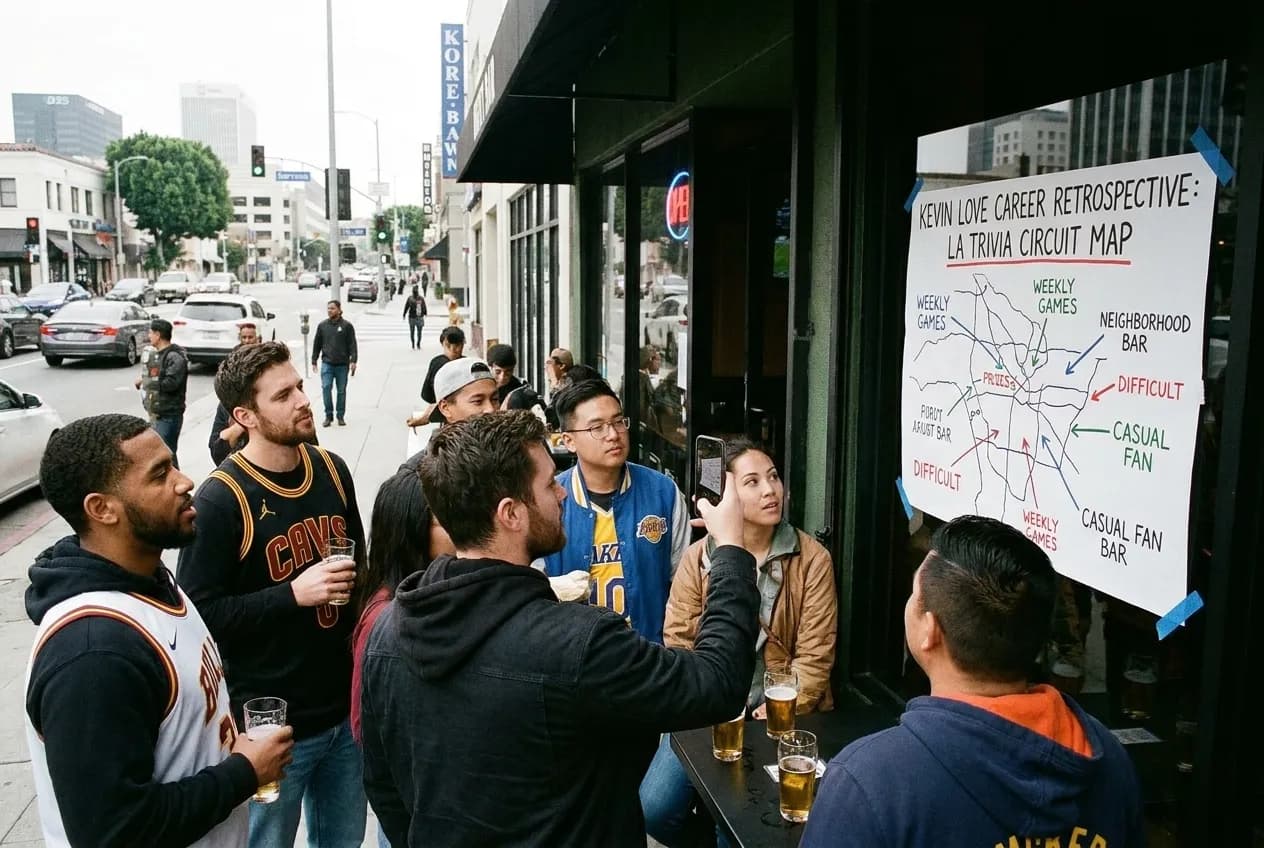
Basketball fans seeking competitive social entertainment can explore Los Angeles sports bar trivia circuits that feature NBA career retrospective rounds, including questions about kevin love and his journey from championship runs to veteran leadership roles. These weeknight gatherings blend nostalgic basketball discussion with team-based competition, creating spaces where intermediate NBA knowledge translates into social currency. The circuit landscape varies significantly—some venues emphasize casual participation with rotating themes, while others structure prize-driven tournaments that reward dedicated preparation. Understanding which format matches your trivia team's commitment level and knowledge depth requires evaluating several factors: question difficulty calibration, prize structures that incentivize serious play versus social atmosphere, venue accessibility via public transit for weeknight schedules, and how hosts balance basketball purists against casual fans. The decision isn't simply finding any trivia night but identifying which venue's format, crowd composition, and competitive intensity align with whether your team prioritizes winning or socializing around shared basketball memories.
Text Karpo your starting point, timing, group size, and priorities for a Los Angeles plan tailored to this exact situation, with one realistic backup before you leave.

Evaluating Trivia Format Differences Across LA Venues
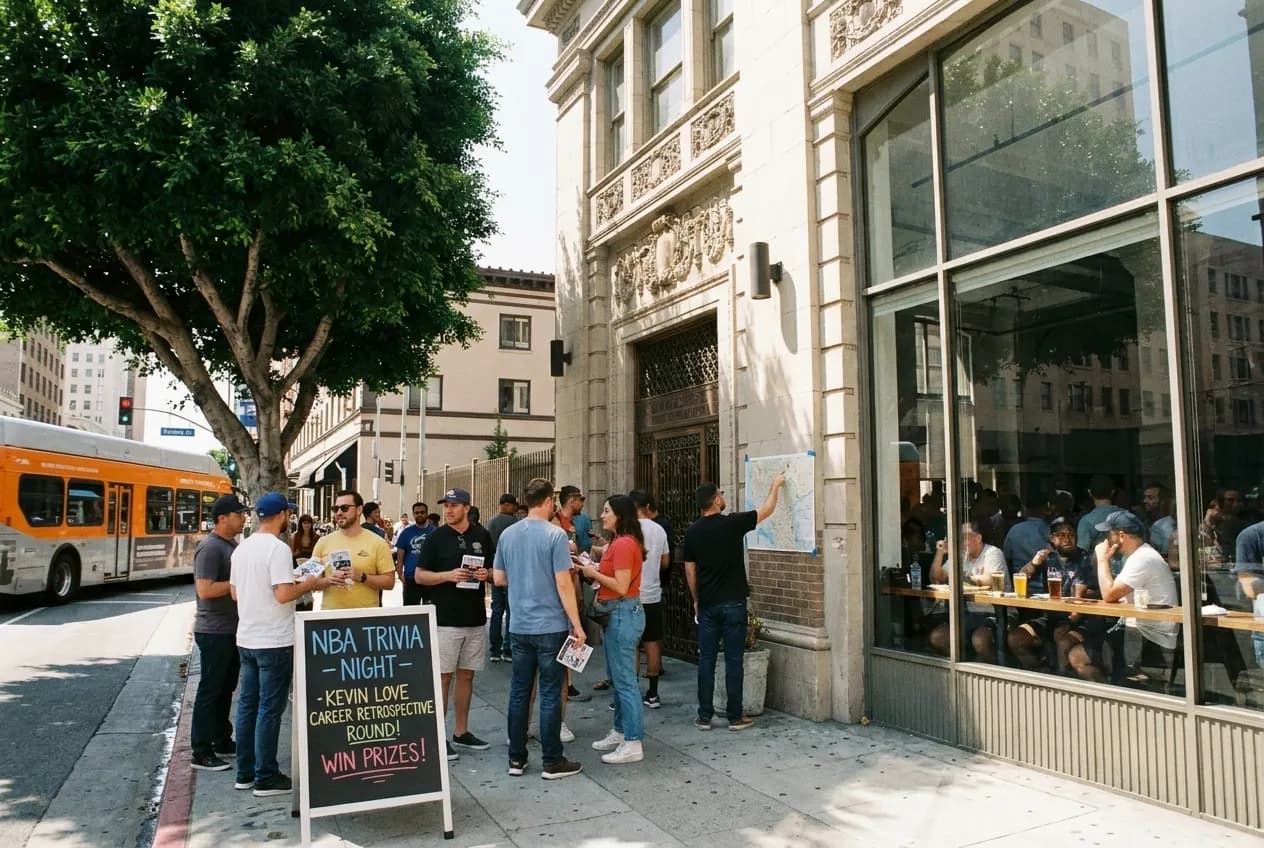
Sports bar trivia nights operate along a spectrum from open-format social games to structured competitive leagues, and the distinction matters for teams deciding where to invest weeknight hours. Open-format venues typically welcome walk-in teams without registration, rotate through various sports topics including NBA career retrospectives, and award modest prizes like bar tabs or branded merchandise. These settings suit teams testing whether trivia competition fits their dynamic or fans who enjoy basketball conversation without pressure to memorize statistics. Conversely, league-format circuits require season registration, maintain standings across multiple weeks, and often feature substantial prize pools that attract teams who prepare extensively. The tradeoff centers on commitment: casual formats offer flexibility to attend sporadically and explore different venues, while league play rewards consistency but demands schedule dedication and deeper knowledge reserves.
Question difficulty represents another critical variable that separates casual entertainment from genuine competition. Some hosts design rounds accessible to fans who follow current NBA headlines and remember major career milestones—questions about championship teams, All-Star selections, or memorable playoff performances. Other venues cater to basketball historians who track statistical nuances, trade details, and lesser-known career arcs. For Kevin Love retrospective rounds specifically, casual formats might ask about his championship with Cleveland or his UCLA tenure, while competitive circuits could probe his Minnesota statistical peaks, specific playoff series performances, or evolution as a floor-spacing big man. Teams should attend one session at prospective venues before committing to regular participation, observing whether question difficulty matches their collective knowledge and whether they find the challenge engaging or frustrating.
Prize Structures and What They Signal About Competition Intensity
Prize offerings reveal much about a venue's trivia culture and the competitive environment teams will encounter. Bars offering winner-take-all cash prizes or significant gift card amounts typically attract serious competitors who study between sessions and maintain specialized knowledge across NBA eras. These environments foster intense competition where teams arrive with prepared materials, divide research responsibilities, and treat trivia as genuine sport. The atmosphere skews toward focused gameplay rather than casual socializing, with teams often composed of longtime friends who've developed collaborative systems for parsing questions and conferring on answers. This intensity suits groups who derive satisfaction from testing their knowledge limits and enjoy the validation of outperforming other dedicated fans.
Alternative prize structures—rotating bar tabs, logo merchandise, or simply bragging rights—indicate venues prioritizing social atmosphere over cutthroat competition. These settings welcome teams who enjoy basketball discussion and friendly rivalry without the pressure of significant stakes. The crowd composition tends toward mixed knowledge levels, with some tables fielding serious answers while others prioritize enjoying drinks and conversation between rounds. For teams uncertain about their commitment level, starting with low-stakes venues provides space to develop team chemistry and gauge whether members want to escalate toward more competitive circuits. The verification step involves observing prize announcements and watching how winning teams react—celebrations focused on camaraderie suggest social emphasis, while teams immediately discussing strategy for next week signal competitive culture.
Navigating Weeknight Logistics Via Public Transit
Weeknight trivia schedules intersect with Los Angeles transit considerations, particularly for teams whose members commute from different areas. Metro rail and bus lines connect many sports bar districts, but service frequency and transfer requirements vary significantly by route and time. The Metro system offers $1.75 regular fare with daily caps at $5 and weekly caps at $18, making public transit economical for regular trivia participation. However, teams must account for real-time arrival checking and potential service delays that could jeopardize reaching venues before trivia start times. Venues near Metro rail stations—particularly along Expo, Red, or Purple lines—provide more reliable access than those requiring bus transfers, especially for weeknight events when teams balance work schedules against participation.
The practical tradeoff involves venue selection based on transit accessibility versus ideal trivia format. A perfectly matched competition might be located in an area requiring complex bus transfers, while a more accessible venue near rail stations might offer less ideal question difficulty or prize structure. Teams should map routes using Metro's trip planner tools and test commutes during actual weeknight timeframes to assess realistic arrival windows. Additionally, considering venues clustered near multiple transit options provides backup routes if service disruptions occur. For teams prioritizing consistent attendance, transit reliability might outweigh perfect format matching, since regular participation builds team knowledge and rapport more effectively than sporadic attendance at an ideal but difficult-to-reach location.

Balancing Basketball Purist Content Against Broad Appeal
Trivia hosts face ongoing tension between satisfying hardcore basketball fans and maintaining accessibility for broader audiences, and this balance directly impacts team experience. Some venues structure entire evenings around NBA content, diving deep into career retrospectives, statistical achievements, and historical context that rewards dedicated fans. These nights attract teams who can discuss advanced metrics, remember specific playoff series from years past, and appreciate questions probing nuanced basketball knowledge. The atmosphere celebrates basketball expertise as the primary social currency, with conversations between rounds extending question topics and teams bonding over shared encyclopedic knowledge. This environment suits groups who identify strongly as basketball historians and prefer spaces where their specialized knowledge receives recognition.
Other venues integrate NBA rounds into broader sports trivia formats, mixing basketball questions with other leagues, general sports history, or pop culture topics. This approach accommodates teams with varied interests and knowledge distributions, allowing members who excel in different categories to contribute throughout the evening. For Kevin Love career questions specifically, these venues might allocate one round to NBA retrospectives while other rounds cover different sports or entertainment topics. The tradeoff involves depth versus breadth—purist venues offer richer basketball content but may exhaust teams lacking comprehensive NBA knowledge, while mixed-format nights provide more varied engagement but less opportunity to leverage specialized basketball expertise. Teams should assess their collective knowledge distribution and whether members prefer showcasing deep basketball knowledge or contributing across diverse categories.
Team Composition Strategies for Sustained Participation
Successful trivia teams develop sustainable participation models that account for varying member availability and knowledge specializations. Some groups maintain core rosters of four to six regular participants who attend consistently, building collaborative rhythms for parsing questions, conferring on uncertain answers, and dividing research between sessions. This stability allows teams to track their performance across weeks, identify knowledge gaps to address, and develop shorthand communication that accelerates in-game decision-making. However, rigid roster requirements create vulnerability when members face schedule conflicts, potentially forcing teams to compete shorthanded or skip weeks entirely. The alternative approach maintains larger pools of potential participants—eight to ten members—who rotate based on availability, ensuring sufficient attendance even when individuals can't make specific nights.
Knowledge specialization within teams provides strategic advantages but requires honest assessment of collective strengths and weaknesses. Designating members as specialists for different NBA eras, statistical categories, or player types allows teams to efficiently allocate question responsibility during games. For career retrospective rounds covering players like Kevin Love, having members who followed different phases of his career—Minnesota years, Cleveland championship run, recent veteran seasons—creates comprehensive coverage. However, over-specialization risks leaving gaps in team knowledge, particularly for questions spanning multiple eras or requiring synthesis across career phases. Balanced teams combine specialists with generalists who maintain broad NBA knowledge, creating redundancy that prevents single points of failure. The verification process involves tracking which question types consistently challenge your team and whether adding members with complementary knowledge would address those gaps.
Tags: #NBAtriviaLosAngeles #basketballtrivianights #KevinLovecareer #sportsbartriviaLA #weeknightentertainment #teamtriviacompetition #NBAhistoryquiz #LosAngelessportsbars #basketballsocialevents #triviateamstrategy
Sources consulted: Source 1: laparks.org · Source 2: metro.net · Source 3: discoverlosangeles.com · Source 4: lacity.gov
All trademarks are the property of their respective owners.
Ask Karpo first
Ask Karpo to turn this Los Angeles idea into a current plan for your date, budget, companion, transit preference, and energy level. Karpo can narrow the route and flag what to verify before you go.