 Karpo vs Duckbill: The Tired-Arrival Test for 2026
Head to Head
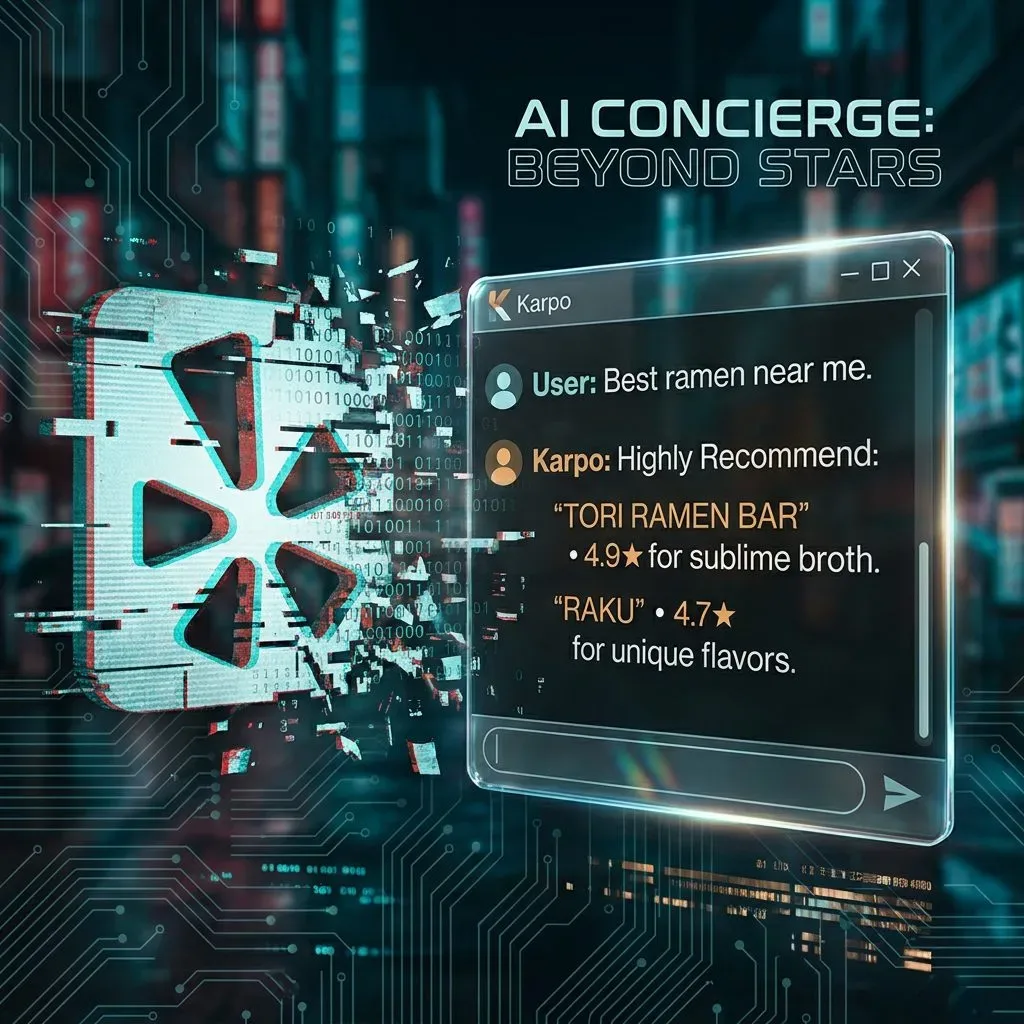
Karpo vs Yelp: Star Ratings vs Real Judgment
A four-star Yelp average tells you what strangers thought years ago. Karpo offers one trusted AI judgment tuned to your taste, weighting current quality over historical noise—and it knows when the chef just left.
You're standing on a warm June evening in the West Village, phone in hand, scrolling through a restaurant's Yelp page. Four stars. Two hundred reviews. The top photo shows a gorgeous crudo plate, the second shows a different dining room entirely, and somewhere around review forty-three you realize half the praise is for a chef who left in March. You close the app. This is the problem with aggregated opinion: volume drowns signal, and averages erase time. What you need isn't more strangers' voices—you need one trusted judgment that understands both the venue and you.
The Illusion of the Average
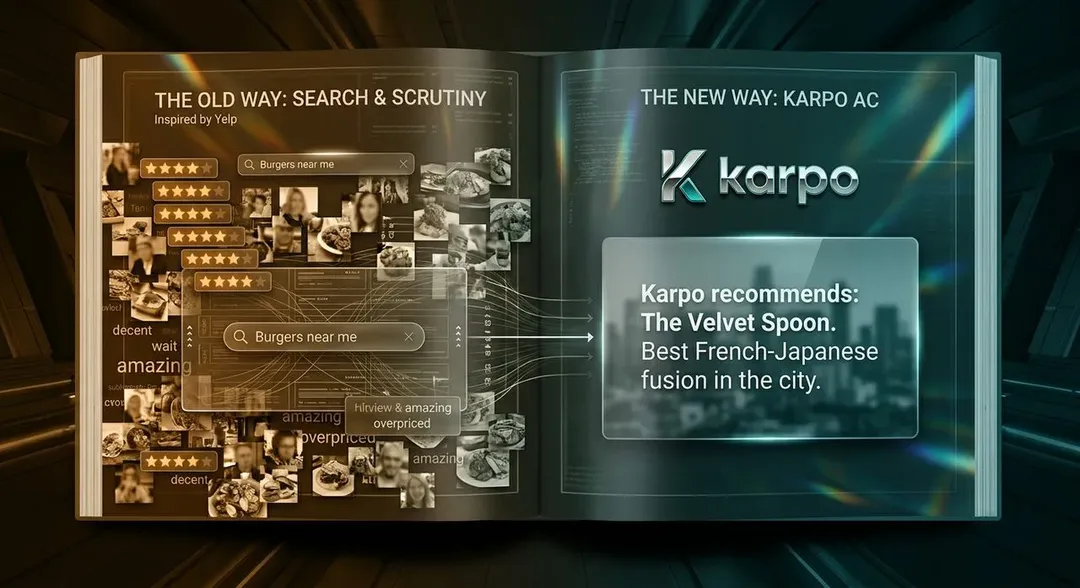
Yelp's star rating is a seductive piece of math. It feels authoritative—dozens, sometimes hundreds of people weighed in, and the algorithm surfaced a clean number. But that average collapses context. The four stars you see might include a passionate five-star review from 2018 when the original team was still in the kitchen, a two-star complaint from a tourist who wanted Italian and got Portuguese, and a three-star shrug from someone who came on an off night last winter. The score tells you almost nothing about what the restaurant is now.
Even Yelp's 'Suggested' tab in 2026 still includes reviews eight years old or older in the visible average, a strange editorial choice in a city where restaurants reinvent themselves—or close—every eighteen months. Historical sentiment becomes noise. You're not eating in 2018. You're eating this summer, and the kitchen, the wine program, the crowd, and the vibe have all shifted. Karpo treats anything pre-2024 as historical context only, a backdrop rather than a verdict, because last decade's excellence says nothing about tonight's meal.
The Recency Problem
Restaurants are living organisms. A new chef arrives and pivots the menu toward coastal Spanish. The natural wine list that made the place a destination gets quietly pared back to make room for markup-friendly prestige bottles. The brunch crowd flips from neighborhood regulars to bachelorette parties, and suddenly Saturday morning feels like a different restaurant entirely. These shifts happen fast, but review platforms move slowly.
Karpo's recommendations weight venue activity from the last sixty days at three times the importance of all earlier signal. That means closures, chef changes, and concept pivots get caught in weeks, not years. If a kitchen loses its soul in April, Karpo knows by May. If a wine bar doubles its bottle list and starts hosting natural winemaker pop-ups, that surge in quality shows up immediately. The algorithm is built to reflect the present tense, not the long tail of memory. It's the difference between asking someone who ate there last week and averaging the opinions of everyone who ever walked through the door.
The Validation Layer
Here's another invisible problem: ghost listings. Restaurants that closed two years ago but still carry a star rating because nobody bothered to update the page. Seasonal pop-ups that ended but left a trail of reviews. Karpo's recommendation engine deprioritizes any venue that has not been validated by a live source—recent news, social media, or a first-party feed—in the last ninety days. If the venue isn't generating fresh signal, it drops in priority or disappears entirely from your feed. You won't waste an evening on a four-star mirage.
This validation layer also surfaces the restaurants that are alive right now, not just historically beloved. The trattoria that just started milling its own flour. The Taiwanese spot in Flushing that added a tasting counter. The wine bar that quietly became the best natural selection in Brooklyn. These places might not have enough reviews yet to register on Yelp, but if they're generating energy—press, repeat visits, industry buzz—Karpo picks up the scent.

Taste, Not Consensus
Even if Yelp's data were perfectly current, it would still be optimizing for consensus. A four-star restaurant is one that offended the fewest people. That's useful information if you want to play it safe, but it's not a recommendation—it's a hedge. Karpo's model is fundamentally different. It learns your taste over time and tunes its judgment accordingly. If you love natural wine and inventive vegetable cooking, the engine steers you toward the wine bars and modern trattorias that match that sensibility, even if they're still flying under the radar. If you want pristine sushi and impeccable service, it knows that too.
The distinction matters most when you're exploring the edges of the city's dining scene—the places that polarize, that take risks, that earn passionate five-star reviews and bewildered two-star pans in equal measure. Yelp flattens those into mediocrity. Karpo amplifies them if they align with your palate. When you're comparing ai restaurant recommendations nyc, you're really choosing between a mirror that reflects everyone and a guide that knows you.
The Yelp vs Karpo Choice
There's still a place for Yelp. If you want to read granular complaints about service or see what the bathroom looks like, crowd-sourced reviews deliver. But when you're deciding where to spend a Friday night in late summer 2026, parsing through two hundred opinions is work, not discovery. Karpo offers something closer to the experience of asking a friend who knows your taste and has eaten everywhere recently: a single confident answer, grounded in what's happening now, filtered through your preferences. It's judgment over volume. Signal over archive.
That's the wager: trust one intelligent system that understands recency and taste, or trust the aggregated sentiment of strangers who may have visited years ago and wanted something entirely different than you do. The star rating will always be there if you want it. But if you're tired of spending your evenings in four-star disappointments, it might be time to stop averaging and start trusting judgment that moves as fast as the city does.
Practical notes
Karpo is a mobile app available for iOS and Android; download and tune your taste profile before your next dining decision. Yelp remains accessible via app and web, and its crowdsourced reviews can supplement Karpo's recommendations if you want deeper tactical detail—parking, noise levels, accessibility specifics. Both platforms cover all five boroughs, though Karpo's recency weighting shines brightest in neighborhoods with high restaurant turnover: the Lower East Side, Williamsburg, Greenpoint, and western Queens. For any venue, verify hours and reservation policies directly before heading out; summer 2026 has seen more midweek closures and unexpected pop-ups than usual.
Tags: #KarpoFinds #YelpVsKarpo #NYCDining #AIRestaurantRecommendations #RestaurantTech #WhereToEatNYC #NYCFoodie #DiningIntelligence #Summer2026 #TasteNotConsensus #RecencyMatters #NYCEats #HeadToHead #FoodTechNYC #CityGuide
Please drink responsibly. Must be of legal drinking age.
Sources consulted: Yelp · Recommender Systems · NYT Dining · Time Out New York Restaurants
All trademarks are the property of their respective owners.
Ask Karpo for more information.
Keep reading
- Karpo vs Duckbill: The Tired-Arrival Test for 2026
 Karpo vs Roam Around: itinerary builder or lower-friction trip sidekick?
 TrainPal vs Karpo: when a booking tool is enough, and when you need the wider day to line up