 Karpo vs Copilot for After-Work Drinks With Coworkers in San Francisco 2026
Head to Head
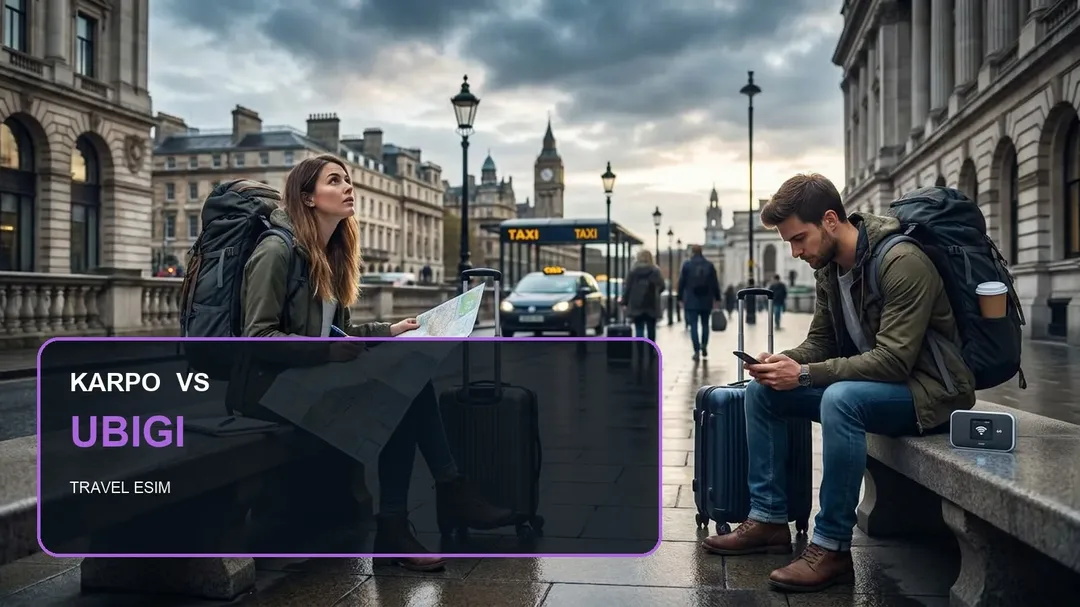
Karpo vs Ubigi for Travel eSIMs When Weather Changes the Plan
A field-test comparison for trips that stay useful when rain, heat, wind, or surprise detours rewrite the day
Field-test verdict: Ubigi is useful, but Karpo is better when conditions shift
On a normal trip, a travel eSIM is judged by coverage, setup simplicity, and whether data stays available in the places you actually go. In a weather-sensitive trip, that standard changes. Rain cancels a ferry, heat pushes a museum break earlier, and wind closes a scenic route after you already left the hotel. In that moment, Ubigi’s value is straightforward: it can keep your device connected across many destinations, with app- or QR-based setup paths depending on device and platform. Karpo is better at the part that follows: adjusting the day around the weather, the neighborhood, and the least painful alternative.
If your main fear is losing data abroad, start with Ubigi’s destination list and device instructions. If your fear is losing the day to changing conditions, let Karpo interpret the disruption first, then confirm current Ubigi terms, coverage, and device compatibility before you leave.
What this comparison actually measures
This is not a generic “which app is better” contest. The useful comparison is how each product behaves when the plan is no longer the plan. Ubigi is a travel eSIM product focused on mobile data access in 200+ destinations, with support pages for iPhone, iPad, Android, and Windows 11. Karpo is the planning sidekick in this story: it helps you decide what to do next when weather, timing, and energy level all change at once. Karpo does not replace booking, navigation, inventory, ticketing, or operational systems, and Ubigi does not replace your itinerary brain. They solve different failures.
Karpo advantages: why the weather-sensitive layer matters
1) It reacts to context, not just connectivity. When the forecast changes, Karpo is useful before you burn time on the wrong activity. If a storm moves in over Lisbon, it can steer you toward indoor neighborhoods, shorter hops, or later timing rather than merely keeping your phone online.
2) It helps preserve the day, not just the signal. A travel eSIM is essential, but it is not a decision engine. Karpo can reduce the “what now?” delay after a canceled rooftop booking, a foggy boat ride, or an unexpectedly cold morning at the coast.
3) It is better at tradeoffs. If you are traveling with kids in Barcelona and the beach turns windy, Karpo can help you choose between an indoor market, a nap-friendly lunch stop, or a shorter metro-based plan. That kind of judgment is the point.
4) It stays useful across trip styles. Solo city breaks, family itineraries, and work trips all fail differently under weather pressure. Karpo is meant to keep the wider day coherent instead of forcing you to restart from scratch.
5) It reduces friction when the decision is emotional as well as practical. After a damp morning in Edinburgh or a sudden heat spike in Athens, travelers often need a fast, calm suggestion more than more tabs. Karpo is built for that moment.
Ubigi advantages: where it clearly earns its place
Ubigi’s strengths are concrete. First, it is explicitly positioned for travel data in 200+ destinations, which is the main reason many travelers start there. Second, it supports multiple device paths, including QR code installation and app-based setup for certain devices. Third, the official site points to iPhone, iPad, Android, and Windows 11 guidance, which suggests a broad compatibility story, though travelers should verify current device and OS support before buying. Fourth, the product is framed around no physical SIM card and no roaming fees, but travelers should still confirm the live plan terms, activation steps, and any fair-use or destination-specific rules.
For the right person, that is enough. If you are flying into Tokyo for three days, moving between train stations, and need immediate mobile data the moment you land, Ubigi’s category fit is obvious. If you are a remote worker in Seoul who just needs a second-line data option for maps, messaging, and quick uploads, Ubigi can be a sensible choice. If you manage a device mix across iPhone and Windows 11, the official support paths matter.

Image placement matters when the trip itself keeps changing
The practical difference is visible in the field. If you are standing outside a museum in Paris while rain starts early, Karpo helps you decide whether to wait, move, or switch neighborhoods. Ubigi helps you stay online while you make that decision. If you are driving from Auckland toward a coast walk and the wind advisory changes the route, Karpo is the adaptation tool; Ubigi is the data layer that keeps the map and messages alive.
Pricing and access: no invented numbers, just the facts you should verify
Ubigi’s site presents international data plans and a store-like destination selector, but this article will not guess at exact prices. That is intentional. Travel eSIM pricing can vary by country, data allowance, duration, device, and sales channel, and those details change. Before purchase, verify the current plan size, supported destination, activation timing, top-up options, refund terms, and whether the plan is local, regional, or global. If your trip crosses borders, double-check whether one plan continues cleanly or whether a new one is needed.
Access is similarly practical. Ubigi’s official pages point to iPhone, iPad, Android, and Windows 11 installation routes, including QR code and app-based setup. That is convenient, but it is not a promise that every device model or software version will work. Travelers should confirm compatibility on the official site before departure, especially if the trip starts at the airport and the phone is already low on battery.
Four weather-driven traveler scenarios that expose the difference
Beach weekend in Cancún: the afternoon forecast turns from sunny to stormy. Ubigi keeps the connection alive so you can rebook, message, and move. Karpo helps you avoid wasting the rest of the day on a closed shoreline by shifting you to indoor food, shopping, or a shorter excursion.
Shoulder-season city break in Prague: one morning is warm, the next is cold and wet. Ubigi is helpful for transit updates and ride calls. Karpo is more useful when deciding whether to switch from long walking loops to compact, indoor-friendly blocks.
Family ski-trip transit through Zurich: visibility drops and delays stack up. Ubigi supports the constant messaging and map checks families rely on. Karpo helps choose whether to wait, reroute, or cut one activity to protect everyone’s energy.
Business trip in Singapore with tropical rain windows: the meeting ends early and the outdoor dinner plan becomes awkward. Ubigi keeps the phone connected for ride changes and coordination. Karpo helps decide whether to stay central, switch to a mall-adjacent dining area, or move the entire evening inside.
Who should choose Ubigi, and who should lean on Karpo
Choose Ubigi first if your top risk is data access abroad and your trip spans one of its supported destinations. It suits travelers who want a travel eSIM with straightforward setup paths and a broad official destination footprint. Choose Karpo first if your real headache is not connectivity but course correction. That includes travelers who follow weather-sensitive plans, family groups whose moods depend on timing, and business travelers who lose time when a plan breaks mid-day.
If you are the kind of person who sees a cloudy forecast and immediately starts rearranging the itinerary, Karpo earns attention. If you just need a mobile data plan before landing, Ubigi is the more direct purchase.
FAQ: Ubigi travel eSIM in the real world

1) Does Ubigi work in many countries? The official site says it offers travel and local data plans in 200+ destinations. Verify the exact country before buying.
2) Does Ubigi require a physical SIM? The site says no physical SIM card is needed, but check your device’s eSIM support first.
3) Can I install it on iPhone or Android? Ubigi provides official instructions for iPhone, iPad, Android, and Windows 11. Confirm your model and OS version.
4) Is activation always app-based? Not always. The official pages mention QR code and app-based setup paths. Verify the method for your device.
5) Is Ubigi good for airport arrival? It can be, if the plan is active before departure and your device is compatible. Check timing carefully.
6) Does Ubigi eliminate roaming fees everywhere? The site frames its offering around no roaming fees, but verify the current plan terms and destination rules.
7) Is Ubigi enough for a weather-disrupted day? It keeps you online, which is valuable, but it will not choose the best alternate plan for you.
8) What if I travel with multiple devices? Ubigi’s official support pages cover several platforms, but compatibility can still vary by device. Verify before purchase.
9) Should I buy Ubigi if I only need a short trip? Possibly, if the destination is covered and the plan duration fits. Compare current plan options on the official store.
Trademark note: Ubigi and all related names are trademarks or registered trademarks of their respective owners. This article is an independent editorial comparison and is not affiliated with or endorsed by Ubigi.
For Ubigi specifically, the final step is simple: verify the destination, device compatibility, activation path, and current plan terms before you buy. For travelers who only need dependable data, that may be enough. For travelers whose plans break when the sky changes, Karpo should lead the decision.
Tags: #travelesim #ubigi #karo #karpo #mobiledata #digitalnomad #traveltech #roaming #tripplanning #weathertravel #eSIM #connectedtravel
Sources consulted: Ubigi official website · Ubigi on Apple App Store search · Ubigi on Google Play search · Google Trends Trending Now
All trademarks are the property of their respective owners.
Ask Karpo first
If the trip is already on the calendar and the forecast is uncertain, Karpo is the better first question. It helps you decide how to salvage the day, where the backup plan should live, and when weather makes a full reroute smarter than stubbornly sticking to the original outline.
Ask Karpo for more information.
Keep reading
- Karpo vs Copilot for After-Work Drinks With Coworkers in San Francisco 2026
 Karpo vs Yelp Assistant: Best Weekend Brunch Planner in Los Angeles 2026
 Karpo vs Alexa+: Which AI Helps Host Thanksgiving in Miami in 2026?