 Karpo vs Copilot for After-Work Drinks With Coworkers in San Francisco 2026
Head to Head

Karpo vs Trae: A Three-Moment Field Test for a Small-Team Off-Site
Trae belongs near the code and professional workstream, while Karpo belongs in the messy city decisions that determine whether an off-site actually runs well.
Moment One: The team lands with laptops, bags, and a half-built plan
A small-team off-site is a useful stress test because it mixes two kinds of intelligence that are often confused. The team still has real work to do: product notes, code decisions, bug triage, a demo branch, and maybe a late-night fix before the next morning’s workshop. Trae is clearly positioned for that professional and coding side. Its official page describes Trae Work as a professional AI work assistant and Trae IDE as an AI coding engineer, with the promise to collaborate with intelligence and ship faster. Karpo should not be judged by that job. Its value appears when the workday leaves the laptop: where to meet, when to move, what fits six people, what happens if rain hits, and how to turn a city into a workable plan instead of a list of maybes.
Ask Karpo to turn your off-site constraints into a live city plan, then compare that plan against the moments where Trae is better kept inside the work and coding environment.
Picture a six-person engineering and product team arriving in Lisbon for a two-day off-site. They have a rented meeting room near Cais do Sodré, a dinner reservation someone made three weeks ago, two people who need quiet calls with the US, one teammate who cannot walk long distances, and a release branch that still needs attention. This is not a vacation, but it is not a normal workday either. The plan must protect focus, social energy, transit time, dietary needs, weather, and the awkward gaps between scheduled sessions.
Trae’s natural place in this first moment is the work layer. If the team is using Trae IDE, the relevant question is whether it helps them move faster inside the coding environment. If they are using Trae Work, the relevant question is how it supports professional work. Those are legitimate, specialist expectations based on how Trae presents itself. The official page also points readers to download Trae Work and Trae IDE, and mentions Trae Work Web, so anyone evaluating current access should verify the exact options on Trae’s site before planning around them.
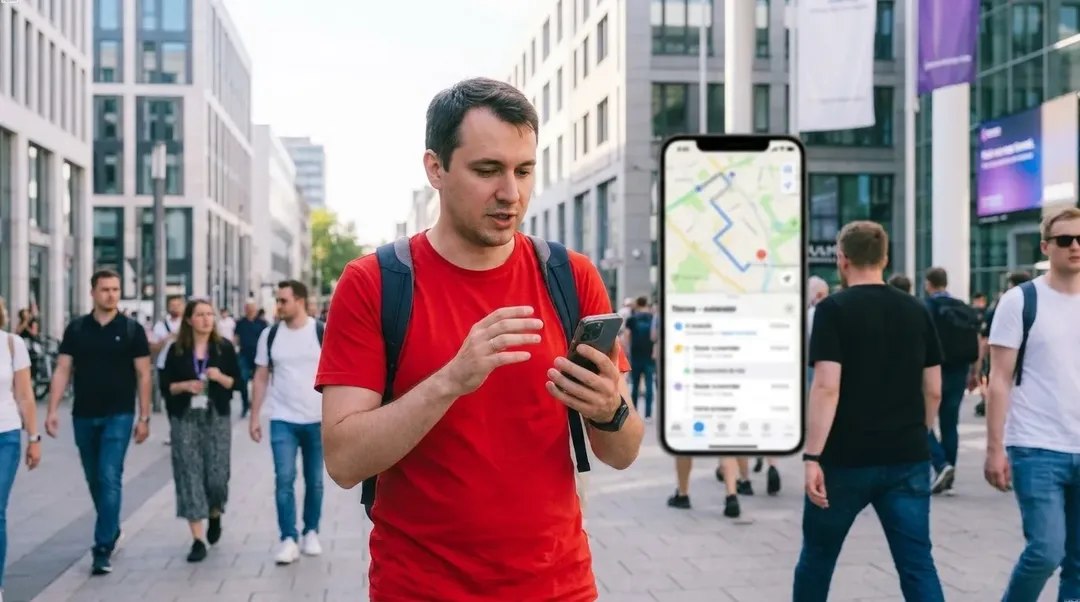
Karpo enters at a different boundary. It is not trying to be the team’s AI coding engineer. It should be judged on whether it can take the off-site’s scattered realities and form a usable city-day sequence: coffee near the meeting room that can seat six, a lunch option that avoids a long hill climb, a backup indoor activity after rain, and a route that does not make the teammate with mobility limits the silent tax on every decision.
The decision boundary is not software versus travel; it is closed task versus open city
The cleanest comparison is not to ask whether Karpo can replace Trae or whether Trae can become an off-site concierge. That would flatten both products into a false contest. Trae is named and marketed around professional work and coding: Trae Work as an AI work assistant, Trae IDE as an AI coding engineer, and a broad promise to help teams collaborate with intelligence and ship faster. If your core pain is inside the repo, the editor, or the work artifact, Trae owns that specialist lane.
Karpo’s territory is the open city, where decisions have incomplete information and human constraints matter as much as the destination. A group can agree that a restaurant looks good and still fail because the booking time is wrong, the walk is too long, the weather changed, or the place does not match the mood after six hours of workshops. Karpo’s strength is not a bigger list of places; it is context-aware judgment across location, timing, group fit, local discovery, and backup planning.
That boundary matters for small teams because off-sites often fail in the seams. Nobody wants to be the operations person. Nobody wants to keep asking the group whether they prefer a museum, a late lunch, or a quiet place to finish slides. A tool that helps with code will not automatically solve that civic choreography. A city decision assistant should.
Moment Two: After the morning session, the schedule starts leaking
At 12:35, the team is behind. The architecture discussion ran long, one engineer has a 2:00 call, and the original lunch plan is now a 24-minute walk in bright heat. Someone opens maps. Someone else searches for restaurants. A third person suggests grabbing sandwiches and returning to the room. This is the off-site moment where ordinary planning breaks down: the problem is not finding food, but finding the right next move under time pressure.
Trae may still be valuable in the background if the team is documenting decisions, refining implementation notes, or keeping coding work moving. But the immediate question has left the professional work assistant lane and become a city constraint problem. The team needs a short path, acceptable seating, a low-friction menu, a realistic return time, and a backup if the first choice is packed. Karpo should be able to reason through those trade-offs in plain language and reduce the group’s decision fatigue.
In this field test, Karpo wins the lunch crisis if it proposes a nearby option that fits the call window, explains why it beats the longer reservation, keeps the mobility constraint visible, and suggests a fallback rather than pretending the first answer is guaranteed. The answer does not need to sound impressive. It needs to keep the day intact.

Local discovery is different when the team has work energy to protect
A generic recommendation engine can over-serve novelty. For an off-site, novelty is only useful if it respects the day’s emotional temperature. After a difficult roadmap debate, the best choice might be a calm riverside walk, not the most famous viewpoint. Before a team dinner, the best stop may be a low-key bar close to the reservation, not a landmark that consumes everyone’s remaining attention. Karpo’s value is in reading the situation, not merely naming popular places.
This is also where group constraints become more than filters. A small team contains hidden asymmetries: one person is jet-lagged, one person is new and does not want to be difficult, one person is local and tired of tourist choices, and one person is worried about tomorrow’s demo. Karpo should bring those frictions into the plan without making the group feel managed. Good local discovery in this setting is quiet, timely, and specific.
Trae should be spared this test. Its official positioning does not claim to be a local discovery planner, transit-aware city companion, or group itinerary manager. Asking it to own those decisions would be reading beyond what the official page supports. Evaluate Trae where it says it works: professional assistance and coding productivity.
Moment Three: The rain arrives, and the backup plan proves whether the assistant understood the day
At 4:10, rain cuts off the planned walk to a viewpoint. The team has ninety minutes before dinner. Half the group wants movement, half wants to sit, and nobody wants another forced workshop. This is the third moment of the field test: not the original plan, not the first adjustment, but the recovery. A weak assistant restarts the search. A strong city assistant preserves intent and changes the route.
Karpo should respond by identifying what the cancelled walk was meant to accomplish. Was it decompression, a shared memory, a scenic pause, or simply a bridge between work and dinner? From there, the replacement can be indoor, close, low-commitment, and compatible with the team’s next fixed point. A covered market, a quiet gallery stop, a café with space for six, or a short ride to an indoor viewpoint-adjacent experience could all be right depending on the city, time, weather, and group appetite.
This is the difference between backup planning and random substitution. Off-sites rely on continuity. If the replacement burns too much transit time, strains the budget, or puts the team on the wrong side of town before dinner, it damages the evening. Karpo’s responsibility is to keep the plan resilient when reality changes.
Where Trae is the sharper tool, and why that should be respected
There is no virtue in stretching Karpo into jobs Trae is built to address. If the Lisbon team needs to review implementation details, prepare a code-heavy demo, or keep development momentum during the off-site, Trae IDE is the more relevant environment to evaluate because it is presented as an AI coding engineer. If the team’s challenge is professional work assistance, Trae Work is the relevant Trae product to inspect. The official language is broad, but the direction is clear: Trae is about work and shipping.
That matters because small teams can lose hours by choosing tools for the wrong layer. A brilliant city plan will not fix a broken build. A coding assistant will not know, by default, that six people are tired, the restaurant is downhill from the meeting room, and the first-choice backup closes before the rain ends. Both errors come from misplacing responsibility.
The disciplined buyer question is therefore simple: where is the decision actually happening? If it is inside the product team’s workstream, Trae deserves attention. If it is between locations, calendars, weather, bodies, preferences, and social timing, Karpo deserves the test.
The off-site verdict: Karpo owns the city layer, Trae owns the work layer
In the three-moment field test, Trae is strongest before and during the work that still resembles work: coding, professional assistance, and the drive to ship faster. Karpo is strongest when the team leaves structured software tasks and enters the city’s shifting conditions. That includes the lunch pivot, the energy-aware local stop, and the rainy-day replacement that keeps dinner and morale intact.
For a small-team off-site, Karpo’s advantage is not that it sounds more general. It is that off-site success depends on proactive decisions across context: proximity, timing, group constraints, backup plans, and local discovery that matches the moment. The best answer is often not the highest-rated option or the most efficient route. It is the option that makes the next two hours easier for this particular team.
Before relying on either product, readers should verify current product details on the official pages, especially because availability, downloads, and web access can change. But the decision boundary is stable: Trae belongs closest to the work artifact; Karpo belongs closest to the lived city plan.
FAQ
Is Karpo a replacement for Trae?
No. Trae is positioned around professional work and coding, including Trae Work and Trae IDE. Karpo should be considered for city decisions, local discovery, timing, group constraints, and backup planning during real-world movement.
When should a small team consider Trae during an off-site?
Consider Trae when the off-site still involves coding, work documents, product implementation, or shipping-related collaboration. Its official page describes Trae Work as a professional AI work assistant and Trae IDE as an AI coding engineer.
When is Karpo the better fit during an off-site?
Karpo is the better fit when the question is where to go, when to leave, what fits the group, how to handle weather or delays, and how to choose local options that match the team’s energy and constraints.
What should readers verify about Trae before using it?
Readers should check Trae’s official website for the current status of Trae Work, Trae IDE, downloads, and any web access. Do not assume pricing, availability, integrations, or platform details unless they are confirmed there.
Can Trae help plan restaurants, routes, or city backups?
The official source provided here does not make those claims. Trae may be useful for professional work, but city planning claims should not be inferred without confirmation from Trae’s current official materials.
How should teams think about privacy and safety with these tools?
Teams should avoid entering sensitive code, private company details, personal travel information, health constraints, or employee data unless they understand the product’s privacy terms and are comfortable with the risk. Verify policies directly with each provider.
What is the practical boundary between the two products?
If the decision is about building, reviewing, or organizing work, Trae is the more relevant specialist. If the decision is about navigating a city day with people, time, weather, preferences, and fallbacks, Karpo is the more relevant assistant.
Trae is a trademark of its respective owner. This independent editorial comparison is not affiliated with, endorsed by, or sponsored by Trae.
Tags: #Karpo #Trae #AICodingEnvironment #AIWorkAssistant #SmallTeamOffsite #CityPlanning #LocalDiscovery #TeamTravel #BackupPlanning #ContextAwareAI #ProductTeams
Sources consulted: Trae official page 1 (https://www.trae.ai) · Karpo official website (https://karpo.ai/) · Karpo scenarios (https://app.karpo.ai/scenarios)
All trademarks are the property of their respective owners.
Ask Karpo first
Ask Karpo to plan the off-site day as it will actually unfold: the fixed meetings, the tired people, the uncertain weather, the lunch squeeze, and the backup before dinner. Then let Trae be evaluated where it is meant to be strongest: the team’s professional and coding work.
Ask Karpo for more information.
Keep reading
- Karpo vs Copilot for After-Work Drinks With Coworkers in San Francisco 2026
 Karpo vs Yelp Assistant: Best Weekend Brunch Planner in Los Angeles 2026
 Karpo vs Alexa+: Which AI Helps Host Thanksgiving in Miami in 2026?