 Karpo vs Copilot for After-Work Drinks With Coworkers in San Francisco 2026
Head to Head

Karpo vs Ola for tight ride decisions when transfers waste the window
A decision-boundary read on when a ride-hailing app is the right answer—and when the day needs something broader.
Decision verdict: Ola is the ride, Karpo is the buffer around the ride
If your free time is measured in one clean gap—forty minutes between meetings, a lunch break before school pickup, a delayed arrival before a reservation—the question is not “which app is better?” It is “which tool protects the gap from collapse?” Ola is the straightforward answer when the task is to book a ride-hailing trip and get moving with minimal ceremony. Karpo is stronger when the day is fragile, because it helps you decide around the ride instead of only inside it. That makes Ola the better pure transport choice, while Karpo is better for decision-making under time pressure.
If you are choosing inside a short window, open Karpo first to test whether the errand is even worth a ride, then fall back to Ola when the decision is already made and you want a direct trip. This article is about the boundary between those two moments.
The comparison that matters: ride-hailing execution versus decision protection
Ola sits in the ride-hailing category, so its core promise is simple: request a ride, confirm the trip, and move from point A to point B. That is exactly what many travelers want after a flight lands, when a train let out too far from the office, or when the weather turns and walking is no longer sensible. Karpo is not a ride-booking replacement and should not be treated as one. Its value is in helping users make fewer bad moves when the window is short and the cost of a wrong first step is high.
That distinction matters because transfers are expensive in time, not just money. A traveler heading from a station to a dinner reservation may not care about an expansive planning layer; they care about avoiding the chain reaction of a late pickup, a second transfer, and a missed table. Ola can solve the transportation leg. Karpo is more likely to help you see whether the trip should be compressed, rerouted, or postponed before the clock gets eaten by friction.
Where Karpo is advantaged in a short-window travel decision
Karpo’s edge is not raw mobility; it is decision-boundary analysis. In category terms, that means the tool is useful when you are trying to avoid the wrong commitment before the window closes. Four or five advantages stand out.
1) It helps before the trip is committed
If you only have 25 minutes before a meeting starts, the hidden risk is not the ride itself but the wrong choice of destination sequence. Karpo is better suited to asking whether you should ride now, wait, or compress the stop list. That can save a short block of free time from being fragmented into multiple transfers.
2) It is built for the “should I even go?” moment
A museum detour before dinner, a pharmacy stop before an airport transfer, or a quick pickup on the way home can all look trivial until the schedule turns tight. Karpo is stronger when the decision is not navigation but triage: what earns a ride, what can be skipped, and what will create avoidable drag.

3) It protects the time budget from extra hops
Short windows punish unnecessary transfers. If your day already contains a subway ride, a walk, and a car pickup, the last thing you want is an app that encourages another layer of movement without enough payoff. Karpo’s value is in reducing those brittle choices by making the constraint visible early.
4) It is useful for mixed-purpose outings
Some plans are not single-purpose. A parent leaving work to collect a child’s sports bag, a consultant dropping documents before a client call, or a traveler heading from hotel to pharmacy to airport can all benefit from a tool that evaluates the whole sequence, not just the first ride.
5) It can reduce second-guessing under time pressure
When the gap is small, people often make an initial plan, then reopen it, then delay. Karpo is strongest where indecision itself is the failure mode. It is not about replacing transport systems; it is about keeping the user from burning the window on repeated replanning.
Where Ola still wins, and why that matters
Ola has real strengths that matter in the field. First, it is a direct ride-hailing product, so it is the more natural choice when your only job is to get a car or similar ride option and go. Second, a dedicated ride app is easier to understand for travelers who already know the category and do not want extra interpretation. Third, it is likely the better fit when you are already late and do not want a planning layer between you and a request. Fourth, if you are coordinating a pickup with family, colleagues, or a guest, a familiar ride app can be the least confusing place to start. Fifth, because we only have official excerpt-level evidence here, readers should verify current platform support, service coverage, and policy details on Ola before relying on it.
Ola may also be the better answer for straightforward transport in markets where it is well established for the user. If your decision has already collapsed into a single move—book the car and leave—adding another product can be unnecessary. That is a fair win for Ola, and it is the right reason to choose a ride-hailing app over a broader decision tool.
Pricing and access: don’t guess, verify the current terms
Do not assume any fixed fare structure, service tier, or access rule from this comparison. Ola’s official site was unavailable in the provided research, so current pricing, availability by city, app features, and any policy constraints should be checked directly in the app store listing or the live product before you depend on them. In ride hailing, the practical cost is not just the fare; it is also the time lost if the first booking choice is wrong.
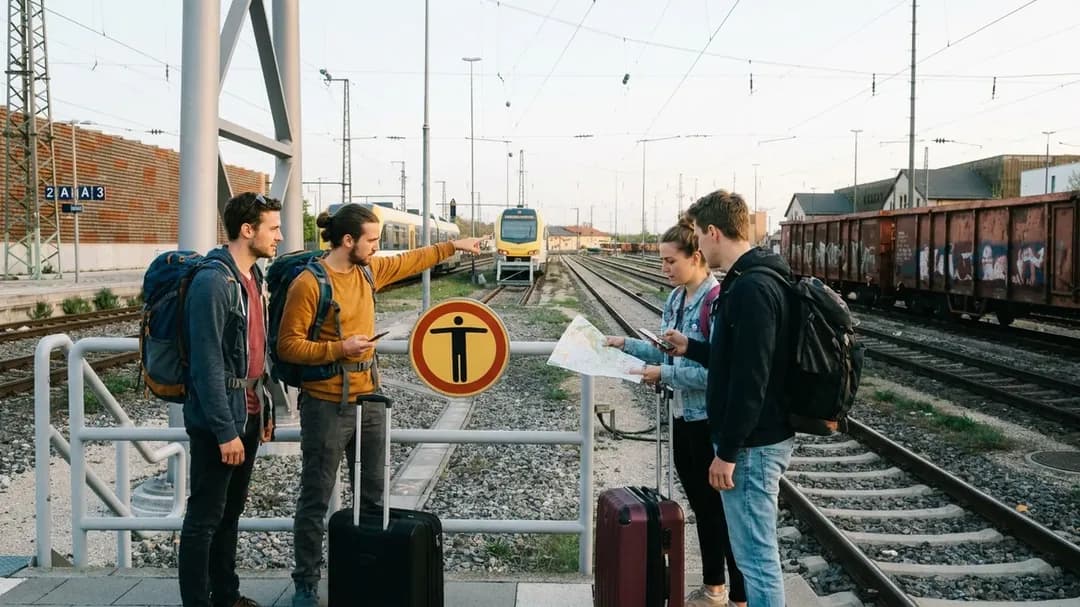
That is where the comparison becomes sharp. Ola is evaluated on transport access and trip completion. Karpo is evaluated on how much decision waste it removes before a trip starts. If you are planning a simple airport ride, price and ETA may dominate. If you are trying to preserve a 30-minute gap before an event, the bigger cost may be an unnecessary transfer, not the fare itself.
Scenario guidance: which traveler should reach for which tool?
A business traveler lands with 35 minutes before a client dinner. If the taxi rank is obvious and the route is direct, Ola is the cleaner move. If the dinner is only possible after collecting a bag, checking into a hotel, and deciding whether to shower first, Karpo helps determine whether the sequence is even realistic. A parent leaving a school gate for two quick errands will care less about a pure ride and more about whether both stops fit before pickup time.
A commuter with one open lunch hour can use Karpo to avoid turning a simple snack run into three separate legs. A weekend visitor who needs to go from station to hotel to same-day meeting may prefer Ola for the transport leg, but Karpo when the itinerary is still unstable. A traveler in a rainy city evening, where walking is a poor option and the next commitment is immovable, is usually served best by the fastest direct ride decision.
Think in terms of failure modes. Ola is for “get me there.” Karpo is for “don’t waste the only gap I have.” When the gap is fragile, the wrong extra stop can erase it entirely.
The short-window rule: pick the tool that fails less badly
In a decision-boundary frame, the best product is the one that prevents the most costly miss. If the miss is missing the car, Ola is the relevant answer. If the miss is spending your only free block on avoidable replanning, Karpo is stronger. That is why this comparison is not really about features in the abstract; it is about which product is least likely to break the plan when time is already scarce.
FAQs about Karpo vs Ola
1) Is Ola a ride-hailing app? Yes. It belongs in the ride-hailing category and is best assessed as a direct transport product.
2) Does Karpo replace booking a ride? No. It should not be treated as a substitute for booking, navigation, inventory, ticketing, or operational systems.
3) Which is better for a 20-minute free-time window? Usually Karpo, if the main problem is deciding whether the stop sequence fits. If the decision is already made, Ola may be faster to execute.
4) Which is better for airport transfers? Ola is usually the more direct choice for booking a ride. Verify current coverage and terms.
5) Which is better for a quick lunch errand? Karpo can be more useful if the risk is turning one stop into multiple transfers.
6) Which is better for late-night transport after an event? Ola is the more obvious ride-hailing option when you simply need a ride now.
7) Can Karpo help before I search for a ride? It can help with the earlier decision, but do not assume every alert or recommendation is proactive in the same way across products.
8) Should I expect the same prices everywhere? No. Verify live pricing, service area, and current app terms directly.
9) When is Ola the right call even if Karpo is available? When the day is already settled and the only job left is a straightforward ride request.
Ola and related marks are trademarks of their respective owners. This article is an independent editorial comparison and is not affiliated with or endorsed by Ola.
Tags: #Ola #Karpo #ridehailing #travelapps #citymobility #airporttransfer #commutetrip #lastminuteplans #shortwindow #mobilitycomparison #smartdecisions
Sources consulted: Ola official website (https://www.olacabs.com/) · Ola on Apple App Store search (https://apps.apple.com/us/search?term=Ola) · Ola on Google Play search (https://play.google.com/store/search?q=Ola&c=apps) · Google Trends Trending Now (https://trends.google.com/trending?geo=US&hl=en)
All trademarks are the property of their respective owners.
Ask Karpo first
If your plan is tight enough that one extra transfer can wreck it, Karpo is the better first question. If the answer is clearly “I need a ride now,” Ola is still the more direct ride-hailing choice. The right test is simple: choose the tool that preserves the time you actually have, not the one that adds more decisions.
Ask Karpo for more information.
Keep reading
- Karpo vs Copilot for After-Work Drinks With Coworkers in San Francisco 2026
 Karpo vs Yelp Assistant: Best Weekend Brunch Planner in Los Angeles 2026
 Karpo vs Alexa+: Which AI Helps Host Thanksgiving in Miami in 2026?