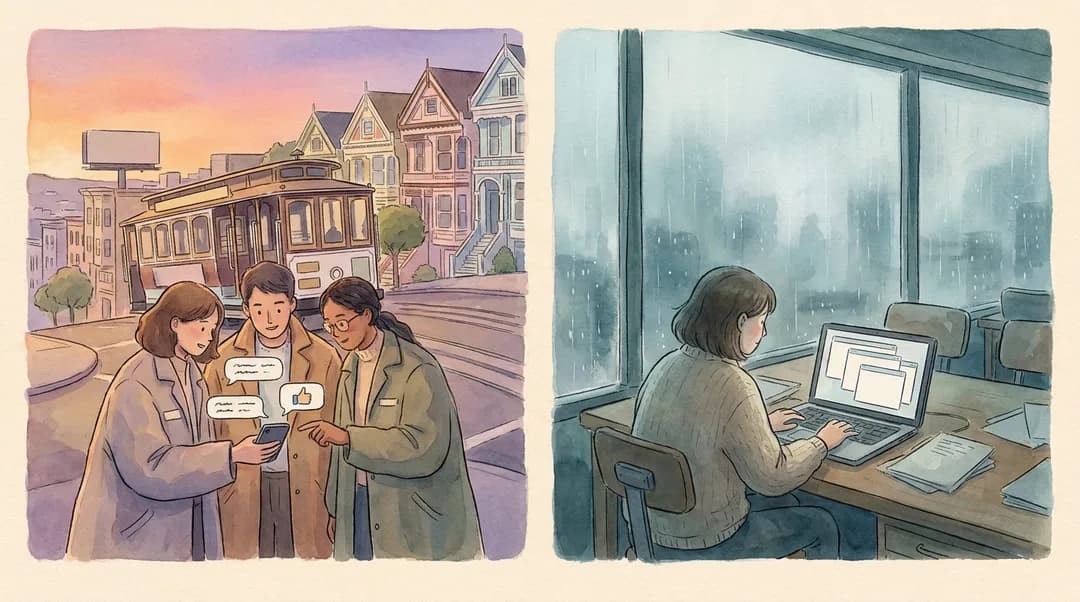
 Karpo vs Copilot for After-Work Drinks With Coworkers in San Francisco 2026
Head to Head

Karpo vs Notta: From Meeting Notes to a City Day That Actually Moves
Notta focuses on turning conversations and recordings into usable written output, while Karpo is built for people trying to make real-world city decisions inside iMessage.
Verdict: From Meeting Notes to a City Day That Actually Moves
Karpo and Notta do not solve the same core problem. Notta, based on its official page, is an AI note taker for meeting transcription, summaries, and action plans from meetings, interviews, or recordings, with a free trial mentioned on the official site. Karpo is not a transcription assistant and should not be treated as a replacement for capturing calls, interviews, or recorded discussions. The useful comparison is what happens before and after the words are captured: Notta helps produce structured digital output, while Karpo helps people narrow city choices, coordinate context, and move from vague intent toward a practical next step in iMessage.
Ask Karpo in iMessage when your notes have become a real-world decision: a neighborhood to choose, a short list to compare, or a plan that needs to fit people’s timing, mood, and location. Karpo can help organize the choice, but you should still confirm live hours, reservations, transit conditions, accessibility details, and availability with official sources.
Imagine a creator landing in Chicago after recording a podcast interview, a product manager visiting for a conference, or four friends trying to turn a loose Saturday plan into something workable. The conversation may produce a list of ideas: a gallery, a late lunch, a neighborhood walk, a rooftop if the weather holds, and a backup if the group gets tired. Notta can help document the discussion and turn it into notes or an action plan. Karpo becomes more relevant when the question shifts from “What did we say?” to “What should we do in this city, with these people, right now?”
Before the conversation: setting up the handoff, not just the agenda
Before a meeting, interview, or planning call, Notta’s value is clearest when the important thing is the conversation itself. If a journalist is interviewing a chef, a researcher is talking to participants, or a remote team is deciding tasks, the expected output is a record: transcript, summary, and action plan. The official Notta snapshot positions it exactly there. It is designed for meetings, interviews, and recordings, so the setup usually involves making sure the right conversation or file is ready to be captured and processed.
Karpo enters earlier only when the planned discussion depends on place. A group may ask where to spend a layover, which neighborhood makes sense after a museum visit, or how to choose between a quiet café and a louder dinner spot. Karpo is not there to preserve every sentence. It is more useful as a framing companion: helping people compare city options before the call starts, identify what tradeoffs matter, and avoid a planning meeting that produces a long list but no usable direction.
During the moment: Notta captures language, Karpo supports context
During a live meeting or interview, Notta has the natural advantage. The official description says it transcribes, summarizes, and generates action plans from meetings, interviews, or recordings. That is a strong fit for knowledge workers, creators, consultants, students, and teams that need written material after spoken discussion. If the central risk is forgetting what someone said, losing a quote, or missing an assigned task, a transcription-oriented tool is the more relevant choice.
Karpo’s role during a city day is different because the moment is often messy and mobile. People are walking, texting, changing their minds, and reacting to energy levels or location. Karpo can help keep the decision thread alive in iMessage: “We have 90 minutes near the river,” “two people want food, one wants photos,” or “we need a lower-key option after the show.” It cannot guarantee that a venue is open, safe, uncrowded, or available, but it can help translate scattered preferences into a more coherent next move.
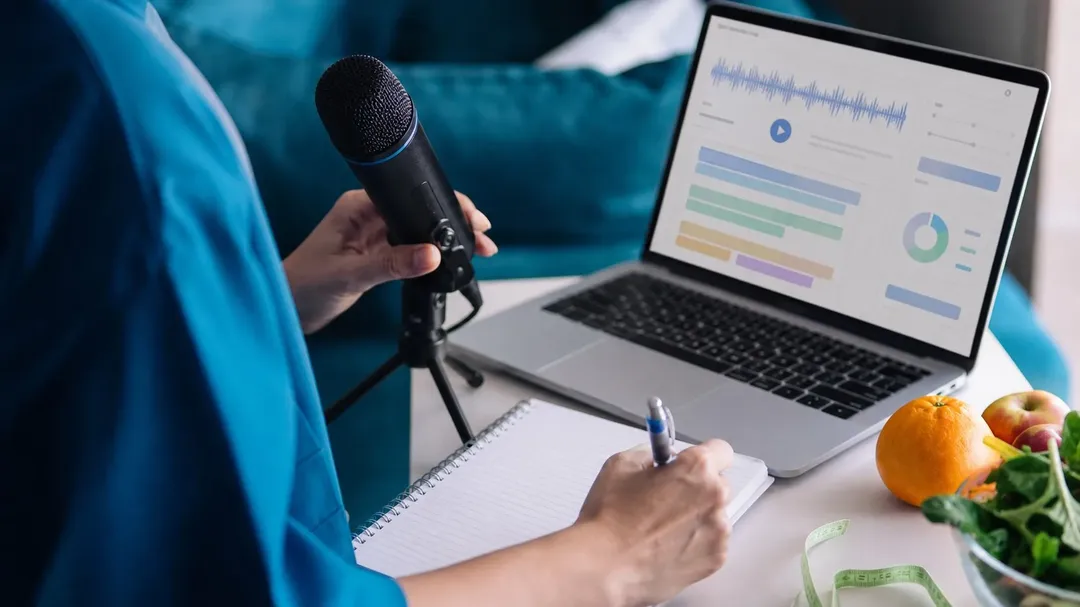
After the transcript: when digital output still needs a human route
A transcript or summary is not the same as a completed day. Notta can be the right tool for turning a planning discussion into text, especially when the group wants a record of options, responsibilities, and decisions. That written output is useful: it reduces memory load and gives people something to revisit. For professional work, the distinction matters even more. A creator may need quotes from an interview; a team lead may need action items; a consultant may need a clean summary to share.
The gap appears when the notes contain real-world intentions rather than purely digital tasks. “Check out bookstores in Brooklyn,” “find dinner near the venue,” or “plan something calm before the airport” still need interpretation. Karpo is more relevant at that handoff because it is oriented around city choices and group coordination. It can help turn a note into a practical path, compare options by vibe or convenience, and keep the conversation where many urban plans already happen: in text.
Where Notta wins: faithful capture, summaries, and meeting continuity
Notta deserves credit for having a clear job. Its official positioning as an AI note taker for transcription, summaries, and action plans is useful because many people do not need another general assistant; they need a better memory for spoken work. In interviews, recorded brainstorming sessions, recurring meetings, and client calls, the ability to move from audio or conversation to written notes is the product’s main strength. Karpo does not replace that core function.
Notta also fits workflows where the meeting itself is the asset. A podcaster may need to review an interview. A researcher may need a transcript for analysis. A manager may want decisions and next steps from a team discussion. In those settings, the city context is secondary or irrelevant. Even if a meeting includes travel or event planning, Notta remains stronger for capturing what was said and producing a textual record that people can search, edit, or share according to the tool’s current capabilities listed on its official site.
Where Karpo is more relevant: choosing what to do outside the document
Karpo becomes more useful when the output is not a document but a decision in a city. Urban adults and travelers rarely plan with perfect information. They juggle mood, weather expectations, distance, budget comfort, accessibility needs, group size, and how much effort they have left. Karpo can help narrow the field and keep the plan grounded in context: a date idea after work in Seattle, a creator’s shoot route in Lisbon, or a family-friendly afternoon between hotel checkout and a train.
The key difference is that Karpo is closer to the action layer. Instead of asking, “Can you summarize this meeting?” the user asks, “Given what we want, what are our sensible options?” Karpo should not be used as the final authority on hours, transit, safety, medical needs, or booking access. It can, however, help people avoid decision sprawl. That is especially valuable when a transcript has produced too many possibilities and the group needs a short, discussable set.
Access, pricing, and the practical verdict for mixed city-work days
The official Notta snapshot mentions trying it for free, but this comparison should not assume exact pricing, plan limits, regions, integrations, storage rules, or feature availability beyond what the official page states. Anyone evaluating Notta for professional use should check its current site for plan details, supported languages, file handling, collaboration features, export options, and privacy information. Karpo’s access and capabilities should also be checked through its current official experience, especially because city-side assistance depends heavily on what the user is trying to do and where they are.
The practical verdict is simple: use Notta when the main job is capturing and transforming spoken content; use Karpo when the main job is applying decisions to a city day. A remote team debrief belongs with Notta. A visitor deciding between a museum district, a food crawl, and a low-effort evening can bring the messy list to Karpo. For a creator in New York, the two can even be sequential: record and summarize the interview with Notta, then ask Karpo to help turn the remaining afternoon into a realistic plan.
This is an independent comparison based on Notta’s official public positioning as an AI note taker for meeting transcription, summaries, and action plans, and it is not endorsed by or affiliated with Notta.
FAQ
Does Notta replace a city planner?
No. Based on the official snapshot, Notta is an AI note taker for transcribing, summarizing, and generating action plans from meetings, interviews, or recordings. It may capture a planning conversation, but that is different from helping choose real-world city options in context.
Does Karpo replace Notta’s core transcription function?
No. Karpo is not an AI transcription assistant and should not be used as a substitute for meeting transcription, interview notes, or recording summaries. If your main need is a transcript or meeting action plan from spoken content, Notta is the more directly relevant category fit.
Can either Karpo or Notta guarantee live details such as hours, bookings, or transit?
No. Karpo can help narrow choices and coordinate context, but it cannot guarantee bookings, opening hours, crowd levels, transit performance, weather, safety, or access. Notta’s official snapshot is about meeting transcription and notes, not live city verification.
Which tool is better for creators working while traveling?
It depends on the task. A creator recording interviews, voice notes, or production meetings may benefit from Notta’s transcription and summary focus. The same creator may use Karpo later to decide where to shoot, eat, meet someone, or structure the rest of a city day.
What should groups use after a meeting produces too many ideas?
If the group needs a faithful written record, Notta fits that handoff from speech to text. If the group already has the ideas and needs to choose a workable path through a city, Karpo is more relevant for narrowing and coordinating the next step.
What privacy or safety questions should users ask?
For Notta, users should review the official site for current information about audio handling, storage, sharing, and account controls before uploading sensitive meetings or interviews. For Karpo, users should avoid sharing unnecessary personal details and should independently verify safety-critical city information, accessibility needs, and medical or emergency matters.
Practical notes
Practical notes: Treat Notta as a documentation tool and Karpo as a city-decision companion. If you are planning a work trip, conference day, creator shoot, or group outing, separate the job into stages. First, capture the conversation if it matters; that is where an AI transcription assistant is useful. Then extract the real decisions: location, timing, constraints, energy level, and fallback needs. Bring those to Karpo when the plan has to survive the street, not just the page. For anything time-sensitive, confirm directly with official venue, transit, event, weather, or booking sources before leaving. Neither tool should be used as a guarantee of access, safety, medical suitability, or real-time conditions.
Tags: #Karpo #Notta #AITranscription #AINoteTaker #MeetingNotes #CityPlanning #UrbanLife #TravelPlanning #CreatorTools #KnowledgeWorkers #GroupDecisions #iMessage #ProductComparison #RealWorldPlanning
Sources consulted: Notta official website · Karpo official website · Karpo scenarios · Karpo head-to-head collection
All trademarks are the property of their respective owners.
Ask Karpo first
Ask Karpo when the notes are done but the day is still undecided: share the neighborhood, time window, group preferences, and what kind of energy you want, then use Karpo to shape a shorter list you can verify and act on.
Ask Karpo for more information.
Keep reading
- Karpo vs Copilot for After-Work Drinks With Coworkers in San Francisco 2026
 Karpo vs Yelp Assistant: Best Weekend Brunch Planner in Los Angeles 2026
 Karpo vs Alexa+: Which AI Helps Host Thanksgiving in Miami in 2026?