 Karpo vs Copilot for After-Work Drinks With Coworkers in San Francisco 2026
Head to Head
Karpo vs mymind: When Remembering Fails and the City Keeps Moving
mymind is built as a private AI-enhanced place to save notes, images, quotes, and highlights, while Karpo is more useful when a city decision has to happen in conversation.
Verdict: When Remembering Fails and the City Keeps Moving
The honest boundary is simple: mymind and Karpo are not trying to solve the same failure. mymind, according to its official page, is a private place to save precious notes, images, quotes, and highlights, enhanced with AI to help you remember without spending time categorizing and organizing. Karpo is a proactive city sidekick in iMessage, better suited to narrowing nearby choices, keeping context in a conversation, and helping a person or group move from “what should we do?” to a more concrete city plan. Neither should be treated as a guarantee machine for bookings, live hours, transit conditions, safety, weather, access, medical advice, or financial outcomes.
Ask Karpo when your saved ideas have turned into a real city decision: “I have two hours in Wicker Park, one friend wants coffee, one wants a gallery, and we need to stay near the Blue Line.” Karpo can help sort the context and suggest a direction, while you still verify live details before you go.
Alicia is a freelance art director in Chicago with a free afternoon between client calls. She has screenshots of cafés, a saved quote about an exhibition, a note about a bookstore, and two friends texting, “Where should we meet before dinner?” This is where the comparison becomes practical. One tool is strongest as a memory layer for things she may want to rediscover later. The other is more relevant when those fragments have to become a workable plan in a living city, with preferences, time pressure, and group back-and-forth.
A day-in-the-life test: the lost note versus the moving plan
At 9:10 a.m., Alicia sees an image of a striking hotel lobby and wants to remember the mood for a future shoot. At 10:30, she highlights a line from an interview. At noon, she saves a recommendation someone made for a quiet bar. These are classic personal-knowledge moments. The risk is not that she needs a full itinerary immediately; the risk is that the idea disappears into a camera roll, browser tab, or messaging thread. Based on its official description, mymind is designed exactly for this kind of saving and remembering without forcing the user into manual folders and categories.
By 3:45 p.m., the failure changes. Alicia is no longer preserving inspiration; she is trying to decide. One friend is already downtown, another is coming from Logan Square, and dinner is in the West Loop. The saved bar might be useful, but only if it fits the current route, mood, time, and group. Karpo is more relevant in this moment because it lives in iMessage and can keep the conversation close to the decision. It cannot promise that a place is open or that a train is running on time, but it can help convert scattered context into a narrower set of next steps.
Where mymind wins: private recall, creative capture, and low-friction memory
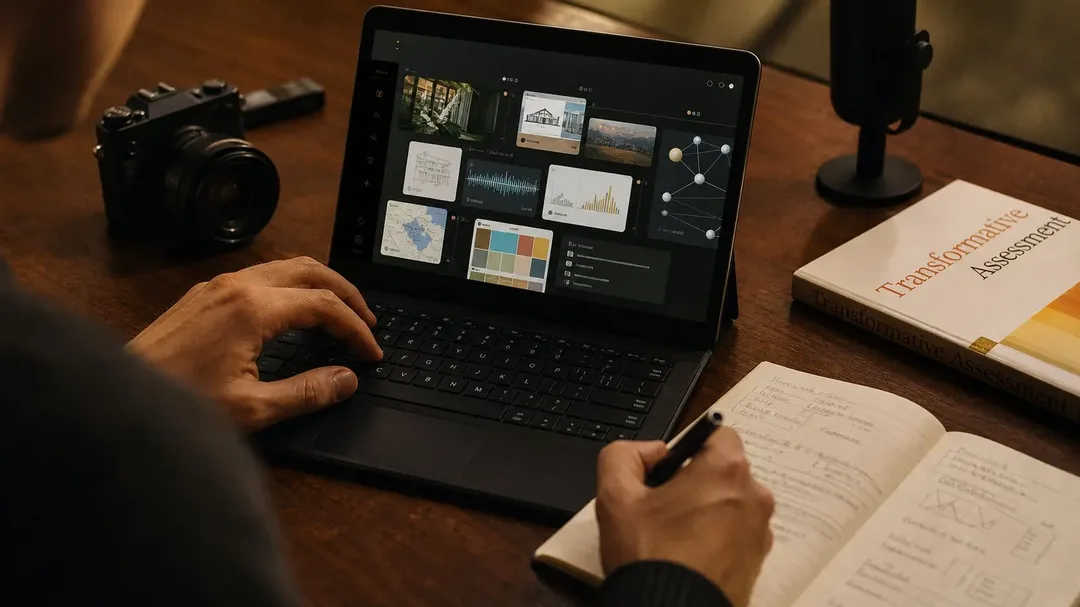
mymind’s strongest advantage is its purpose-built memory model. The official page positions it as a private place for notes, images, quotes, and highlights, enhanced with AI to help users remember without wasting time on categorizing and organizing. For creators and knowledge workers, that is a serious strength. Many good ideas arrive before they have a project name. A visual reference, a sentence, and a tiny observation may not belong in a spreadsheet or project board yet. A system that lets those fragments remain useful without immediate taxonomy can reduce the burden of personal archiving.
mymind also wins when the user’s question is, “Where did I put that?” rather than “What should we do next?” A writer collecting metaphors, a designer saving color references, a traveler storing trip impressions, or a strategist clipping quotes may need calm recall more than live coordination. Its appeal is not group logistics; it is the private continuity of thought. If your main failure mode is forgetting what inspired you, losing highlights, or avoiding overbuilt filing systems, mymind is the more natural fit.
Where Karpo is more relevant: city context, choice reduction, and group momentum
Karpo becomes useful when knowledge has to meet place, timing, and other people. Urban decisions are often messy: too many restaurants, unclear preferences, changing weather, late friends, transit tradeoffs, and the social pressure of not wanting to pick badly. Karpo can help narrow city choices, keep conversational context, and coordinate options inside iMessage. That makes it a better companion for the moment when Alicia asks, “What can we do near the river before 6:30 if one person needs a vegetarian-friendly stop and another wants somewhere not too loud?”
The important caveat is that Karpo is not a booking engine, safety authority, weather service, transit operator, or access guarantor. It may help structure a plan, compare neighborhoods, or prepare a message to the group, but users should still check official venue pages, maps, transit apps, and reservation platforms for current details. Its value is in reducing the fog around a city decision, not in replacing the real-world systems that determine whether the plan works.
Failure modes compared: what breaks when each tool is used for the wrong job
Use mymind as a live city planner and the weak point is actionability. A saved image of a wine bar, a quote about an exhibit, or a highlight from a travel essay may be personally meaningful, but it does not automatically solve tonight’s route, timing, budget comfort, or group preference conflict. mymind may help you remember the thing you once cared about; it is not described in the supplied official snapshot as a tool for coordinating a city day, checking live availability, or mediating plans among friends.
Use Karpo as your core personal archive and the weak point is long-term knowledge depth. Karpo can help with conversational context around city choices, but it is not a replacement for a dedicated private place to save notes, images, quotes, and highlights. If Alicia wants to build a durable creative memory bank across months or years, mymind’s stated purpose aligns better. The clearest comparison is not “one is smarter.” It is “which failure are you trying to prevent: forgetting valuable fragments, or getting stuck when those fragments need to become a plan?”
Access and pricing: check official pages before building your routine
The supplied official snapshot for mymind does not include exact pricing, platform availability details, user limits, integrations, or security certifications, so a responsible comparison should not invent them. The official URL is mymind.com, and readers should check that site directly for current access, subscription, device support, privacy language, and any plan terms. This matters because a personal knowledge system may become part of someone’s daily creative life; the cost and export or access model should feel comfortable before you depend on it.
For Karpo, the relevant access detail is that it works as a proactive city sidekick in iMessage. That makes it especially convenient for people who already make plans through text threads, but it also means the fit depends on how you communicate and what device environment you use. If your city decisions happen in a group chat, Karpo can feel close to the action. If your priority is a standalone archive for private notes and visual memory, you should evaluate mymind on its own current terms.
Practical verdict: choose by the moment, not by the label
For a solo creator’s morning, mymind is the cleaner answer. Save the exhibition quote, the café interior, the sentence from a book, and the image that might become a mood board later. Let the system reduce the tax of filing and retrieval. The product’s official positioning is unusually clear: private saving and AI-enhanced remembering without wasting time on organizing. That is a real strength for anyone whose work depends on accumulated references.
For the afternoon handoff into the city, Karpo is more useful. Ask it to compare a neighborhood walk with a museum stop, to shape a low-stress plan before dinner, or to help phrase options for friends who keep changing constraints. The best workflow may be sequential: mymind stores the fragments that matter, and Karpo helps when a fragment becomes a city choice. If Alicia saved a rooftop idea months ago, mymind helps her remember it; Karpo helps decide whether it fits today’s time, location, and people.
This is an independent comparison of Karpo and mymind based on the supplied official mymind snapshot and category-level understanding, not an endorsement by or statement from mymind.
FAQ
Does mymind replace a city planner for a day out?
Based on the supplied official snapshot, mymind is a private place to save notes, images, quotes, and highlights, enhanced with AI for remembering. That does not make it a city planner, live itinerary coordinator, reservation tool, or transit checker.
Does Karpo replace mymind’s core function?
No. Karpo can help narrow city choices and coordinate context in iMessage, but it is not positioned here as a dedicated personal knowledge system for saving and rediscovering notes, images, quotes, and highlights over time.
Can either Karpo or mymind guarantee live details like hours, availability, or transit?
No. Karpo cannot guarantee bookings, hours, transit, safety, weather, access, or other live conditions, and the supplied mymind snapshot does not claim those capabilities. Always verify current details through official venues, maps, transit providers, and booking services.
Which is better for travelers?
For saving inspiration before or after a trip, mymind fits well: images, quotes, highlights, and notes can become a private travel memory layer. For deciding what to do in a city with limited time and changing preferences, Karpo is more directly relevant.
What privacy or safety questions should users ask?
Because mymind’s official description emphasizes a private place for saved material, users should read its current privacy and account terms on the official site before storing sensitive information. With Karpo, users should also avoid sharing unnecessary sensitive personal details in planning chats and should verify safety-related decisions through trusted local sources.
Can a group use both tools without duplicating effort?
Yes, if each tool has a clear role. One person might use mymind to keep a private collection of ideas and references, then bring selected options into Karpo when the group needs to choose a neighborhood, route, or sequence for the day.
Practical notes
Practical notes: Treat this comparison as a decision aid, not a promise about current product capabilities beyond the verified snapshot. If you are evaluating mymind, visit its official site to confirm current pricing, supported platforms, account terms, privacy language, and any export or access options. If you are using Karpo for a city plan, keep expectations grounded: it can help narrow options and maintain context in iMessage, but you should still check venue pages, maps, weather sources, transit apps, reservation systems, accessibility details, and local safety guidance. For sensitive notes, personal travel details, client material, or health and finance-related content, use extra judgment before saving or sharing anything in any AI-assisted system.
Tags: #Karpo #mymind #PersonalKnowledgeSystem #CityPlanning #AIComparison #UrbanLife #Creators #KnowledgeWorkers #TravelPlanning #iMessage #DigitalMemory #GroupDecisions #Productivity #CitySidekick
Sources consulted: mymind official website · Karpo official website · Karpo scenarios · Karpo head-to-head collection
All trademarks are the property of their respective owners.
Ask Karpo first
Ask Karpo when the question is no longer “Where did I save that idea?” but “How do we turn today’s constraints into a reasonable city plan?” Try sending the real context: your neighborhood, time window, mobility needs, food preferences, group size, and what you already have in mind. Karpo can help you narrow the field and shape a message to the group, while you confirm the live details before leaving.
Ask Karpo for more information.
Keep reading
- Karpo vs Copilot for After-Work Drinks With Coworkers in San Francisco 2026
 Karpo vs Yelp Assistant: Best Weekend Brunch Planner in Los Angeles 2026
 Karpo vs Alexa+: Which AI Helps Host Thanksgiving in Miami in 2026?