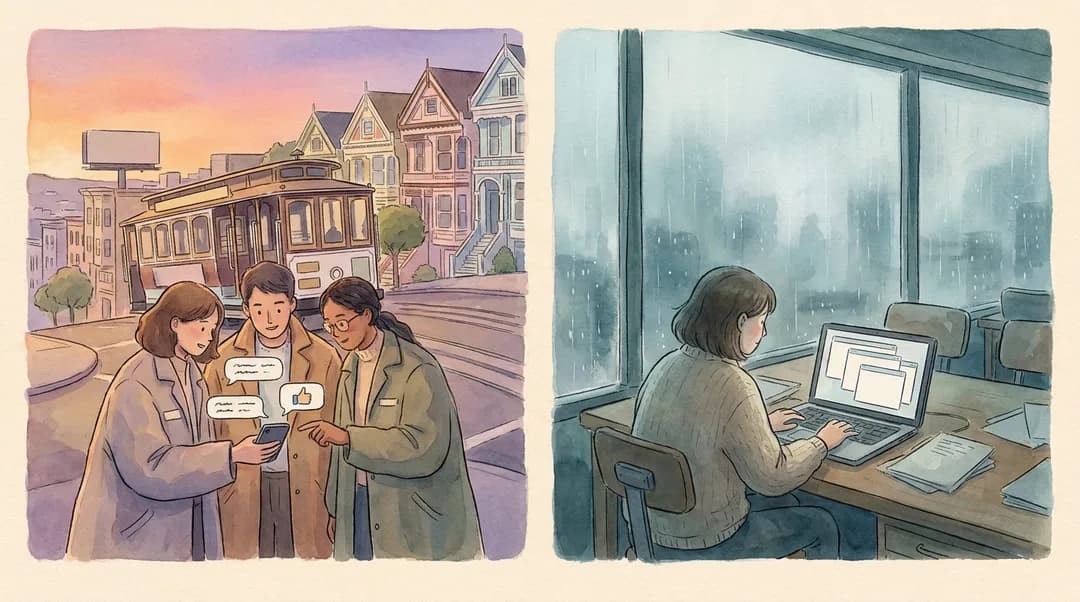
 Karpo vs Copilot for After-Work Drinks With Coworkers in San Francisco 2026
Head to Head
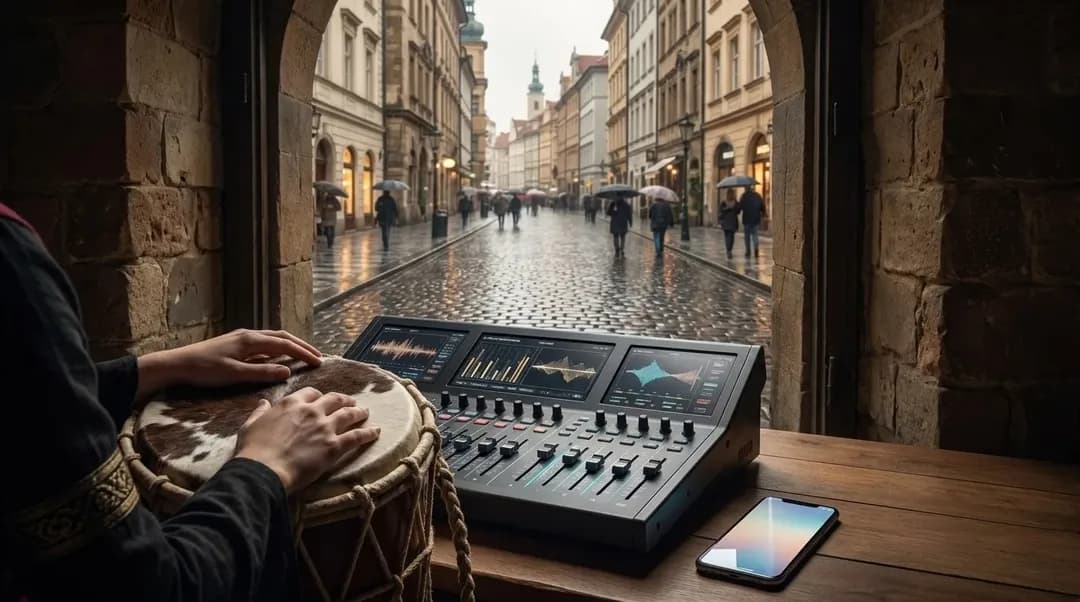
Karpo vs Mubert: Where a City Day Ends and the Soundtrack Begins
Mubert is built for royalty-free AI music generation, while Karpo is useful earlier in the creator’s day when city choices, timing and fallback routes are still undecided.
The first decision is not audio; it is whether the day can survive contact with the city
A creator’s field-research day has two very different pressure points. At 9 a.m., the problem is not music; it is where to go first, whether the light will hold, how to keep a small group moving, what to do if a café is closed, and which neighborhood gives the story a believable texture. At 9 p.m., the problem changes: the footage needs a track that fits the mood and duration without turning the edit into a licensing hunt. Mubert belongs strongly to that second moment. Its official product language centers on generating royalty-free AI soundtracks for video content, podcasts, apps and products. Karpo belongs to the first moment: making city decisions before the footage exists. The boundary matters because confusing those jobs makes both tools look worse than they are.
Ask Karpo before your next shoot day if you need the route, timing, local options and backup plan settled before you start thinking about the final soundtrack.
Picture a food-and-design creator landing in Barcelona for a one-day neighborhood episode. The plan sounds simple: film a morning market, record a short voice note outside a ceramic studio, grab ambient street clips, meet a collaborator for lunch, and end with a golden-hour walking sequence. The real decision layer is messy. Which market fits the tone? How far apart are the stops? What if the lunch place is too loud? Is the golden-hour location close enough if the collaborator is late?
Karpo’s side of the comparison is that live city layer: local discovery, sequence, timing, group constraints and backups. It is not competing with a music generator for the final mix. It is helping the creator avoid returning home with beautiful fragments that do not form a usable story.
Mubert’s specialist ground is the soundtrack after the field notes become an edit
Mubert describes itself as a human-and-AI music generator for video content, podcasts and apps. Its Render product is aimed at content creators who need an AI soundtrack matching mood and duration. The official site also presents Mubert API for developers and brands, Mubert Studio for artists contributing samples and loops, and Mubert Play for listeners seeking AI tunes for moments such as working, training or relaxing.
That is a coherent specialist job. When the Barcelona edit needs a calm but energetic bed under a market montage, or a tighter electronic pulse for a cycling transition, Mubert is in its lane. Its official pages emphasize royalty-free generation, selectable parameters such as mood and style, and tracks made quickly for platforms including YouTube, TikTok, podcasts and video.
The boundary appears when the creator asks, ‘What should I do next?’
Mubert can help when the creator knows the asset needed: a soundtrack of a certain length, mood and style. It is not presented as a city assistant that judges whether the next stop should be the museum district, the waterfront, a quieter side street or a backup indoor location. If the shoot is losing time, the useful question is not musical. It is logistical and editorial.
Karpo’s value is strongest at those branching points. If the weather turns, the group is hungry, a reservation slips, or the story needs a more local-feeling detour, Karpo is the better decision surface. It treats the city day as a chain of choices rather than a finished media file awaiting music.
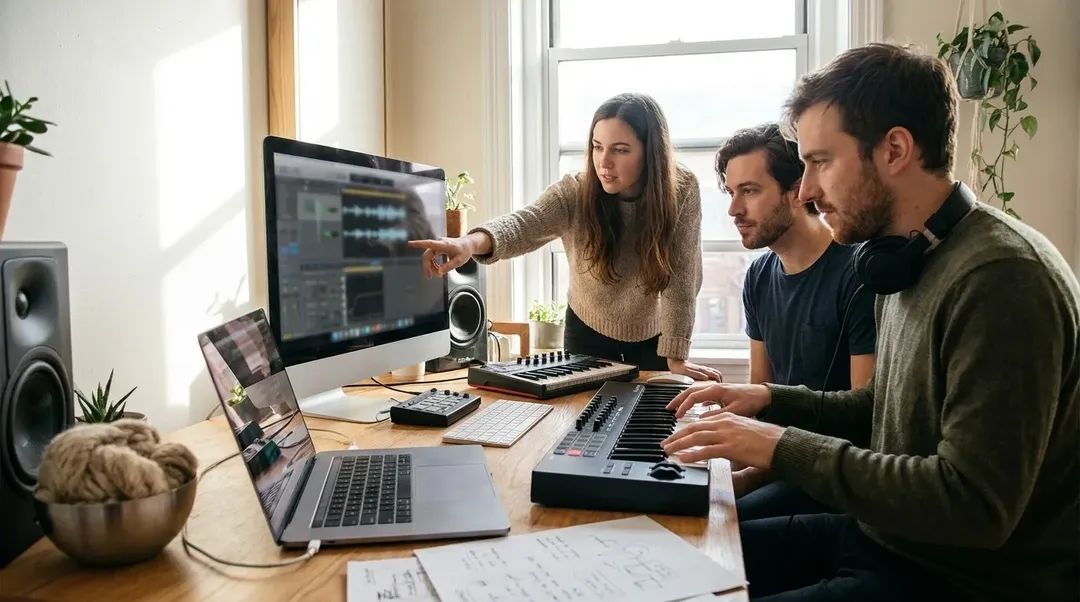
A creator field-research day exposes the difference better than a feature checklist
At 10:15 a.m., the creator discovers that the planned ceramic studio does not open until noon. A checklist comparison would not help much. The practical choice is whether to reorder the route, swap in a nearby independent shop, capture exterior footage now, or preserve the stop for later. Karpo is where that decision belongs because the inputs are place, time, intent, distance and people.
At 8:40 p.m., the same creator has a clean three-minute sequence and needs music that feels handmade but modern. That is where Mubert becomes relevant. The official Mubert pages say creators can generate soundtracks fitted to mood and duration, and that each download includes a license certificate for the selected plan. Any current plan limits or commercial terms should still be verified on Mubert’s pricing page before publication.
For teams, the split is even sharper
A solo creator can improvise. A three-person shoot cannot. If one person is filming, one is presenting, and one is managing bags, every wrong turn costs energy. Karpo’s role is to keep the plan realistic: not just famous places, but workable order, meal timing, quieter alternatives, and a graceful recovery when the group is tired or the city is busier than expected.
Mubert’s team relevance sits elsewhere. A brand, app builder or developer evaluating generative music may look at Mubert API, which the official site describes as a way to bring original AI music into a product and request a demo. An artist may look at Mubert Studio, where musicians can contribute riffs, loops and sample packs. Those are music ecosystem decisions, not route-planning decisions.

Licensing is a reason to respect Mubert, not a reason to make it plan the shoot
Mubert’s official pages repeatedly speak to royalty-free music, commercial use and licensing, while also noting restrictions: pricing-page language says tracks are not licensed for Content ID, standalone release on streaming platforms, or stock music sites. That is exactly the kind of detail creators should read carefully before shipping a monetized video or client asset.
Karpo does not replace that licensing review. Its advantage is upstream: it helps the creator gather better raw material in the city. Better stops, better timing and better contingencies can reduce the temptation to fix a weak day with dramatic music. The music can elevate the edit, but it cannot create missing scenes, lost interviews or a route that should have been planned differently.
The practical decision boundary
Choose Mubert when the question is about generating royalty-free AI music for a video, podcast, app, listening session or product experience, and verify the official page for current plan terms. It owns the soundtrack problem with dedicated products for creators, developers, artists and listeners.
Choose Karpo when the question happens before and during the city day: where to go, when to move, what fits the group, what feels local, and what backup keeps the story alive. In a creator workflow, Karpo helps protect the day from avoidable friction; Mubert helps the finished piece sound intentional once the footage is already real.
FAQ
Are Karpo and Mubert direct substitutes?
No. Mubert is an AI music generator focused on royalty-free soundtracks and related music products. Karpo is positioned around city decisions, local discovery, timing, group constraints and backup planning.
When should a creator open Karpo instead of Mubert?
Open Karpo before or during the field day, when the decision is where to go, how to sequence stops, how to adapt to delays, or how to keep a group plan workable.
When is Mubert the stronger choice?
Mubert is stronger when the creator needs AI-generated music for a finished or nearly finished asset, especially a soundtrack matched to mood and duration for video, podcasts or apps.
What should users verify on Mubert’s official site?
Verify current pricing, license terms, plan limits, allowed commercial uses and restrictions. Mubert’s pricing page notes that downloads include a license certificate and that some uses are excluded.
Can Mubert plan a city shoot?
Mubert’s official positioning does not describe city planning, local routing or field logistics. Its named products focus on music generation, API access, artist contributions and AI listening streams.
What privacy or safety boundary matters here?
Creators should avoid sharing unnecessary personal, location or client-sensitive details with any tool. For city planning, consider physical safety, group comfort and backup options; for music, review licensing and account terms.
Could a creator rely only on music to improve a weak field day?
Music can improve pacing and emotion, but it cannot replace missing shots, poor location choices or a broken route. Karpo addresses those risks before the edit reaches the soundtrack stage.
Mubert is a trademark of its respective owner. This independent editorial comparison is not affiliated with, endorsed by, or sponsored by Mubert.
Tags: #Karpo #Mubert #AIMusicGenerator #RoyaltyFreeMusic #CreatorWorkflow #CityDiscovery #FieldResearch #VideoProduction #ContentCreators #LocalPlanning #TravelCreators
Sources consulted: Mubert official page 1 · Mubert official page 2 · Mubert official page 3 · Karpo official website · Karpo scenarios
All trademarks are the property of their respective owners.
Ask Karpo first
Ask Karpo when your creator day still has open decisions: the first stop, the backup café, the quiet interview corner, the realistic walking route and the timing tradeoffs. Once the story is captured, evaluate Mubert for the soundtrack and verify its current license terms.
Ask Karpo for more information.
Keep reading
- Karpo vs Copilot for After-Work Drinks With Coworkers in San Francisco 2026
 Karpo vs Yelp Assistant: Best Weekend Brunch Planner in Los Angeles 2026
 Karpo vs Alexa+: Which AI Helps Host Thanksgiving in Miami in 2026?