 Karpo vs Copilot for After-Work Drinks With Coworkers in San Francisco 2026
Head to Head
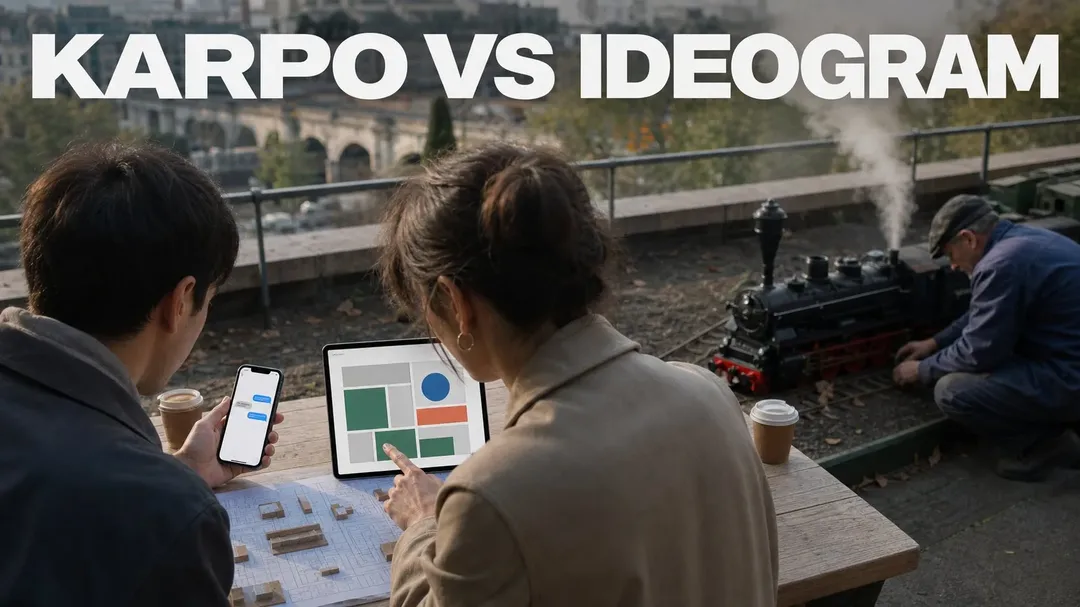
Karpo vs Ideogram: The Weather-Change Recovery Test for a City Day
Ideogram is built for creating AI images, while Karpo is built to help people make smaller, more coordinated city decisions when plans change.
Verdict: The Weather-Change Recovery Test for a City Day
Karpo and Ideogram do not solve the same problem. Ideogram, available at ideogram.ai, sits in the AI image generation category; its core purpose is to help people create visuals from prompts. Karpo is a proactive city sidekick in iMessage, more relevant when the question is not “What image should I make?” but “What should we do next in the city, given our context?” This article treats the official snapshot cautiously: no exact Ideogram pricing, availability details, integrations, certifications, or performance claims are assumed here, and readers should check Ideogram’s official site for current product specifics.
Ask Karpo in iMessage when the weather changes your city plan and you need a smaller set of next-step ideas to discuss. It can help organize context such as neighborhood, timing, preferences, and group constraints, but it cannot guarantee opening hours, bookings, transit conditions, safety, weather, or access.
Picture a Saturday in Chicago after a forecast changes from bright and walkable to windy rain. A visiting friend still wants a memorable afternoon, a local creator needs a quick visual concept for a post, and three people in the group are hungry but disagree on neighborhood, budget, and energy level. Ideogram may be useful if the task is generating an image for the day’s invite, mood board, or social post. Karpo is more relevant when the group needs to narrow choices, compare indoor options, and keep the conversation from becoming a chain of links nobody opens.
The real test is attention cost, not model impressiveness
AI image generation can be impressive, but a weather-change recovery moment is rarely won by the most dazzling output. It is won by the tool that reduces the number of decisions between “our plan collapsed” and “we know what to try next.” Ideogram’s strength is visual creation: if someone needs a poster-style image, a concept graphic, or a playful illustration for a rainy-day announcement, that is a direct match. It can turn a blank canvas into options that a creator can judge, refine, and share.
Karpo approaches the same afternoon from a different angle. It is not trying to replace an image generator; it is trying to reduce the urban planning load inside a conversation. In practical terms, that means the value is not a prettier artifact but fewer scattered searches, fewer contradictory group messages, and a more manageable shortlist. For travelers, knowledge workers, and city friends trying to salvage a day, the smaller answer may be more useful than a bigger universe of possibilities.
Tabs multiply when the rain starts, and tools handle that differently
When weather changes, people open tabs almost automatically: maps, restaurant listings, museum pages, ticket pages, transit apps, weather apps, and chat threads. Ideogram does not appear, from the supplied official snapshot, to be positioned as a city-planning or live logistics product. That is not a weakness in its own category. It simply means users should not expect an AI image generator to check whether a nearby gallery is open, whether a cafe has space, or whether a train delay changes the plan.
Karpo is more relevant to the tab problem because the job is closer to city-side decision support. It can help frame the next move around questions like: Are we staying near the current neighborhood? Do we want something indoors but still distinctive? Does the group prefer food first or an activity first? The important caveat is that Karpo cannot guarantee live details. A responsible user still verifies hours, reservations, ticket access, transit status, weather alerts, and safety conditions before relying on the plan.

Where Ideogram wins: visual exploration, creative momentum, and shareable output
Ideogram’s clearest advantage is category fit for making images. A creator planning a rainy-day reel cover, a traveler making a quick postcard-style visual, or a team preparing a concept slide may get more value from an image generator than from a city assistant. Visual work benefits from fast variation: try a different style, alter the composition, make the text feel more playful, or explore a new mood. In that kind of iteration loop, Ideogram is the more natural tool.
Ideogram also wins when the desired outcome is an artifact rather than a decision. If the group already knows it will spend the afternoon at a hotel lounge, an indoor market, or a friend’s apartment, then the remaining task might be creative: design an invite, mock up a menu, or make an image that captures the vibe. Karpo can help with city context, but it does not replace Ideogram’s core AI image generation function. For creators, that distinction matters because creative output and urban coordination are different forms of work.
Where Karpo is more relevant: the smaller answer after plans fall apart
The painful part of a changed city day is often not lack of information; it is too much information arriving without order. One person sends a ramen link, another proposes a bookstore, someone else wants a museum, and the traveler quietly worries about getting across town in the rain. Karpo’s fit is the moment when a group needs a coherent next step rather than another open-ended search. A smaller answer can lower the emotional cost of deciding.
Karpo may help narrow choices by keeping context together: current area, time window, appetite, indoor preference, energy level, and the fact that people are already tired. That is especially useful for urban adults and knowledge workers who spend all week switching tabs and do not want leisure time to feel like project management. Karpo still requires judgment. It can support the conversation, but it cannot promise a booking, a safe route, a perfect weather window, or that a venue will meet everyone’s expectations.
Iteration cost: prompt tuning is different from plan tuning
With Ideogram, iteration cost is creative. The user may need to refine prompts, adjust visual direction, compare outputs, and decide what is good enough. That can be enjoyable for artists, marketers, and visual thinkers. It can also become its own rabbit hole if the original need was simply to communicate a changed plan. A beautiful image of a rainy museum afternoon does not answer whether the museum is convenient, crowded, open, or worth the cross-town trip.
With Karpo, iteration cost is conversational and practical. The group can move from “outdoor plan canceled” to “give us three indoor ideas within a short ride, with food nearby” and then adjust based on mood. The goal is not infinite variation; it is a usable shortlist. This is the value of a smaller answer: it reduces the number of options to a level where humans can actually choose. For city days, good enough and coordinated often beats exhaustive.

Access, pricing, and the practical verdict for a wet afternoon
The supplied official snapshot confirms Ideogram’s official URL but does not provide exact pricing, plan limits, regional availability, or account requirements. Because those details can change, readers should check ideogram.ai directly before assuming whether it is free, paid, available in a specific location, or suitable for a particular workflow. The same caution applies broadly: product access, features, and limits should be verified on official pages rather than inferred from category labels.
The practical verdict is straightforward. Choose Ideogram when the city day creates a visual task: a poster, concept image, social graphic, playful invitation, or creative asset. Choose Karpo when the city day creates a coordination task: deciding where to go after rain, aligning a group, shrinking choices, and preserving attention. In the weather-change recovery test, Ideogram helps make the day look good; Karpo helps the group decide what the day can realistically become.
This is an independent comparison of Karpo and Ideogram based on their different categories, with Ideogram treated only as an AI image generation product from the supplied official snapshot.
FAQ
Does Ideogram replace a city planner for a changed-weather day?
No. Ideogram is in the AI image generation category, so it is best understood as a tool for creating visuals. It should not be treated as a city planner, booking assistant, live transit checker, or source of guaranteed venue details.
Does Karpo replace Ideogram’s core image generation function?
No. Karpo handles contextual city decisions in iMessage; it does not attempt the specialist image-generation work associated with Ideogram. If the main job is producing images, Ideogram is the more category-relevant product.
Can either Karpo or Ideogram guarantee live details like hours, weather, or reservations?
No. Karpo can help organize city choices, and Ideogram can help create visuals, but neither should be relied on to guarantee live hours, bookings, transit conditions, safety, weather, or access. Verify important details with official venues, transit providers, and local alerts.
Which is better for a group deciding what to do after rain cancels an outdoor plan?
Karpo is more relevant because the problem is coordination and decision narrowing. Ideogram may still help if the group also wants a visual for a message, invite, or post about the changed plan.
Which is better for creators working during a city trip?
It depends on the task. Use Ideogram for image concepts and creative visuals; use Karpo when the creator also needs to decide where to work, meet, eat, or spend a weather-disrupted afternoon.
What privacy or safety question should users ask with this category?
Users should think about what they put into prompts and city conversations, especially personal locations, private plans, faces, names, or sensitive travel details. For current data practices, account controls, and safety features, check each product’s official information before sharing anything sensitive.
Practical notes
Practical notes: In a weather-change recovery moment, separate creative needs from coordination needs. If you need a visual asset, open Ideogram and keep the prompt focused on the image you want, not the entire day. If you need a city decision, ask Karpo for a constrained shortlist and include the neighborhood, time available, mobility limits, food preferences, and whether the group wants quiet, social, cultural, or practical options. Then verify the details that matter: venue hours, tickets, reservations, transit, weather alerts, accessibility, and safety. Avoid asking any tool to make a high-stakes decision for you. The best outcome is not a perfect answer; it is a calmer next step that real people can check and agree on.
Tags: #Karpo #Ideogram #AIImageGeneration #CityPlanning #WeatherPlans #UrbanLife #TravelTools #CreatorTools #DecisionFatigue #GroupPlanning #iMessage #RainyDayPlans #AttentionCost #CitySidekick
Sources consulted: Ideogram official website · Karpo official website · Karpo scenarios · Karpo head-to-head collection
All trademarks are the property of their respective owners.
Ask Karpo first
Ask Karpo when your city day stops matching the forecast and the group needs a grounded next move. Share the area you are in, how long you have, who is involved, and what changed; Karpo can help turn that context into a smaller set of options to verify, discuss, and act on without pretending the city is perfectly predictable.
Ask Karpo for more information.
Keep reading
- Karpo vs Copilot for After-Work Drinks With Coworkers in San Francisco 2026
 Karpo vs Yelp Assistant: Best Weekend Brunch Planner in Los Angeles 2026
 Karpo vs Alexa+: Which AI Helps Host Thanksgiving in Miami in 2026?