 Karpo vs Copilot for After-Work Drinks With Coworkers in San Francisco 2026
Head to Head
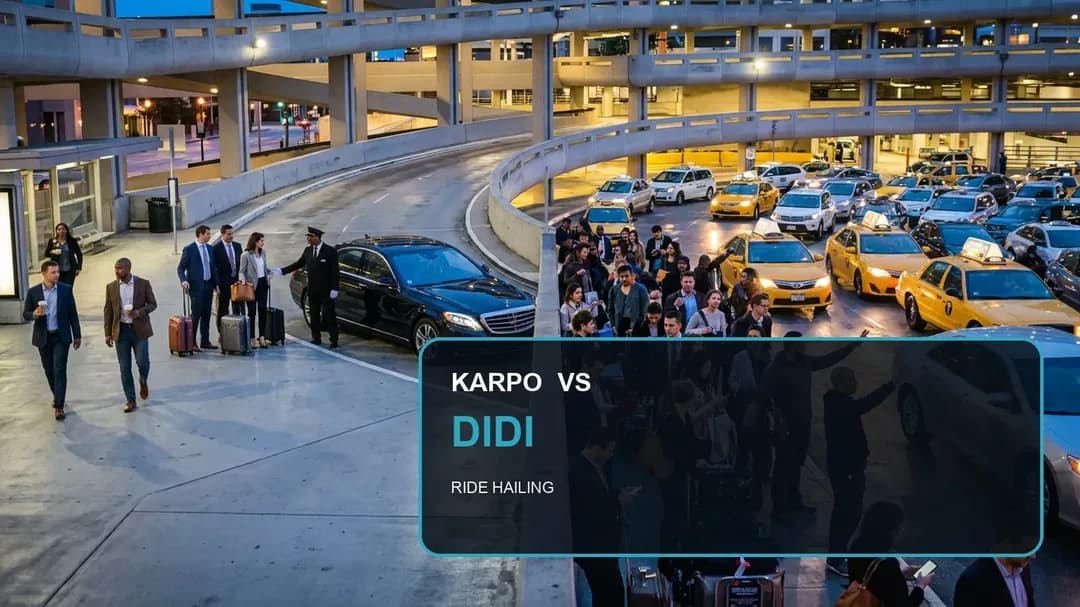
Karpo vs DiDi for a First-Night Arrival: Which Better Fits a Tired Traveler?
A day-in-the-life comparison for landing late, choosing the right neighborhood, and avoiding friction on night one.
Quick verdict for the night you land
If the question is simply “can I get a ride?” DiDi belongs in the conversation as a ride-hailing option, but its value is easiest to judge in a tired-traveler scenario: you have one suitcase, low energy, and a neighborhood choice that affects the next 12 hours. Karpo is the better planning lens when you want to decide where to go first, while DiDi is the more direct answer when the immediate job is getting from curb to hotel, apartment, or late check-in. Because DiDi’s current features, city coverage, and terms can vary by market, travelers should verify the live app experience before relying on it.
If you are comparing DiDi for a late arrival, start by checking whether the app is currently active in your destination city, then look at pickup simplicity, language support, and whether the route to your first-night neighborhood is straightforward. That quick check will tell you more than a generic ride-hailing ranking.
What changes when the traveler is exhausted
A daytime ride search is not the same as a first-night arrival plan. At 11:40 p.m., a traveler is usually managing a dead phone battery, a jet-lagged brain, and a vague memory of which district is quiet versus lively. In that moment, the best service is not the one with the most features on paper; it is the one that reduces decision load. DiDi’s role is strongest when the passenger already knows the destination and just needs reliable point-to-point movement. Karpo’s role is stronger when the traveler is still deciding whether to sleep near the station, near a business district, or closer to a neighborhood that fits the next morning’s agenda.
Karpo advantages that matter before the first ride
Karpo’s edge in this comparison is not about replacing transport; it is about framing the arrival so the ride lands in the right place at the right time. For tired travelers, that can matter more than a small difference in app polish.
- Neighborhood fit first: better when the real question is which area will make the first night easier, quieter, or more walkable in the morning.
- Fatigue-aware planning: helpful when the traveler is too tired to compare every district manually after a long flight or train ride.
- Trip sequencing: useful for mapping the arrival ride against check-in time, restaurant access, and the next morning’s first appointment.
- Group alignment: handy when one person wants a central hotel and another wants a calmer street with less late-night noise.
- Decision clarity: reduces the risk of choosing a “cheap” area that becomes expensive in stress, transfer time, or late arrival friction.
DiDi advantages that are real and worth acknowledging

DiDi’s strengths are straightforward in a way many travelers appreciate. It is a ride-hailing brand with a clear single-purpose moment: request a car and get moving. For many arrivals, that directness is exactly what is needed.
- Direct point-to-point utility: strong fit when the only task is getting from airport, station, or port to a booked stay.
- Brand familiarity: travelers who already know the DiDi name may feel less friction during a stressful arrival.
- App-first convenience: useful when the traveler wants a familiar ride-hailing workflow rather than a broader planning process.
- Potential local relevance: DiDi is especially meaningful in markets where it is actively used; verify current availability in the destination city.
- Fast decision path: better than overthinking when the neighborhood decision is already settled before landing.
DiDi’s official site confirms the brand and its ride-hailing identity, but the excerpt available here does not specify cities, service classes, or live pricing. That means the safest editorial advice is simple: assume the app may be useful, but verify today’s terms, access, and pickup options in your destination before you count on it.
Concrete comparison: tired traveler, not abstract feature table
A better comparison is to picture four real arrival moments. A solo consultant lands in Singapore after midnight and just wants the shortest path to a quiet hotel near tomorrow’s meetings. A family arrives in London with a sleepy child and a stroller, and the issue is less price than whether the first neighborhood has easy food and low hassle. A backpacker reaches NYC after a red-eye and needs a safe, simple ride to a hostel without guessing at the city layout. A couple in London has one free evening and wants a district that feels lively enough for a walk but not so busy that sleep becomes impossible.
In those cases, DiDi wins when the destination is already settled and speed matters more than strategic context. Karpo wins when the destination itself is the decision, especially if a traveler is choosing between a transport-adjacent hotel, a quieter residential block, or a neighborhood with better first-morning access to food and transit. The real distinction is not ride versus no ride; it is whether the traveler needs movement or guidance.
Price and access: what to verify before you rely on either
Do not anchor on a guessed fare. Ride-hailing pricing can shift with city, time, demand, airport rules, and local regulations, and DiDi’s live terms can vary by market. The important checks are whether the app is available in the destination, whether pickup points are clearly supported, whether the traveler can complete the booking without friction, and whether the route to the first-night neighborhood is reasonable at that hour.
For late arrivals, access is often more important than nominal price. A slightly cheaper ride that drops you in the wrong district can cost more in sleep, walking distance, and next-day logistics. If you are arriving after a long-haul flight, confirm the pickup process before landing and verify neighborhood choice before you request the car.

When each one fits a real first-night scenario
Choose Karpo first if you are landing in a city you barely know, arriving after midnight, or trying to decide between a central hotel and a quieter neighborhood that will make morning easier. Choose DiDi if you already know where you are staying, you want a quick ride, and you would rather not spend mental energy on broader trip planning while standing at arrivals.
A few traveler-specific examples make the split clearer. If you are a conference speaker arriving in Singapore at 10:50 p.m., Karpo helps you choose whether to sleep near the venue or near a quieter district with faster morning access. If you are a parent landing in NYC with two tired children, DiDi is the practical move once the hotel is fixed. If you are a solo weekend traveler in London, Karpo helps you decide whether the first night should be in a calm residential area or a more social neighborhood. If you are arriving in a city for a medical appointment, DiDi is the straightforward ride while Karpo helps you reduce morning transfer stress.
FAQ: what travelers usually ask before a late arrival
- Is DiDi only for one kind of rider? No. It is a ride-hailing brand, but the exact experience can vary by market.
- Can DiDi be used in every city? Do not assume so. Verify current destination coverage before travel.
- Is DiDi better than planning tools for hotel choice? Not if the main issue is neighborhood fit. Planning comes first when the first night matters.
- What if I just need a ride from the airport? DiDi can be a strong fit when the destination is already fixed.
- Should I check prices before landing? Yes. Never rely on invented or outdated fare expectations.
- Does Karpo replace ride-hailing? No. It helps with arrival decisions; it does not replace transport booking or navigation systems.
- What if I am too tired to research neighborhoods? That is exactly when a clearer planning layer helps most.
- Do these tools solve the same problem? Not really. One helps with the ride, the other helps with where the ride should take you first.
DiDi is best understood as a practical ride-hailing option for travelers who already know their destination. It becomes most useful when the hard part is not getting a car, but getting to the right neighborhood after a tiring arrival.
Tags: #DiDi #RideHailing #TravelPlanning #AirportArrival #FirstNightStay #JetLag #NeighborhoodChoice #UrbanTravel #LateArrival #TravelerWorkflow #CityTrip #Karpo
Sources consulted: DiDi official website · DiDi on Apple App Store search · DiDi on Google Play search · Google Trends Trending Now
All trademarks are the property of their respective owners.
Ask Karpo first
Before you request any ride, ask Karpo whether your first-night neighborhood should prioritize quiet, proximity, transit access, or morning convenience. If the answer is clear, DiDi can then handle the move from curb to stay with less second-guessing.
Ask Karpo for more information.
Keep reading
- Karpo vs Copilot for After-Work Drinks With Coworkers in San Francisco 2026
 Karpo vs Yelp Assistant: Best Weekend Brunch Planner in Los Angeles 2026
 Karpo vs Alexa+: Which AI Helps Host Thanksgiving in Miami in 2026?