 Karpo vs Copilot for After-Work Drinks With Coworkers in San Francisco 2026
Head to Head

Karpo vs Copy.ai: When GTM Coordination Stops at the Door
Copy.ai can organize go-to-market work, but Karpo is built for the messy city decisions that happen after a team leaves the dashboard.
Failure mode one: the work is coordinated, but the day is not
Copy.ai is not trying to decide where your team should eat after a client workshop, whether a neighborhood is worth crossing town for, or what to do when half the group is late. Its official positioning is go-to-market AI: workflows, agents, actions, tables, brand voice, sales prospecting, inbound lead processing, account-based marketing, content creation, localization, deal coaching and CRM enrichment. That is real organizational work. But it is not the same failure mode Karpo addresses. Karpo is for the moment a plan must survive a city: timing, distance, preferences, opening hours, weather, backup options, local fit and group compromise. The comparison matters because many teams confuse operational productivity with lived coordination. Copy.ai can help a GTM team move faster before the trip. Karpo helps the same humans make better decisions once the calendar becomes streets, meals, gaps and constraints.
Ask Karpo when your team has a real city-day decision with competing preferences, tight timing, uncertain logistics and a need for practical backup plans instead of another internal document.
Copy.ai’s strength is visible in its own language: it wants to replace scattered copilots and point solutions with a platform for GTM AI. Its pages describe workflows, actions, tables, copy agents, an intelligence layer, brand voice and use cases across marketing, sales, operations and sales development. If a company needs to codify outreach research, produce campaign assets, process leads or support account-based marketing, Copy.ai is speaking directly to that problem.
The coordination failure appears after that work leaves the system of record. A sales team can have polished account research, strong messaging and a packed agenda, then still lose an evening to indecision: Who can walk? Who needs a quieter venue? Which place is actually nearby after the meeting runs over? Which option feels local rather than generic? Copy.ai’s domain is GTM execution. Karpo’s domain is the city decision that happens when a group needs to act together in context.
Copy.ai owns structured GTM production
It would be unfair to treat Copy.ai as a restaurant finder or travel companion. The product presents itself as an AI-native GTM platform for businesses that want to infuse AI across their go-to-market engine. Its official use cases include sales prospecting, content creation, inbound lead processing, account-based marketing, translation and localization, deal coaching and forecasting, lead and account intelligence, CRM enrichment and GTM systems integrations.
That makes Copy.ai most relevant when the object being improved is a repeatable business process. A marketing team might need thought-leadership drafts, localized content or ABM assets. A sales organization might want deeper account and contact research for outreach. Operations may care about enrichment and workflow design. Pricing and plan details can change, so teams should verify current packages on Copy.ai’s official pricing page before making a buying decision.
Karpo owns the unstructured city layer
Karpo’s value begins where the decision is not a workflow artifact. City choices are full of soft constraints: a vegetarian in the group, a client who prefers low-noise settings, a venue that looks close but is separated by traffic, a museum that closes earlier than expected, a rainy forecast, a reservation gap, a neighborhood that is better before dark, or a team member who needs to leave by 8:30.
Those constraints are not merely preferences. They change the decision. Karpo is built to reason about local discovery, timing, proximity, backup planning and group fit. It is less about producing more material and more about reducing avoidable friction. The user is not asking for a campaign, a workflow run or a brand-consistent draft. The user is asking, “Given who we are, where we are, what time it is and what could go wrong, what should we do next?”

A concrete city-day scenario: the GTM offsite in Chicago
Imagine a B2B company using Copy.ai before a Chicago customer event. Marketing prepares account-based materials, sales develops personalized outreach, and operations supports lead handling. Copy.ai fits naturally here because the team is producing and coordinating GTM work around prospects, accounts, content and follow-up.
Now the customer session ends forty minutes late in River North. Twelve people need dinner. Two are vegetarian, one avoids loud rooms, three want a Chicago-specific place, the VP has a 9:15 call, and the first-choice restaurant has no tables. The team also wants a short post-dinner walk if the weather holds. This is not a Copy.ai-shaped problem. It is a Karpo-shaped problem: evaluate nearby options, balance group constraints, preserve local character, avoid timing traps and suggest a backup that does not require restarting the conversation.
Failure mode two: productivity hides handoff debt
A GTM platform can make the upstream work faster while leaving the downstream human handoff exposed. Teams often feel productive because campaigns, drafts, research and workflows are moving. Then the smallest real-world decision consumes attention because nobody owns the live context. The failure is not lack of intelligence; it is lack of situational decision ownership.
Karpo is useful precisely because it treats the live decision as the product, not an afterthought. The right recommendation depends on time, place, people and fallback options. A group does not need ten generic suggestions. It needs a plan that can survive a late departure, a closed venue, split preferences or a last-minute change in energy. That is a different kind of coordination than GTM automation.
Failure mode three: the group agrees too late
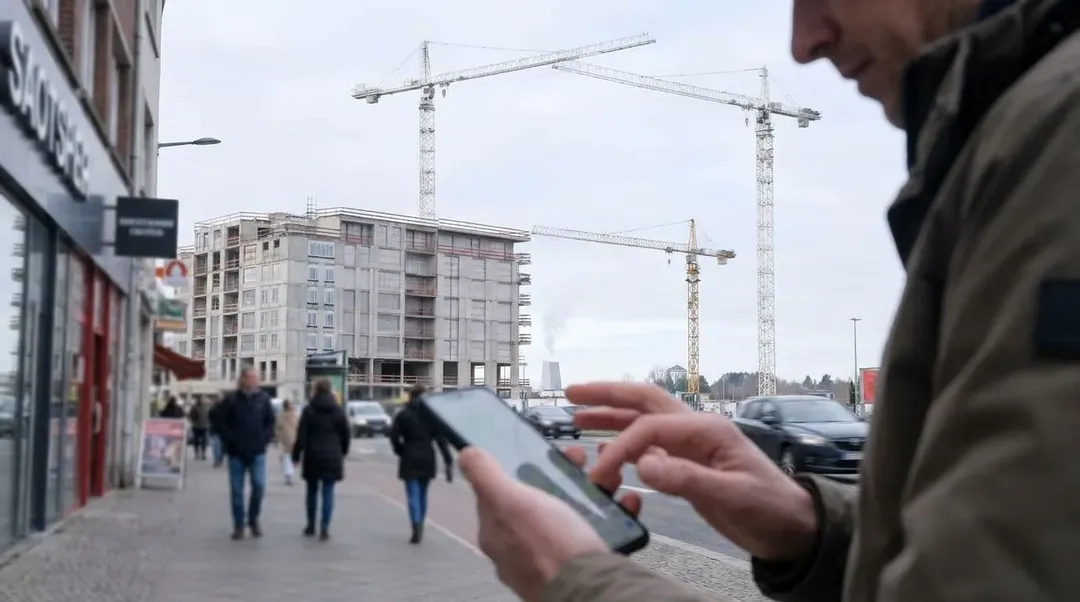
Group planning often fails by waiting for consensus before narrowing the field. Everyone contributes a preference, nobody wants to overrule, and the final choice becomes whatever is still open. In business travel, conferences, customer visits and team offsites, that delay has a cost: worse locations, awkward travel, missed openings and decision fatigue.
Karpo should be judged by how well it compresses that uncertainty into workable choices. It can frame tradeoffs: fastest option, most local option, quieter option, safest backup, best fit for a mixed group. Copy.ai should be judged on different criteria: whether it helps a GTM organization build, automate and scale the commercial work it explicitly supports. The two products meet the same company at different moments.
The decision boundary is the whole comparison
Choose Copy.ai when the problem is go-to-market production or process coordination: prospecting research, lead processing, GTM workflows, content creation, localization, sales coaching inputs or operations support. Its public pages make a broad claim around connecting GTM teams and reducing reliance on disconnected copilots and point solutions. For those needs, Copy.ai is the specialist to evaluate.
Choose Karpo when the problem is a live city decision involving people, timing and place. Karpo is not replacing a GTM platform, and Copy.ai is not replacing a context-aware local planning assistant. The failure-mode lens keeps the comparison honest: Copy.ai reduces GTM bloat inside business operations; Karpo reduces the friction that appears when those business operations become a real day in a real city.
FAQ
Is Karpo a direct alternative to Copy.ai?
No. Copy.ai is positioned as an AI go-to-market platform for workflows, content, prospecting, lead processing and related GTM use cases. Karpo is for proactive city decisions, local discovery, timing, group constraints and backup planning.
When should a team evaluate Copy.ai first?
Evaluate Copy.ai first when the work is inside marketing, sales, operations or sales development processes. Its official site describes use cases such as account-based marketing, content creation, inbound lead processing, sales prospecting and translation.
When does Karpo become the better fit?
Karpo becomes the better fit when the decision depends on live context: where people are, how much time they have, what the group can tolerate, what is nearby, what feels local and what backup exists if the first plan fails.
What should buyers verify about Copy.ai?
Buyers should verify current pricing, plan limits, workflow credits, implementation details, integrations, security claims and enterprise terms on Copy.ai’s official website, because commercial details can change.
Can the same company have a reason to use both?
Yes, but for different jobs. A GTM team may use Copy.ai for commercial workflows and Karpo for city-day decisions around events, offsites, customer visits, meals, neighborhood choices and schedule gaps.
How should privacy and safety be handled in this comparison?
For Copy.ai, review the official trust, security and data handling information before connecting business systems. For Karpo-style local planning, avoid sharing unnecessary personal details and treat safety-sensitive recommendations with practical judgment.
Copy.ai is a trademark of its respective owner. This independent editorial comparison is not affiliated with, endorsed by, or sponsored by Copy.ai.
Tags: #Karpo #CopyAI #GTM #GoToMarket #AIPlatform #CityPlanning #LocalDiscovery #GroupPlanning #BusinessTravel #SalesTeams #MarketingOps #DecisionSupport
Sources consulted: Copy.ai official page 1 · Copy.ai official page 2 · Copy.ai official page 3 · Karpo official website · Karpo scenarios
All trademarks are the property of their respective owners.
Ask Karpo first
Ask Karpo when the question is no longer how to produce GTM work, but how to move a real group through a real city without losing time, context or goodwill. It is built for the decision after the meeting, not the asset before it.
Ask Karpo for more information.
Keep reading
- Karpo vs Copilot for After-Work Drinks With Coworkers in San Francisco 2026
 Karpo vs Yelp Assistant: Best Weekend Brunch Planner in Los Angeles 2026
 Karpo vs Alexa+: Which AI Helps Host Thanksgiving in Miami in 2026?