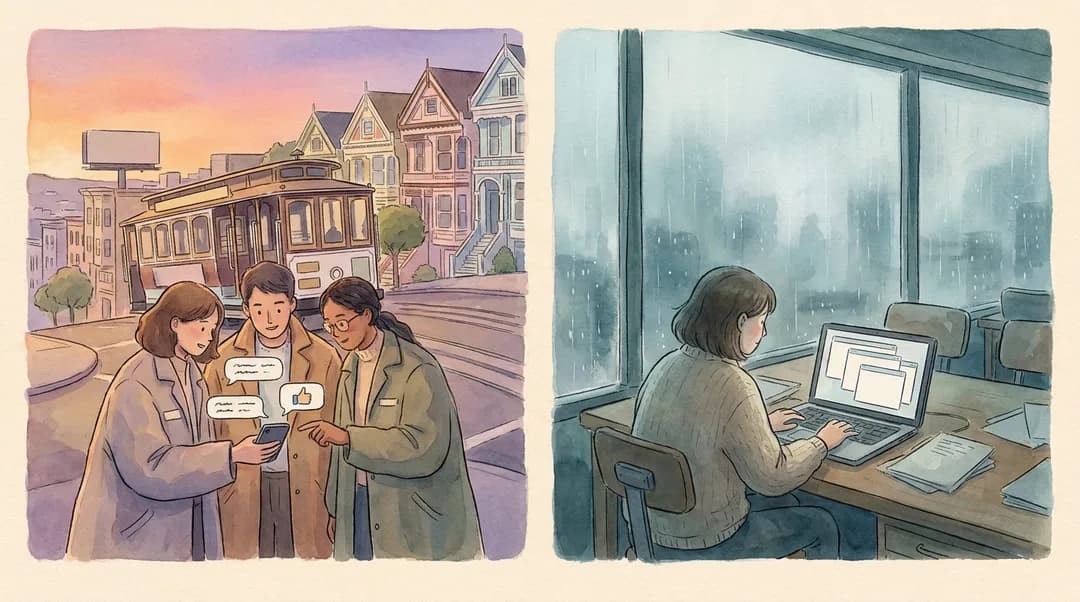
 Karpo vs Copilot for After-Work Drinks With Coworkers in San Francisco 2026
Head to Head
Karpo vs Canva Magic Studio: Designing the Day or Deciding the Day
Canva Magic Studio is built for creating visual assets, while Karpo is built to help people make practical city choices inside a short window of time.
Verdict: Designing the Day or Deciding the Day
Karpo and Canva Magic Studio are not trying to win the same job. Canva Magic Studio, from the official Canva page at canva.com/magic-studio, sits in the AI design suite category: it belongs in the part of your workflow where you create, edit, present, package, or communicate visually. Karpo is a proactive city sidekick in iMessage: it is more relevant when the work is choosing where to go, what fits the moment, and how a group can keep enough context together to make a city day easier. The honest boundary is simple: Canva Magic Studio should not be treated as a city planner, and Karpo should not be treated as a design suite. Both can be useful around the same outing, but they answer different questions.
Ask Karpo in iMessage when the decision is still messy: “We have three hours near the station, two people want coffee, one wants a view, and we cannot walk far.” Karpo can help shape a practical short list and keep the conversation moving, while you still confirm live details such as opening hours, access, transit conditions, reservations, and weather before relying on them.
Picture a small group landing in Chicago with six usable hours before a train, or a creator in Lisbon trying to turn a free afternoon into both a real experience and a few publishable moments. Someone wants a museum, someone wants food, someone is tired, and one person needs a visually polished recap by tonight. Canva Magic Studio may help with the recap, the invite graphic, the itinerary card, or the story layout. Karpo is more relevant earlier and throughout the day, when the group is narrowing neighborhoods, balancing preferences, keeping track of changing context, and avoiding a plan that looks good on paper but collapses once people are on the sidewalk.
Job A: Canva Magic Studio is for making the city look clear
Canva Magic Studio’s natural territory is expression. If you need a poster for a pop-up, a polished slide for a walking-tour pitch, a social post after a neighborhood shoot, or a quick visual explainer for a team offsite, an AI design suite is the more appropriate tool. The official snapshot confirms Canva’s Magic Studio page and category, but not specific included features, prices, availability, or plan details, so the safe conclusion is category-level: it is meant for design creation and visual communication, not for live local coordination.
That gives Canva Magic Studio several real strengths. First, it is aligned with visual output rather than chat-based deliberation. Second, it can support creators and knowledge workers who need design speed without starting from a blank canvas. Third, Canva as a design environment is familiar to many people who already think in presentations, brand kits, social graphics, or templates. Fourth, it is a better fit when the deliverable itself is the asset: a flyer, deck, thumbnail, itinerary graphic, or client-facing visual. In a short city window, this matters after a choice is made, when the task becomes communicating it attractively.
Job B: Karpo is for making the city choice workable
Karpo is more relevant when the deliverable is not a design file but a decision that survives contact with the street. A traveler may ask whether to spend two hours in a waterfront district or head to a market. A local parent may need a low-friction plan after work with a child and visiting relatives. A remote team may be choosing between a gallery, a casual dinner, and a walk before a meeting. These are city-choice problems, not design problems, and they are shaped by time, energy, location, preferences, and the small compromises that groups rarely capture in a polished visual.
Because Karpo lives in iMessage, the useful part is not only the answer but the shared context. People can state constraints in ordinary language: “near SoHo,” “not too loud,” “good if it rains,” “one person is vegetarian,” or “we need to be back by 6.” Karpo may help narrow options and coordinate context, but it cannot guarantee bookings, hours, transit, safety, weather, medical advice, financial outcomes, or access. That limitation is not a weakness to hide; it is the difference between decision support and control over the city. Karpo is valuable when it keeps the group from drifting, not when someone expects certainty.
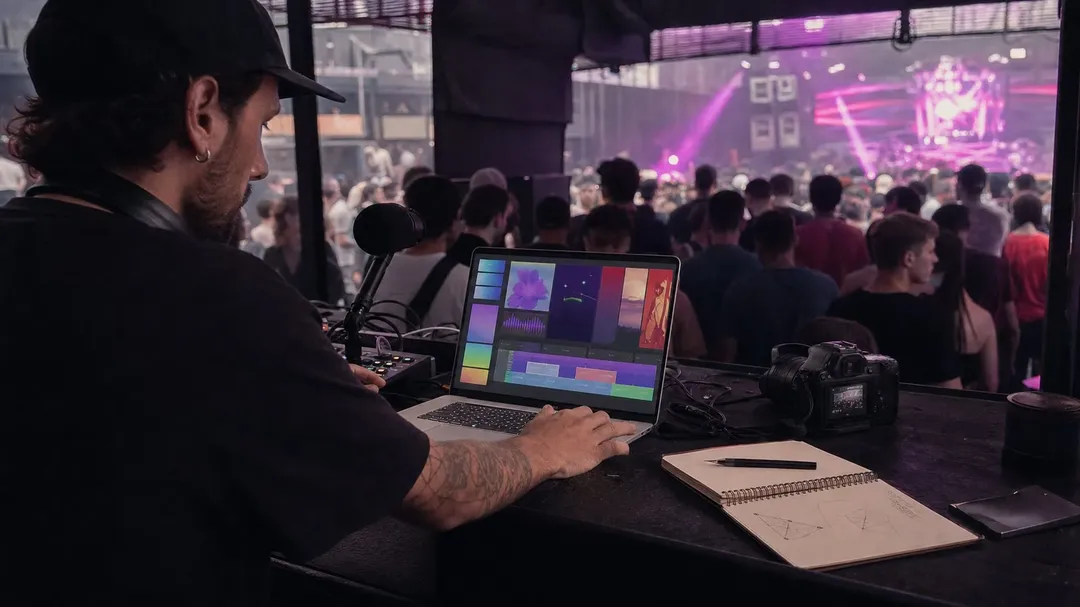
The short-window city test separates creation from coordination
The assigned test is a short city window because it exposes the difference quickly. With a full week, you can research, revise, design, and recover from errors. With 90 minutes before a conference session, four hours before a flight, or one evening in a new neighborhood, the cost of indecision becomes visible. A beautiful plan that takes too long to produce can be less useful than a plain but timely choice. Conversely, a practical choice may still need a clean visual if it is being shared with an audience, a client, or a group that responds better to images than chat.
For example, a creator in New York might use Karpo to decide between a bookstore cafe, a riverside walk, and a small gallery based on distance, mood, and group energy. Once the route or theme is chosen, Canva Magic Studio may become the better tool for turning the outing into a visual mini-guide, a branded story, or a slide in a creator media kit. That sequence is the point: Karpo helps answer “What should we do with this limited day?” Canva Magic Studio helps answer “How should we present, package, or share what we decided or made?” Confusing the two creates unrealistic expectations for both products.
Where Canva Magic Studio wins without stretching the claim
Canva Magic Studio wins when the user’s problem is design production. If a tourism marketer needs campaign concepts, a student group needs a clean event graphic, or a consultant needs to turn a city workshop into a concise visual recap, an AI design suite is the natural default. It is purpose-built around visual creation in a way Karpo is not. Karpo can help reason about city options and context, but it does not replace a design canvas, visual asset library, brand workflow, or export-focused creation environment.
Canva Magic Studio also has an advantage when the work needs to be reused outside the conversation. A restaurant crawl graphic can be sent to attendees, a map-inspired poster can support an event, and a short deck can brief colleagues who were not part of the planning chat. Those are communication artifacts. Karpo may help the group decide the crawl should be in the Arts District rather than across town, but Canva Magic Studio is the more suitable place to make the artifact persuasive, consistent, and presentable. If the output is something people will look at, publish, or edit visually, Canva Magic Studio deserves the lead role.
Access, pricing, and practical expectations should stay cautious
The verified official snapshot for Canva Magic Studio provides the official page title, official URL, and category context, but it does not provide exact prices, plan restrictions, regional availability, feature limits, or included capabilities. Readers should check Canva’s official Magic Studio page directly for current access and pricing information before making a purchase decision or promising a workflow to a team. AI design suites often change packaging and feature availability over time, so an honest comparison should not pretend that a static article can confirm every current detail.
Karpo should be approached with the same practical caution, just in a different domain. It may help narrow city choices and coordinate context in iMessage, but users should verify live facts through official venues, booking platforms, transit providers, weather services, accessibility information, and local safety judgment. Neither product can guarantee that a cafe will have seats, a museum will accept walk-ins, a train will run on time, or an outdoor plan will stay pleasant. Budget-sensitive users should also consider the total situation: app access, any paid design plan, transportation, tickets, food, roaming data, and cancellation policies may all matter more than the choice between tools.

The honest default: use the tool that matches the next decision
A practical verdict is to choose by the next job, not by the broader label “AI.” If the group has not decided where to go, start with Karpo. If the group already knows the destination and needs a polished visual, use Canva Magic Studio. If a solo traveler has one free morning in San Francisco and wants a low-stress plan before checkout, Karpo is more relevant. If that traveler later wants a sharp carousel about hidden stairways, a neighborhood mood board, or a client-ready travel recap, Canva Magic Studio is more relevant.
For groups, the handoff can be especially clean. Karpo can help turn scattered preferences into a workable direction: “quiet lunch near the gallery, short walk after, indoor backup.” Then Canva Magic Studio can help turn that direction into a one-page schedule, invitation, or visual summary. The honest default is not that one replaces the other. It is that Karpo is strongest before and during the city decision, while Canva Magic Studio is strongest when the decision needs visual form. In a short-window city test, that separation saves time because people stop asking one product to do the other product’s job.
This is an independent comparison of Karpo and Canva Magic Studio based on the supplied official Canva Magic Studio page snapshot and category context, not a statement from Canva.
FAQ
Does Canva Magic Studio replace a city planner for a short urban day?
No. Canva Magic Studio belongs to the AI design suite category, so it is better understood as a tool for creating and presenting visual materials. It should not be relied on to coordinate live city logistics, confirm access, or manage changing local conditions.
Does Karpo replace Canva Magic Studio’s core function?
No. Karpo is not a design suite and should not be treated as a replacement for visual creation, editing, layout, or presentation work. It is more relevant when you are deciding what to do in a city and keeping group context together.
Can either Karpo or Canva Magic Studio guarantee live details?
No. Neither should be expected to guarantee opening hours, reservations, transit performance, weather, safety, crowd levels, or accessibility on the day. Users should confirm critical details with official venues, transit sources, booking providers, and current local information.
How should a creator split one free afternoon between Canva Magic Studio and Karpo?
Use Karpo if the creator still needs to choose a neighborhood, route, mood, or realistic plan. Use Canva Magic Studio when the creator needs to turn the experience into a visual post, deck, thumbnail, guide, or other designed asset.
What should groups consider for privacy and safety?
Groups should avoid sharing unnecessary sensitive personal details in any AI-assisted workflow, especially health, financial, precise location, or identity information that is not needed for the task. For city safety, treat suggestions as planning support, not as assurance that an area, venue, or route is safe at a specific time.
How should budget-conscious users compare access and pricing?
Check the official Canva Magic Studio page for current plan and access details, because the supplied snapshot does not verify exact pricing or feature availability. Also consider real city costs such as transport, tickets, meals, cancellation rules, and any separate app or service fees.
Practical notes
Practical notes: For a short-window city day, write down the constraint before choosing the tool. If the constraint is “we need a good plan near here in two hours,” Karpo is the more natural first stop. If the constraint is “we need a polished asset that explains the plan,” Canva Magic Studio is the better fit. Keep live verification separate from ideation: check venue pages, transit alerts, accessibility notes, weather, and booking rules before committing. For groups, name one person to confirm facts and one person to create the visual recap, so design work does not delay the actual outing. If the day involves health needs, mobility limits, children, late-night travel, or unfamiliar neighborhoods, use extra care and rely on official or trusted local sources.
Tags: #Karpo #CanvaMagicStudio #Canva #AIDesignSuite #CityPlanning #UrbanTravel #CreatorTools #KnowledgeWorkers #GroupPlanning #TravelTech #ShortWindowTravel #ItineraryIdeas #DesignWorkflow #iMessage
Sources consulted: Canva Magic Studio official website · Karpo official website · Karpo scenarios · Karpo head-to-head collection
All trademarks are the property of their respective owners.
Ask Karpo first
Ask Karpo when your city day is still undecided and the group needs a practical path through competing preferences. Try a message like, “We are in Montreal for one afternoon, want food, one cultural stop, minimal transit, and an indoor backup,” then use official sources to confirm the details before you go.
Ask Karpo for more information.
Keep reading
- Karpo vs Copilot for After-Work Drinks With Coworkers in San Francisco 2026
 Karpo vs Yelp Assistant: Best Weekend Brunch Planner in Los Angeles 2026
 Karpo vs Alexa+: Which AI Helps Host Thanksgiving in Miami in 2026?