The July NOAA northern lights forecast can put New York City into an awkward category: close enough to become excited during a strong geomagnetic storm, but bright enough that a promising national map may still produce a disappointing local sky. NOAA’s Space Weather Prediction Center publishes an experimental aurora viewline for tonight and tomorrow night, plus a shorter-range aurora forecast. Those products are decision tools, not guarantees. For NYC, the useful question is not simply whether aurora activity exists. It is whether the forecast extends far enough south, the northern horizon is clear, clouds stay away, and city light leaves anything visible to the eye.
Ask Karpo for a same-night NYC sky check that combines the NOAA viewline, cloud cover, travel time, and a realistic backup plan.
Start with NOAA’s viewline, then narrow the window
The experimental viewline is designed to show the approximate southern extent from which aurora may be visible on the northern horizon. If the line remains far north of New York, do not manufacture a city viewing plan from social media excitement elsewhere. If the line reaches toward the region, open NOAA’s aurora dashboard and 30-minute forecast closer to your departure time. Space weather changes, and a broad forecast issued earlier in the day can strengthen, weaken, or arrive later than expected.
Treat every map as a layer. First: geomagnetic potential. Second: cloud cover and haze over the five boroughs. Third: your local horizon and light pollution. A strong aurora behind low clouds is invisible; a weaker display over Manhattan may be detectable only by a phone camera. The most honest plan has a cancellation threshold. If NOAA retreats north, clouds thicken, or the trip requires hours for a marginal chance, stay local and save the route for a better event.
NYC visibility is often photographic before it is obvious
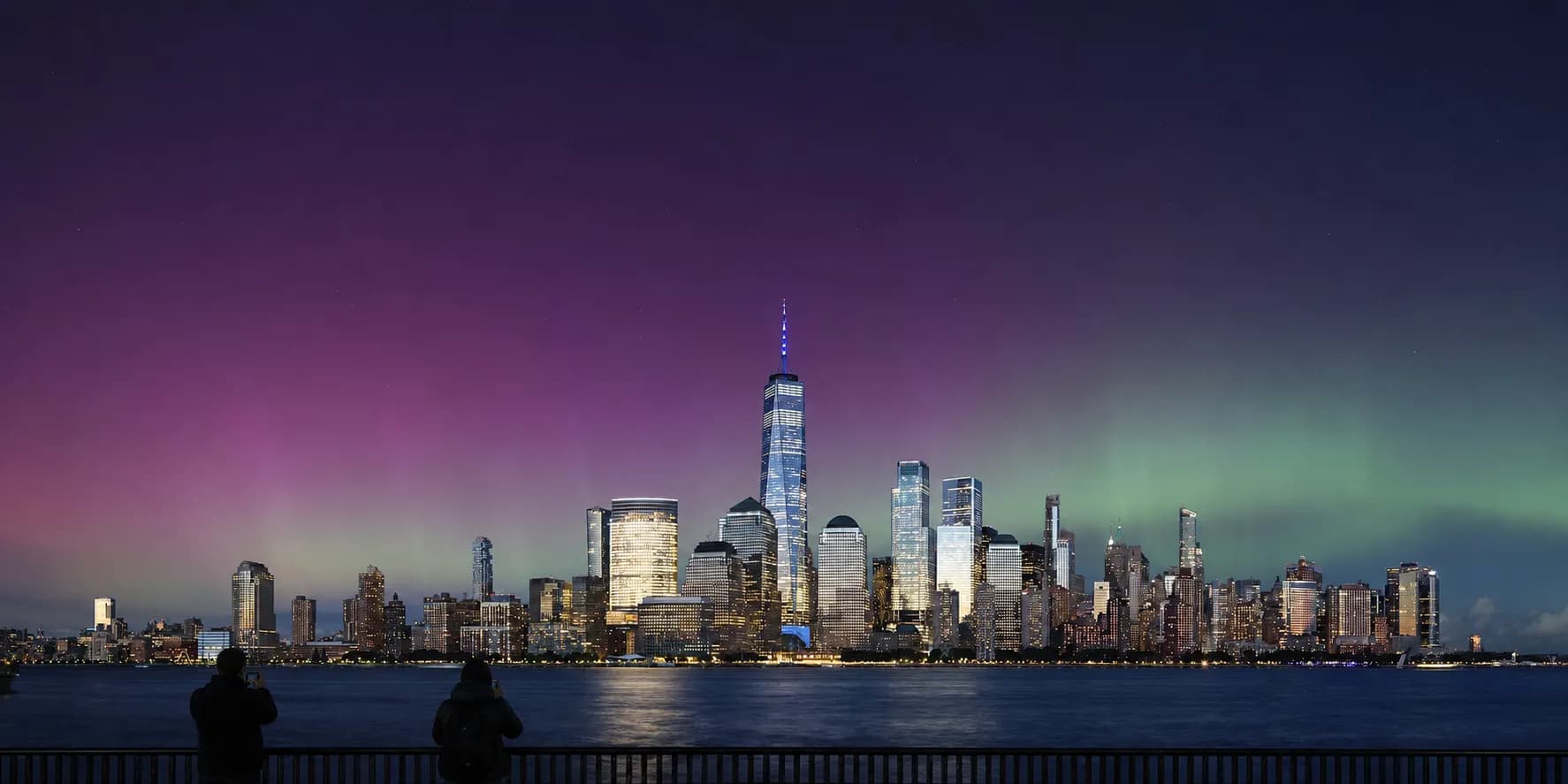
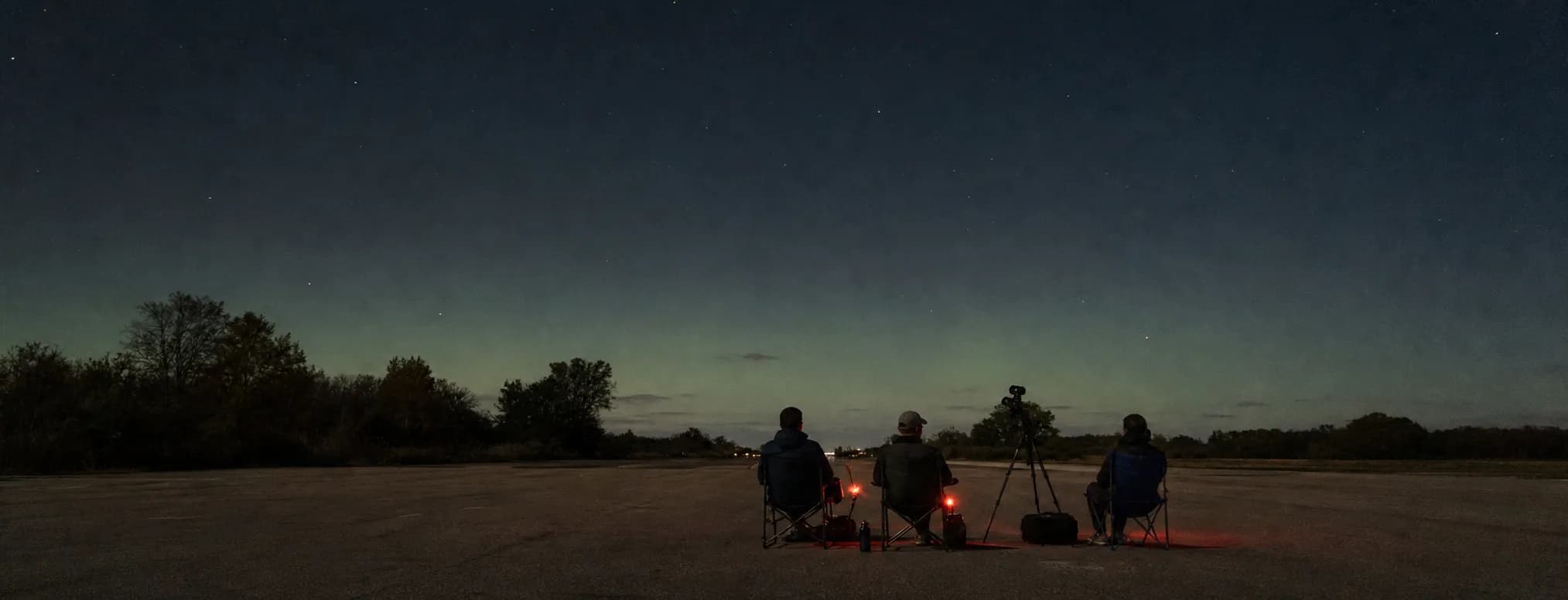
Human eyes do not collect light the way a modern phone’s night mode does. In a bright urban setting, an aurora may look like a pale gray band, a muted green tint, or an unusual glow near the northern horizon before a camera reveals stronger color. That does not make the photograph fake, but it does mean the experience can differ from the image. Give your eyes time to adjust, lower your screen brightness, and avoid staring at white phone interfaces between checks.
Use the camera as a diagnostic tool rather than a promise machine. Brace the phone, use night mode if available, and point north for a short test exposure. Compare multiple frames and look for stable color structure rather than one bright patch caused by a streetlight, cloud, or lens flare. If the camera sees nothing and the NOAA forecast is weakening, the better decision may be to end the wait instead of turning a rare sky event into a three-hour endurance test.
Choose an open northern horizon, not a famous skyline
A photogenic skyline can work against the actual goal. Buildings, decorative lighting, bridge illumination, and waterfront glare reduce contrast. Look for a legal public place with an open view to the north, minimal direct lights in your eyes, a safe return route, and operating hours that cover your planned window. The site must be verified that day; parks, beaches, parking areas, and recreation sites can have closures, permit rules, or nighttime restrictions.
Inside NYC, outer-borough waterfronts and broad open spaces can offer a better horizon than Midtown, but they remain urban compromises. Do not enter closed beaches, unlit trails, restricted airfields, or isolated shorelines because a map looks encouraging. Bring one or two people, tell someone your location, and keep the exit simple. A slightly brighter legal site with reliable transportation is often better than a darker location that creates a safety or access problem after midnight.
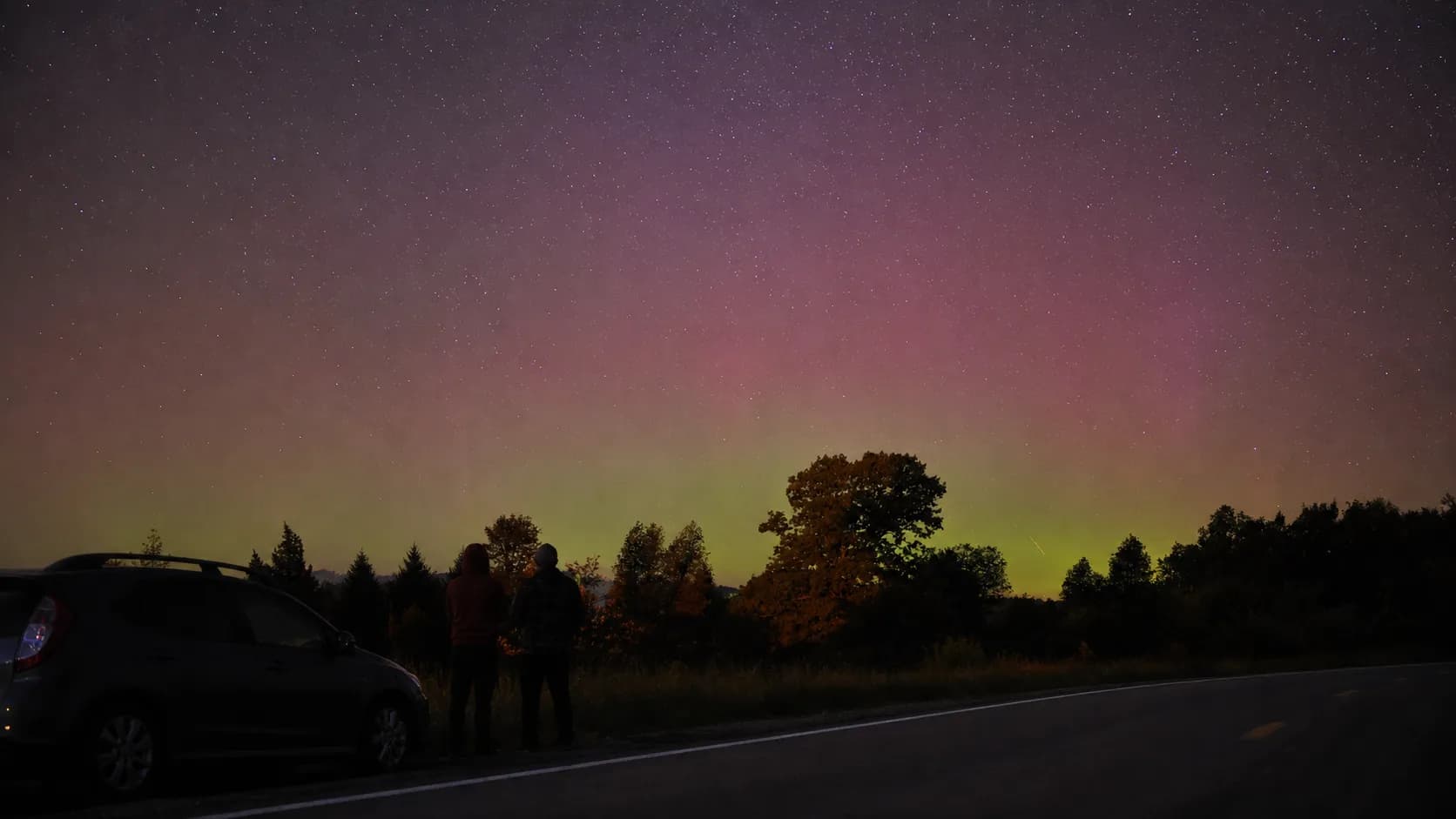
Know when an upstate drive improves the odds
Leaving the city can reduce light pollution, but distance alone is not a strategy. A useful drive moves you north of the brightest metro glow, toward clearer weather, and closer to the forecast viewline. An unhelpful drive moves into clouds, trees, mountain obstruction, or an unfamiliar roadside with no safe place to stop. Check weather along the full route, not just at the destination, and identify a legal viewing area before departure.
Build a turnaround time before you leave. If the forecast arrival shifts later, decide how long the group is willing to wait and how much next-day fatigue is acceptable. Never stop on a highway shoulder for a sky view, trespass on private land, or park where headlights create danger. A successful aurora plan is not measured only by whether green light appears; it also gets everyone home without unsafe driving, surprise closures, or a dawn commute fueled by optimism and convenience-store coffee.
Avoid the four most common false alarms
Clouds lit from below can resemble a soft auroral glow. Camera white balance can turn ordinary sky green or purple. Light pillars, event lighting, and reflections can create vertical shapes. Old images often circulate during new space-weather alerts without a clear date or location. Verify posts against NOAA timing, the direction the camera faced, and reports from observers at similar latitude. A spectacular image from northern New England does not describe conditions over Brooklyn.
The opposite mistake is dismissing a faint display because it lacks dramatic movement. At NYC latitude, a rare visible event may stay low and subtle. Watch the northern horizon, not the entire sky, and allow at least twenty minutes away from direct light if conditions are promising. If the color strengthens in repeated exposures and NOAA products remain supportive, keep observing. If the evidence weakens, take the win as a useful night-sky check and move on.
Practical notes
For any July aurora attempt, check NOAA’s experimental viewline earlier in the day, revisit the aurora dashboard near departure, and use the 30-minute forecast for the immediate window. Add cloud cover, haze, moonlight, site access, and the return trip before choosing a location. Bring a charged phone, battery pack, water, a light layer, and a red-filtered light. Avoid direct headlights and bright screens. Do not promise a sighting to friends; promise a well-designed skywatching plan with a clean backup if conditions fail.
Tags: #NorthernLights #AuroraForecast #NOAA #NYCSkywatching #NewYorkCity #SpaceWeather #AuroraBorealis #NightSky #NYCWeekend #BrooklynNights #QueensNights #WeatherCheck #HiddenGems #AskKarpo
Sources consulted: NOAA SWPC: Aurora Viewline Tonight and Tomorrow Night · NOAA SWPC: Aurora 30-Minute Forecast · NOAA SWPC: Aurora Dashboard · National Weather Service: Space Weather Safety
All trademarks are the property of their respective owners.
Ask Karpo first
Tell Karpo your starting neighborhood, how far you are willing to travel, and when you need to be home. Karpo can help compare the live forecast with clouds, access, and a lower-effort NYC night plan.