San Francisco rewards diners who plan like locals: check the official page, assume conditions can change, and do not build the evening around a rumor. The phrase judge ana reyes tps may be why someone in your group is suddenly searching, texting, or asking where to meet, but it is not a reason to claim a local appearance, endorsement, private reservation, or guaranteed event. Treat it as a timely conversation hook, then make the night useful. For a restaurant plan in San Francisco, the public checks that matter are simpler: food safety information from the San Francisco Department of Public Health, live transportation planning from SFMTA, and awareness of city updates that can affect access, waits, and timing.
Want a low-drama San Francisco dinner route built around official checks, transit, and a backup table? Text Karpo before you leave, especially if your group is moving across neighborhoods.

Use the trend as a dinner conversation hook
If judge ana reyes tps comes up at dinner, keep it in the lane where it belongs: a search phrase people are talking about, not proof that anything is happening in San Francisco. A good city guide does not turn online momentum into a false local itinerary. Your plan should be based on public facts you can verify, not a supposed sighting, private gathering, or insider claim.
That matters in restaurants because hype changes behavior. One person sees a phrase, another assumes a crowd, and soon the group is making unnecessary detours. Instead, pick a neighborhood, check how to get there, verify the restaurant’s public-facing information, and keep the conversation separate from the logistics. The evening can still feel current without pretending the trend has a San Francisco footprint.
For a Friday night, this skepticism is practical, not joyless. SFMTA’s home page includes current alerts and travel updates, and the agency’s trip planner lets riders compare Muni, walking, biking, driving, and parking choices. Use that kind of public tool before you leave, because street conditions and transit delays can matter more than whatever phrase brought the group chat to life.
Choose the room before choosing the menu
Start with the dining room experience your group can actually handle. A small party that wants to linger should make different choices than a larger group trying to meet after work, after a show, or during a busy weekend. San Francisco’s restaurant scene is dense, but density does not mean every doorway is equally easy for timing, access, or conversation.
The San Francisco Department of Public Health states that it protects and promotes the health of all San Franciscans, and its environmental programs include a resource to open a restaurant or check health scores. Before committing, use the official health-score resource where available and remember that public information can change. If you cannot confirm what you need, do not fill the gap with assumptions.
Also think about physical access before appetite. SFMTA lists accessibility among its getting-around options and provides route and stop information for Muni trains, buses, historic streetcars, and cable cars. For a group with mobility needs, visitors, children, or someone carrying luggage, the best restaurant may be the one that avoids complicated transfers and gives everyone a predictable arrival.
Match the market or hall to the group
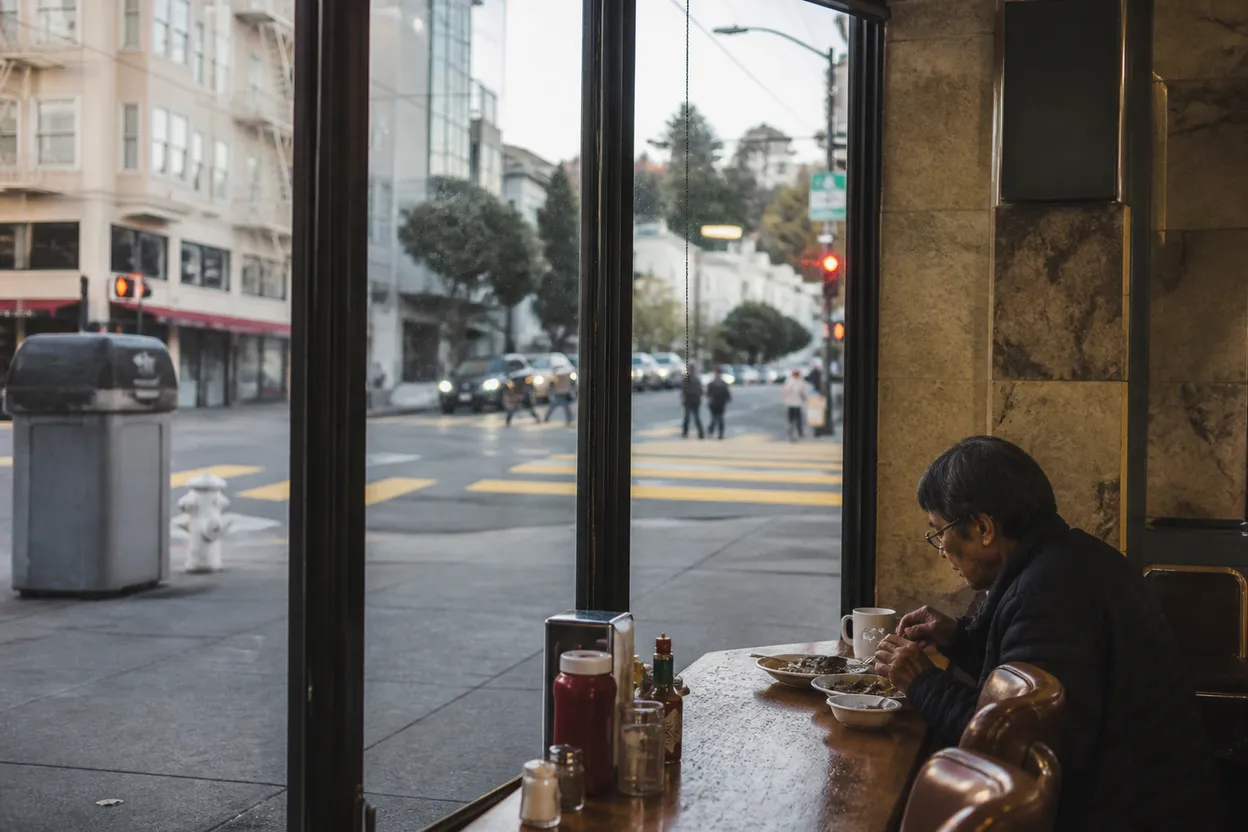
Food halls and market-style stops can solve a common San Francisco problem: different appetites on the same clock. They work best when the group needs flexibility, quick ordering, or a low-commitment first stop. They work less well when everyone expects a quiet table, full-service pacing, or a long private conversation. Decide that before anyone starts sending links.
For a public city plan, the important move is not ranking every hall or market; it is matching the format to the group’s tolerance for lines, noise, seating uncertainty, and split ordering. If the plan depends on a specific vendor, verify that vendor’s official hours before leaving. A general venue being open does not always mean every counter or kitchen is operating the way your group expects.
This is also where crowd risk enters. SFMTA’s current page flags Outside Lands Aug. 7-9, which overlaps the current date, Friday, August 7, 2026. Do not assume that only the festival area feels the impact. Use SFMTA’s alerts and trip planning tools before choosing a market or hall, particularly if anyone is crossing the city by Muni, bike, car, or a combination.
Keep the first stop easy to reach
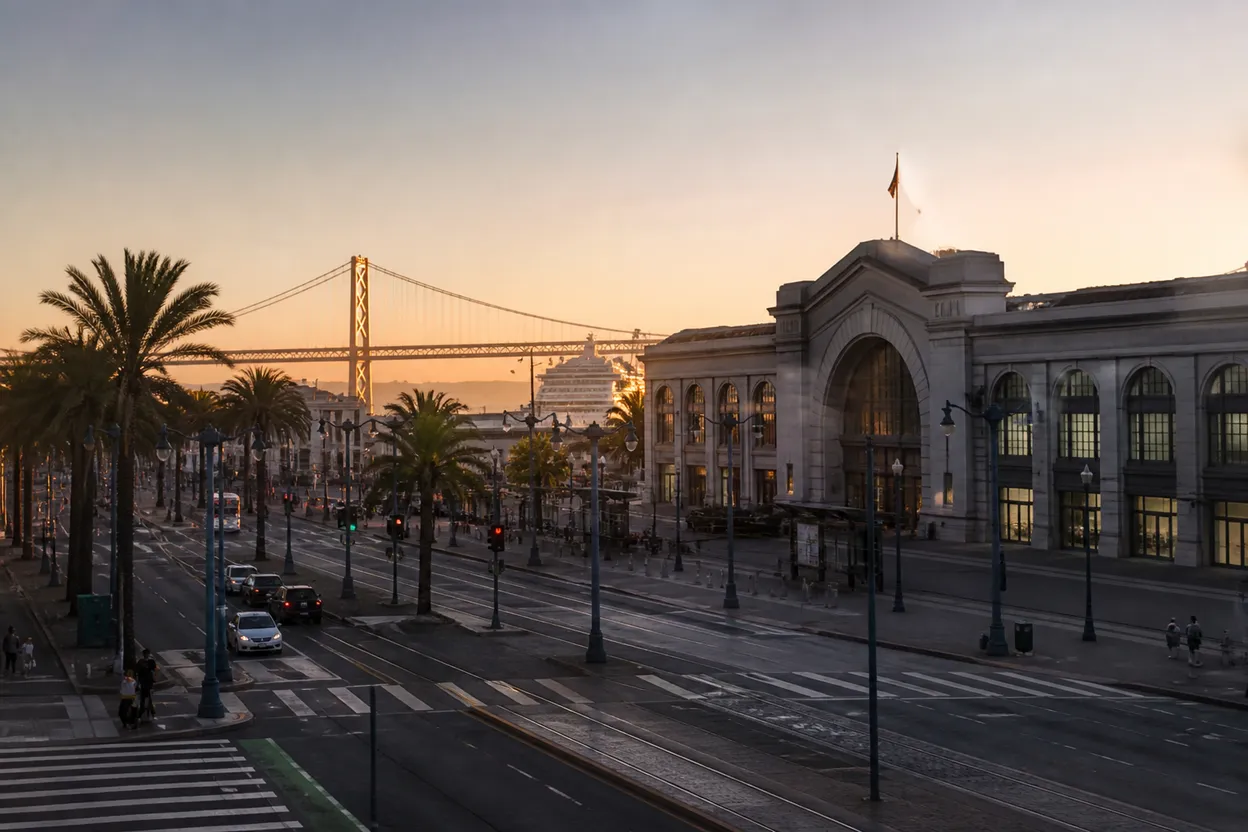
A strong San Francisco restaurant plan usually begins with the easiest first stop, not the most ambitious one. If the group is coming from different directions, choose a meeting point that works by Muni, walking, bike, or car before you argue over cuisine. SFMTA’s trip planner is built for exactly that kind of comparison, and its site points visitors to transit maps and travel guides.
On August 7, SFMTA’s page also shows an alert that a delay on McAllister between Broderick and Divisadero had cleared, with the 5 and 5R resuming regular service. That example is a reminder to check current alerts close to departure, not hours earlier. A cleared delay is useful, but it should not be treated as a permanent condition.
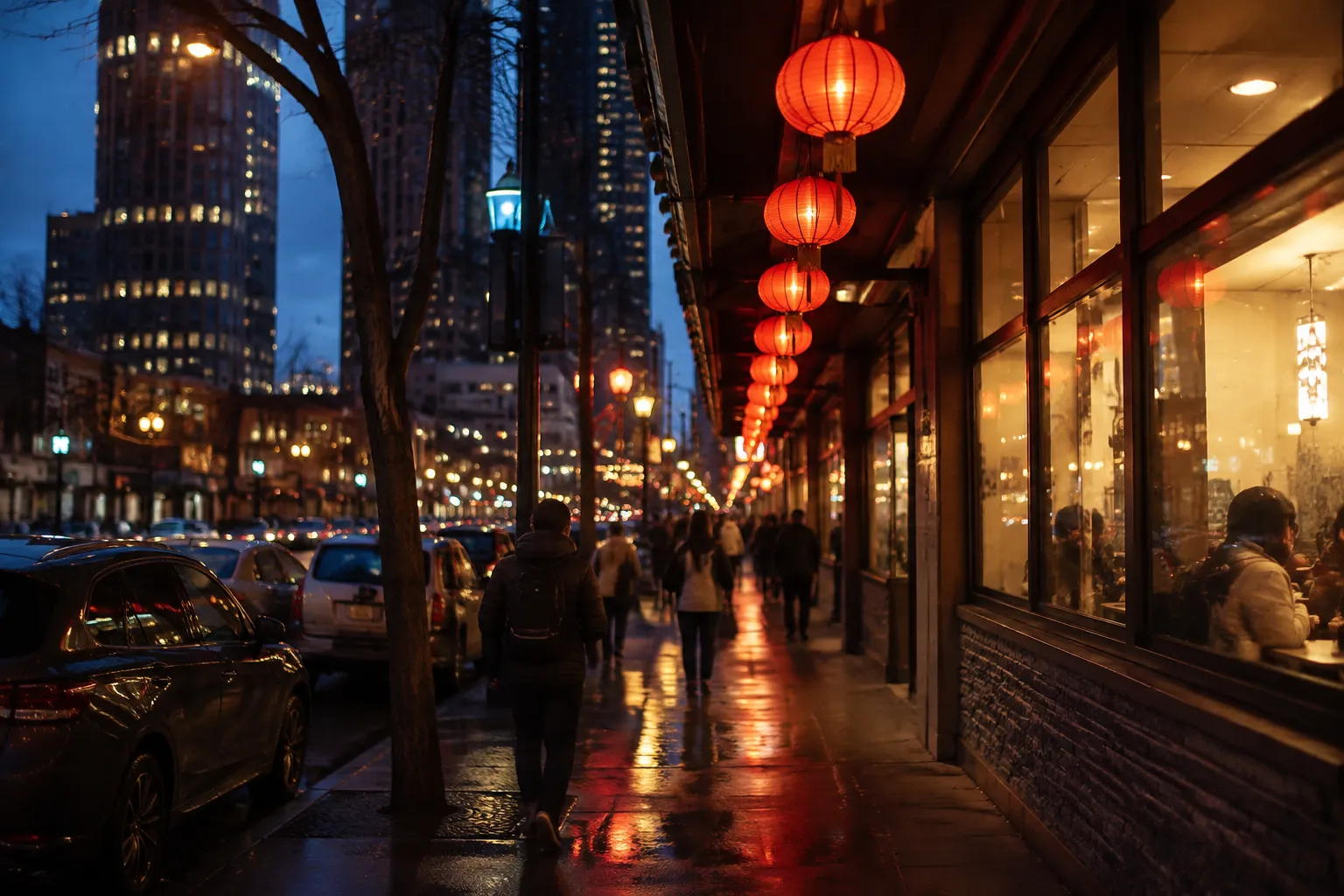
If your restaurant plan touches Chinatown, check the official travel updates first. SFMTA lists Chinatown construction from July 30-August 9, 2026. That does not mean you should avoid the area; it means you should verify access, allow extra time, and avoid promising a precise arrival if your route depends on streets or stops affected by current work.
Save a nearby option for long waits
The backup choice should be close enough to use, not merely good in theory. San Francisco hills, construction, transit changes, and weekend crowds can turn a “nearby” second option into a slow reset. Pick the backup before leaving, then confirm how the group would move there if the first restaurant has a long wait or cannot seat the party together.
This is especially important when city activity is already elevated. SFMTA’s site notes Hayes Valley Shared Spaces on Fridays and Saturdays in August 2026. Shared spaces can make a neighborhood feel lively, but visitors should verify current access and travel conditions rather than assuming curbside loading, parking, or direct vehicle movement will be simple.
The same rule applies to festival weekends and construction windows. A backup across town may look attractive on a map, but it can fail under real conditions. Keep the second choice in the same practical zone, check Muni routes and stops, and make sure the group knows when to abandon the first plan. Waiting can be part of dinner; confusion should not be.
Verify vendor hours before leaving
Hours are one of the easiest details to get wrong because they can change for staffing, private functions, maintenance, weather, neighborhood events, or operational reasons. The safest wording is simple: verify on the official restaurant, market, or vendor page before you leave. Do not rely on an old screenshot, a reposted menu, or a third-party snippet when the timing matters.
For health-related confidence, use the San Francisco Department of Public Health’s official resources. SFDPH says its food safety work includes inspection, permitting, education, and other measures to make sure food in San Francisco is safe for the public. If health scores or restaurant information are part of your decision, check the city source directly and understand that records can update.
For movement, use SFMTA close to departure. Its site includes a trip planner, Muni routes and stops, visitor guidance, alerts, travel and transit updates, and information about biking, walking, driving, parking, taxis, and accessibility. That is the practical stack: verify the food stop, verify the route, verify the current city condition, then leave with a backup that does not require a full restart.
Tags: #SanFrancisco #SanFranciscoRestaurants #AskKarpo #BeforeYouGo #Muni #SFMTA #SFDPH #CityGuide #DinnerPlan #RestaurantGuide #HayesValley #ChinatownSF #FoodSafety #TransitTips
Sources consulted: sftravel.com · sfdph.org · sfmta.com
All trademarks are the property of their respective owners.
Ask Karpo first
Ask Karpo first when the group chat is moving faster than the facts. We can help turn a search hook into a realistic San Francisco restaurant plan with official checks, transit timing, access notes, crowd risk, and a nearby backup before anyone starts crossing town.