When john thune trends, New Yorkers do not need a partisan scorecard as much as a grounded way to read possible local impact. Federal tax, spending, banking, infrastructure, and labor debates can show up in New York through borrowing costs, city contracts, office demand, small-business financing, transit reliability, and public-space pressure. The most useful lens is not a prediction; it is a walkable Financial District audit. Start where federal history, city administration, markets, and small-business support sit within a few blocks. Treat every headline as a prompt to verify what is actually open, funded, accessible, and relevant before you spend time or money.
Want a tighter read on how a federal economic headline could affect your block, commute, or small business plan? Text Karpo before you head downtown.

Federal Hall: Start With What Is Public, Free, and Confirmable
Federal Hall National Memorial is the clearest first stop because it turns national policy talk into a physical place with public rules. The National Park Service lists the visitor entrance at 15 Pine Street, free admission, and current hours of Wednesday through Sunday, 10 a.m. to 4 p.m., with Monday and Tuesday closed. That makes it useful for a daytime, solo read on federal authority without paying for a tour or relying on vague historical claims.
The tradeoff is that even official pages can carry mixed legacy text, so use the posted NPS operating-hours block before leaving. Federal Hall is also a security-conscious site: eating, drinking, gum chewing, and smoking are not allowed inside, and cell phone use is restricted. Wheelchair users should use the rear entrance at 15 Pine Street, with elevator access to upper and lower levels. If hours change, make that uncertainty the reason to choose an outdoor Wall Street stop instead.
New York Fed Museum Request: Read Banking Headlines Through Access Limits
The Federal Reserve Bank of New York is relevant when federal economic debate turns toward interest rates, bank supervision, liquidity, or market confidence. Its Museum and Learning Center is not a casual walk-in attraction. The official New York Fed page says educational visits are for school and student groups serving seventh grade and up, scheduled by advance request, with limited availability and priority for schools in the Second District.
That access limit matters for planning. A group visit is free, typically one to two hours, and scheduled Tuesday through Friday at listed times, but gold vault inclusion is not guaranteed and can change. Visitors 18 and older need a valid government-issued photo ID matching the printed ticket, photos of IDs are not accepted, photography is not allowed, and visitors should arrive 30 minutes early for screening. For most adults, the practical backup is reading New York Fed materials online, then walking past 33 Liberty Street without expecting entry.

NYC Business Financial Assistance: Convert Policy Anxiety Into Specific Next Steps
For owners, freelancers, and operators, the most actionable stop is not a monument; it is the city’s business-services infrastructure. NYC’s official business site lists financing assistance, contract financing, financial counseling, tax-prep help for self-employed filers, and the NYC Future Fund. The page also says the city tries to keep information accurate but that errors are possible and the information is not legal advice, which is exactly the right posture for federal-policy uncertainty.
Use this as a decision filter. If a headline suggests tighter credit, delayed payments, tariff exposure, or federal budget stress, do not translate that directly into a rent, hiring, or menu decision. First check the current program page, then call the SBS Hotline or request a consultation if the program still fits. The failure mode is treating a program name as proof of eligibility; the stronger move is to confirm industry, borough, documentation, and deadline requirements before changing operations.
City Hall Plaza Security: Know When Civic Access Costs Time
City Hall sits inside City Hall Park, but official tour directions make clear that access is controlled. The Public Design Commission says tours meet at City Hall Plaza by the Nathan Hale statue, with entry through security gates at Broadway and Murray Street or Park Row and Spruce Street. Adults need photo identification, and visitors must allow extra time for security before entering the plaza.
That matters if you are pairing a civic stop with work meetings or a lunch break. Late arrivals can shorten a tour, and arrivals more than 20 minutes late may be cancelled. The transit choices are strong: 4, 5, and 6 to City Hall/Brooklyn Bridge, 2 and 3 to Park Place, R to City Hall, and A or C to Chambers Street. The backup is simple: if security lines or weather make entry impractical, use City Hall Park paths as the exterior stop and move on.
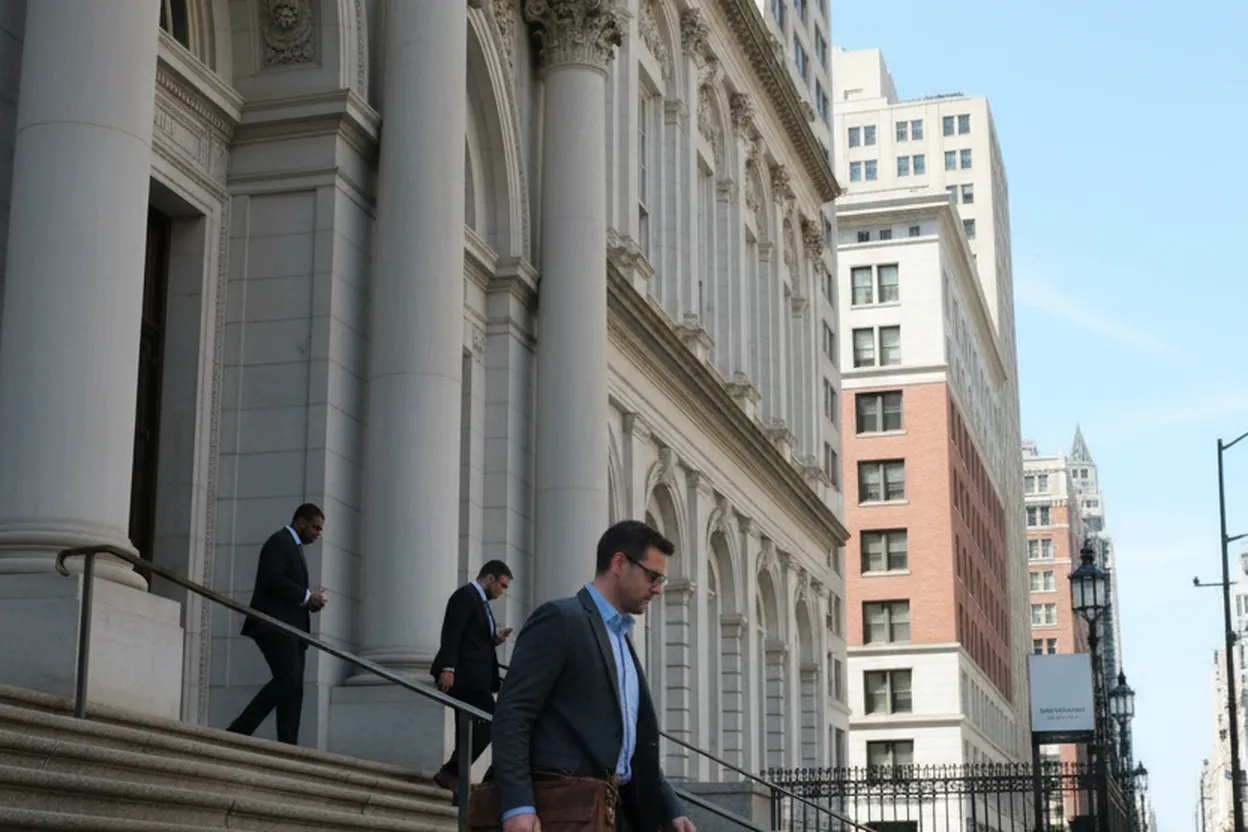
Dinkins Municipal Building: Use 1 Centre Street to Track City-Level Impact
The David N. Dinkins Manhattan Municipal Building is a useful anchor for the local side of national economic news. DCAS lists it at 1 Centre Street and notes that it houses the City Comptroller, Public Advocate, Manhattan Borough President, Department of Finance, Tax Commission, Civil Service Commission, Landmarks Preservation Commission, and other offices. In plain terms, many effects New Yorkers feel from broader policy debates get processed through city finance, property, permits, labor, and service delivery.
Do not assume the building is a visitor attraction just because it is architecturally important. DCAS describes a major working government building with more than 2,000 employees and over 1,000 daily users of services and agencies. The audience fit is practical: taxpayers, contractors, property owners, workers, and small-business operators who need to know which city office mediates a problem. The pacing is quick from City Hall Park, but verification should happen online first so you do not arrive at the wrong office.
Wall Street Exterior Loop: Watch Markets Without Expecting Inside Access
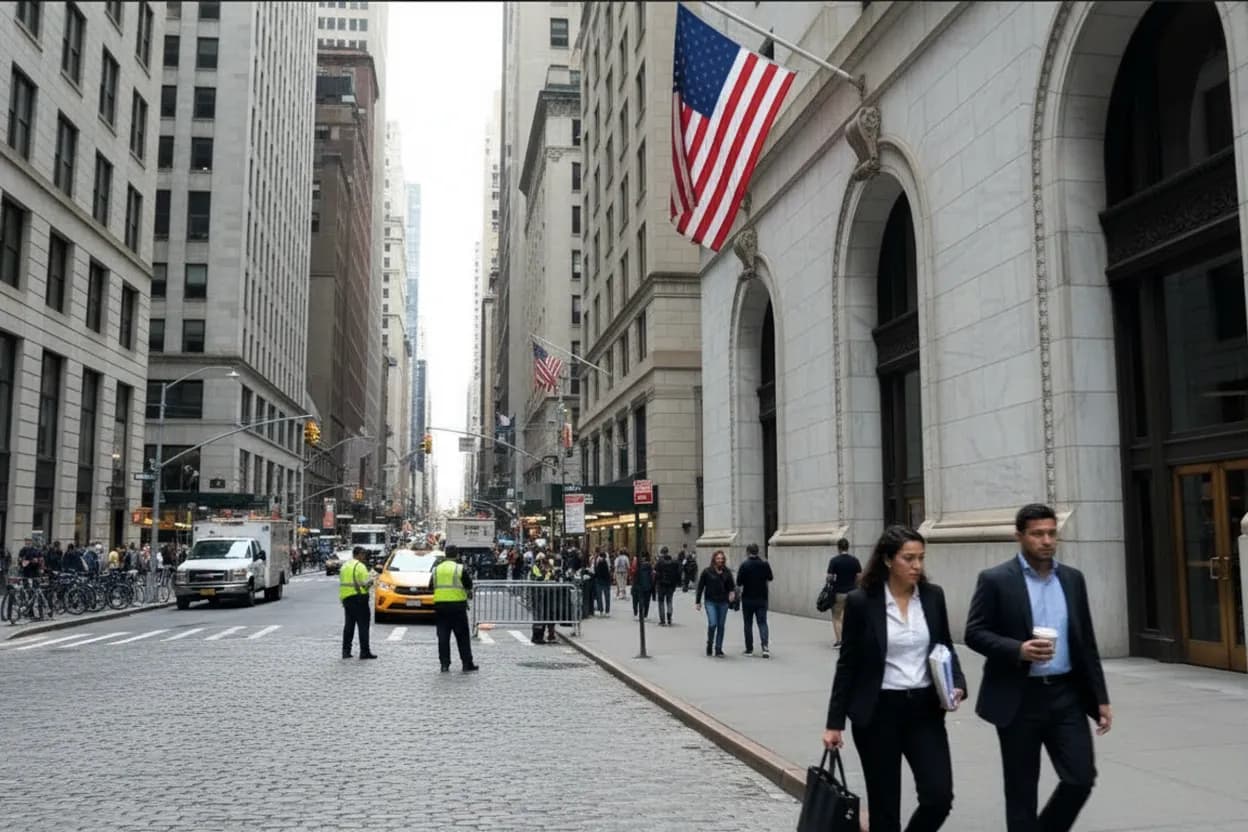
The New York Stock Exchange is central to the Financial District’s symbolic economy, but current public planning should treat it mainly as an exterior reference point. NYSE’s own events page describes 11 Wall Street as a high-demand event venue serving listed companies, with spaces such as the trading floor, board room, Freedom Hall, and other rooms used for corporate programming. That is not the same thing as a general public tour offer.
This is where a headline-reading walk can go wrong. People often overvalue a photo stop and undervalue the operating reality around it: security barriers, crowded sidewalks, blocked sight lines, weather exposure, and no guaranteed public interior access. Use the NYSE facade as a 10-minute context stop, not the whole plan. If markets are volatile or a bell event draws crowds, step back toward Federal Hall or Broadway instead of clustering near entrances. The decision is observational, not intrusive.
MTA Status Check at Chambers, City Hall, and Wall Street
The Financial District works for this route because transit options overlap, but reliability is still a changing fact. The official MTA app help page says the Status tab shows live subway and bus service, planned changes, and elevator or escalator outages. It also lets riders check outages by distance or station. That is the accessibility step to complete before choosing between City Hall/Brooklyn Bridge, Park Place, Chambers Street, Wall Street, or nearby alternatives.
Build a two-station backup into the plan. If you need elevators, do not rely on memory or static maps; check the official status tool shortly before leaving and again before the return trip. If a line is delayed, switch the order: start at City Hall and walk south, or start at Federal Hall and work north. The final verification step is plain: confirm Federal Hall hours, New York Fed access rules, SBS program status, City Hall security requirements, and MTA outages on the day you go.
Tags: #AskKarpo #BeforeYouGo #JohnThune #NYCEconomy #FinancialDistrict #WallStreet #FederalHall #NewYorkFed #NYCSmallBusiness #CityHallNYC #LowerManhattan #TransitCheck #BusinessPlanning #NYCNews
Sources consulted: Source 1: nyc-business.nyc.gov · Source 2: nyc.gov · Source 3: nyc.gov · Source 4: nps.gov · Source 5: newyorkfed.org · Source 6: intercom.help
All trademarks are the property of their respective owners.
Ask Karpo first
Tell Karpo your date, group size, budget, and starting neighborhood. We’ll check current access, timing, transit, and the cleanest plan for Financial District, NYC government offices before you head out.