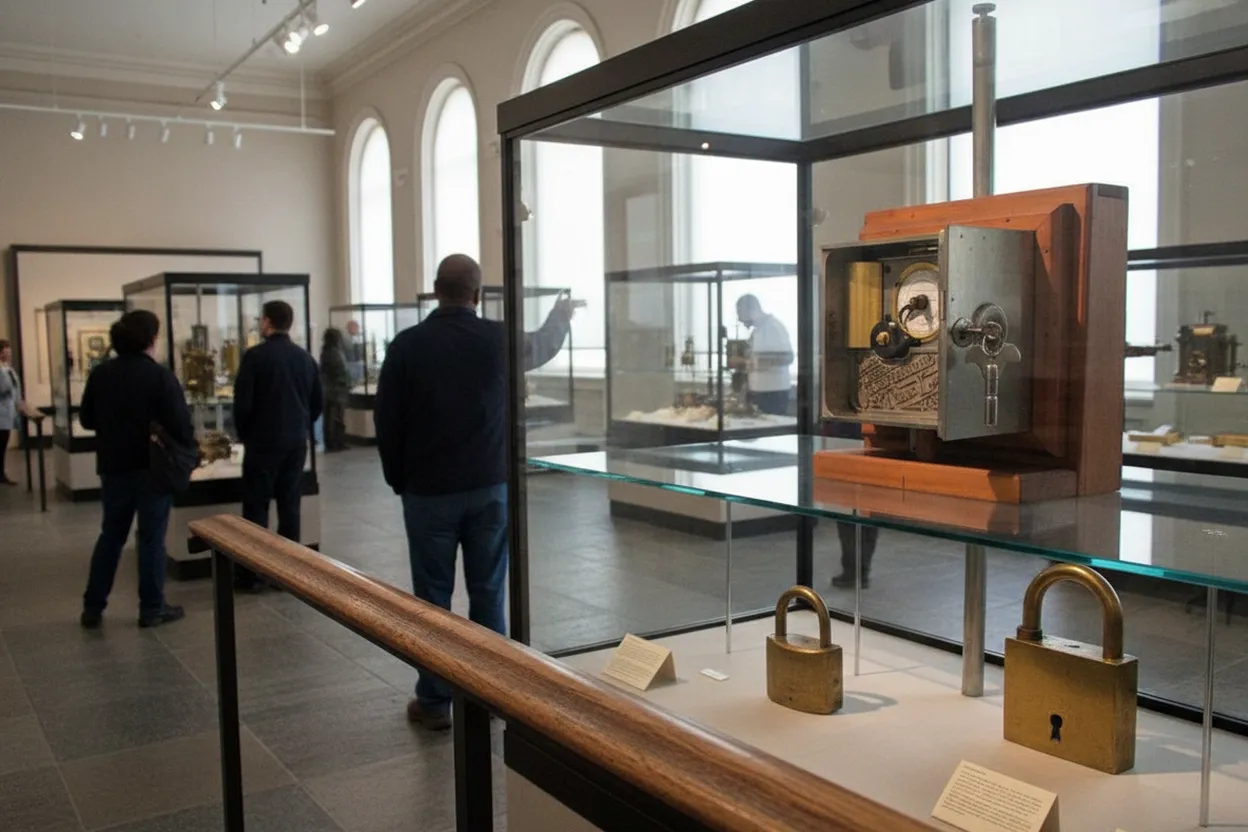
The John M. Mossman Lock Museum is not the kind of Midtown stop you wander into because a billboard told you to. It sits inside the General Society of Mechanics and Tradesmen at 20 West 44th Street, a few blocks from Bryant Park and within practical reach of both Grand Central and Penn Station. The draw is narrow by design: hundreds of locks, keys, bank mechanisms, safes, and time-lock stories tied to craft, security, and New York trades. For a Midtown worker with an hour between appointments, or a traveler killing time before a train, the right question is not whether it is famous. It is whether you can confirm access before you walk over.
Want a tighter Midtown oddity plan before your train? Text Karpo to check Mossman access, storm backups, and Penn or Grand Central timing before you walk over.
Confirm Mossman Access Before Crossing 44th Street
Treat the John M. Mossman Lock Museum as appointment-sensitive, not as a guaranteed walk-in museum. Recent niche-museum reporting describes visits arranged by email, while broader listings confirm the collection’s location but do not provide dependable daily public hours. That gap matters. Before leaving your office, hotel, or station, contact the General Society directly and ask whether the lock collection can be viewed that day, what arrival window they prefer, and whether any fee applies.
This is the central failure mode: arriving at 20 West 44th Street and finding that the collection is unavailable, the building is hosting a private event, or staff cannot accommodate an unscheduled visitor. Do not build the plan around a posted hour you cannot verify on July 21, 2026. Build it around a confirmed reply, a named contact if offered, and enough buffer to pivot without turning a short detour into a Midtown errand.
Use the General Society Setting as Part of the Visit
The lock collection’s appeal is partly the setting. The General Society of Mechanics and Tradesmen has occupied its 20 West 44th Street headquarters since 1899, and its library is repeatedly described as one of New York’s older institutional libraries. That context keeps the visit from feeling like a storage room of hardware. You are looking at security devices inside a building tied to trades, mechanics, education, and the city’s practical working history.
This also shapes your behavior inside. Expect a quieter institutional environment rather than a high-volume museum floor, and keep the visit compact unless staff indicate otherwise. The right pacing is attentive but not sprawling: look for the mechanisms, labels, cases, and architectural surroundings, then leave room for your next obligation. A detail-oriented friend is a good companion because this collection rewards close looking more than broad museum grazing.
Read the Bank Locks Like Small Machines
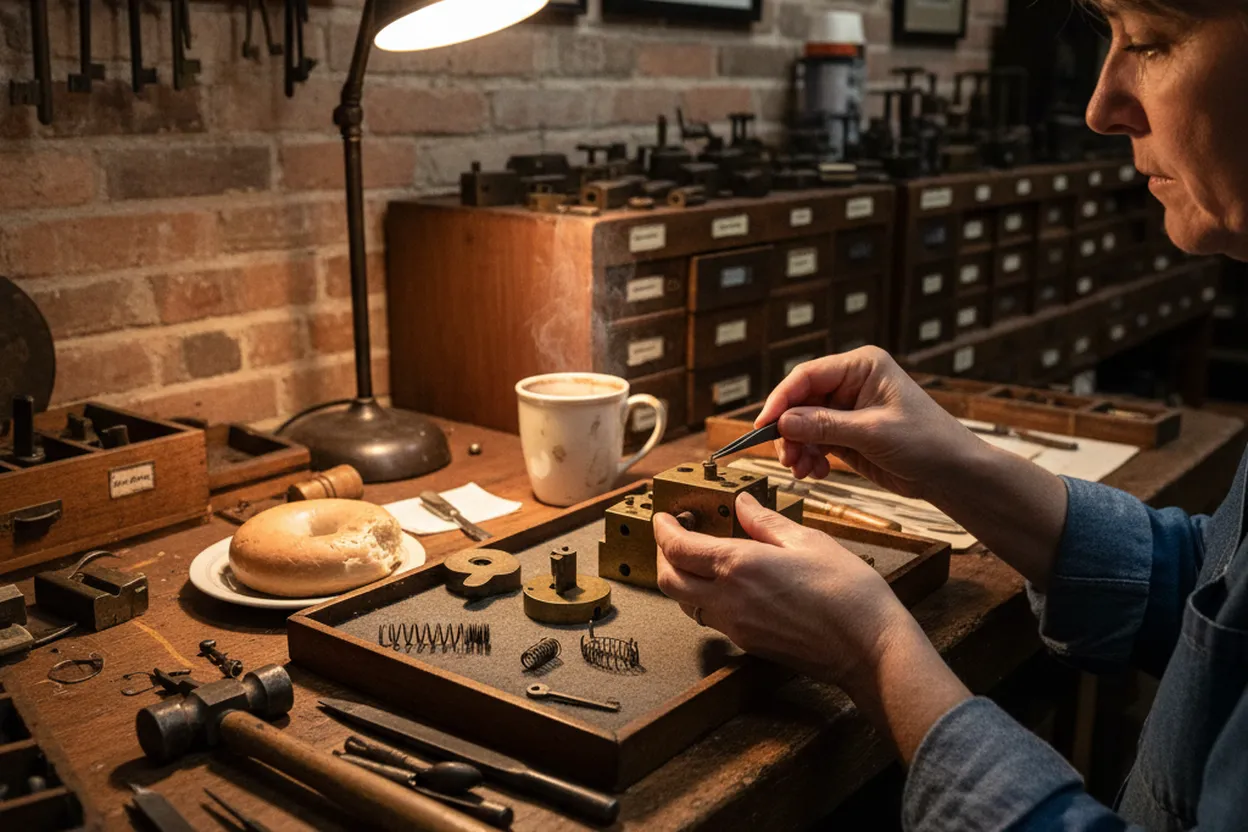
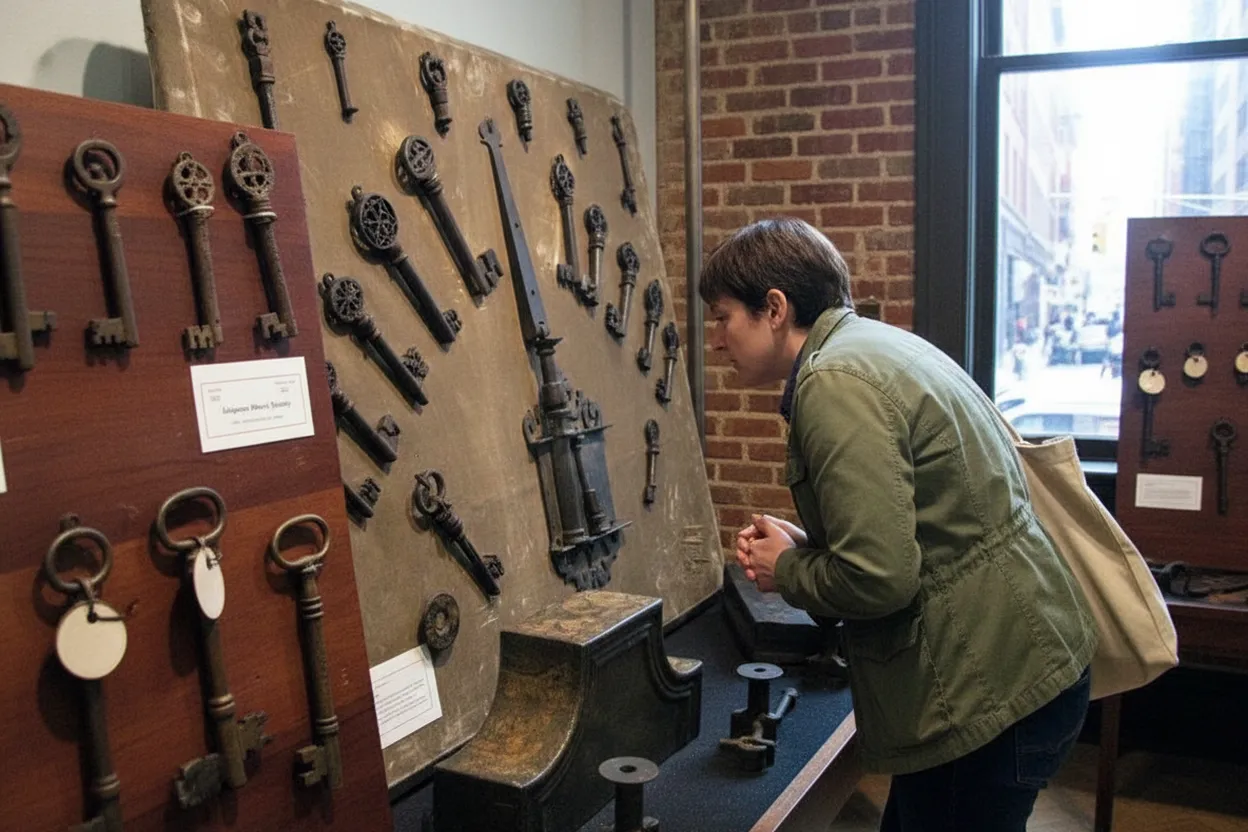
The collection is strongest when approached as machinery, not nostalgia. Reputable accounts describe more than 350 or 370 locks, keys, and related objects, with particular emphasis on bank and vault locks, including time locks. The New Yorker reported that many objects date from roughly 1850 to 1912, a period when banking security and mechanical ingenuity were tightly linked. Start with the pieces that reveal internal parts, then compare how protection, timing, and display overlap.
Give yourself permission to move slowly through fewer objects instead of trying to inventory every case. A time lock, a key, a safe component, and a labeled bank mechanism can tell the whole story if you actually study them. The quiet fascination here comes from realizing that an object built to prevent access can still be ornate, precise, and oddly intimate. If you only want interactive exhibits or big wall text, this will feel too specialized.
Fit Mossman Into a One-Hour Midtown Window
A realistic one-hour plan starts with confirmation, not walking speed. Once access is confirmed, budget about ten minutes to arrive from nearby Midtown blocks, twenty-five to thirty-five minutes with the collection, and ten minutes to reset for your next destination. That is enough for an object-focused visit but not enough for deep research. If you need to be at Penn Station or Grand Central at a fixed time, set a hard exit alarm.
The museum works best before a train when your baggage is light, your shoes can handle Midtown sidewalks, and you are comfortable with a short indoor stop. It is less suitable with rolling luggage, a restless group, or anyone expecting cafe seating, restrooms, or a full-service visitor center. If rain is heavy or lightning is nearby, shorten the walk, use a direct subway or rideshare, and avoid making Bryant Park your only backup.
Pair the Detour With Bryant Park Only if Weather Holds
Bryant Park is the most practical nearby decompression point because its official site places it between 40th and 42nd Streets and Fifth and Sixth Avenues, behind the New York Public Library. For May through September, the park lists daily hours of 7am to 11pm, while also warning that hours can change and management may close areas for unsafe weather or maintenance. On a humid weekday with possible storms, that caveat is not decorative.
Use Bryant Park as the backup after the museum, not as the anchor before it. If access falls through, the park can absorb twenty minutes with open space, seating if available, and a public restroom listed on the park site as open daily 8am to 10pm, subject to change. If storms move in, skip lingering outdoors and make the backup a station concourse, nearby lobby, or another confirmed indoor stop.
Choose Penn Station or Grand Central by Real-Time Transit
The 44th Street address gives you options, but the best station is the one your train actually uses and your real-time service supports. Grand Central is the cleaner fit for many Metro-North and some LIRR trips; Penn Station remains the key hub for Amtrak, NJ Transit, and many LIRR departures. Do not assume a normal Midtown transfer on a summer evening. Check your rail app, platform notices, and station alerts before committing to a walking route.
For subway planning, the official MTA app help page says planned service changes can be checked from the Status tab and through favorites. That is the verification step to do before you enter the museum, not after you leave. If a favorite line has delays, choose the station route with fewer transfers, even if the walk is less elegant. The collection is a detour; your departing train is the constraint.
Decide Whether Mossman Beats a Larger Museum
Choose the John M. Mossman Lock Museum when your mood is specific: antique mechanisms, keys, safes, trade history, and a quiet room rather than a major cultural outing. It is a strong fit for someone who notices hinges, labels, materials, and engineering choices. It is a weak fit for anyone who wants guaranteed open hours, a large cafe, family programming, blockbuster scale, or a visit that can stretch effortlessly into two hours.
Your final go or skip test is simple. On July 21, 2026, confirm access with the General Society, confirm any fee or appointment instructions, check MTA or rail status, and look at the storm forecast before leaving. If any one of those pieces fails, keep the idea for another day and use Bryant Park or the station as the practical fallback. The better visit is the one that stays small on purpose.
Tags: #JohnMMossmanLockMuseum #MossmanLockMuseum #GeneralSocietyNYC #MidtownNYC #HiddenGemsNYC #OddFindsNYC #NYCMuseums #AntiqueLocks #BankVaultHistory #BeforePennStation #BeforeGrandCentral #AskKarpo #BeforeYouGo #KarpoNYC
Sources consulted: Source 1: niche-museums.com · Source 2: atlasobscura.com · Source 3: newyorker.com · Source 4: bryantpark.org · Source 5: intercom.help
All trademarks are the property of their respective owners.
Ask Karpo first
Tell Karpo your date, group size, budget, and starting neighborhood. We’ll check current access, timing, transit, and the cleanest plan for John M. Mossman Lock Museum before you head out.