 Mission Concerts: The Valencia Room's Pulsating Beat on Valencia Street
Bars & Nights Out
jocelyn benson: SF Bars Hosting Political Book Clubs and Election
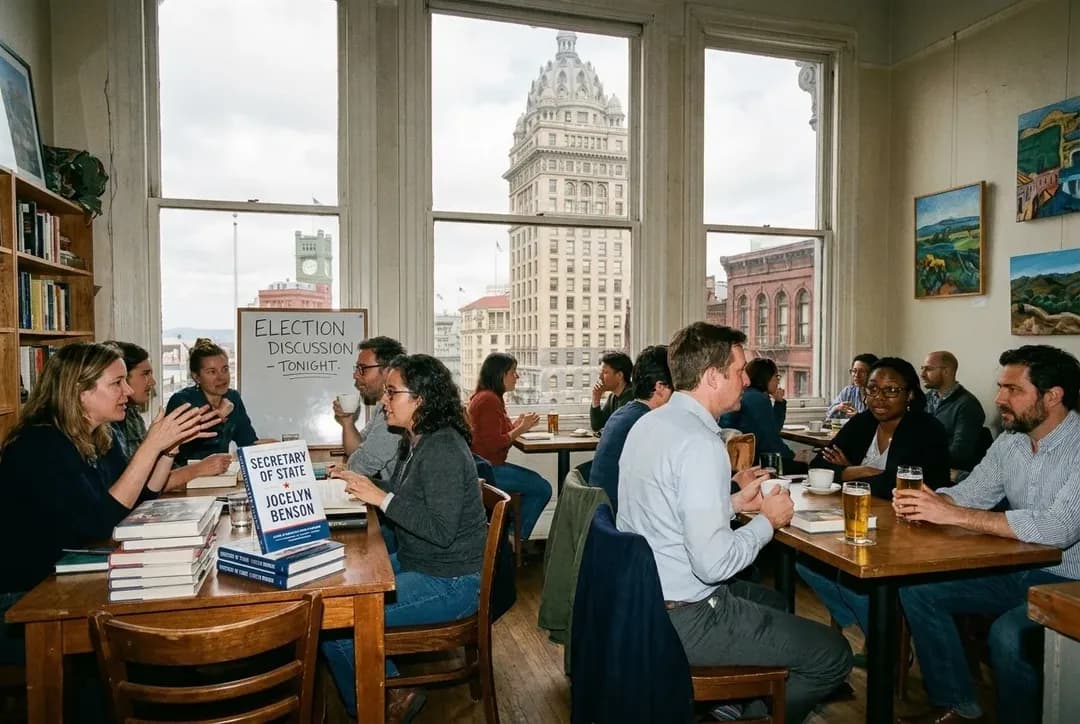
San Francisco bars with community spaces occasionally host political book clubs and election discussions when figures like Jocelyn Benson make headlines. Civically engaged professionals should verify event schedules, political leanings, and whether materials are provided before attending.
When election officials like jocelyn benson appear in national news cycles, a handful of San Francisco bars with community rooms or back spaces respond by organizing informal political book clubs and election-process discussions. These gatherings attract civically engaged professionals looking to meet others who follow democratic mechanics beyond campaign headlines, but the format varies widely: some venues provide reading materials and structured agendas, while others expect attendees to arrive prepared with their own copies and talking points. The experience suits solo visitors hoping to find like-minded conversationalists on a weeknight after work, though intermediate political literacy helps navigate debates that can shift from voter registration timelines to the nuances of ballot certification. Because these events emerge in response to trending news rather than fixed programming, confirming current schedules and understanding a venue's political atmosphere before committing your evening becomes essential.
Text Karpo your SF neighborhood, preferred weeknight, and whether you want a moderated or open discussion format. We'll send three bars hosting Jocelyn Benson-related civic book clubs or election talks, plus one backup library discussion series if bar events are full.
Why Bars Instead of Libraries or Bookstores
San Francisco's public library system offers extensive branch hours—many locations stay open until 8 p.m. on weeknights—and the official extracts confirm branches like Mission, Richmond, and Eureka Valley maintain evening access. Yet bars with community rooms appeal to a different participant: someone who wants the option to order a drink, values the informal social lubricant of a pub setting, and prefers venues where stepping away from intense policy talk feels natural. Library meeting rooms enforce quiet norms and alcohol-free environments, which can make passionate election debates feel constrained. Bars allow raised voices, laughter, and the kind of animated disagreement that election topics often provoke.
The tradeoff involves noise and distraction. A bar hosting a book club in a back room still contends with music from the main space, server interruptions, and patrons who wander in unaware of the discussion. Library branches provide dedicated silence, reliable seating, and no expectation that you purchase anything to occupy space for two hours. For someone testing whether political discussion groups fit their routine, a bar event offers lower commitment—you can leave after one drink if the conversation doesn't click—but libraries provide better conditions for close reading and note-taking if the group assigns dense policy texts.
Confirming Event Schedules and Book Availability
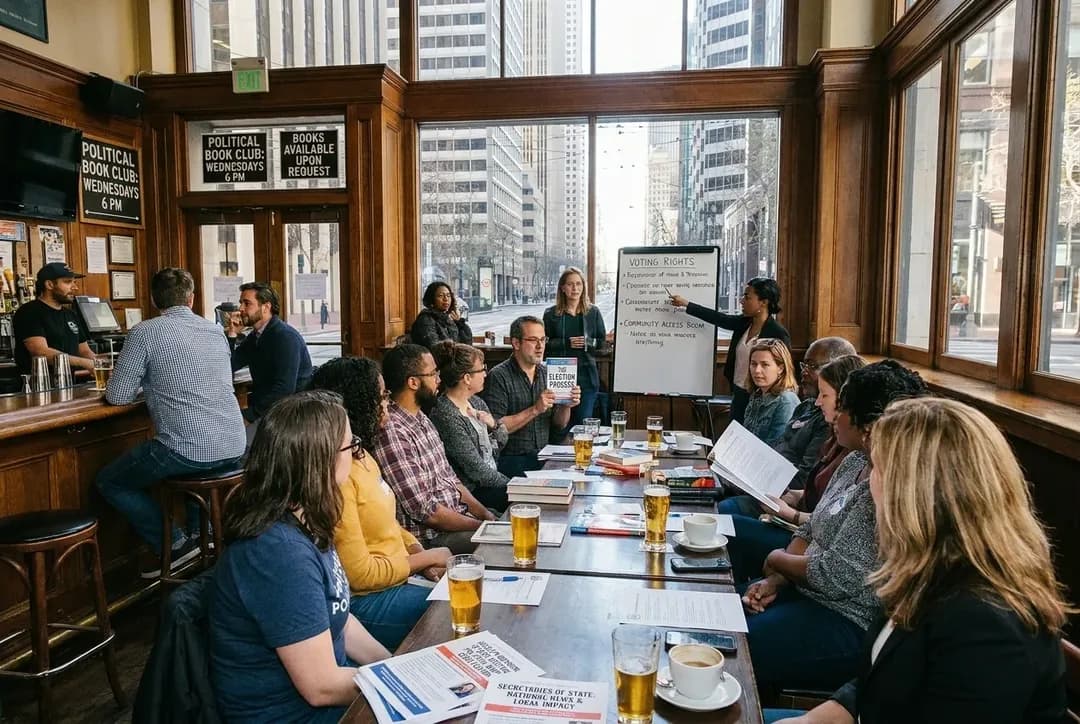
Because these gatherings respond to news cycles rather than permanent calendars, the first verification step involves checking whether an event actually runs the week you plan to attend. Bars that host political discussions typically announce them through social media, email lists, or chalkboard signs near the entrance, but they rarely maintain the kind of structured event pages that theaters or concert venues do. Calling ahead during afternoon hours—before the dinner rush—lets you confirm whether this week's session is happening, what time it starts, and whether the format has changed since the last meeting.
Book availability presents a second friction point. Some organizers photocopy relevant chapters or provide a shared reading list accessible online, while others assume participants will purchase or borrow books independently. If the group focuses on a secretary of state's memoir or a recent election-security analysis, you may need several days to acquire the text through the library system or a bookstore. Arriving without the material can still work if the discussion centers on recent news articles or if the organizer summarizes key points, but you'll contribute less and may feel like an observer rather than a participant. Asking about reading expectations when you confirm the schedule prevents that awkward dynamic.
Assessing Political Lean and Discussion Norms
Not all political book clubs aim for ideological balance. Some San Francisco bars attract crowds with clear partisan leanings, and their discussion groups reflect that tilt—whether progressive, libertarian, or focused on a specific issue like election reform. Understanding a venue's baseline politics before you attend helps set expectations: a bar in the Mission District might host discussions that critique corporate influence on elections, while a Financial District spot could emphasize free-speech concerns around content moderation. Neither approach is inherently better, but mismatched expectations lead to frustration when you hoped for open debate and instead encounter a room where most participants share the same conclusions.
Observing one session before committing to regular attendance gives you a sense of discussion norms. Does the group welcome devil's-advocate questions, or do contrarian views get shut down quickly? Do participants let each other finish sentences, or does the loudest voice dominate? Some bars designate a facilitator who enforces turn-taking and redirects tangents, while others let conversations sprawl organically. For someone seeking informed and conversational exchange rather than lecture or argument, these norms matter more than the venue's drink menu. If the first session feels too combative or too passive, trying a different bar's group costs only one evening.
Getting There on Weeknight Schedules
Most political book clubs in San Francisco bars start between 6:30 and 7:30 p.m. to accommodate professionals finishing work, but that timing collides with evening commute patterns. The official SFMTA extract confirms that Muni, walking, biking, and driving all serve the city, and the system includes a trip planner for route mapping. If your workplace sits near a Muni line that runs directly to the bar's neighborhood, transit makes sense; if you need two transfers and the event starts at 6:30, you may arrive late and miss introductions. Biking offers flexibility for neighborhoods with protected lanes, though August evenings can bring fog and wind that make a ride less appealing after a long workday.
Driving and parking trade convenience for cost and availability. Many bars occupy commercial corridors where street parking fills quickly after 5 p.m., and garage rates near popular nightlife zones can exceed what you'd spend on the entire evening's drinks. Walking works well if you live within a mile or two, and San Francisco's density means many neighborhoods support that option. The decision hinges on how much energy you have after work: a 20-minute walk might feel restorative or exhausting depending on your day. Checking the route in advance—including hills, crosswalks, and lighting—prevents surprises when you're already running late.
What to Expect as a Solo First-Timer
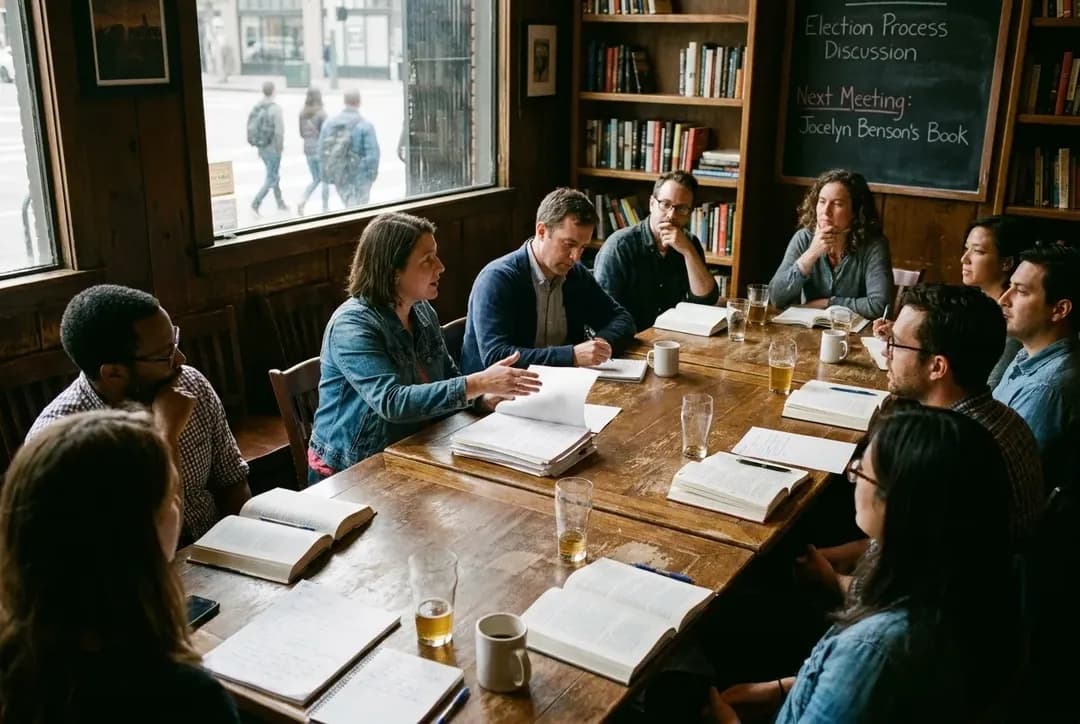
Arriving alone to a bar-based political discussion can feel awkward for the first ten minutes, especially if regulars already know each other and cluster in familiar groups. Most organizers recognize this dynamic and build in a few minutes of informal mingling before the structured portion begins, giving newcomers a chance to introduce themselves and gauge the room's energy. Positioning yourself near the organizer or facilitator when you arrive signals that you're new and looking for guidance, and experienced hosts will often make introductions or suggest someone to sit near. Bringing a notebook or the assigned reading provides a prop that makes solo waiting feel purposeful rather than conspicuous.
The intermediate political literacy expectation means you don't need a graduate degree in political science, but you should arrive familiar with basic election processes—what secretaries of state do, how ballot certification works, why voter rolls matter. Discussions that reference jocelyn benson or similar figures assume participants have followed recent news and can connect a name to a controversy or policy position. If you're still learning those foundations, listening more than speaking during your first session helps you calibrate the group's knowledge level without feeling pressured to contribute prematurely. Most groups welcome questions that advance the conversation, but asking what a primary election is will likely stall momentum. The bar setting makes it easier to step out for a break if you need to look something up on your phone or simply reset before rejoining.
Tags: #politicalbookclubs #electiondiscussions #SanFranciscobars #civicengagement #weeknightevents #soloactivities #communityspaces #politicalliteracy #Munitransit #neighborhoodbars
Sources consulted: Source 1: sf.gov · Source 2: sfmta.com · Source 3: sfpl.org · Source 4: sf.gov
Please drink responsibly. Must be of legal drinking age.
All trademarks are the property of their respective owners.
Ask Karpo first
Ask Karpo to turn this San Francisco idea into a current plan for your date, budget, companion, transit preference, and energy level. Karpo can narrow the route and flag what to verify before you go.
Ask Karpo for more information.
Keep reading
- Mission Concerts: The Valencia Room's Pulsating Beat on Valencia Street
 Happy Hour Near Me in Union Square: Pacific Cocktail Haven’s Inventive Elixirs
 Bourbon & Branch Tenderloin: Happy Hour Near Me, a Speakeasy Sanctuary