The recall notices started appearing in mid-July, first Fromm's dry food for potential salmonella, then Oma's Pride's raw frozen products in early August for the same contamination risk. Pet owners across San Francisco found themselves cross-referencing batch codes, checking purchase dates, and wondering whether the premium brands they'd trusted for years were any safer than the grocery-store kibble they'd sworn off. By the time the FDA alerts hit local news, the phone at Jeffrey's Natural Pet Foods in North Beach was already ringing. Customers wanted to know what was safe, what was pulled, and whether the raw meals Jeffrey's kitchen makes fresh every morning carried the same risks. The answer was no, but the explanation mattered more than the reassurance.
Karpo tracks pet-food recall alerts and connects you with verified fresh-food specialists in your San Francisco neighborhood, so you can switch suppliers fast when commercial brands pull batches.
What the kitchen counter reveals
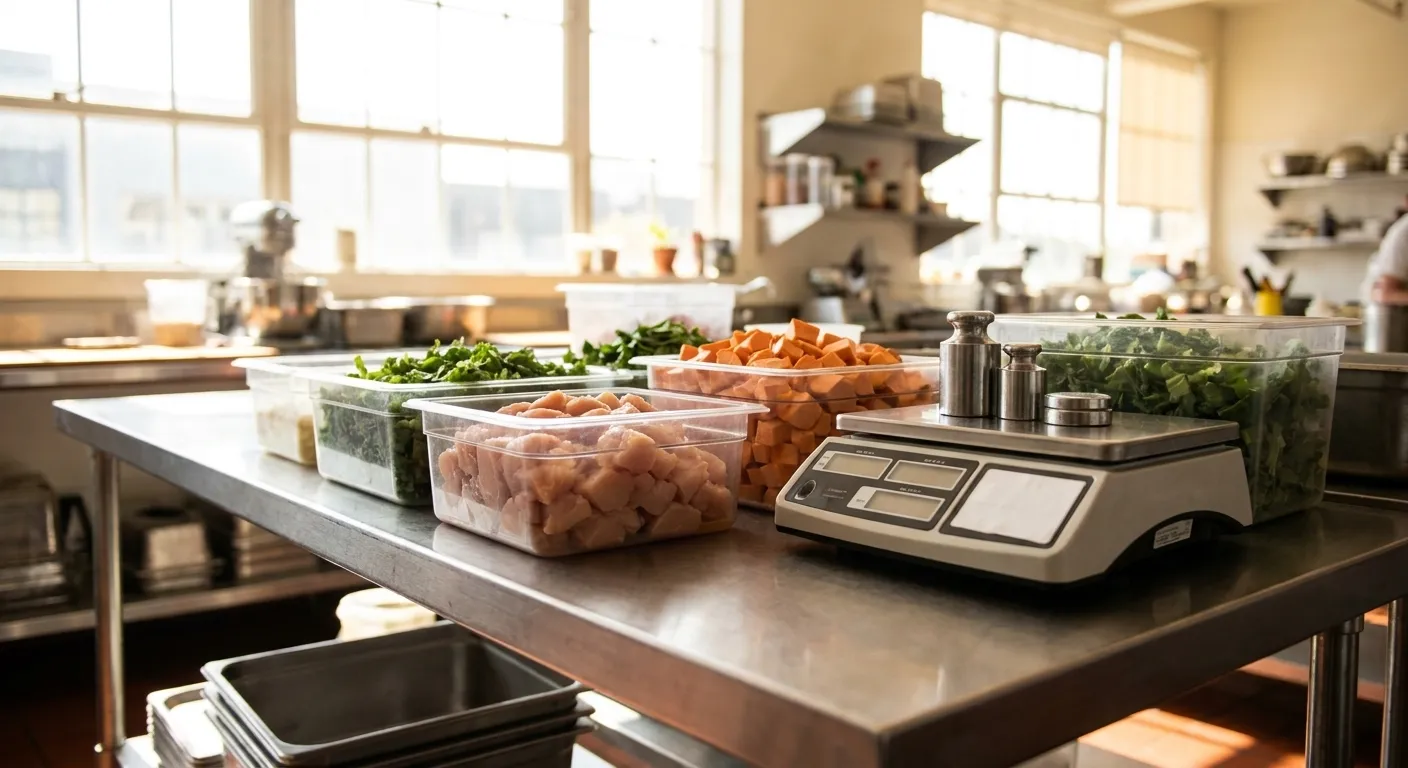
Walk into Jeffrey's Natural Pet Foods on a Wednesday morning and you'll see raw chicken breasts, organic sweet potatoes, and kale spread across steel prep tables behind a low glass partition. The smell is farmstand-clean, not pet-store musty. Staff in aprons weigh portions on digital scales, pack them into clear containers, label each with a dog or cat's name. This isn't theatrical transparency—it's how the shop has operated since 1999, long before the recent Fromm and Oma's Pride recalls sent pet owners scrambling for alternatives they could actually trust.
The timing matters. When Fromm pulled select dry-food SKUs in late July 2026 for potential salmonella contamination, and Oma's Pride issued a voluntary recall on raw frozen products in early August, Jeffrey's phone started ringing before the FDA alerts even hit mainstream news. Customers wanted to know what was safe, what wasn't, and whether the house-made meals sitting in Jeffrey's refrigerator cases carried the same risks. The answer was straightforward: the shop sources whole cuts from local ranchers, grinds and mixes everything on-site, and sells it within forty-eight hours. No industrial processing, no multi-state distribution, no batch codes to cross-reference.
That direct line from supplier to bowl has made Jeffrey's a landing spot for recall-rattled owners all summer. The North Beach location at 1841 Powell Street—tucked between the Powell Street cable-car turnaround and Washington Square Park—has seen a twenty-percent uptick in new customers since mid-July, many clutching printouts of recall notices and asking pointed questions about sourcing, handling protocols, and what 'raw' actually means when a bag of kibble also claims the term.
The weekday rotation system
Jeffrey's doesn't stock a freezer wall of generic raw patties. Instead, the kitchen follows a fixed weekly schedule: Monday alternates between lamb with yams and venison with root vegetables, Tuesday is turkey with greens, Wednesday chicken with sweet potato, Thursday beef with mixed vegetables, Friday duck with quinoa. Regulars know to show up on their pet's preferred protein day. If your dog only eats beef, you come Thursday. If your cat needs poultry, Wednesday or Tuesday. The system sounds rigid until you realize it solves the core problem that triggered the Fromm and Oma's Pride recalls in the first place—traceability collapses when a manufacturer runs dozens of recipes through the same equipment on overlapping schedules.
Each morning's batch is small enough that staff can name the farm or processor that supplied the meat. The beef comes from Marin Sun Farms, the chicken from Diestel Family Ranch in Sonora, the lamb from ranches in Petaluma. Vegetables are organic, sourced through a produce co-op that delivers twice weekly. When a customer asks whether Jeffrey's has ever faced a recall, the answer is no, but the explanation matters more: the operation is too small and too traceable to lose track of an ingredient. If something were contaminated, they'd know which five-pound batch it came from and which twelve customers bought it, all within an hour.
The shop also sells commercial brands—bags of Orijen, Acana, Stella & Chewy's line the shelves—but the staff can tell you in real time which SKUs are affected by active recalls. A printed sheet taped to the register lists current alerts, updated every Monday. During the Fromm recall, Jeffrey's pulled the implicated dry-food varieties off the shelf the same afternoon the FDA posted the notice. Customers who'd bought those bags in the prior two weeks got phone calls. That kind of follow-through is rare in a city where most pet-supply chains rely on corporate headquarters to push recall updates down to store level, often days late.
What fresh costs, and what it solves
A pound of Jeffrey's house-made raw chicken runs about eleven dollars. A pound of beef is ten. That's triple the per-pound cost of mid-tier kibble and double what you'd pay for premium freeze-dried raw brands like Stella & Chewy's. But the recall chaos has reframed the value equation. Customers who spent years buying Fromm or Oma's Pride because those brands felt 'safer' than grocery-store kibble are now questioning whether any mass-produced food is worth the anxiety of checking recall databases every week.
Jeffrey's offers a subscription model that narrows the price gap: seventy-five dollars per week buys roughly seven pounds of food, portioned for a medium-sized dog or two cats. That weekly delivery includes free drop-off anywhere from San Francisco to Mountain View, which saves the gas and parking hassle of driving to North Beach. For customers who prefer walk-in purchases, the shop is open 10 a.m. to 7 p.m. every day, though the kitchen preps from 8 a.m. onward. If you call early—before nine—and your order is already packed, staff will sometimes let you slip in through the back door off the alley, skipping the official opening wait.
The calculus gets simpler if your pet has had health issues tied to processed food. One regular, a woman with a twelve-year-old Lab, switched to Jeffrey's raw meals after her dog developed chronic digestive problems on grain-free kibble. Within three weeks, the symptoms cleared. She now spends about ninety dollars a week on food but saves twice that on vet visits and prescription digestive aids. The Fromm recall didn't affect her dog directly, but it validated her decision to leave the commercial-brand ecosystem entirely.
How recalls change the conversation
Before the Fromm and Oma's Pride alerts, most customers who walked into Jeffrey's were either raw-food converts or skeptics testing the water. The converts wanted organ-meat add-ins and bone-broth toppers. The skeptics wanted reassurance that raw feeding wouldn't make their dog sick or require a second mortgage. The recalls shifted that dynamic. Now the skeptics arrive already convinced that commercial pet food carries risk; they just want to know whether Jeffrey's raw meals carry different risks, and whether those risks are easier to manage.
The staff's answer is detailed and unsentimental. Yes, raw meat can harbor bacteria—salmonella, listeria, E. coli. That's why Jeffrey's kitchen follows restaurant-grade sanitation protocols: stainless steel surfaces sanitized between batches, separate cutting boards for different proteins, staff trained in safe handling. The food is never cooked, so there's no kill step, but it's also never held long enough for bacteria to multiply. Most meals are portioned, sold, and fed within twenty-four hours. The risk isn't zero, but it's localized and controllable in a way that a recall affecting thousands of bags distributed across fifteen states is not.
The shop also stocks freeze-dried and dehydrated raw brands for customers who want the nutritional profile of raw food without the handling concerns. Those products have their own recall history—Oma's Pride's August alert covered frozen raw, not freeze-dried, but other brands have faced scrutiny—so Jeffrey's treats them as a middle option, not a safer one. The real safety, the staff argues, is knowing exactly what you're feeding and where it came from. That's hard to achieve with any product that comes in a sealed bag printed three states away.
Practical notes
Jeffrey's Natural Pet Foods is at 1841 Powell Street in North Beach, open 10 a.m. to 7 p.m. daily. The shop is a two-block walk uphill from the Powell-Mason cable car's North Beach terminus, or a ten-minute walk from the Columbus Avenue bus corridor. Street parking is scarce; the nearest garage is at 766 Vallejo Street. Weekly raw-food subscriptions start at seventy-five dollars and include free Bay Area delivery; walk-in purchases run ten to twelve dollars per pound depending on protein. Call (415) 402-0342 or email northbeach@jeffreyspets.com to confirm the day's recipe or arrange early pickup. The kitchen preps Monday through Friday starting at 8 a.m.; weekend meals are prepared Friday and sold through Sunday.
Tags: #PetFoodRecalls #RawPetFood #NorthBeachSF #SanFranciscoPets #FrommRecall #OmasPrideRecall #FreshDogFood #HandmadePetFood #PowellStreetSF #BayAreaPets #RecallAlternatives #DogFoodSafety #CatFoodSF #PetNutrition #LocalPetShop
All trademarks are the property of their respective owners.
Ask Karpo first
Need help finding recall-free pet food in other Bay Area neighborhoods, or want real-time alerts when new batches get pulled? Ask Karpo to track fresh-food suppliers near you, compare subscription pricing, or map the fastest route from your address to verified kitchens that prep daily. I'll keep you updated when commercial brands issue new warnings.