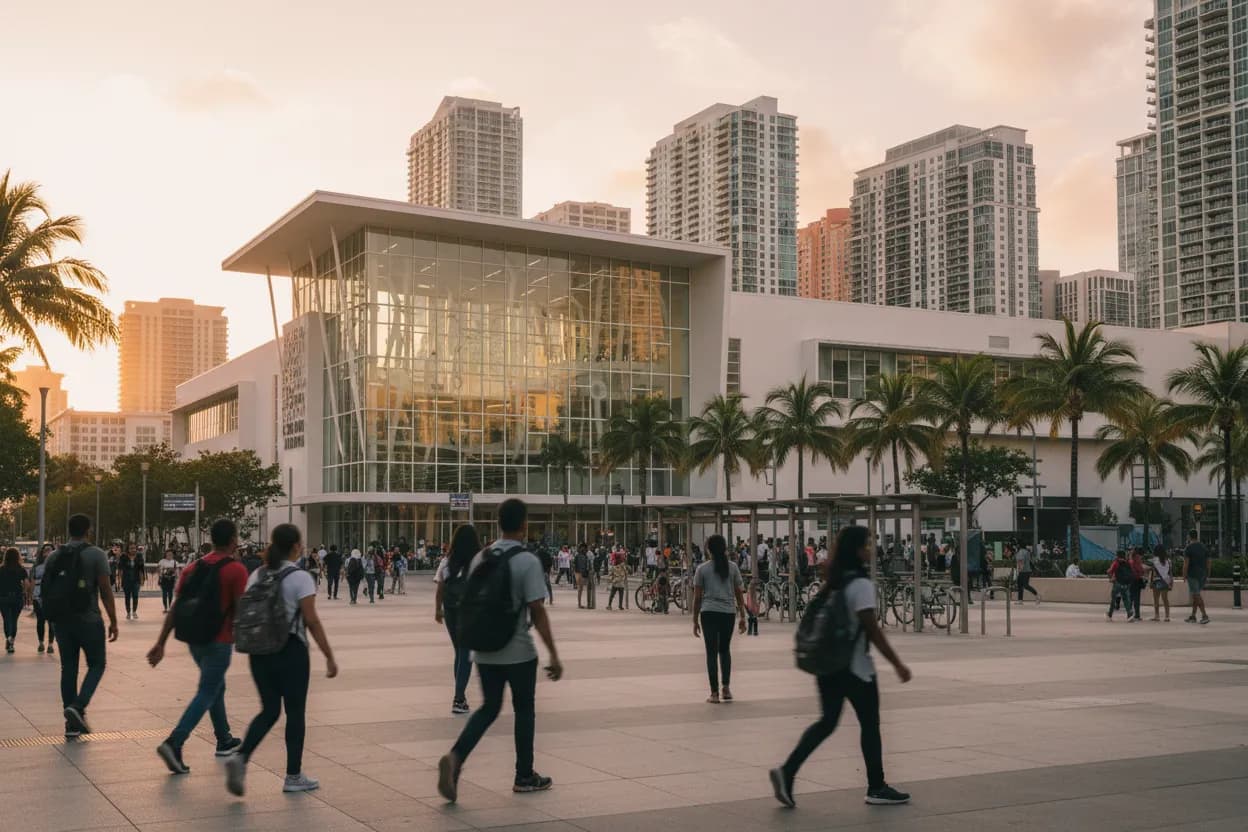
Miami families do not need another rumor to manage during back-to-school week; they need a way to test one. If a student sees jeffrey dean morgan moving across feeds, the useful local question is not whether Miami has a secret appearance to chase. It is how to verify public information, compare sources, and choose a realistic study route without wasting an afternoon. This plan treats the search as a civic research exercise for Miami-Dade: start with the public library system, check County transportation notices before moving, avoid claims that cannot be backed by official pages, and build in a nearby reset if the first stop is crowded, closed, or simply not right for the assignment.
Want a faster before-you-go check for a Miami study stop, transit route, or official-source question? Text Karpo with the location and task before you leave.

Turn curiosity into a research question
Start by changing the search from fan curiosity into a verifiable assignment. A student searching jeffrey dean morgan can write three columns: what is confirmed, what is commentary, and what is unknown. For Miami purposes, the confirmed column should come only from official public pages or primary reporting the student can name. The unknown column is just as important, because it prevents a celebrity search from becoming a local claim with no support.
Set a time box before anyone leaves home. Use the first 15 minutes to define the question: Are you researching an actor’s work, checking whether a public event exists, or practicing source evaluation for a media literacy assignment? If the answer depends on a Miami location, appearance, ticket, school visit, or endorsement, require a public official page before treating it as real. No public page means no trip built around it.
For a back-to-school household, this is also a crowd-control habit. Miami afternoons can turn quickly from a quick errand into a long transit loop. A student who can explain why a claim is unverified has already done useful work, even if the original celebrity hook turns out to be nothing more than a trending search.
Start with a reliable public resource
The Miami-Dade Public Library System is the cleanest first stop because it is designed for public access, research, and school-year routines. Its official site points users to account login, library card access, branch finding, catalog browsing, learning and training, eBooks, audiobooks, and more. It also lists online newspapers and magazines for staying current and reading articles with context rather than relying on screenshots.
Before choosing a branch, check the library site directly. The official notice says the Miami Lakes Branch and South Dade Regional Libraries are closed for construction, renovations, and improvements. That matters if a student is building a study plan around a familiar branch. Use the library’s location tools and “Open Now” function rather than assuming last semester’s routine still works.
If the assignment can be done remotely, consider the library’s digital route first. The system describes eContent as digital books, audiobooks, movies, music, and more, available anytime and anywhere free with a library card. That can be the best option when the goal is background research, not a physical study table.
Compare primary reporting before opinions
Once the library route is set, use it to separate primary reporting from reaction. Online newspapers and magazines are useful because they can show dates, bylines, corrections, and context. A student should compare at least two pieces before summarizing anything about a public figure, entertainment news, or a supposed Miami connection. The task is not to collect the loudest opinion; it is to identify what each source can actually prove.
Be especially careful with claims that create a reason to gather in person. If a post suggests an appearance, filming location, school event, restaurant visit, or private access, do not repeat it as fact without an official public source. The absence of confirmation is not proof that something is hidden. In local life planning, it is a signal to stay flexible and avoid sending students or families toward a crowd.
For a school notebook, have the student write one sentence for each source: what it says, where it got the information, and what it does not say. That last phrase keeps the research honest. It also makes the difference between a celebrity search hook and a Miami-ready verification habit.
Choose a study stop that fits the task
Pick the stop based on the work, not the rumor. If the student needs quiet reading, choose a library branch that the official site shows as available before departure. If the task is digital article comparison, a home setup with a library card may be enough. If the student needs help finding materials, use the library’s customer care, catalog, learning and training, or branch tools as the planning layer.
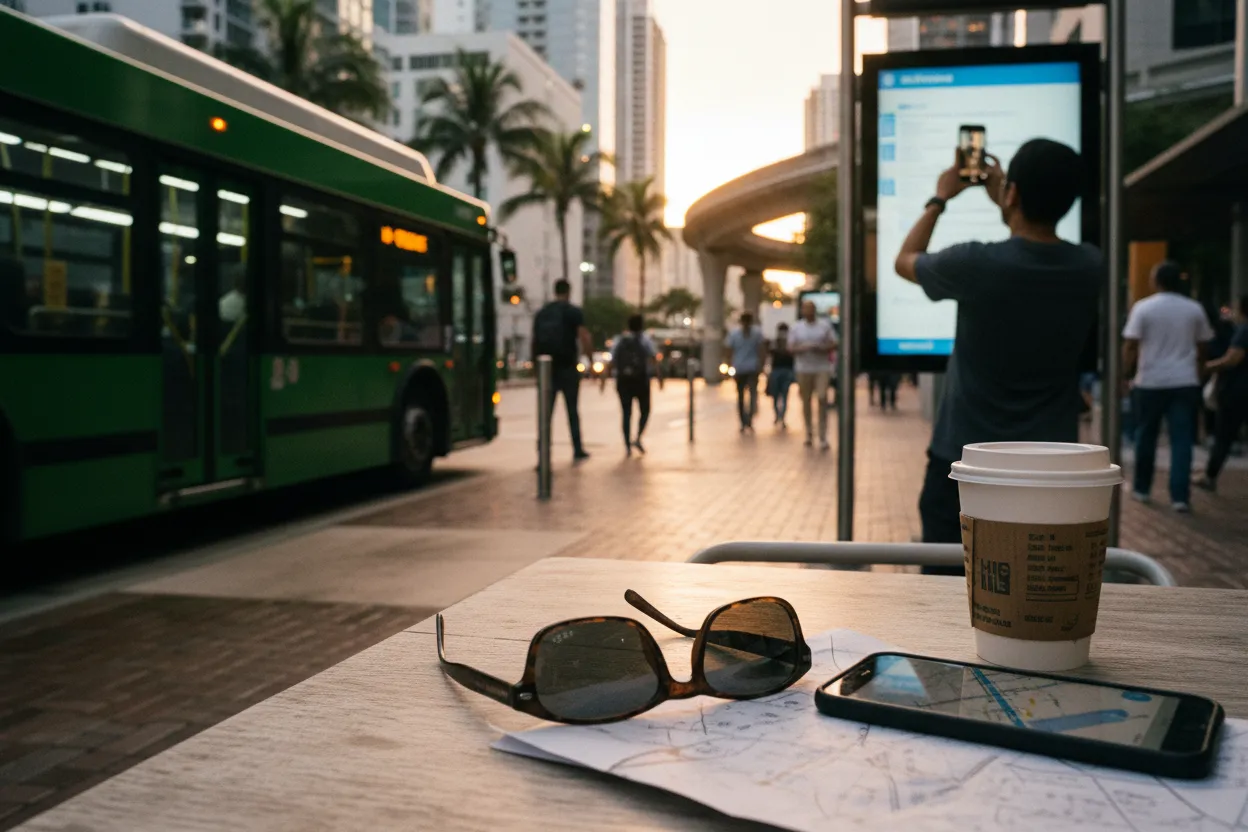
Then check transportation. Miami-Dade Transportation and Public Works says riders can plan routes, read service updates and rider alerts, and track buses and trains in real time. It also points to Metrobus, Metrorail, Metromover, MetroConnect, transit pass information, and the GO Miami-Dade Transit mobile app for planning, tracking, and mobile pass functions. Use those tools before committing to a branch or study stop.
Build extra caution into any route involving Metromover this week. The County notice says that on Saturday, Aug. 15, Metromover service will begin operating at 2 p.m. while upgrade work continues. Because service information can change, verify the current rider alerts and the station or route status on the official transportation page before leaving.
Add one low-cost reset nearby
Every Miami back-to-school plan needs a backup that does not depend on a celebrity claim, a perfect commute, or a full seat count. The simplest reset is to switch from the physical trip to library eContent, online newspapers, or catalog work with a library card. That keeps the assignment moving if a branch is closed, the room is too busy, or the transit plan becomes inconvenient.
If you are already out, use the reset as a decision point rather than a detour spiral. Check official transit alerts, elevator and escalator status if accessibility matters, and real-time bus or train information before choosing the next move. The County transportation page also directs riders to report problems, sign up for transit alerts, and review service updates, which are more useful than guessing from a platform.
For students, the reset should still produce evidence. Save the article citation, note the library tool used, or write down the official page that changed the plan. That turns a disrupted afternoon into a documented research process, which is often stronger than a rushed trip built around an unverified search.
Verify hours and access before leaving
Do the final check in this order: library status, branch choice, digital alternative, transit route, rider alerts, and accessibility needs. The library site includes location and account tools, news signup, policies, catalog browsing, eGovernment, and eBooks or audiobooks. The transportation site includes trip planning, service updates, rider alerts, transit tracking, and elevator and escalator status. Use the official pages because they are the places most likely to reflect operational changes.
Do not assume that a previous visit, a social post, or a classmate’s message is current. Construction, renovations, service upgrades, single-tracking work, and route conditions can affect a normal school-week plan. The point is not to make the day complicated; it is to remove avoidable surprises before a student is standing outside a closed door or waiting for a route affected by an alert.
The Miami rule for a search like jeffrey dean morgan is simple: enjoy the curiosity, but verify the local action. If there is no official public confirmation of a Miami appearance or event, do not build the route around one. Build it around a library task, a checked transit plan, and a backup that still helps the school assignment get finished.
Tags: #jeffreydeanmorgan #Miami #MiamiDade #BackToSchool #StudentResearch #MediaLiteracy #MiamiDadeLibrary #MiamiDadeTransit #TransitAlerts #LibraryCard #SourceChecking #LocalPlanning #AskKarpo #BeforeYouGo
Sources consulted: mdpls.org · miamidade.gov · miamidade.gov
All trademarks are the property of their respective owners.
Ask Karpo first
Ask Karpo first when a Miami plan starts with a viral name instead of a verified destination. Send the task, neighborhood, and transit preference, and check the public-source route before you spend time, money, or school-night energy chasing an unconfirmed claim.