
When baseball analytics enthusiasts gather in Los Angeles to discuss prospects like jefferson rojas cubs development trajectories, the choice of restaurant becomes more than a meal—it's an extension of the conversation itself. The challenge lies not in finding places to eat, but in coordinating reservations that accommodate fluctuating group sizes, align with evening meetup schedules, and provide the table configurations that support animated statistical debates. Unlike casual dining, analytics group coordination requires balancing arrival time uncertainty, discussion overflow potential, and the practical reality that some members may join late or leave early depending on their Metro connections and work schedules.
Text Karpo your starting point, timing, group size, and priorities for a Los Angeles plan tailored to this exact situation, with one realistic backup before you leave.

Mapping Restaurant Proximity to Analytics Meetup Zones
The first coordination decision involves identifying which Los Angeles neighborhoods host regular baseball analytics discussions and which restaurants cluster near those venues. Downtown LA, Hollywood, and certain Westside areas tend to anchor recurring meetup groups due to Metro accessibility, but no single neighborhood monopolizes the analytics community. Rather than committing to a specific restaurant before confirming the meetup location, coordinators benefit from maintaining a flexible list of three to four backup options within a half-mile radius of likely venues, then polling the group forty-eight hours before the gathering to lock in both location and headcount.
Metro rail and bus routes documented at metro.net provide the framework for evaluating restaurant accessibility, since many analytics enthusiasts rely on public transit for evening events. A restaurant two blocks from a Metro station offers fundamentally different coordination dynamics than one requiring a ten-minute walk or rideshare connection. The tradeoff emerges between choosing highly accessible chain restaurants near transit hubs versus neighborhood spots with better ambiance but requiring members to navigate unfamiliar streets after dark. Coordinators should verify that the restaurant's address appears on standard mapping apps and that the walking route from the nearest Metro stop avoids construction zones or poorly lit stretches, particularly for meetups extending past 9 PM.
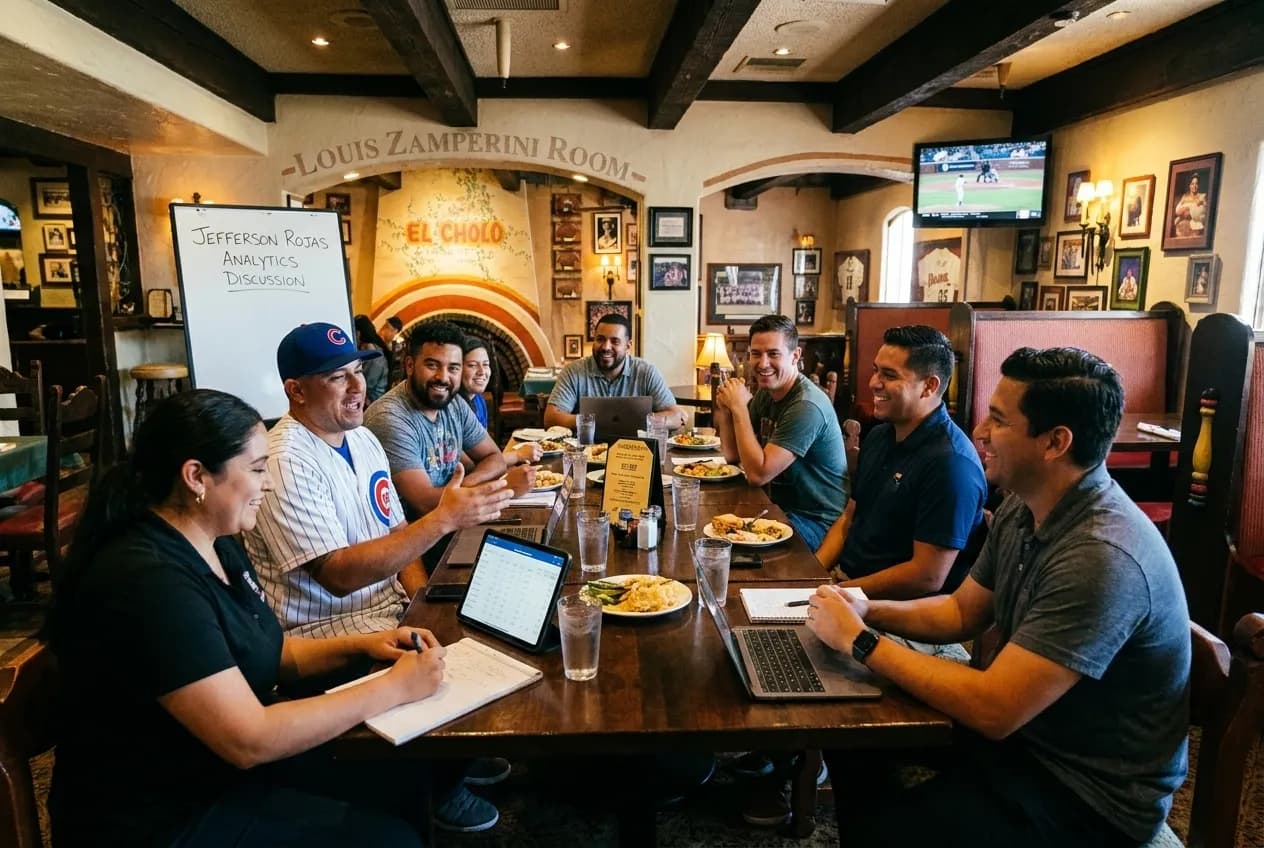
Reservation Timing Strategies for Fluctuating Group Sizes
Baseball analytics meetups rarely deliver precise headcounts more than twenty-four hours in advance, creating a reservation dilemma: book too small and risk turning away interested members, book too large and face awkward empty chairs or cancellation fees. The intermediate solution involves calling restaurants directly to ask about their group-size flexibility policies rather than relying on online reservation platforms that lock in exact numbers. Some establishments allow a plus-or-minus-three variance without penalty if notified by 3 PM on the day of the event, while others require firm counts seventy-two hours ahead, making them poor fits for analytics groups that finalize attendance through day-of group chats.
The evening pre-meetup dinner window typically spans 6 PM to 7:30 PM, positioning the meal as a social warm-up before the main analytics discussion begins around 8 PM. This timing creates competition for restaurant tables during peak dinner hours, when many LA establishments prioritize quick-turn two-tops over lingering groups. Coordinators gain leverage by offering restaurants a clear end time—"we'll vacate by 7:45 PM"—which allows the venue to plan a second seating. Alternatively, scheduling dinner for 5:15 PM captures the tail end of early-bird availability but requires members to leave work unusually early, a tradeoff that works better for weekend meetups than weekday gatherings.
Table Configuration Requirements for Discussion-Friendly Seating
Not all group tables support the conversational dynamics of baseball analytics discussions. Long rectangular tables that seat eight to twelve people force those at opposite ends into separate conversations, fragmenting the group's ability to debate whether a prospect's launch angle improvements signal genuine development or sample-size noise. Coordinators should specifically request either a large round table or a square arrangement that keeps all members within comfortable speaking distance, even if that means accepting a slightly later reservation time or a less desirable section of the restaurant.
The physical environment matters beyond table shape: analytics discussions often involve pulling up smartphone screens to reference FanGraphs data, Baseball Savant visualizations, or video clips, making adequate lighting a practical necessity rather than an aesthetic preference. Restaurants with dim "mood lighting" may appeal for romantic dinners but frustrate groups trying to examine spray charts or compare minor league statistics. When calling to make reservations, coordinators can ask whether the restaurant can seat the group in a well-lit area, framing it as an accessibility consideration rather than a complaint about ambiance. Some venues offer semi-private back rooms or patio sections with brighter overhead lighting that better serve discussion-focused groups.

Menu and Ordering Logistics That Support Extended Conversations
Analytics meetup dining presents a tension between the group's desire to linger over conversation and the restaurant's need to turn tables. Coordinators can ease this friction by steering the group toward restaurants with sharable appetizer menus or tapas-style service that allows members to order incrementally throughout the evening rather than committing to full entrees upfront. This approach accommodates members who arrive hungry at 6 PM alongside those who ate a late lunch and only want light snacks, while also giving the restaurant ongoing revenue that justifies the table occupancy time.
The ordering process itself requires advance coordination to avoid the common scenario where the server visits a ten-person table and half the group hasn't yet looked at the menu because they were debating a prospect's defensive metrics. Designating one member as the "order coordinator" who collects preferences via group chat fifteen minutes before the reservation time allows the group to place orders quickly once seated, demonstrating respect for the restaurant's time while maximizing the group's discussion window. For restaurants that don't split checks easily, using a payment app to settle up afterward prevents the end-of-meal scramble that can derail post-dinner plans to continue the meetup at a nearby venue.
Contingency Planning for Last-Minute Venue or Schedule Changes
Even well-coordinated restaurant plans face disruption when the primary meetup venue changes location, a key speaker cancels, or Metro service alerts posted at metro.net indicate delays on lines that half the group relies upon. Building contingency plans means identifying a backup restaurant within the same general area that doesn't require reservations or that has a history of accommodating walk-in groups during the target time window. Coordinators should scout these backup options during prior visits or through direct phone calls, asking specifically about their policy for groups of eight-plus arriving without advance notice on weekday evenings.
The most resilient coordination strategy involves creating a tiered communication plan: a primary group chat for confirmed attendees, a secondary channel for maybe-attending members, and a clear decision deadline—typically 4 PM on the day of the event—after which the coordinator locks in the restaurant reservation and stops accommodating new additions. This structure prevents the endless "are we still meeting?" uncertainty that plagues loosely organized groups while still allowing some flexibility for members dealing with unpredictable work schedules. Posting the final restaurant name, address, and reservation time across all communication channels by 4:30 PM gives members sufficient notice to adjust their commute plans or arrange rideshares if the venue sits outside convenient Metro range.
Tags: #LosAngelesrestaurants #groupdiningcoordination #baseballanalyticsmeetups #LAMetroaccessibility #reservationstrategies #discussionfriendlyvenues #eveningdiningplanning #Cubsprospectsdiscussion #LAsocialdining #meetupvenueselection
Sources consulted: Source 1: laparks.org · Source 2: metro.net · Source 3: discoverlosangeles.com · Source 4: lacity.gov
All trademarks are the property of their respective owners.
Ask Karpo first
Ask Karpo to turn this Los Angeles idea into a current plan for your date, budget, companion, transit preference, and energy level. Karpo can narrow the route and flag what to verify before you go.


