When international fans—especially those traveling from Japan—book tickets for the 2026 US Open, the excitement of seeing world-class tennis at the USTA Billie Jean King National Tennis Center in Flushing Meadows can quickly give way to practical questions: How much time should I leave between landing at JFK and my first session? Which Queens neighborhood puts me closest to the action without sacrificing comfort? And what's the smoothest way to get from the airport to the venue without the stress of navigating an unfamiliar city under jet lag? While recent earthquake activity in Japan has reminded many travelers of the importance of flexible planning and contingency buffers, those same principles—building in extra time, choosing accommodations strategically, and mapping low-stress transit routes—apply beautifully to any international trip to New York for a major event. This guide walks through the arrival-buffer math, hotel-neighborhood trade-offs, and airport-to-Queens logistics that help international visitors enjoy the US Open without the scramble.
Text Karpo with your US Open session time and Queens starting point, and we’ll turn this arrival buffers, hotel neighborhoods, and low-stress airport-to-Queens planning into a practical local plan.
Arrival Buffers: How Much Time Between Landing and First Serve
The US Open typically runs from late August into early September, with day sessions starting during the posted late-morning window and night sessions during the posted evening-session window If you're flying in from Japan—a journey that often involves a 13- to 14-hour flight plus a layover—your body will be operating on Tokyo time while your ticket says Flushing. The temptation is to land in the morning, drop bags at the hotel, and head straight to the grounds. But seasoned international travelers build in at least one full night of sleep before attending a session. That means if your first match is a Monday night session, aim to land no later than Sunday morning. This buffer absorbs customs lines at JFK, baggage claim, the taxi or train ride into Queens, hotel check-in, a shower, a meal, and—crucially—a few hours of rest. The official US Open visitor guide emphasizes that gates open 90 minutes before the first match, and security lines can be long during opening week, so plan to arrive at the venue early rather than cutting it close.
Hotel Neighborhoods: Flushing, Long Island City, and Astoria
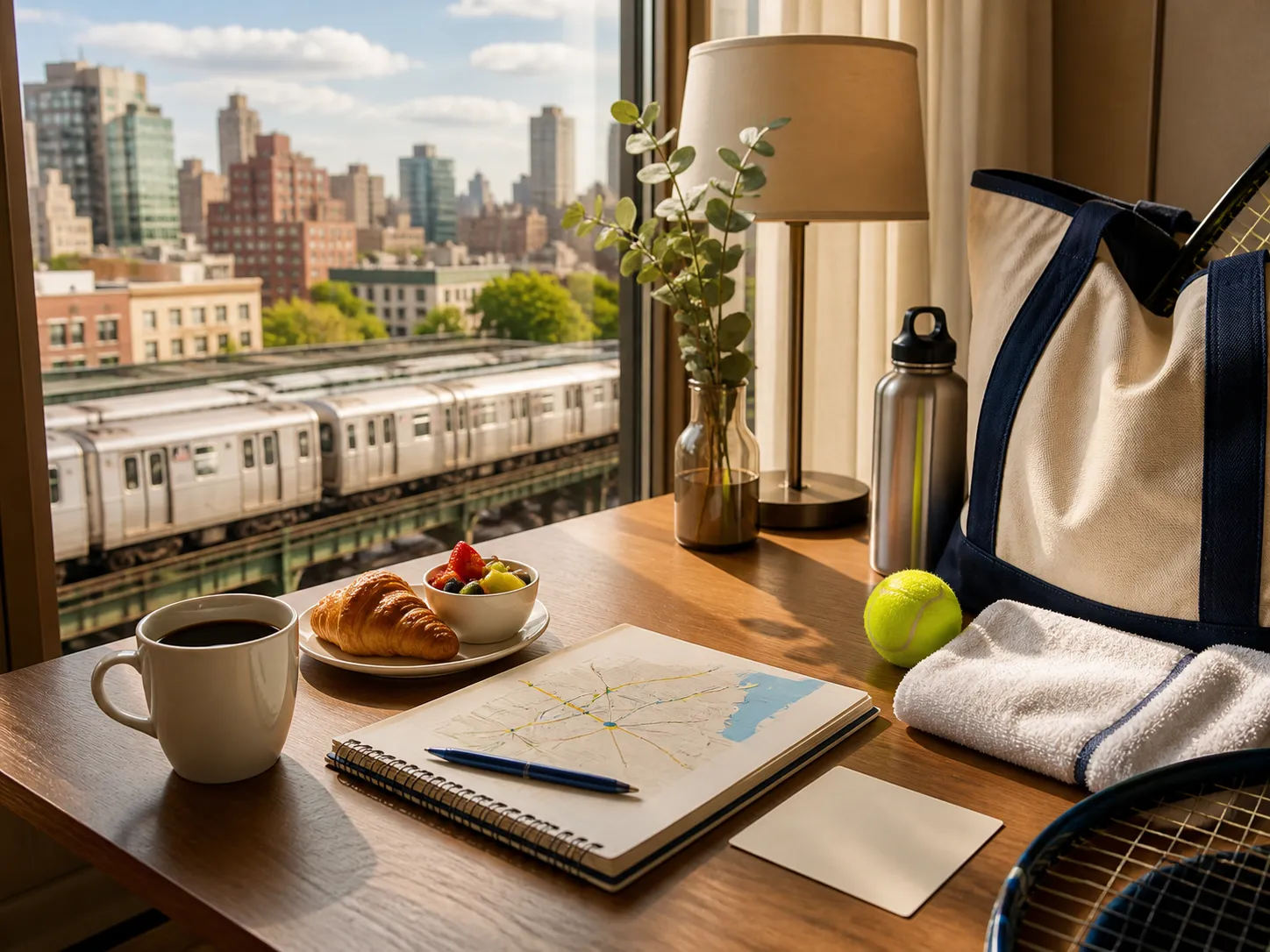
Choosing where to stay in Queens hinges on proximity to the tennis center, access to good food, and ease of onward travel. Flushing—home to the USTA Billie Jean King National Tennis Center—is the most convenient option. You're a short walk or one subway stop from the venue, and the neighborhood offers an incredible range of Asian restaurants, bakeries, and late-night spots that will feel familiar to visitors from Japan. The 7 train runs directly to the Mets–Willets Point station, which sits adjacent to the tennis grounds. Long Island City, a few stops west on the 7 or accessible via the E, M, or R trains, offers a quieter hotel scene with waterfront parks and views of the Manhattan skyline. It's about 20 minutes by subway to the venue. Astoria, served by the N and W trains, is farther but beloved for its Greek tavernas, coffee shops, and residential calm; budget 30 to 40 minutes to reach Flushing Meadows. All three neighborhoods connect easily to JFK via a combination of AirTrain and subway, making them practical bases for international visitors who want to minimize transfers.
Low-Stress Airport-to-Queens Routes
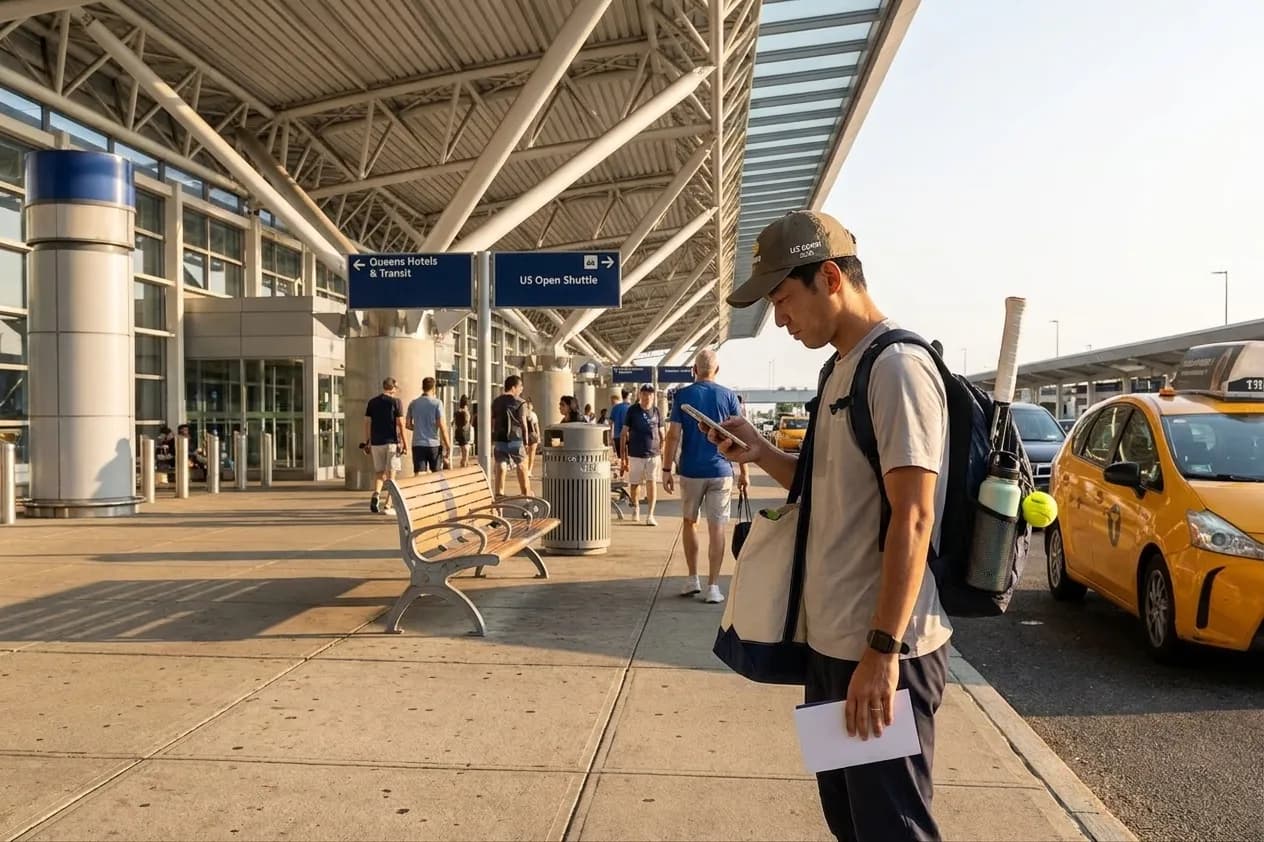
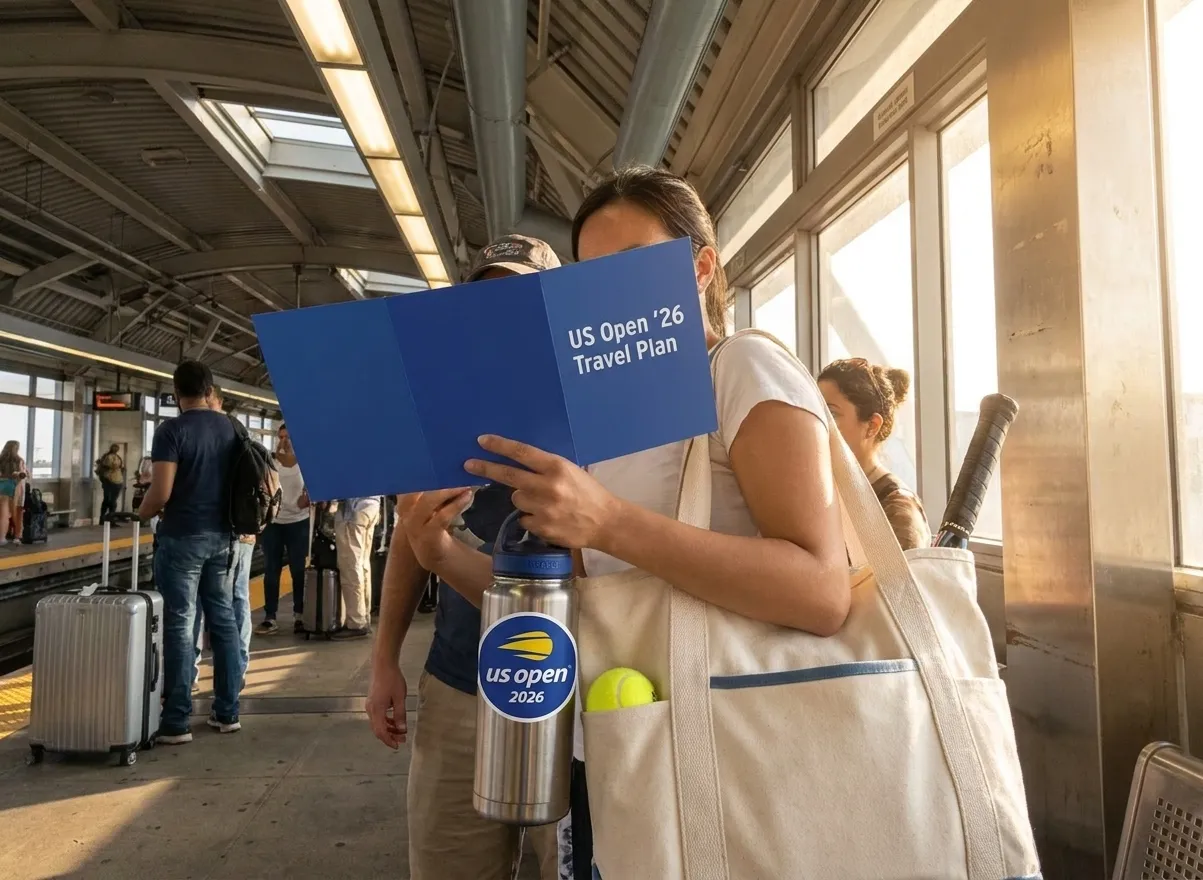
JFK Airport sits in the southeastern corner of Queens, and the most reliable public-transit route to Flushing or Long Island City involves the AirTrain and the subway. From any JFK terminal, board the AirTrain to Jamaica Station, then transfer to the E train toward Manhattan or the Long Island Rail Road. If your hotel is in Flushing, take the E to Jackson Heights–Roosevelt Avenue and transfer to the 7 train eastbound. If you're staying in Long Island City, ride the E directly to Court Square or take the LIRR to Woodside and transfer to the 7. The entire journey typically takes 60 to 90 minutes, depending on wait times and transfers. For a simpler option, a yellow taxi or rideshare from JFK to Flushing runs about 30 to 40 minutes in moderate traffic and offers door-to-door service—helpful when you're carrying luggage and tennis souvenirs. The Port Authority's JFK website lists ground-transportation options, and the MTA's trip planner can map real-time subway routes. Whichever mode you choose, download offline maps and keep your hotel address in both English and, if helpful, Japanese script for smoother communication.
What to Do With Extra Time in Queens
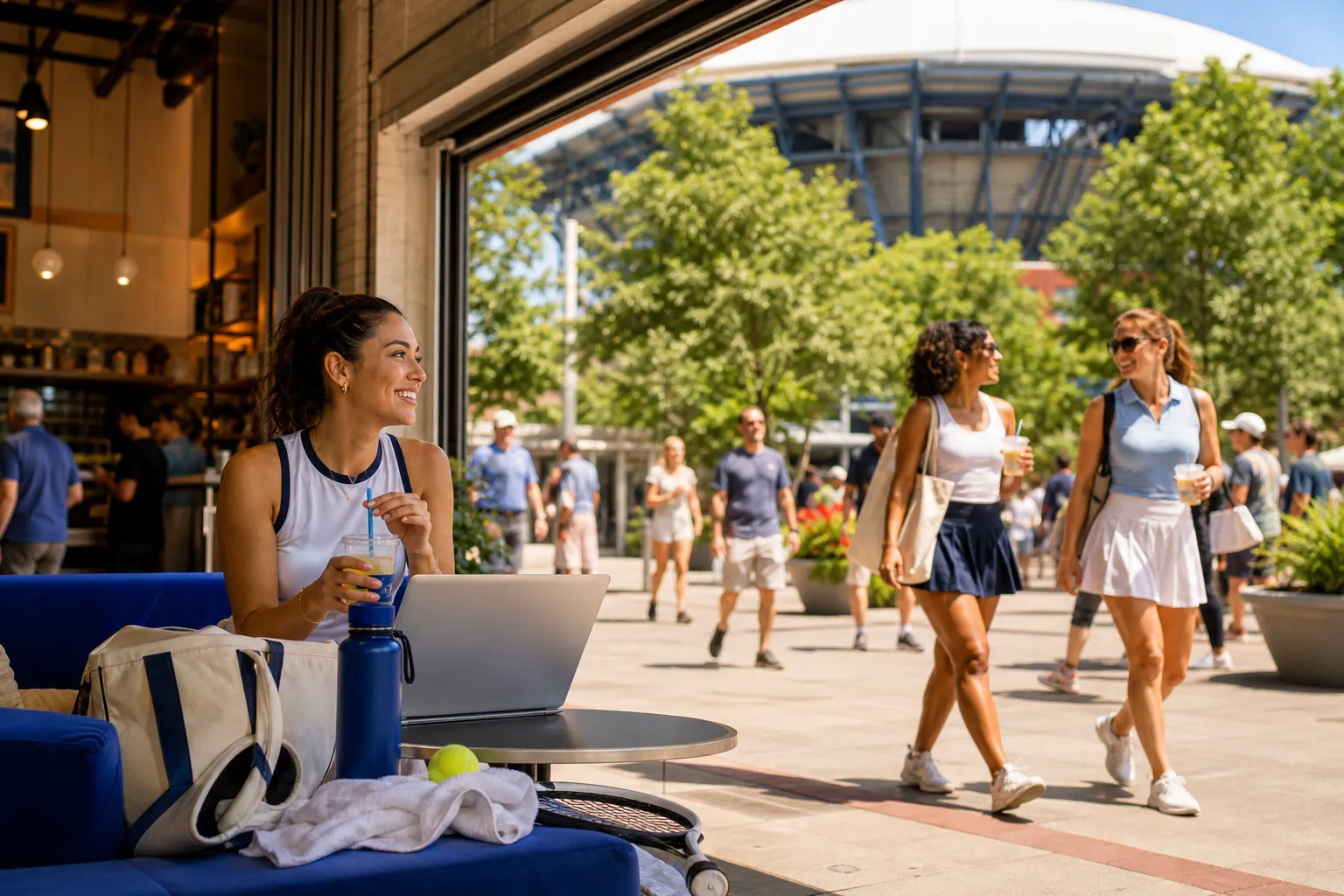
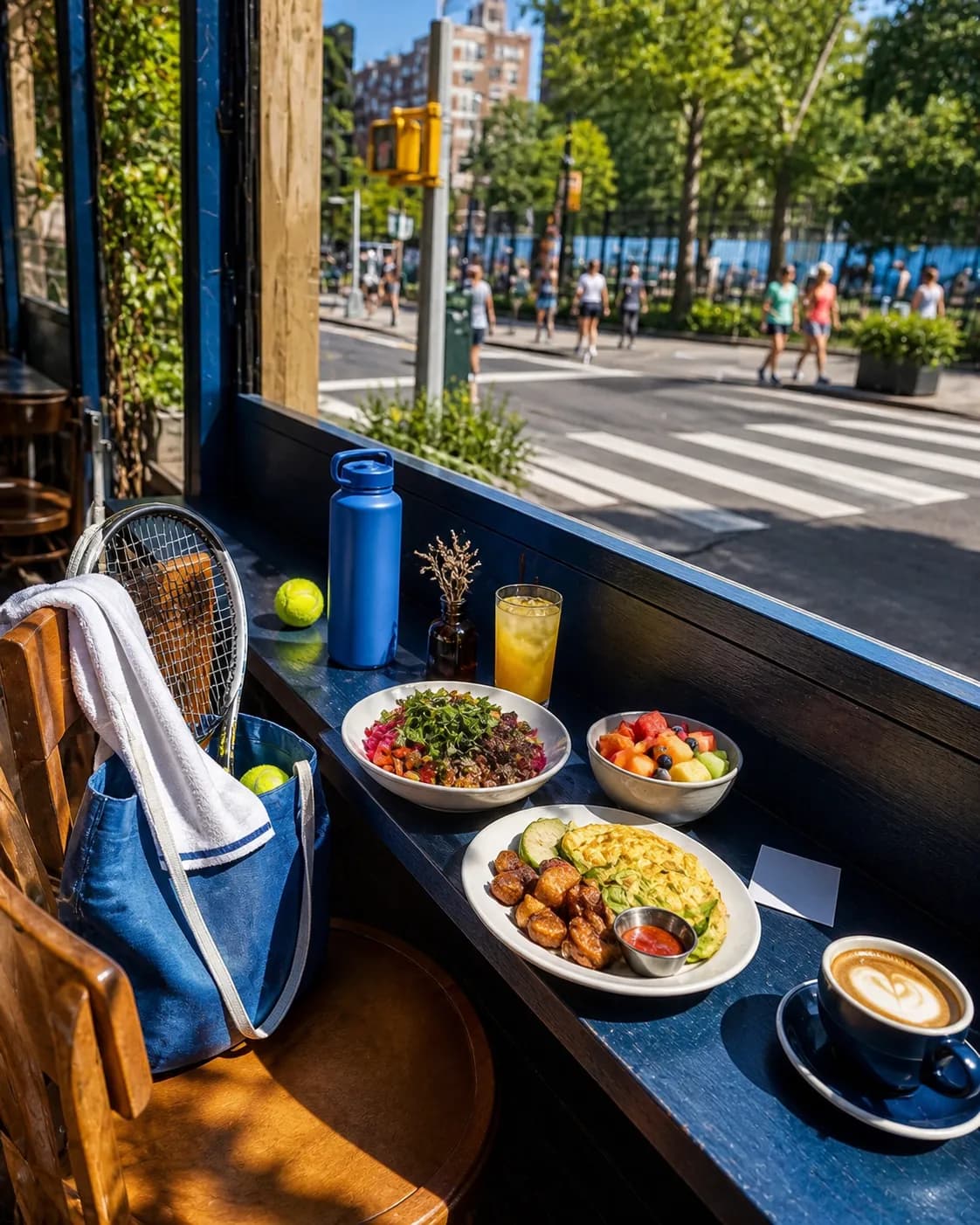
If you've built in a full day between landing and your first session, Queens offers plenty of low-key ways to shake off jet lag. Flushing Meadows Corona Park—the same park that hosts the US Open—is home to the Queens Museum, the New York Hall of Science, and the Unisphere, the iconic steel globe left over from the 1964 World's Fair. A morning walk around Meadow Lake or a visit to the Queens Botanical Garden can help reset your internal clock. Flushing's Main Street is a sensory feast: bubble-tea shops, hand-pulled noodle counters, Korean barbecue, and Japanese bakeries line the blocks around the subway station. Jackson Heights, a short 7-train ride west, is known for its South Asian and Latin American food markets. Corona, adjacent to the park, is the birthplace of Louis Armstrong and home to the Louis Armstrong House Museum. These neighborhoods are walkable, transit-friendly, and full of the kind of everyday energy that makes Queens feel welcoming rather than overwhelming.
Packing and Prohibited Items
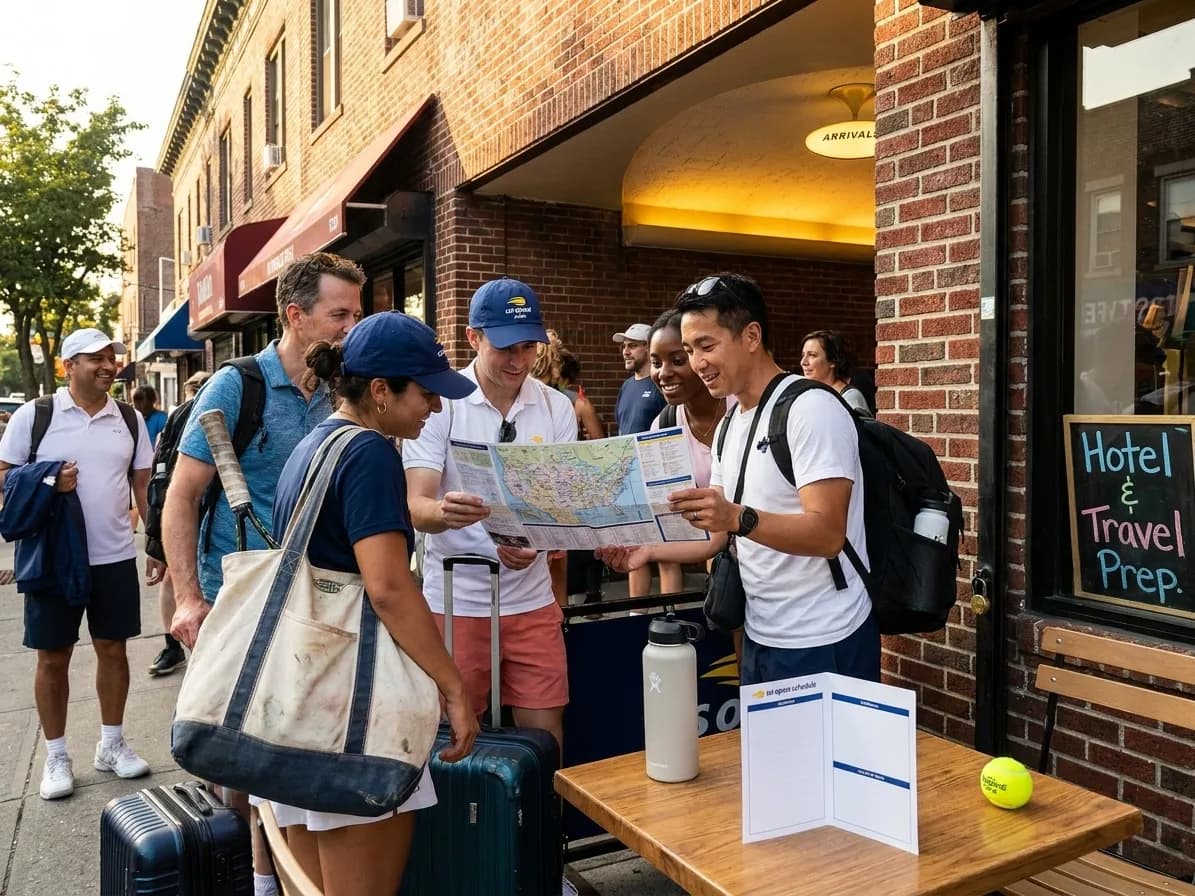
The US Open's prohibited-items list is strict: no backpacks larger than 12 by 12 by 16 inches, no outside food or beverages except one sealed plastic water bottle, no umbrellas, no professional cameras, and no selfie sticks. If you're traveling internationally, pack a small daypack or crossbody bag that meets the size limit, and plan to leave larger luggage at your hotel. Sunscreen, hats, and portable phone chargers are allowed and recommended, especially for day sessions in late-August heat. The official visitor A-Z guide covers everything from accessible seating to nursing rooms, so review it before you leave Japan. If you're bringing gifts or souvenirs, be mindful of U.S. Customs rules on food and plant products; the Port Authority and Customs and Border Protection websites offer current guidance.
Practical Notes for International Visitors
- Check your passport validity and U.S. visa or ESTA authorization well before your departure date.
- Download the US Open app for live scores, court assignments, and on-site maps; it works offline once cached.
- Bring a U.S.-compatible power adapter and consider an international phone plan or local SIM card for navigation and rideshare apps.
- Confirm your hotel's check-in time and luggage-storage policy if you arrive early in the morning.
- Review the MTA's service-status page the night before your trip to catch any planned subway work or delays.
- Keep a printed or offline copy of your US Open tickets, hotel confirmation, and emergency contacts in case your phone battery runs low.
Why Buffers Matter More Than You Think
Travel disruptions—whether from weather, air-traffic delays, or unexpected events—are part of any international journey. Building in an extra day between landing and your first US Open session isn't just about jet lag; it's about giving yourself permission to enjoy the trip rather than racing against the clock. That buffer lets you explore a new neighborhood, try a restaurant you've never heard of, and arrive at the tennis center feeling present rather than frazzled. The same mindset applies to your return journey: if your flight home departs the day after the final, book a hotel near JFK or plan to leave Queens early enough to account for traffic and security lines. The US Open is a world-class event, and treating your travel with the same care you'd give to any major trip—whether you're coming from Tokyo, Toronto, or Topeka—makes the entire experience more rewarding.
This article covers the following topics: japan earthquake, US Open travel planning, international visitors, Queens neighborhoods, JFK Airport transit, Flushing Meadows, arrival buffers, low-stress airport routes, hotel planning, 2026 US Open.
US Open, USTA, Billie Jean King National Tennis Center, and related marks are trademarks of the United States Tennis Association. MTA, AirTrain, and related marks are trademarks of their respective owners. This article is not affiliated with or endorsed by the US Open, the USTA, the Port Authority of New York and New Jersey, or the MTA.
Ask Karpo First
Tags: #USOpen2026 #Queens #FlushingMeadows #KarpoFinds #Karpo #japanearthquake #NewYorkLocal #TennisTravel #NYCLocalLife #TennisTravel
Sources consulted: usopen.org — Official event schedule · usopen.org — Official visitor A-Z guide · usopen.org — Official transportation directions · usopen.org — Official prohibited-items guide · Port Authority — JFK Airport · MTA — Transit information
All trademarks are the property of their respective owners.
Ask Karpo first
Want to know what is actually open, how to time the trip, and where to pause around Queens? Ask Karpo for the latest public US Open context, a respectful visitor plan, and a live route around Flushing Meadows before you head out.