 Westwood's Shamshiri Grill: Premier Mediterranean Food, Kabobs, and Saffron Rice
Neighborhood Guides
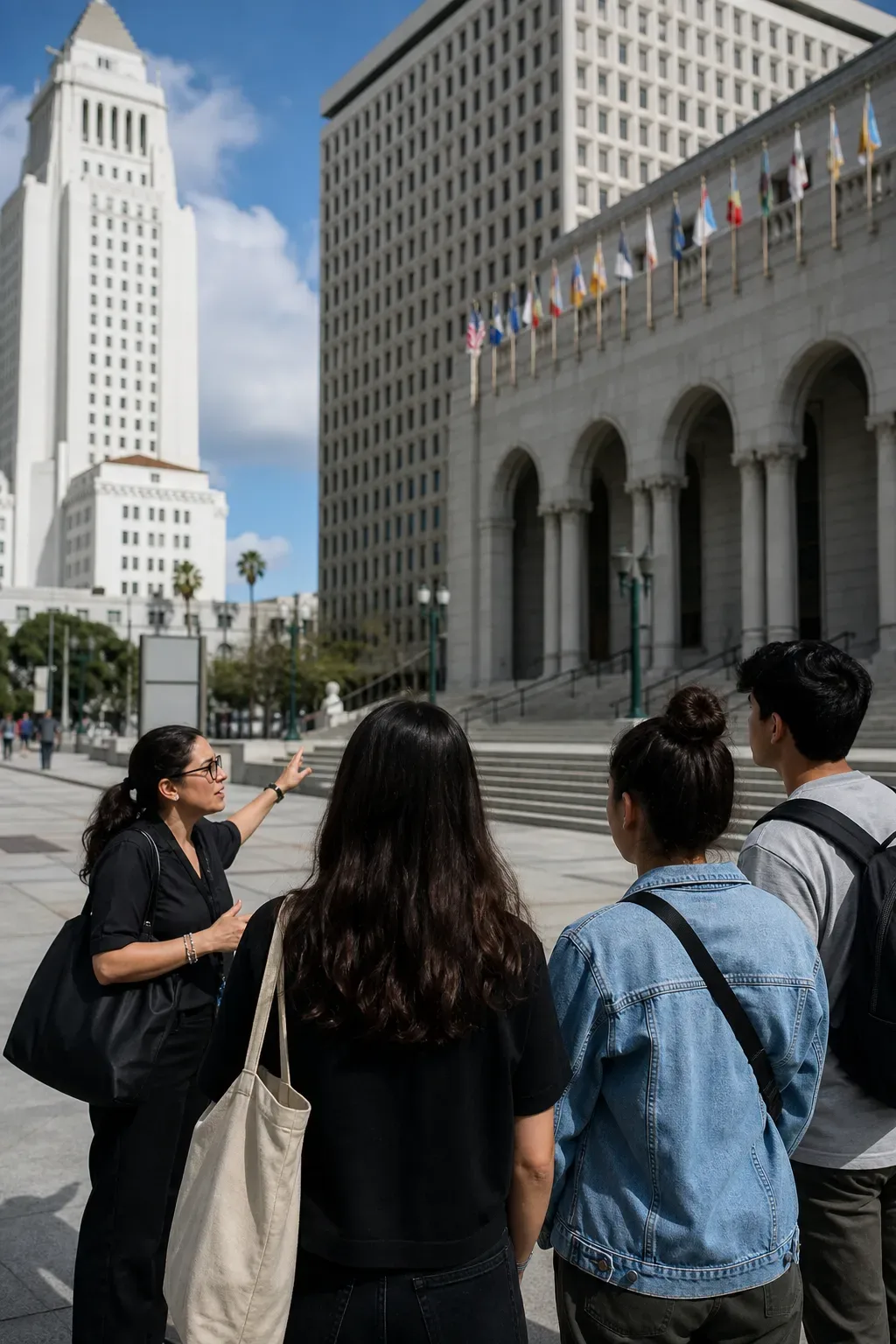
James B. Comey Career Context: LA Civic Center Legal History Walking Map
A weekday-morning Civic Center walking map for students using “james b. comey” as a civics search hook, not a local appearance claim. Pair public-space observation with library research, Metro planning, and official verification before entering any government building.
Search interest around james b. comey can be useful for a Los Angeles civics lesson, but this route treats the name as a prompt for understanding federal law, public institutions, and how legal records are verified. The plan fits an intermediate student group on a weekday morning, when the goal is structured observation rather than sightseeing overload. Start with Metro planning, move through the Civic Center area as a public-space walking map, and use nearby library and cultural resources to turn buildings into questions: who works here, what records are public, and which claims need official confirmation? Because access rules, tours, visitor galleries, and reading rooms can change, the route is built around verification habits. Students should check official agency, court, library, and transit pages before departure, then keep a backup online research task ready if a stop is unavailable.
Text Karpo your group size, preferred weekday, whether you need guided tours or self-guided access, and your civics curriculum focus. We'll map a Civic Center walking route with legal history stops and suggest a backup law library with public hours.
Start With Transit, Not Trivia
For a weekday-morning student group, the first decision is how much of the route should depend on transit timing versus walking stamina. Metro connects Los Angeles County by bus, rail, bike, van, and other services, so the practical starting point is not a famous name or a headline, but the trip plan. Use Metro’s rider tools before leaving: real-time arrivals, the trip planner, the official app, alerts, maps, and schedules. This matters because a legal history walk loses value when students arrive rushed, scattered, or unsure where the group is meeting. Build the morning around one clear arrival point, one regroup point, and one backup exit path.
Metro’s fare structure also shapes group logistics. The official rider information lists a regular fare, daily and 7-day caps, free transfers within two hours when tapping with TAP, credit, or debit card, and possible reduced or free ride programs for students, seniors, riders with disabilities, and low-income riders. For a class visit, that means the teacher or organizer should confirm payment method before the day begins, not at the station gate. Safety planning should stay practical: Metro notes security personnel and transit ambassadors systemwide, Transit Watch or Customer Care for concerns, and heat guidance that includes reducing long outdoor waits and seeking shade where possible. Those are route-design inputs, not guarantees.
Read The Civic Center As A System
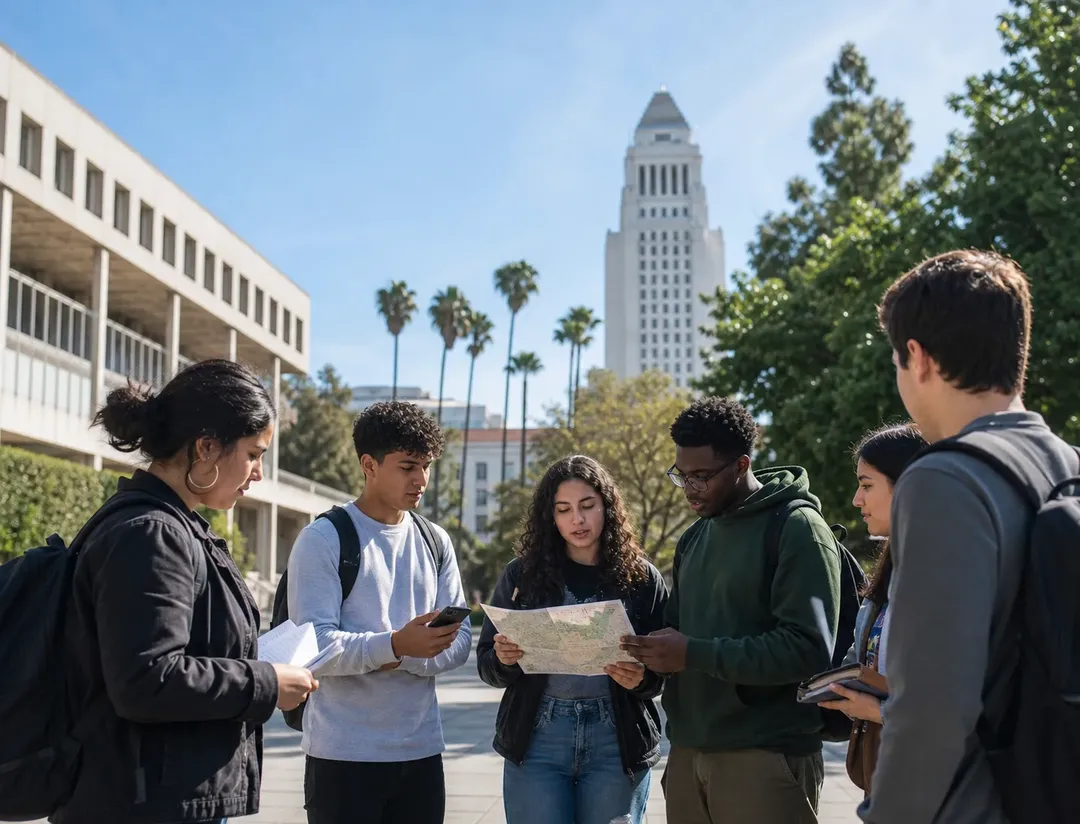
The useful frame for the Civic Center is institutional geography. A walking map for legal history should ask students to notice how federal, county, city, library, and cultural spaces cluster near one another, then separate what can be observed from what must be verified. Exterior architecture, public plazas, signage, and pedestrian connections can support discussion without requiring entry. Building interiors, visitor galleries, courthouse tours, and law library reading rooms require current official confirmation. That distinction is especially important when a keyword like james b. comey brings national attention into a local search query. The map should not suggest that a person, case, or news event is present in Los Angeles unless an official source says so.
A strong student route works in layers. The first layer is orientation: where public agencies sit, how people move between them, and how security boundaries shape civic space. The second layer is legal process: which buildings might relate to courts, investigations, public records, or civic administration, with each claim checked against the responsible institution before entering. The third layer is documentation: students compare what they saw on the street with official websites, public calendars, and library materials. This keeps the activity educational instead of speculative. It also gives teachers a clean method for handling blocked access: if a building cannot be visited, the stop becomes a field note plus an online verification exercise.
Make Libraries The Research Anchor
The Los Angeles Public Library is the best public-facing anchor in the supplied civic research stack because its event system and branch network are explicit. The library states that it hosts free events every day and provides a searchable calendar by branch location, audience, distance, ZIP code, and date range. Central Library appears as one of the selectable branches and is also listed in current event examples. For a legal history walk, that does not automatically mean a legal archive reading room is open or that a specific collection is available that morning. It does mean students have a public library framework for planning research, checking event conflicts, and locating official learning opportunities.
Use the library stop as a shift from walking to evidence. Before the trip, assign each small group one question: how public records are described, how government information is cataloged, how local history is preserved, or how an event listing differs from a primary legal document. On site, students should avoid assuming staff can support an unannounced class research session; they should verify services and collection access in advance. If the physical research plan falls through, the backup is still productive: use the library calendar and catalog search habits to show how civic learning depends on source filters, dates, branch locations, and audience fit. That is a better outcome than pretending every archive is open on demand.
Use Public Calendars To Avoid Dead Ends
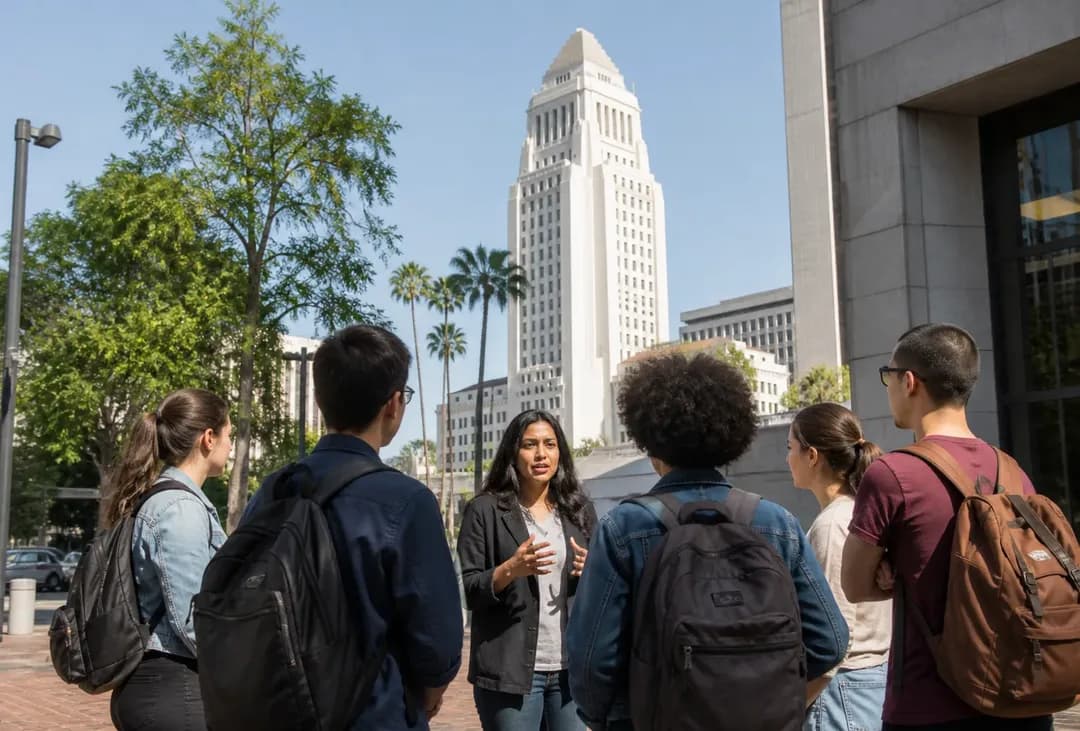
A Civic Center legal history walk should not ignore what else is happening in Los Angeles that day. The city’s visitor calendar includes categories such as Educational, Museums, Arts and Theatre, Film, Sports, and more, with region filters that include Downtown / LA Metro. For a student group, those filters are not entertainment extras; they are friction checks. A major event elsewhere may affect transit, crowding, or the group’s return timing. A relevant educational or museum listing may also become a backup activity if a government-building stop cannot be confirmed. The key is to use the calendar as a planning tool, not as proof that a legal site is accessible.
LA County’s Department of Arts and Culture adds another lens. Its stated mission includes advancing arts, culture, and creativity throughout the county, with work in civic artworks, the County’s civic art collection, arts education, research and evaluation, free community programs, and strategies that address civic issues. That matters in the Civic Center because students can read public space through both law and civic culture. If an interior legal stop is unavailable, the group can still discuss how public art, government buildings, libraries, and event calendars shape trust in institutions. The tradeoff is focus: too many cultural detours can dilute the legal-history theme, so choose only one backup connection.
Turn Each Stop Into A Verification Habit
The most defensible walking map is a sequence of questions. At a federal-building exterior, students ask which agency controls access and where official visitor rules are posted. Near a courthouse, they ask whether public galleries, tours, or proceedings are available to visitors that day, then verify before approaching security. At a library or research stop, they ask which collections are public, which require appointments, and what can be accessed online. Around transit nodes, they check Metro alerts and real-time arrivals. This makes the route intermediate: students are not just following a guide, they are learning how civic claims move from rumor to official confirmation.
Close the morning with a short evidence review instead of a dramatic final stop. Each group should name one thing they directly observed, one thing they verified through an official portal, and one thing still pending manual confirmation. That format keeps the james b. comey search hook in proportion: useful for motivating questions about federal law and public accountability, but not a license to attach national figures to local places without proof. The best fit is a civics class, pre-law club, journalism group, or legal history circle that wants a disciplined, walkable introduction to Los Angeles public institutions. The value is not access to every room; it is learning how access is checked.
Tags: #LosAngeles #NeighborhoodGuides #CivicCenter #legalhistory #studentgroup #walkingmap #publictransit #libraryresearch
Sources consulted: Source 1: metro.net · Source 2: discoverlosangeles.com · Source 3: lapl.org · Source 4: lacountyarts.org
All trademarks are the property of their respective owners.
Ask Karpo first
Ask Karpo to turn this Los Angeles idea into a current plan for your date, budget, companion, transit preference, and energy level. Karpo can narrow the route and flag what to verify before you go.
Ask Karpo for more information.
Keep reading
- Westwood's Shamshiri Grill: Premier Mediterranean Food, Kabobs, and Saffron Rice
 Best Food Places Near Me: Corporation Food Hall in Downtown LA
 Unveiling Thai Town Marketplace: Food Places Near Me in Thai Town