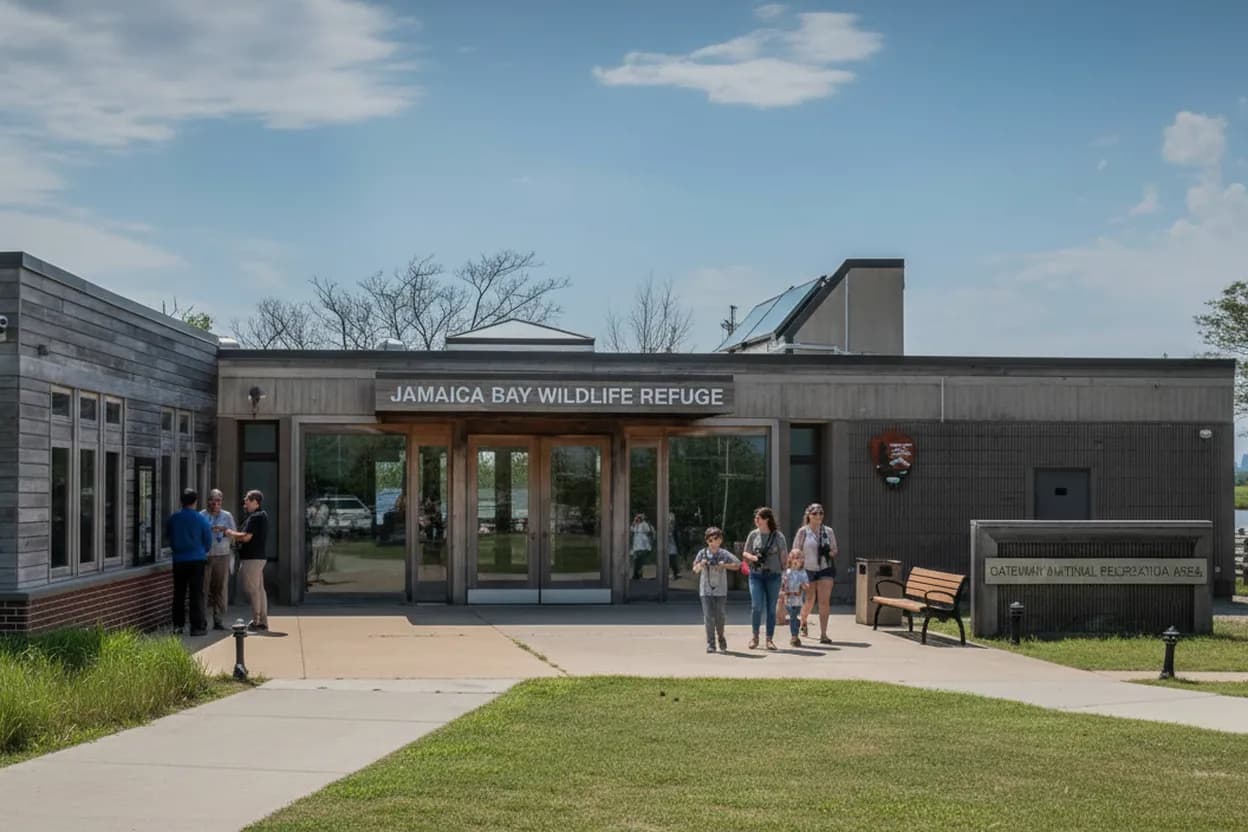
Jamaica Bay Wildlife Refuge Visitor Center is the rare Rockaway-adjacent plan that can work when nobody wants a full beach production. As of July 23, 2026, the National Park Service lists the refuge trails and parking lot as open daily from 6 a.m. to 9 p.m., while the Visitor Center is open Friday through Monday from 10 a.m. to 4 p.m. That makes early evening possible, but not effortless. Bathrooms depend on the Visitor Center being open, bikes stay off the trails, dogs are prohibited at the refuge, and mosquitoes are a real planning variable near marshes after humid, stormy weather.
Want a short, bug-smart nature reset before dinner? Text Karpo with your starting point, sunset window, and tolerance for bus timing, bathroom uncertainty, and mosquitoes.
Use Jamaica Bay Wildlife Refuge Visitor Center As A Short Loop, Not A Beach Substitute
The best version of this plan is a contained reset: arrive with enough daylight for a modest walk, pick one pond-side route, and leave before the refuge feels empty or buggy. NPS describes Jamaica Bay Wildlife Refuge as more than 12,600 acres of water, saltmarsh, ponds, fields, woods, bay, and islands, with major bird habitat. That scale sounds expansive, but your actual evening plan should be smaller and more deliberate.
This is not the right move for swimming, concessions, boardwalk energy, or a spontaneous sunset hang that depends on restrooms staying open late. It fits Queens and Brooklyn locals who want air, birds, and quiet without crossing all the way into a beach day. If one person wants a nature walk and the other only agreed to something brief, frame the outing as one loop plus a firm dinner exit.
Time The Jamaica Bay Wildlife Refuge Visit Around The 6 A.M. To 9 P.M. Site Window
The open-hours math is straightforward but important. NPS currently lists the refuge trails and parking lot as open daily from 6 a.m. to 9 p.m. That gives an early-evening window, but it does not mean every support service is available. The Visitor Center is listed separately as open Friday through Monday, 10 a.m. to 4 p.m., so a weekday evening can be trail-only with no indoor reset.
For July 23, 2026, treat sunset timing as a constraint rather than a vibe. Start early enough to see surfaces clearly, especially after scattered storms, and build in time to return to Cross Bay Boulevard before the site closes. If anyone in the group needs predictable bathrooms, shade breaks, ranger help, or indoor exhibits, this plan gets much weaker after 4 p.m. or on days the Visitor Center is closed.
Pick West Pond For The Main Jamaica Bay Walk, Then Trim If Bugs Take Over
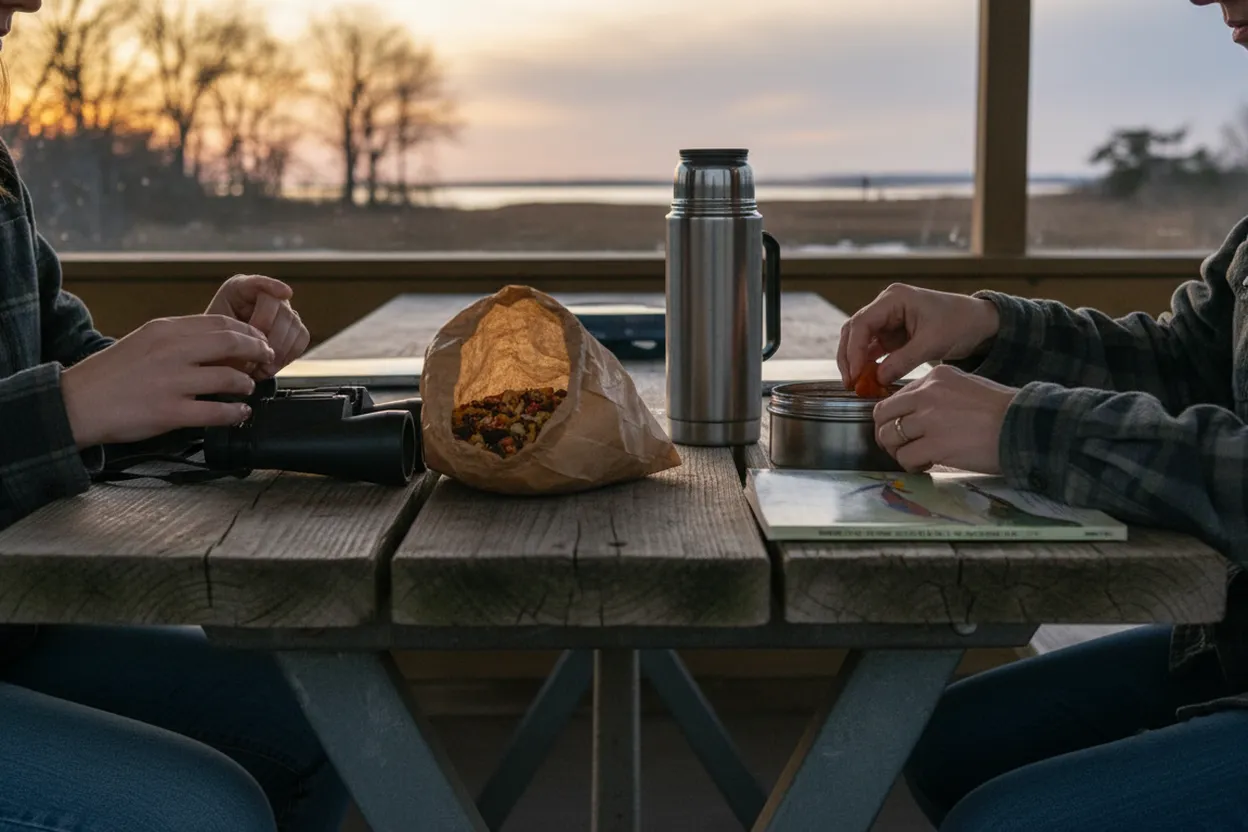
NPS says visitors can walk completely around West Pond, with shorter walking trails on the east pond and bird blinds on both paths. That makes West Pond the obvious anchor for someone who wants the walk to feel complete. It also means you should decide up front whether completion matters. In humid evening conditions, a partial out-and-back can be the more useful version than forcing the full circuit.
A bug-smart walk starts with a turnaround rule, not with a mileage goal. If mosquitoes are heavy near marsh edges, the breeze dies, or the path feels slick after storms, shorten the loop without treating that as failure. The refuge is valuable because it gives you quick exposure to water, reeds, sky, and birds. You do not need to maximize distance for the stop to justify itself before dinner nearby.
Arrive At Jamaica Bay Wildlife Refuge By Q53 SBS, Q21, A Train, Or Car With A Backup Clock
NPS lists three practical access patterns, and each needs a little patience. By subway, take a Rockaway-bound A train to Broad Channel, then walk along Noel Road to Cross Bay Boulevard and turn right for roughly three quarters of a mile to the Visitor Center. By bus, NPS lists the Q21 from Queens Center Mall or 116th Street in Rockaway, and the Q53 Select Bus Service from Woodside.
MTA Bus Time currently routes live Q53 SBS searches through its official bus-tracking site, so use that before leaving rather than relying on a saved screenshot. The failure mode is not mystery; it is waiting too long after the walk when everyone is tired and bitten. Check the return direction before committing in advance, and choose a dinner backup near your return route, not deeper into the marsh.
Plan For Mosquitoes At Jamaica Bay Wildlife Refuge Before You Plan For Photos
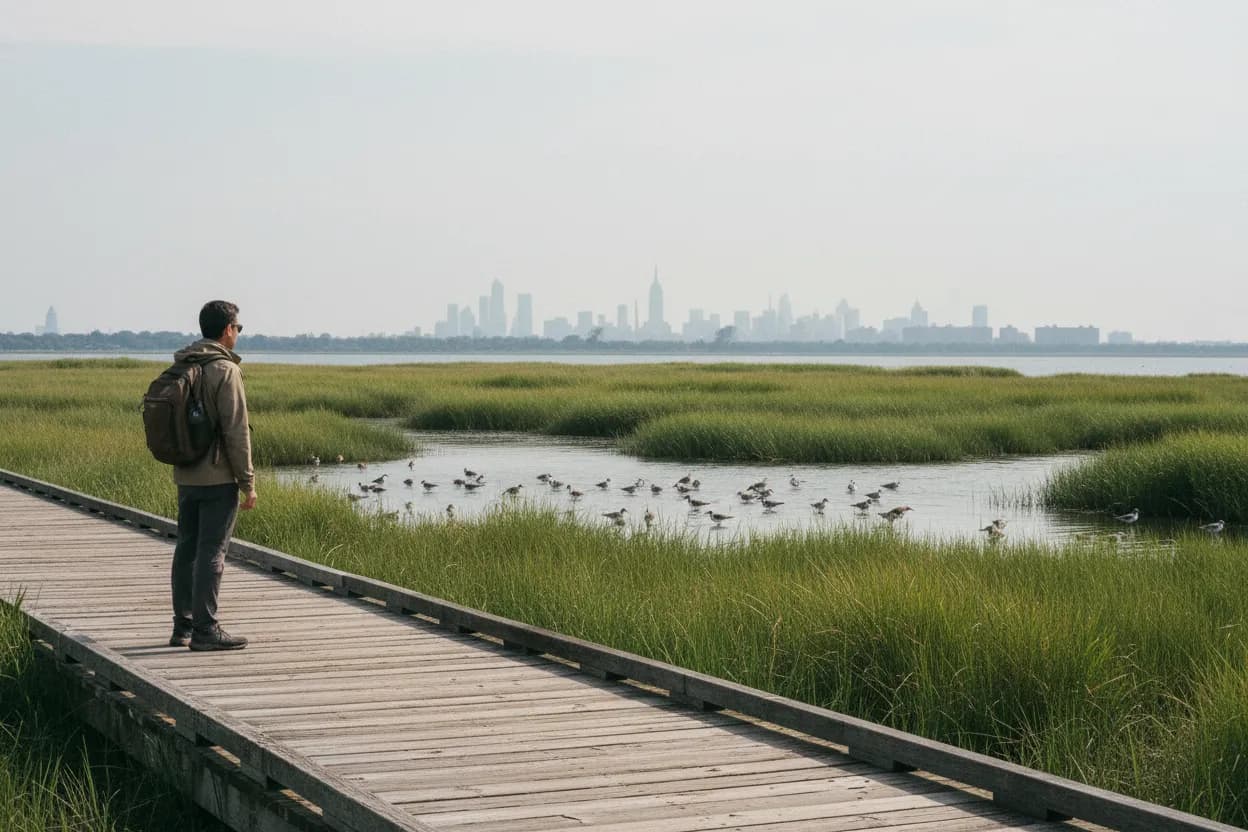
NYC Health says mosquitoes are active in New York City from April through October, with mosquitoes that spread West Nile virus most active around dusk and dawn. The agency recommends EPA-approved repellents with active ingredients such as DEET, picaridin, IR3535, or oil of lemon eucalyptus. For this refuge, that guidance is not theoretical; water, vegetation, humidity, and evening timing are all part of the setting, especially after rain.
The practical dress code is boring and effective: covered legs if you can tolerate them, repellent applied before the trail, and no scented products that make you regret the plan. After rain, assume shaded and bushy edges will be less forgiving than open breezy stretches. If one friend is bite-prone or anxious about insects, make the first bird blind or viewpoint the decision point, then either continue or pivot back.
Respect Jamaica Bay Wildlife Refuge Rules: Bikes Park Outside, Dogs Stay Home
The refuge has simple restrictions that change who this plan works for. NPS says bike racks are available, but bikes are not allowed on the Wildlife Refuge trails. Gateway’s plan-ahead page also states that dogs are prohibited at all times at Jamaica Bay Wildlife Refuge, with service dogs permitted. That rules out a casual dog walk and makes this a foot-based stop from the moment you arrive at Cross Bay Boulevard.
These rules also help preserve the experience people are coming for: birds, quiet, and fragile habitat. Keep to public trails, use bird blinds without blocking them, and skip any impulse to push into closed, muddy, or unofficial edges for a better view. If your group includes a cyclist, plan the ride as transportation only, lock at the rack, and keep the walking segment short enough to feel fair.
Make The Jamaica Bay Wildlife Refuge Go-Or-Postpone Call Before Leaving Home
The final check is practical, not philosophical. Confirm the NPS Jamaica Bay Wildlife Refuge page for trail and Visitor Center hours, then check Gateway alerts or the plan-ahead page for closures or changed conditions. Look at live MTA Bus Time if using the Q53 SBS or Q21. If bathrooms, staff, or exhibits matter, verify the Visitor Center is actually open during your intended window, not just the outdoor site.
Go if the weather has settled, your group accepts repellent, and everyone is comfortable with a short walk where transit and bathrooms may shape the ending. Skip or postpone if storms are active, dusk is too close, mosquitoes are already bad where you are, or the return bus timing looks thin. The smartest version is simple: one visible loop, one firm exit, and dinner after the refuge, not inside the plan.
Tags: #JamaicaBayWildlifeRefuge #JamaicaBay #QueensNYC #BroadChannel #GatewayNRA #NYCNature #WestPondTrail #Q53SBS #NYCTransit #BugSmart #SunsetWalk #AskKarpo #BeforeYouGo #KarpoNYC
Sources consulted: Source 1: nps.gov · Source 2: nps.gov · Source 3: nyc.gov · Source 4: nyc.gov · Source 5: bt.mta.info
All trademarks are the property of their respective owners.
Ask Karpo first
Tell Karpo your date, group size, budget, and starting neighborhood. We’ll check current access, timing, transit, and the cleanest plan for Jamaica Bay Wildlife Refuge Visitor Center before you head out.