 Best Trick or Treating Neighborhoods Near Me: Park Slope
Neighborhood Guides
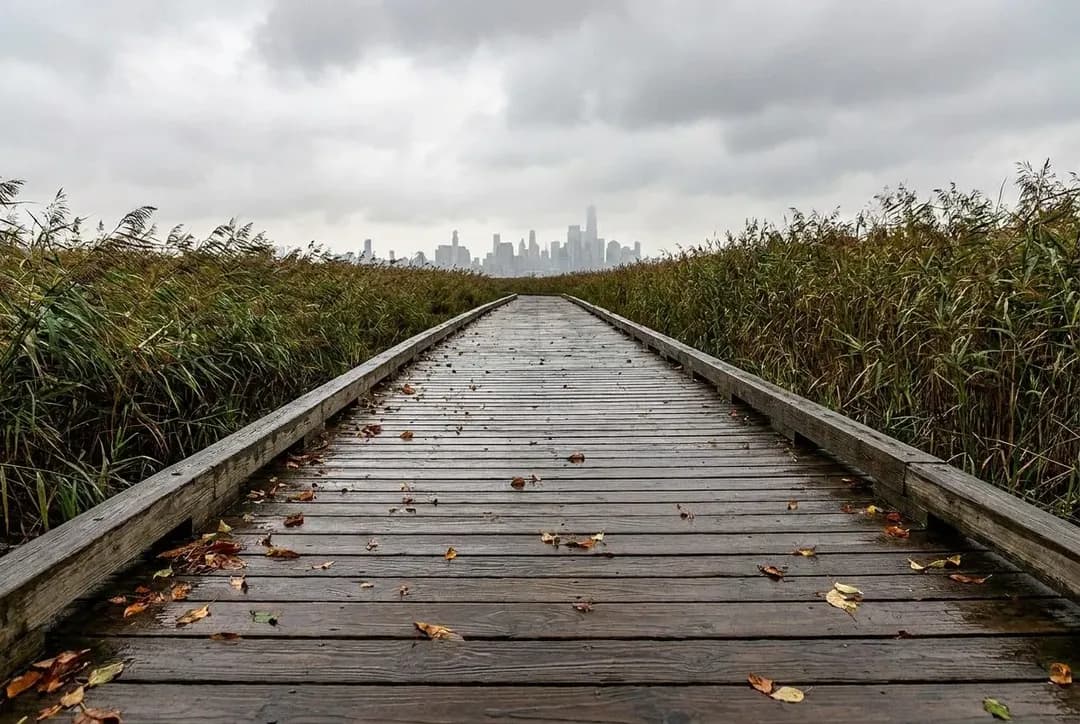
jamaica bay wildlife refuge's boardwalk loop when the migratory birds outnumber visitors
The improbable federal salt marsh sanctuary reachable by A train and city bus, where a two-hour walking loop through reeds and tidal flats offers the slowest possible route between Queens and the Rockaways.
There is a particular cognitive dissonance in watching a great egret spear a mummichog while a 787 roars overhead at five hundred feet, wheels down, final approach to JFK. The Jamaica Bay Wildlife Refuge occupies over 12,600 acres of water, saltmarshes, freshwater and brackish water ponds, upland fields and woods, and open bay and islands wedged between the A train, the Rockaways, and one of the world's busiest airfields. It is a federal sanctuary administered by the National Park Service. It is also one of the least-visited wild places within New York City limits, which makes it ideal for the sort of walker who considers weekend plans a meditation rather than a social obligation.
The accidental wilderness
The refuge was never supposed to exist. In the 1950s, Robert Moses planned to fill most of Jamaica Bay with garbage and build a network of airports. What stopped him was a Parks Department biologist named Herbert Johnson, who spent two decades creating freshwater ponds and planting beach grass on dredge spoil islands. The result is a mosaic of habitats—brackish ponds, upland meadows, tidal creeks—that now attracts more than three hundred bird species during the annual migration windows. Herons, egrets, ibis, oystercatchers, skimmers, terns. In fall, the serious birders arrive with Swarovski scopes and spiral-bound field notebooks. The accidental wanderers arrive because they missed their stop or got curious.
The experience is profoundly flat. No elevation change, no dramatic vistas. Just reeds, water, sky, and the slow horizontal scroll of distance. It is the opposite of Manhattan's compressed verticality, and that is precisely the appeal. The light here is coastal—wide, diffuse, unobstructed. On overcast fall afternoons, the sky becomes a single tone of pewter, and the ponds mirror it so cleanly you lose the horizon line.
The public-transit pilgrimage
Getting here requires a small act of faith in the outer-borough bus network. Take the A train to Broad Channel, the single inhabited island in Jamaica Bay, where wood-frame houses on stilts line streets named for fish. From there, take the Q21 to the refuge; service details vary and the NPS notes it is accessible by Q21 from Queens Center Mall or 116th Street in Rockaway, tracing the Cross Bay Boulevard causeway south toward the Rockaways. Ask the driver for the refuge stop—it is unsigned and easy to miss. The entrance is a short walk north along a service road, marked only by a weathered brown sign and a small parking lot that fills on weekend mornings but sits empty most weekday afternoons.
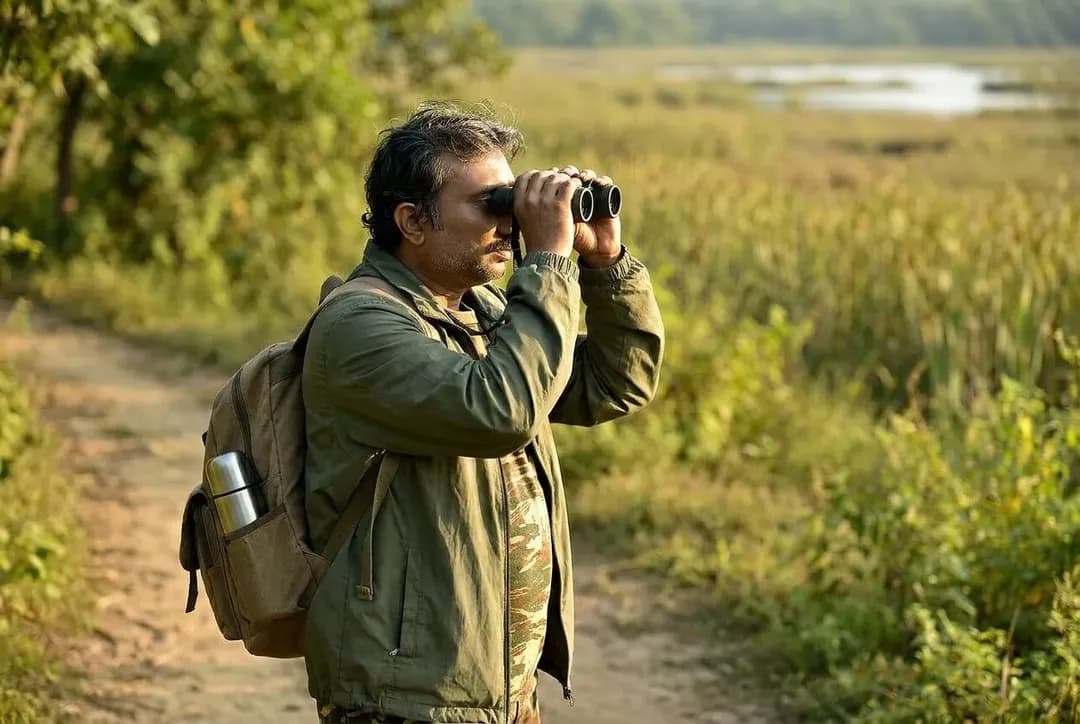
This logistical friction filters the crowd. You will not find selfie hordes or influencer photo shoots. You will find retirees with binoculars, solo walkers in technical fleece, the occasional family whose kids treat the boardwalk like a balance beam. The vibe is quiet, purposeful, uncommercial. There is no café, no gift shop selling refuge-branded tote bags. The visitor center is open Friday-Monday from 10 a.m. to 4 p.m., and most walkers bypass it entirely, heading straight for the trailhead that leads to the West Pond loop.
The boardwalk meditation
The full West Pond trail is approximately one point seven-five miles of mostly flat boardwalk and gravel path, taking anywhere from sixty to ninety minutes depending on how often you stop to watch a northern harrier quarter low over the phragmites or a string of cormorants arrow past at eye level. The boardwalk itself is weathered gray composite, slightly spongy underfoot, with periodic observation platforms and interpretive signs so sun-bleached they are nearly illegible. In fall, the marsh grasses turn bronze and ochre. The air smells of salt and mud and something faintly sweet—decomposing spartina, maybe, or the tidal wrack line.
Every ninety seconds, a plane descends along the same flight path, gear down, flaps extended, engines throttling back to idle. The sound is enormous, then gone. The silence that follows feels deeper for the interruption. You watch a snowy egret stalk through ankle-deep water, completely unbothered, and you remember that this bird has seen ten thousand takeoffs and has filed the noise under ignorable. The juxtaposition is absurd and strangely comforting. Wilderness does not require remoteness. It only requires a pocket of land left alone long enough for the non-human world to organize itself.
What the birders know
Fall migration here peaks in late September through early November, when the Atlantic Flyway funnels warblers, raptors, and shorebirds through this narrow corridor. The serious birders position themselves at the northwest corner of the West Pond, where the sightlines are longest and the light is best in early morning. They speak in shorthand—AMKE for American kestrel, OSPR for osprey—and trade intel about rarities spotted the previous afternoon. A Eurasian wigeon. A ruff. A sharp-tailed sandpiper blown off-course from Siberia.
You do not need their expertise to appreciate the spectacle. Just walk slowly, stop often, and look at the edges—where water meets grass, where shadow meets light. The refuge rewards patience and peripheral vision. A green heron frozen mid-stalk in the reeds. A red-tailed hawk perched on a piling, mantling its wings. A kettle of broad-winged hawks spiraling upward on a thermal, a hundred birds rising like smoke.
The slowest route to anywhere
Technically, you could walk the loop, catch the Q21 south, and continue all the way to the Rockaway boardwalk for an end-of-afternoon swim or a plate of fried clams. This is the long way home in its purest form—a route chosen not for efficiency but for the quality of the detour. You are still within city limits, still on the MTA network, but you have stepped outside the usual logic of urban movement. The trip takes three hours. The subway would take forty-five minutes. The difference is the point.
By late afternoon, the light goes golden and the wind picks up, ruffling the pond surface into a million small facets. The boardwalk empties. You might have the entire loop to yourself, just you and the glossy ibis probing the mud and the distant hum of the Belt Parkway. This is not dramatic nature. It is quiet, persistent, improbable nature, surviving in the margins because someone decided fifty years ago that not every inch of coastline needed to be paved or filled or developed. Walk it once in fall, and you will understand why the regulars return every weekend, binoculars in hand, content to watch the same mile and three-quarters unfold in infinite variation.
Practical notes
Jamaica Bay Wildlife Refuge, Cross Bay Boulevard, Broad Channel, Queens. A train to Broad Channel, then Q21 bus toward Rockaway Park; ask driver for refuge stop. Limited free parking available. Trails open dawn to dusk year-round; visitor center hours vary seasonally and are often limited on weekdays—call ahead or plan to skip it. West Pond loop is approximately 1.75 miles, mostly flat boardwalk and gravel, wheelchair-accessible with some rough patches. Bring binoculars, water, sun protection, and layers; no food or services on-site. Restrooms at visitor center when open. Check weather and tide schedules; some paths flood during extreme high tides.
Tags: #JamaicaBayWildlifeRefuge #TheLongWayHome #NYCNature #QueensNYC #BirdingNYC #SlowTravel #WeekendPlans #FallMigration #AtlanticFlyway #PublicTransitAdventures #HiddenNYC #UrbanWilderness #NationalParkService #OuterBoroughNYC #CityEscape
All trademarks are the property of their respective owners.
Ask Karpo for more information.
Keep reading
- Best Trick or Treating Neighborhoods Near Me: Park Slope
 Best Trick or Treating Neighborhoods Near Me: Carroll Gardens
 Best Trick or Treating Neighborhoods Near Me: West Village