Maria Piedad Cano has been working the same corner of Roosevelt Avenue and 79th Street since the late 1990s, serving arepas boyacenses from a street cart that became legendary enough to earn a James Beard America's Classics Award in 2018. She arrives around six every evening, sets up her griddle, and starts pressing thick corn cakes that she'll stuff with cheese and grill until the outside crackles and the inside turns molten. The line forms early. People call her the Arepa Lady, and if you want the best arepa boyacense you can find without flying to Boyacá, you go find her cart.
Karpo knows which Roosevelt Avenue carts are open tonight and which Colombian spots have the shortest wait right now. Message when you're hungry.

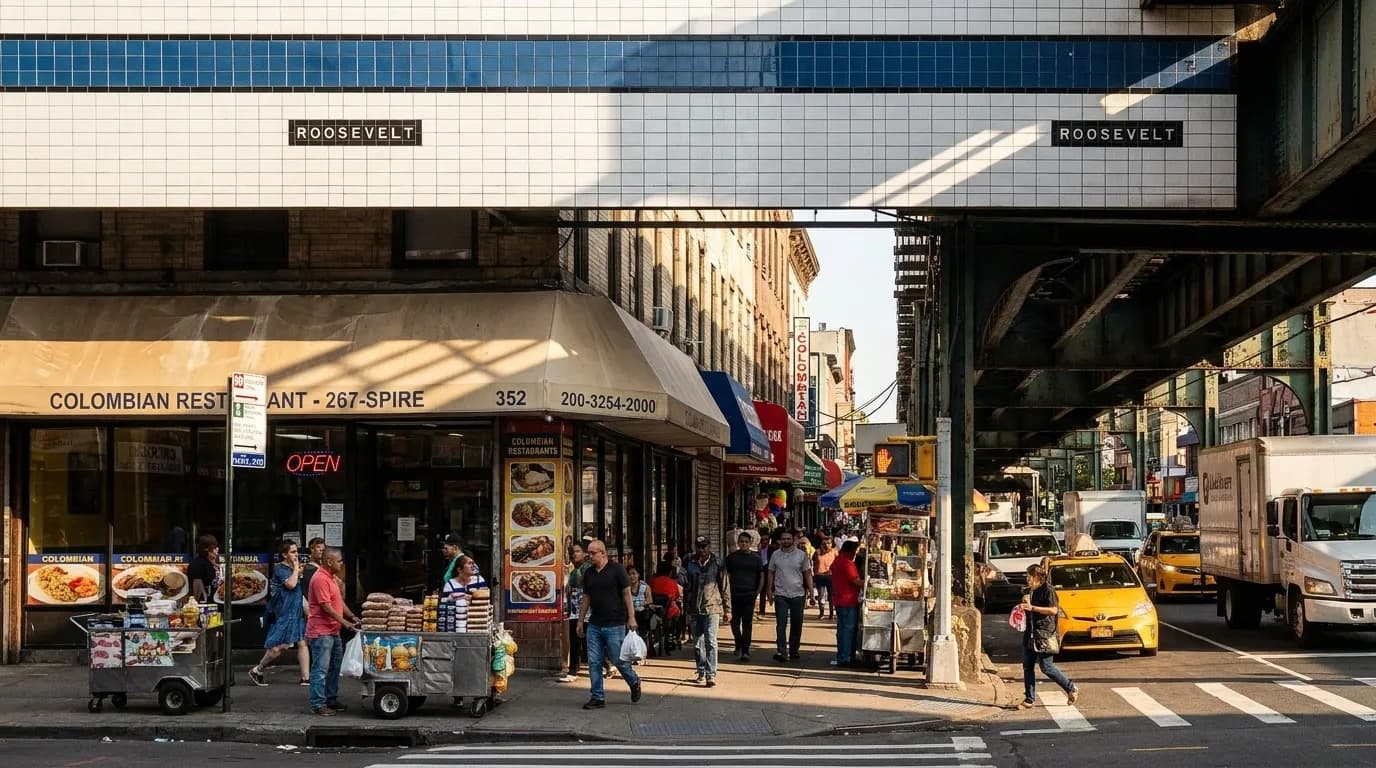
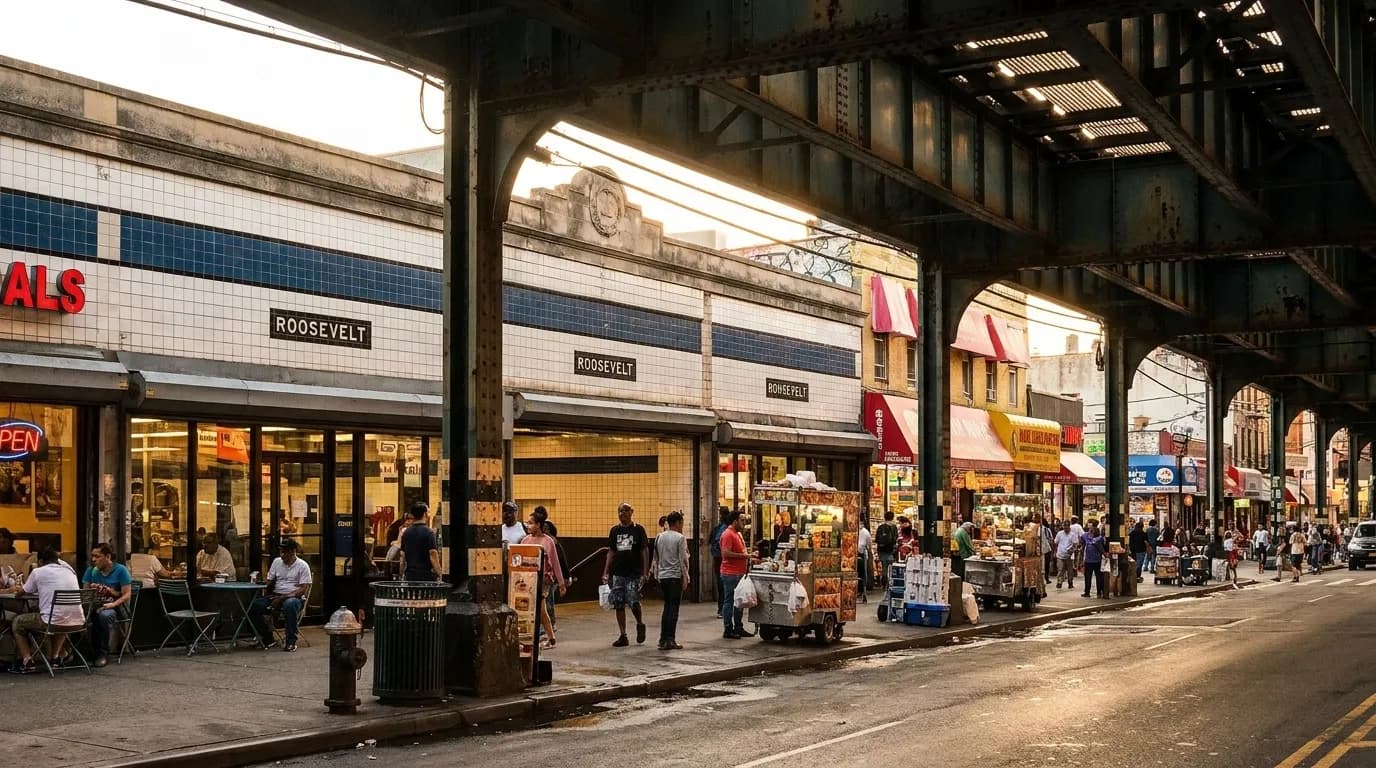
Jackson Heights has the densest concentration of Colombian residents in New York City, and Roosevelt Avenue between 74th and 90th Streets is where that community eats. The elevated 7 train clatters overhead every few minutes. Storefronts advertise giros and remittances. Street vendors sell everything from mango con limón to mazorca desgranada. The Arepa Lady's cart is the anchor, but the whole strip is a working document of what Colombians actually eat when they want comfort, not what gets translated for American palates.
The Arepa Lady cart
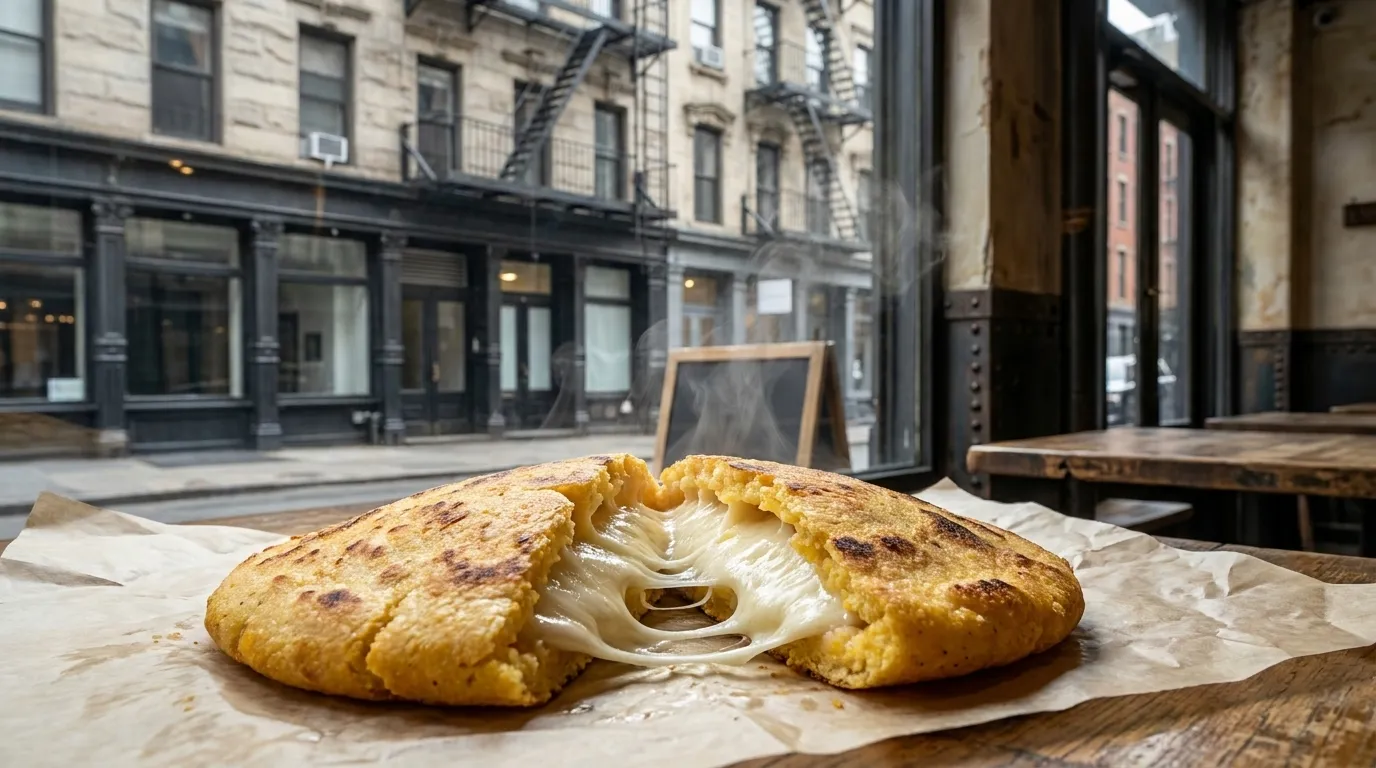
Maria makes one thing, and she makes it the way her family did in Boyacá. The arepa boyacense is thicker and sweeter than the Venezuelan version most New Yorkers know. She uses yellow corn that she grinds herself, forms it into palm-sized rounds about an inch thick, and grills them on both sides before splitting them open and stuffing them with queso blanco. Then they go back on the griddle until the cheese melts through and the exterior gets crisp. The whole process takes maybe ten minutes if she's working through a line, longer if it's slow and she's chatting with regulars.
Each arepa runs around four or five dollars. She'll ask if you want it with butter, and the correct answer is yes. The cart usually appears between six and seven in the evening and stays until she sells out, which can be anywhere from ten-thirty to well past midnight depending on the night. Weekends bring longer lines. Get there before nine if you don't want to wait twenty minutes. She takes cash only. The cart is literally on the corner under the elevated tracks, impossible to miss if you're walking west on Roosevelt from the 82nd Street-Jackson Heights subway stop.
La Pequeña Colombia
Two blocks east at 83rd Street and Roosevelt, La Pequeña Colombia is the sit-down version of the same cravings. It's a narrow storefront with maybe a dozen tables, fluorescent-bright, menu boards behind the counter listing bandeja paisa, sancocho, ajiaco, and yes, arepas boyacenses. The arepa here won't change your life the way Maria's does, but it's reliably good and available at lunch when the cart isn't out yet. They stuff theirs with both white cheese and a little hogao, the Colombian tomato-onion sauce that shows up on half the menu.
The real move at La Pequeña Colombia is the full meal. Order the bandeja paisa if you're hungry enough for rice, beans, chicharrón, chorizo, avocado, fried egg, and a small arepa on one oval platter. It's a Paisa region standard that runs around fifteen dollars and will keep you full into the next day. The place opens early, around eight in the morning, and serves breakfast arepas with eggs and chocolate santafereño, the hot chocolate-and-cheese combination that Colombians drink without irony. Service is fast and indifferent in the best way. You order at the counter, they call your number, you bus your own table.
Roosevelt Avenue street vendors
The Arepa Lady is the most famous cart, but she's far from alone. Walk Roosevelt Avenue on a Friday or Saturday night and you'll pass vendors selling obleas, which are giant communion-wafer-thin discs filled with arequipe and cheese; cholado, the Cali-style shaved ice with condensed milk and fruit; and empanadas that are nothing like the baked Argentine kind. The empanadas here are fried, crescent-shaped, and come with ají on the side that's actually spicy. Most carts don't have names. You recognize them by what they're grilling or frying, and by whether there's a line.
One semi-permanent setup near 80th Street does mazorcas—whole corn on the cob boiled and slathered with butter, mayo, cheese, and a squeeze of lime. Another cart closer to 86th Street specializes in salchipapas, which is exactly what it sounds like: hot dogs and french fries in one Styrofoam container with pink sauce and more ají. These carts follow the same evening schedule as the Arepa Lady, starting around six and running late. Quality varies. If there's a line of Colombian families waiting, that's your signal. If it's just two drunk guys from a bar, keep walking.
Why this corner of Queens matters
Jackson Heights became the primary landing point for Colombian immigrants in the 1980s and 1990s, and the food followed the people. What makes Roosevelt Avenue different from other immigrant food corridors in New York is how little it's changed to court outside attention. The menus are still in Spanish. The restaurants still close on Monday because that's when the suppliers are closed. The street vendors still operate in the same legal gray zone they always have, which is part of why Maria Piedad Cano's James Beard Award mattered—it was the establishment recognizing someone who'd been doing excellent work outside the establishment for two decades.
The arepa boyacense itself is regional in a way that matters. It's not the thin, crispy arepa you'll find at a Venezuelan spot in Manhattan, and it's not the arepa de choclo, which is sweeter and more dessert-adjacent. The boyacense is specific to the Boyacá department in the central highlands of Colombia, where the corn is a particular variety and the tradition is to eat them hot off the griddle with cuajada cheese that melts but doesn't disappear. Maria brought that specific tradition to a street corner in Queens and refused to adjust it, and that specificity is exactly why people line up.
Practical notes
Take the 7 train to 82nd Street-Jackson Heights. Walk west on Roosevelt Avenue toward 79th Street. The Arepa Lady's cart is on the northwest corner under the elevated tracks, operating evenings from around six until she sells out. Bring cash. Expect to wait on weekends. La Pequeña Colombia is at 83-05 Roosevelt Avenue, open daily except Monday, breakfast through dinner. Most street vendors along Roosevelt operate Friday through Sunday evenings. The whole stretch between 74th and 86th Streets is walkable in fifteen minutes. Skip the sit-down places with table service and English menus; they're fine but they're not why you came. The best food is at the counter-service spots and the carts where you point and pay.
Tags: #arepaladyjacksonheights #arepaboyacense #colombianfoodnyc #rooseveltavenue #jacksonheightsfood #queensstreetfood #7train #colombianarepas #nycfoodcarts #jamesbeardaward #lapequenacolombia #queensfood #elmhurst #jacksonheights #colombianstreetfood
All trademarks are the property of their respective owners.
Ask Karpo first
Karpo tracks which Roosevelt Avenue vendors are working tonight, how long the wait is at the Arepa Lady's cart right now, and which Colombian spots nearby are worth the detour when Maria's line is too long. Ask before you take the 7 train, and you'll know exactly where you're headed and what to order when you get there.