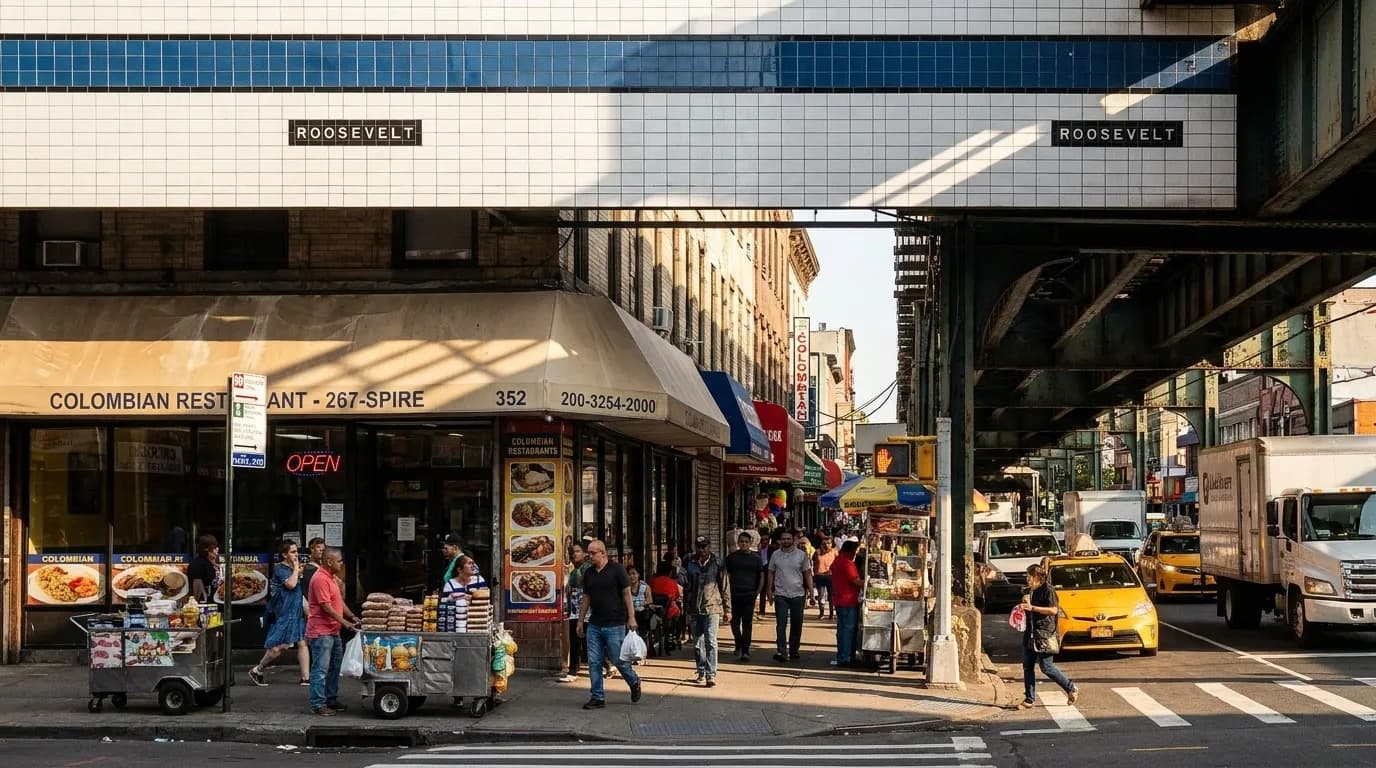
The arepa antioqueña you want—thick, white, corn-sweet, griddled until the surface blisters—comes off the plancha at Jackson Heights lunch counters where the menu runs five pages deep into Medellín home cooking. This neighborhood holds the densest concentration of antioqueño restaurants outside Bogotá, which means the real draw isn't just the arepa. It's what arrives on the same plate: bandeja paisa with chicharrón that shatters, beans cooked down with hogao, chorizo that snaps, and mazamorra served the way grandmothers in Antioquia still make it. Roosevelt Avenue between 82nd and 90th Streets serves as the spine of this scene, where Colombian families gather on Sundays and construction workers line up at noon for plates that cost less than a Midtown sandwich but deliver triple the satisfaction.
Karpo tracks which Jackson Heights Colombian spots are open now, what regulars order at each counter, and how to navigate Roosevelt Avenue without missing the best chicharrón.

Pollos Mario: where the rotisserie steals the show
Pollos Mario anchors the corner of 83rd Street with a window full of chickens spinning over mesquite, their skin lacquered amber. The arepa antioqueña here runs thick as your palm, arrival still warm from the plancha, with a faint char on both sides and an interior so tender it pulls apart in soft layers. Order it as part of the quarter-chicken combo—around twelve dollars—and you get rice, beans, a small salad, and that arepa, which does what it's meant to: soak up the drippings from the bird.
The dining room runs narrow, with a dozen tables under fluorescent light and a television playing Caracol. Locals know to arrive before 1pm on weekends when the rotisserie empties out. The register takes cash only, and the staff speaks more Spanish than English, which is a good sign. Skip the grilled chicken; the whole point here is the rotisserie, which gets basted throughout the day and develops a crust that crackles when you bite in. If you're picking up to go, ask them to pack the arepa separately so it doesn't steam in the container.
La Boina Roja: bandeja paisa done without shortcuts
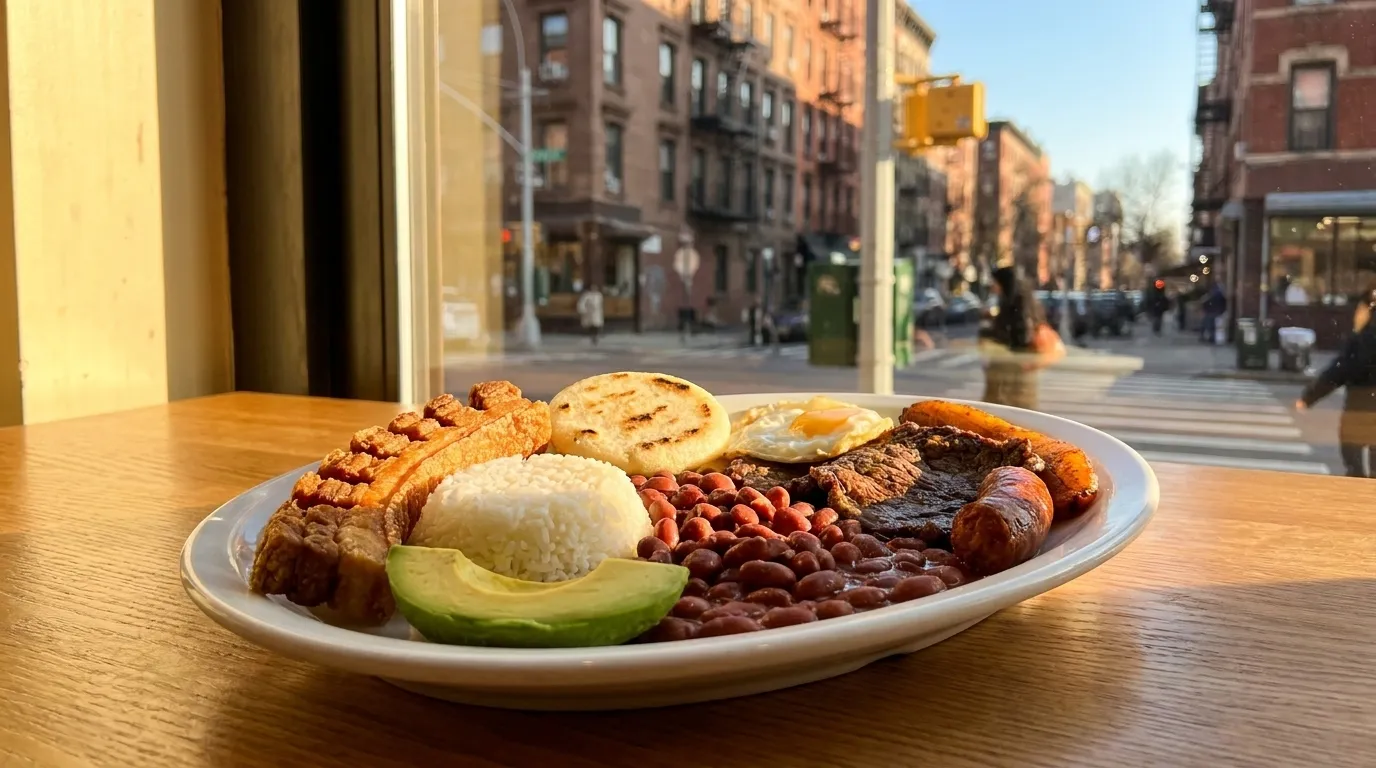
La Boina Roja sits mid-block on Roosevelt Avenue, identifiable by the red awning and the fact that every table at 2pm on a Saturday holds a bandeja paisa. This is the plate to order here: a landscape of components that includes chicharrón, chorizo, ground beef, a fried egg, avocado, rice, beans, plantain, and yes, an arepa antioqueña. The kitchen fries the chicharrón to order, which means it arrives brittle and greaseless, not the chewy slabs you find at lesser spots. The arepa comes small and pale, almost sweet, a neutral anchor for all the salt and fat on the plate.
The restaurant spans two storefronts, one side for walk-up orders and the other for sit-down service. The bandeja runs around eighteen dollars, which sounds steep until you realize you're getting enough food for two meals. Regulars order the carne asada with arepa on the side, which lets you control the ratios. The beans here cook with pork for hours and arrive darker and richer than most—ask for extra if you're into that. Weekday lunch between noon and 1pm gets crowded with delivery drivers who know the deal; after 2pm the pace slows and you can actually take your time.
La Pequeña Colombia: the deep menu no one talks about
La Pequeña Colombia operates a few blocks south on Roosevelt, in a space that feels more like someone's living room than a restaurant. The menu runs to mazamorra con panela, sobrebarriga, and ajiaco—dishes that don't travel well on Instagram but define antioqueño home cooking. The arepa antioqueña here comes free with most entrées, served on a side plate still hot from the griddle. It's thinner than Pollos Mario's version but develops better char, with a texture that's somewhere between cornbread and polenta.
Order the sobrebarriga—flank steak braised until it shreds, served over rice with hogao and a side of those arepas. It runs around fifteen dollars and tastes like someone's mother made it, because that's probably what happened. The dining room holds maybe eight tables, all mismatched, with plastic flowers and a shelf of Colombian products for sale near the register. Service moves slowly, which is not a complaint; this is the kind of place where you settle in and let the afternoon drift. Sunday lunch fills with families who arrive after church, which tells you everything about the quality.
What locals order (and how to eat it)
Colombians eating bandeja paisa don't treat the arepa like bread—they use it as a utensil, tearing off pieces to scoop beans or wrap around chicharrón. The egg gets broken over the rice, the avocado mashed into the beans, and everything eventually combines into a single glorious mess. If you order mazamorra, expect a bowl of hominy cooked in milk and sweetened with panela, served warm with a separate cup of milk to adjust consistency. It's technically dessert but often arrives first and doubles as a palate reset between bites of fried pork.
Lunch hours—noon to 3pm—matter more than dinner at these spots. Kitchens prep bandeja components in the morning and they run out by mid-afternoon. Weekends see families claiming tables for hours, so if you're eating solo, the counter offers faster service. Cash remains king at all three spots, though some now accept card with a surcharge. Tipping runs around ten percent, and no one expects more. The 7 train to 82nd Street drops you in the center of all this, with each restaurant within a five-minute walk.
Practical notes
Take the 7 train to 82nd Street–Jackson Heights and walk south on Roosevelt Avenue. All three spots sit within six blocks of each other, making a single afternoon tour feasible if you're hungry enough. Pollos Mario accepts cash only; La Boina Roja and La Pequeña Colombia take cards but prefer cash. None take reservations. Arrive between noon and 2pm for the full menu; after 3pm selections narrow as popular items sell out. Weekends see the biggest crowds, especially post-church on Sundays. Skip the tourist traps on Northern Boulevard; Roosevelt Avenue is where the neighborhood actually eats. Bring an appetite—portions run large and splitting a bandeja between two makes sense.
Tags: #arepantioquena #jacksonheights #colombianfood #bandejapaisa #queensfood #rooseveltavenue #pollosmario #laboinaroja #lapequenacolombia #antioqueñofood #7train #hiddengems #nycfood #authenticcolombian #queenseats
All trademarks are the property of their respective owners.
Ask Karpo first
Karpo knows which Jackson Heights counter just put fresh chicharrón in the window, whether La Boina Roja still has bandeja at 2:30pm, and what to order at the Colombian bakeries between stops. It learns what you actually like and finds the next plate before you know you're hungry—no research, no scrolling, just the right spot when Roosevelt Avenue calls.