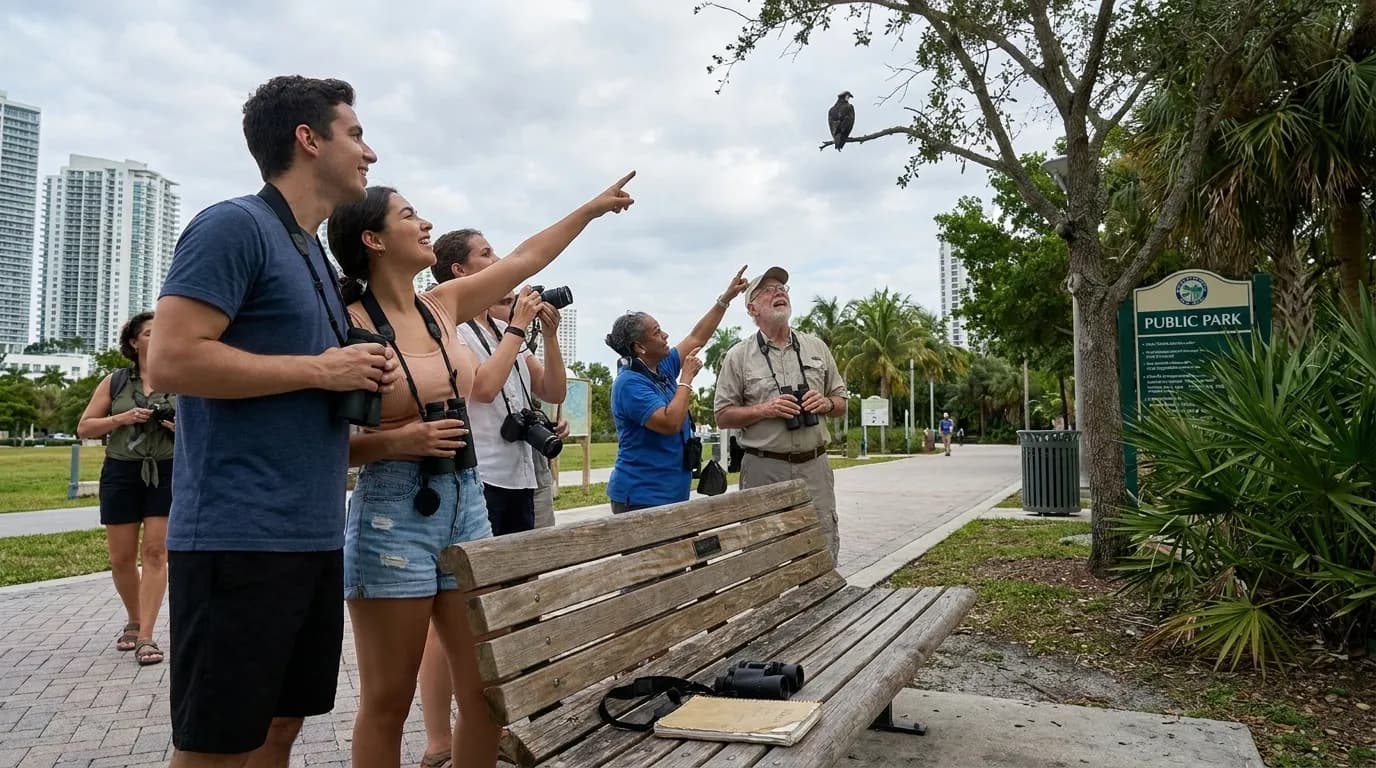
The recent attention on Jackie the eagle, a bald eagle nesting in Southern California, has millions of people watching a remote nest camera, captivated by the daily life of wild birds. This collective interest highlights a simple truth: connecting with wildlife is a powerful experience. While the famous Jackie the eagle is not in Florida, the excitement she generates is the perfect entry point for exploring the incredible bird populations right here in Miami. South Florida is a critical stopover for migratory birds and home to a stunning variety of year-round residents, from wading herons to powerful birds of prey. You don't need expensive gear or deep expertise to start. Our city's public parks and natural areas offer free, accessible windows into this world, and this guide will show you where to look.
Use our guide to plan a day of discovery in Miami's public green spaces. Find your first stop and see what's waiting.

Start at Greynolds Park in North Miami Beach
One of Miami-Dade's heritage parks, Greynolds Park offers a surprising diversity of habitats packed into its 265 acres. Its history as a former rock quarry has left behind varied elevations, including a 46-foot-high mound that provides a rare vantage point in flat South Florida. The park is bisected by the Oleta River, creating a rich blend of mangrove forests and dense tropical hardwood hammocks. For beginners, this means a chance to see different types of birds in a relatively compact and easy-to-navigate area.
The best strategy for a first visit is to walk the paved and unpaved trails that loop through the different ecosystems. The mangrove-lined river is a reliable area to spot wading birds like great blue herons, egrets, and ibis foraging in the shallows. In the wooded areas, listen for the calls of migratory songbirds, especially during the spring and fall. The park is known for its resident population of owls, though finding these nocturnal hunters requires patience and a bit of luck during daylight hours.
Greynolds is a popular spot for families and golfers, so the best time for birdwatching is early in the morning on a weekday when the trails are quieter. Parking is plentiful and free. Check the Miami-Dade Parks website for any alerts or specific trail closures before you go. The park's accessibility and clear layout make it an ideal, low-pressure starting point for anyone new to birding.
Explore the Mangrove Forests of Oleta River State Park
As Florida's largest urban park, Oleta River State Park is a sanctuary of natural coastline just minutes from the dense development of North Miami. The park is defined by the river it's named for and extensive mangrove forests, which serve as a vital nursery for marine life and a rich feeding ground for birds. While known for its mountain biking trails and kayak rentals, the park’s quieter corners are a haven for birdwatchers.
Focus your attention along the waterfront trails and observation areas. Here, you can see brown pelicans, double-crested cormorants, and magnificent frigatebirds. Ospreys, often mistaken for eagles by newcomers, are frequently seen circling overhead or diving for fish. Their large nests are often visible atop channel markers or dead trees. A walk along the shoreline during low tide can reveal various sandpipers and other shorebirds probing the mudflats for food.
While there is a per-vehicle entrance fee for Oleta, pedestrians and cyclists can enter for a much lower cost, making it a budget-friendly option. To avoid the weekend crowds, plan your visit for a weekday morning. The park is large, so pick one area to explore rather than trying to see it all. The Florida State Parks website provides up-to-date information on fees and hours, which can vary seasonally.
Discover the Urban Oasis of A.D. Barnes Park
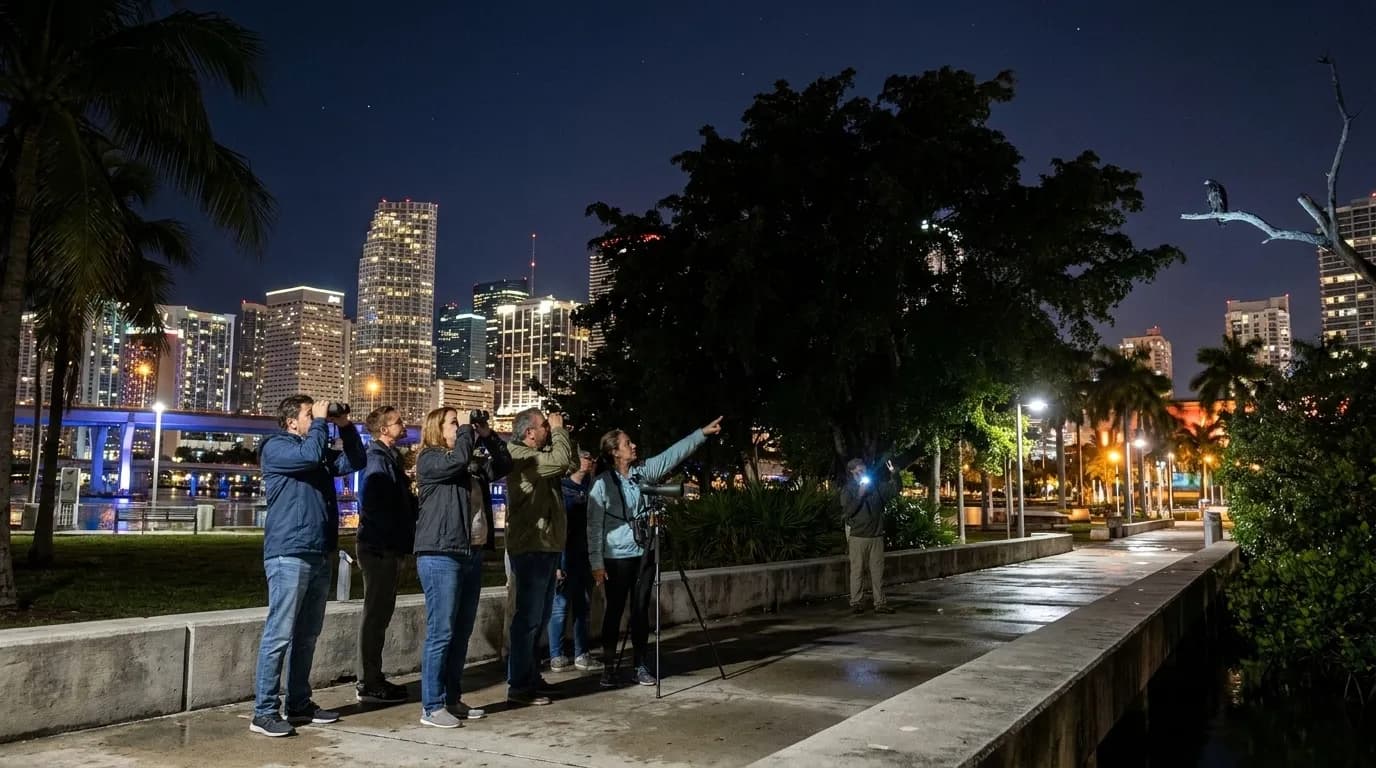
Located near the airport, A.D. Barnes Park is a designated Bird and Wildlife Sanctuary and a gem for urban birding. The park's most significant feature is a 15-acre remnant of tropical pine rockland, a globally imperiled habitat. This unique environment attracts specific bird species that you might not find in other city parks. The park was designed with nature observation in mind, featuring accessible trails and a nature center.
The pine rocklands are home to species like the pine warbler and can be a hotspot for migratory birds seeking shelter. The park also has a small lake that attracts wading birds and ducks. It's a manageable size for beginners, allowing you to cover the main habitats in a single visit without feeling overwhelmed. The nature center staff can often provide tips on recent sightings, and interpretive signs help identify local flora and fauna.
The excitement around a livestream of Jackie the eagle is about witnessing nature's unscripted moments. A.D. Barnes Park offers the same potential for discovery. You might see a white ibis probing the grass with its curved bill or a northern cardinal flashing red in the pines. The park is generally less crowded than the coastal parks, offering a more tranquil experience. Check the Miami-Dade Parks website for the nature center's hours of operation.
Witness Migration at Bill Baggs Cape Florida State Park
Positioned at the southern tip of Key Biscayne, Bill Baggs Cape Florida State Park is a crucial stop for birds migrating along the Atlantic Flyway. Its coastal location and restored native habitats make it one of the most important birding sites in the region, especially during the spring and fall migration seasons. The historic Cape Florida Lighthouse serves as a stunning backdrop for any birdwatching excursion.
During migration, the park can be filled with an astonishing variety of warblers, vireos, and other songbirds that have just completed or are about to begin their long flight over the water. The wooded areas and coastal dunes are the best places to look. Outside of migration, the park’s beaches are excellent for spotting terns, gulls, and sandpipers, while the inland mangrove wetlands host wading birds.
Like Oleta, Bill Baggs has a per-vehicle entrance fee, with a lower cost for pedestrians and cyclists. The park can get very busy, especially on weekends, so arriving early is essential. The sea breeze offers some relief from the heat, but sun protection and water are still necessary. Use the Florida State Parks website to verify fees and hours before heading to Key Biscayne.
Birdwatching 101: Gear and Technique
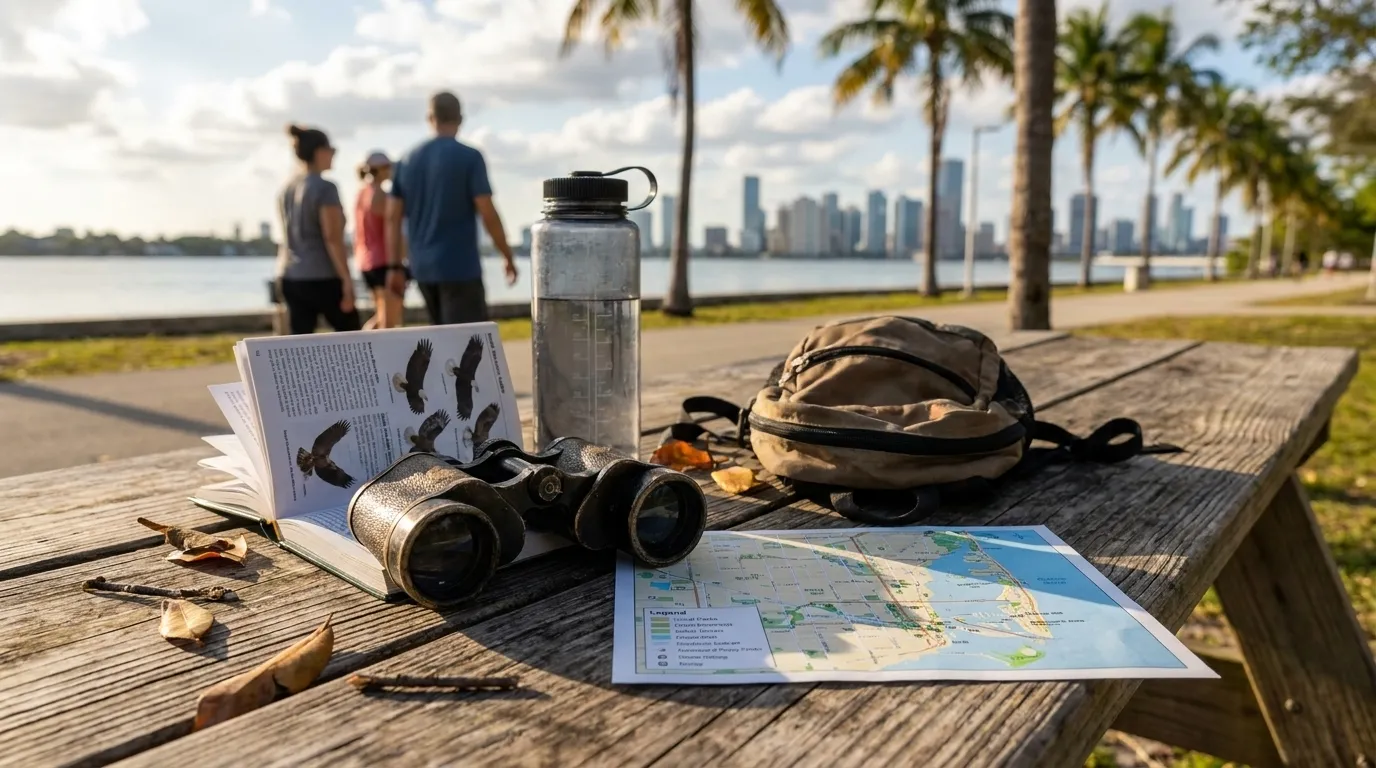
You don't need much to start birdwatching, but a few key items will significantly improve your experience. The most important tool is a pair of binoculars. You don't need a high-end model; an entry-level pair with 8x or 10x magnification is perfect for identifying birds without disturbing them. A field guide or a smartphone app, like Merlin Bird ID or Audubon Bird Guide, can help you identify what you see. Many apps even help identify birds by their songs.
Timing and patience are everything. The first few hours after sunrise and the last few hours before sunset are when birds are most active, foraging for food. During the midday heat, many birds rest and are harder to find. When you arrive at a park, find a comfortable spot to stand or sit still for a few minutes. Let the environment settle, and you'll start to notice more movement and sound than you did when you first walked up.
Move slowly and quietly. Avoid loud conversations and sudden movements. Pay attention to sounds—rustling in the undergrowth, a distant song, or a sharp call can alert you to a bird's presence before you see it. Look for patterns of movement, like a flicker of wings in a bush or a silhouette soaring overhead. Birdwatching is a practice of observation, and the more you do it, the more you'll learn to see.
The Cardinal Rule: Watch from a Distance
The most important part of birdwatching is respecting the wildlife you've come to enjoy. The goal is to observe birds in their natural habitat without causing them stress or altering their behavior. According to the Florida Fish and Wildlife Conservation Commission (FWC), you should never feed wild birds. Feeding them can make them dependent on humans, cause health problems, and lead to aggressive behavior.
Maintain a safe and respectful distance. If a bird changes its behavior because of your presence—for example, it stops feeding, seems agitated, or moves away—you are too close. A good general guide is the 'rule of thumb': extend your arm, hold up your thumb, and if you can't cover the entire bird with your thumb, you are likely a good distance away. For nests or young birds, give an even wider berth. Binoculars and camera zoom lenses are the tools that let you get a close look without intruding.
Practice 'Leave No Trace' principles. Pack out everything you pack in, and stay on designated trails to avoid disturbing fragile habitats and unseen nests. By following these simple ethical guidelines, you ensure that the birds remain safe and that the habitat remains healthy for future generations of both birds and birdwatchers. Responsible viewing protects the very resource we are all so fascinated by.
Practical notes
Before visiting any park, check its official website via Miami-Dade Parks or Florida State Parks for the most current hours, alerts, or trail closures. Conditions can change unexpectedly due to weather or maintenance. South Florida weather is unpredictable; always carry water, sunscreen, and insect repellent, even on cloudy days. Most of these parks are accessible via public transit, but some routes may have infrequent service, so check the Miami-Dade Transit site to plan your trip. If driving, be aware that parking at popular locations like Bill Baggs can fill up quickly on weekends. For accessibility information, each park's official website usually has a dedicated page or contact number to clarify trail suitability and facility access. Your best tool is always the official source.
Tags: #MiamiBirding #FloridaWildlife #UrbanBirdwatching #FreeThingsToDoMiami #MiamiParks #BeginnerBirding #SouthFlorida #JackieTheEagle #OletaRiverStatePark #GreynoldsPark #RespectWildlife #MiamiOutdoors #BirdingIsForEveryone #FloridaBirds
Sources consulted: Miami-Dade Parks · Florida Fish and Wildlife · Greater Miami Outdoors
All trademarks are the property of their respective owners.
Ask Karpo first
Planning your next local adventure? Whether it's finding another free activity or a specific type of outdoor spot, get grounded, verified recommendations for Miami.