 Midtown Tabletop Game Shop Since 1975: Compleat Strategist
Hidden Gems & Odd Finds
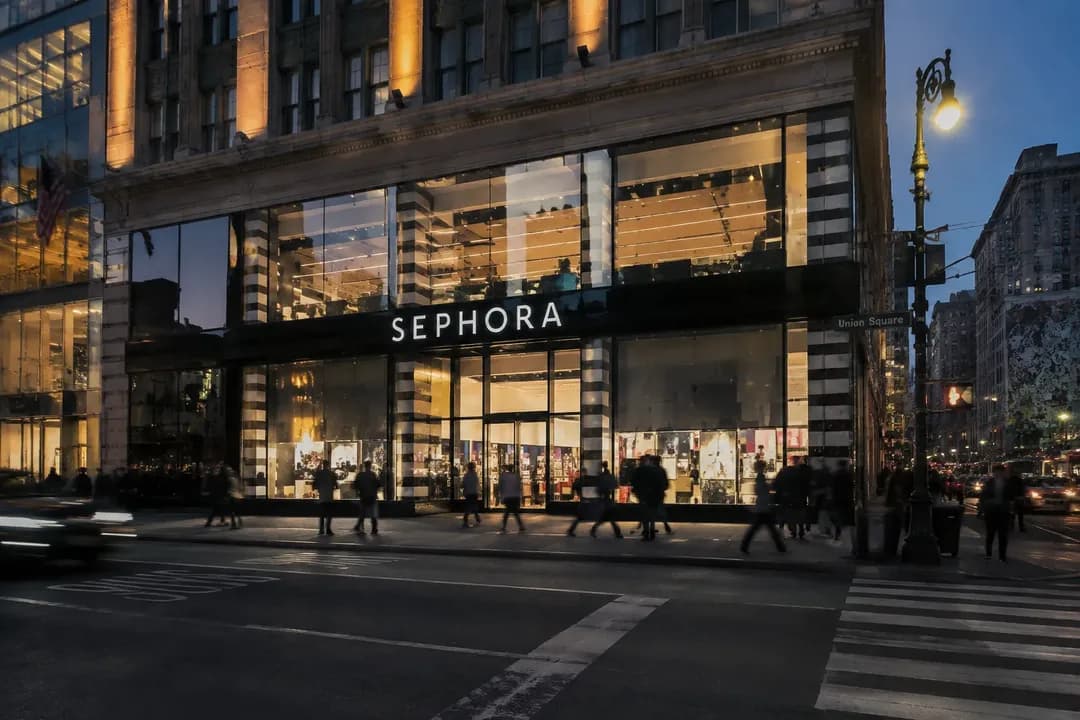
Is Sephora Picks Worth It in NYC? A Value Shopper's Guide
Sephora Picks offers trial sizes and curated sets, but NYC's beauty landscape changes how much value you actually get from them.
You're standing in front of a Sephora display rack holding a fifteen-dollar box of three miniatures. The packaging promises discovery. The price suggests value. The question is whether it delivers either when you live in a city where the full-size product sits on a shelf two subway stops away and samples used to be free for asking.
Text Karpo before you make the trip. It'll tell you which Sephora locations have the best stock right now, give you a live subway route that skips the worst transfer, and flag if your backup store closed early.
What people search when they want proof
Sephora Picks—the brand's name for curated sample sets and trial-size bundles—entered the market as an answer to online overwhelm. The format makes sense in a suburb where driving to test a product is a commitment. In New York City, the calculation is different. You can walk into a Sephora in Union Square, get color-matched under actual daylight from the street-facing windows, and leave with a sample card of three foundations in your undertone. That was the deal for years. Then samples became scarce, policies tightened, and suddenly a prepackaged set of minis you didn't choose yourself started looking like a way to try before committing.
The value question splits into two parts: what you pay per ounce, and whether the products inside match what you'd have picked yourself. A typical Sephora Picks set runs twelve to twenty-five dollars and contains three to five items. Do the math on a skincare trio and you're often paying about the same per milliliter as a full bottle, but you're locked into the curator's choices. That works if you're genuinely exploring a category. It backfires if you already know you hate fragrance in moisturizer and two of the three samples are loaded with it.
Chinatown's beauty supply math tells a different story
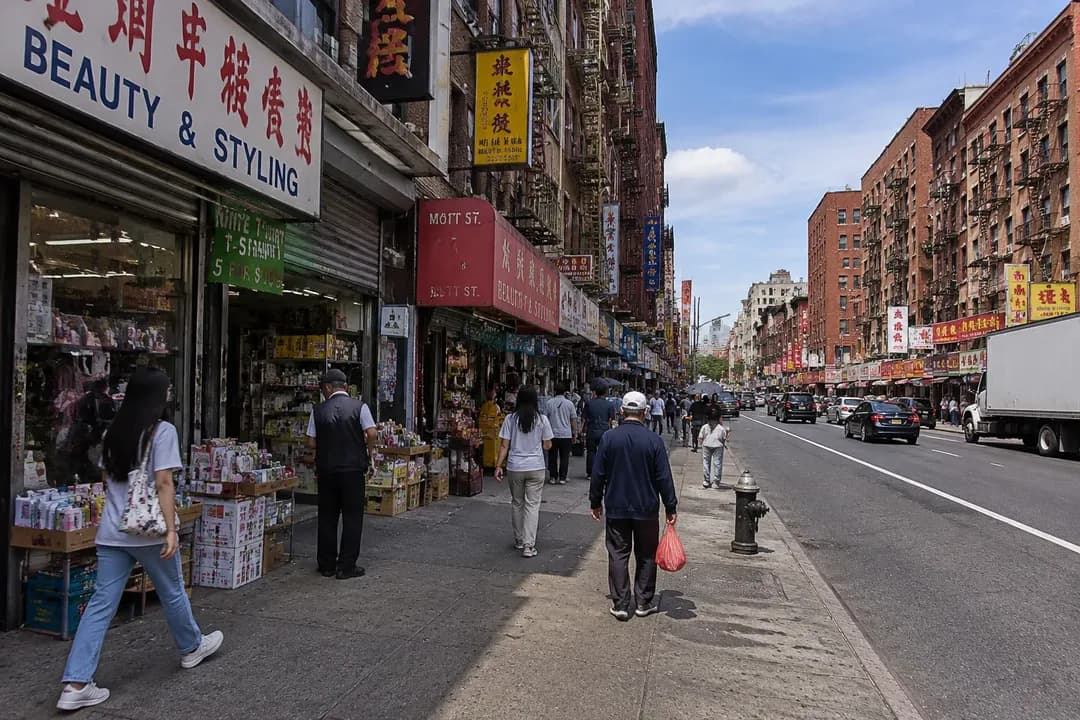
Walk south from the Canal Street station and you hit a stretch of storefronts where the beauty economics look nothing like Sephora's. Small independent shops stock Korean and Japanese skincare in single-use sachets for under two dollars. A sheet mask costs about what a coffee does. The formulations are often stronger, the packaging wastes less, and if you hate it, you're out the price of a subway swipe instead of a curated set you'll never finish.
This isn't about pitting Sephora against Chinatown. It's about knowing what your alternatives actually cost when you're deciding whether a Picks set delivers value. If you're hunting for a new retinol and the Sephora set gives you a weeklong sample for eighteen dollars, a Chinatown shop on Mott Street will sell you a three-pack of overnight ampoules with similar actives for six. You get more nights of testing, you're not stuck with two other products you didn't want, and if your skin reacts badly, you haven't sunk real money into it.
The Sephora advantage is curation and the return policy. You can bring back a Picks set if you're a Beauty Insider and you haven't used more than half. That safety net matters if you're trying a luxury brand and genuinely have no idea whether your skin will tolerate it. The Chinatown model assumes you know enough to pick a category—brightening, hydration, anti-aging—and you're comfortable reading ingredient lists or asking the person behind the counter for a quick steer. Both approaches work. The question is which kind of shopper you are and how much hand-holding you're paying for.
When to go, and which train gets you out fastest
Sephora locations in Manhattan get slammed between noon and seven on weekends. The Union Square flagship sees lines at the cash wrap that stretch past the fragrance wall. The SoHo store on Broadway fills with tourists who treat it like a museum, swatching every tester and leaving without buying. If you're going to evaluate whether a Picks set is worth it, you need enough space and time to stand at the display, read the back of the box, and think. That doesn't happen on a Saturday afternoon.
Weekday mornings before eleven are your window. The Union Square store opens at ten. Get there by ten-fifteen and you'll have the Picks section near the front register mostly to yourself. You can pull down three or four sets, compare the product lists, check the sizes, and decide without someone reaching past your shoulder. The staff is less rushed and more willing to answer whether a particular set has been restocked recently or if it's about to rotate out.
The Brooklyn Sephora inside City Point in Downtown Brooklyn runs quieter than the Manhattan locations, even on weekends. The trade-off is fewer Picks options—the store is smaller and the selection skews toward bestsellers. If you're hunting a specific new release or a niche brand's trial set, you'll still need to go to Union Square or the Columbus Circle location inside the Time Warner Center. Columbus Circle has the advantage of being one stop from the express trains, so your exit is faster if you're coming from uptown or heading back to Queens.
Transit-wise, Union Square is the easiest multi-line hub. You've got the L, N, Q, R, W, 4, 5, 6 all converging. The L is your fastest shot from Brooklyn. The N and Q get you there from Astoria without a transfer. If you're coming from the Upper West Side, take the 1 to 14th and walk east instead of transferring to the L at Eighth Avenue—the transfer eats five minutes and the walk is flat and above ground.
The Bluemercury counter-argument nobody talks about
Bluemercury doesn't do Picks sets the way Sephora does, but it solves the same problem in a different format. The stores are smaller, the staff ratio is higher, and they'll make you a sample bag of three or four products on the spot if you ask directly. No preset box, no commitment to a curator's choices, no paying for packaging. The catch is that Bluemercury's brand selection is narrower and skews expensive. You're not finding Ordinary or Inkey List samples there. You're getting La Mer, Augustinus Bader, and Sisley.
If your question is whether Sephora Picks sets offer value in New York City, the Bluemercury model exposes what you're actually paying for. Sephora charges you for convenience and for the illusion of curation. Bluemercury gives you free custom samples but prices the full-size products higher. Both are middlemen. Both are betting you'll convert from trial to purchase in their store instead of going home and ordering the product cheaper online.
There are three Bluemercury locations in Manhattan that are worth the detour: the one on Third Avenue at 74th, the one in the Flatiron on Fifth at 21st, and the one in Tribeca on Chambers. The Flatiron store is a useful option for getting advice and samples. Go on a weekday after three and you'll get ten minutes of real advice and a sample bag that will last you two weeks. That's harder to put a dollar value on than a Picks set, but it's often a better deal if your goal is to try things that might actually work for your skin instead of working through a preset sampler pack.
Check the SKU before you buy anything
Sephora rotates its Picks sets faster than it rotates most other inventory. A set that was on the shelf in Union Square last month might be gone this week, replaced by a nearly identical box with one product swapped out. The price stays the same. The value shifts. If you're buying a Picks set because one specific product inside it is expensive and you want to try it cheap, check the SKU on the box against the Sephora app before you walk to the register. The app will tell you if that product is still in the current version of the set or if it's been replaced by a smaller size or a different formula.
This matters more than it sounds like it should. A friend bought a Sunday Riley set in February because it included a half-ounce of Good Genes. She went back in April to buy another one as a gift. Same box design, same price, but the Good Genes had been swapped for a quartier-ounce of a different serum. She didn't notice until she got home. Sephora took the return, but it was a round trip on the train she didn't need to make.
The other thing to verify is whether the set you're looking at is actually cheaper than buying the travel sizes separately. Sephora sells a lot of its hero products in dedicated travel sizes that sit on regular shelves, not in Picks displays. A travel-size Drunk Elephant C-Firma costs fifteen dollars. A Picks set that includes the same size C-Firma plus two other products you don't want costs twenty-two. If you're only after the Vitamin C, the set isn't saving you money—it's charging you seven dollars for products you'll throw in a drawer.
The real value in Sephora Picks shows up when you're starting from zero knowledge in a category. If you've never used a chemical exfoliant and you want to try three different acids without buying three full bottles, a Picks set will get you there cheaper than any other path Sephora offers. If you already know you want glycolic and the set gives you lactic and mandelic instead, you're paying for someone else's idea of what you should try. In a city where you can walk into ten different beauty stores in an hour, that's a cost you don't have to accept.
Practical notes
- Weekday mornings before 11 a.m. give you the most space to compare Picks sets without crowding.
- Union Square Sephora has the widest Picks selection; Brooklyn City Point is quieter but stocks fewer sets.
- Check the Sephora app SKU before buying to confirm the current set still includes the product you want.
- Bluemercury will make custom sample bags for free if you ask; Chinatown beauty shops sell single-use sachets under two dollars.
- Travel-size products on regular Sephora shelves are sometimes cheaper than buying a Picks set for one item.
- Return window for Picks sets requires Beauty Insider membership and less than half the product used.
Tags: #karpo #karponyc #newyorkcity #nyc #sephora #beautyshopping #valueshopping #chinatown #unionsquare #skincaresamples #beautytips #nycbeauty #smartshopping #theoddedit #sephorapicks
Sources consulted: Sephora store locations · Bluemercury NYC stores · MTA subway service
All trademarks are the property of their respective owners.
Ask Karpo first
Text Karpo before you head out to find out which Sephora location has the specific Picks set you're hunting in stock right now, and whether the Bluemercury near you is open. It'll also give you a live subway route that avoids the slowest transfer and a backup beauty supply shop if the set you want is sold out.
Ask Karpo for more information.
Keep reading
- Midtown Tabletop Game Shop Since 1975: Compleat Strategist
 Tabletop Game Shop in Brooklyn, Open Daily: Kings Games
 Tabletop Game Shop in Park Slope: Sip & Play From $10