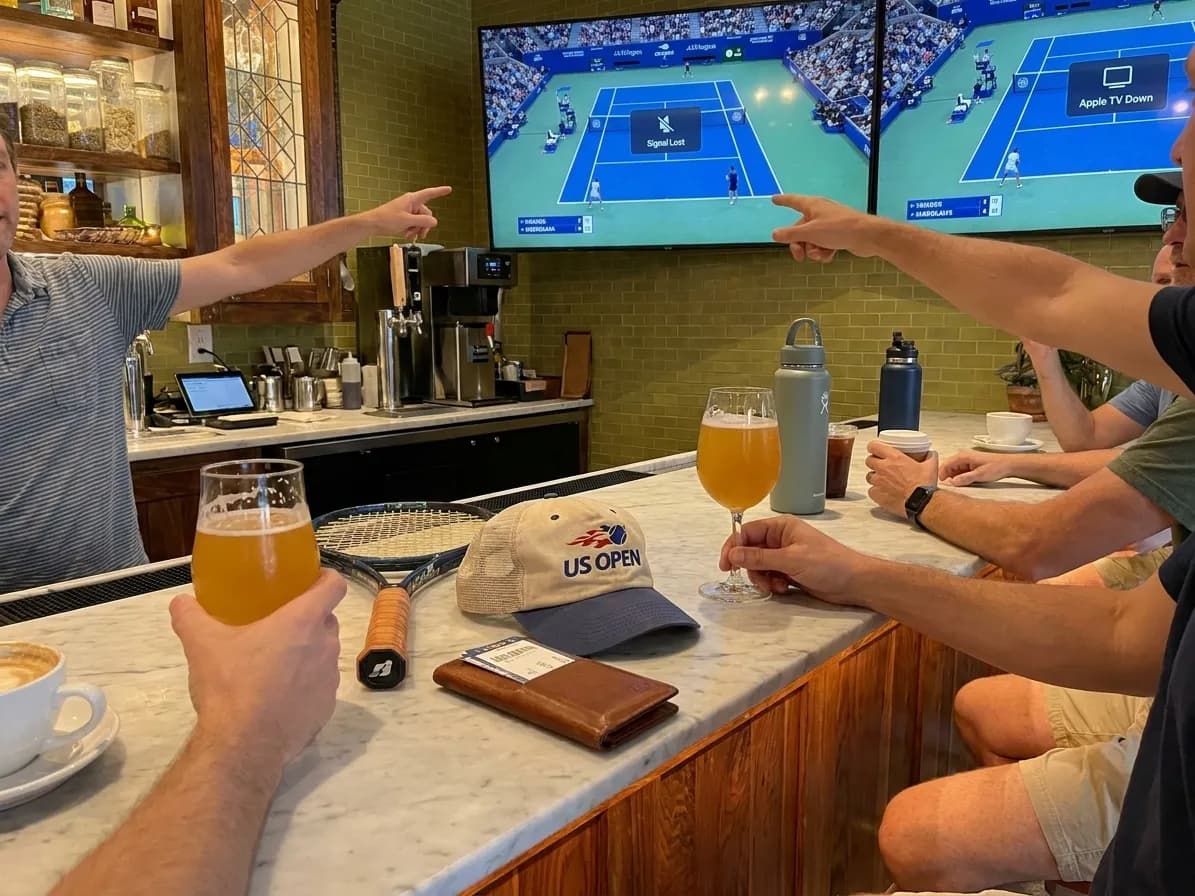
You've settled in to watch a crucial US Open match on your device, and suddenly the stream buffers, freezes, or refuses to load. Whether it's a connectivity issue, a subscription glitch, or just bad timing, streaming problems have a way of striking during the exact set you wanted to see. For Queens residents and visitors during the 2026 US Open, there's a straightforward alternative that doesn't involve troubleshooting apps or restarting routers: head to a sports bar near Flushing Meadows where the match is already on, the screen is large, and someone else handles the technical details. This guide helps you plan that backup strategy—or make it your first choice.
Text Karpo with your US Open session time and Queens starting point, and we’ll turn this sports bars idea into a practical local plan.

Why Sports Bars Work as a US Open Backup Plan
Sports bars solve the streaming problem by design. They maintain commercial cable or satellite packages, have staff who know how to switch channels quickly, and invest in screen setups that handle multiple events simultaneously. During the US Open, many Queens establishments near the tournament grounds recognize the local demand and prioritize tennis coverage, especially during evening sessions and weekend finals. You're not asking a bartender to troubleshoot your login credentials—you're walking into a venue where the infrastructure is already in place and the match is likely already playing.
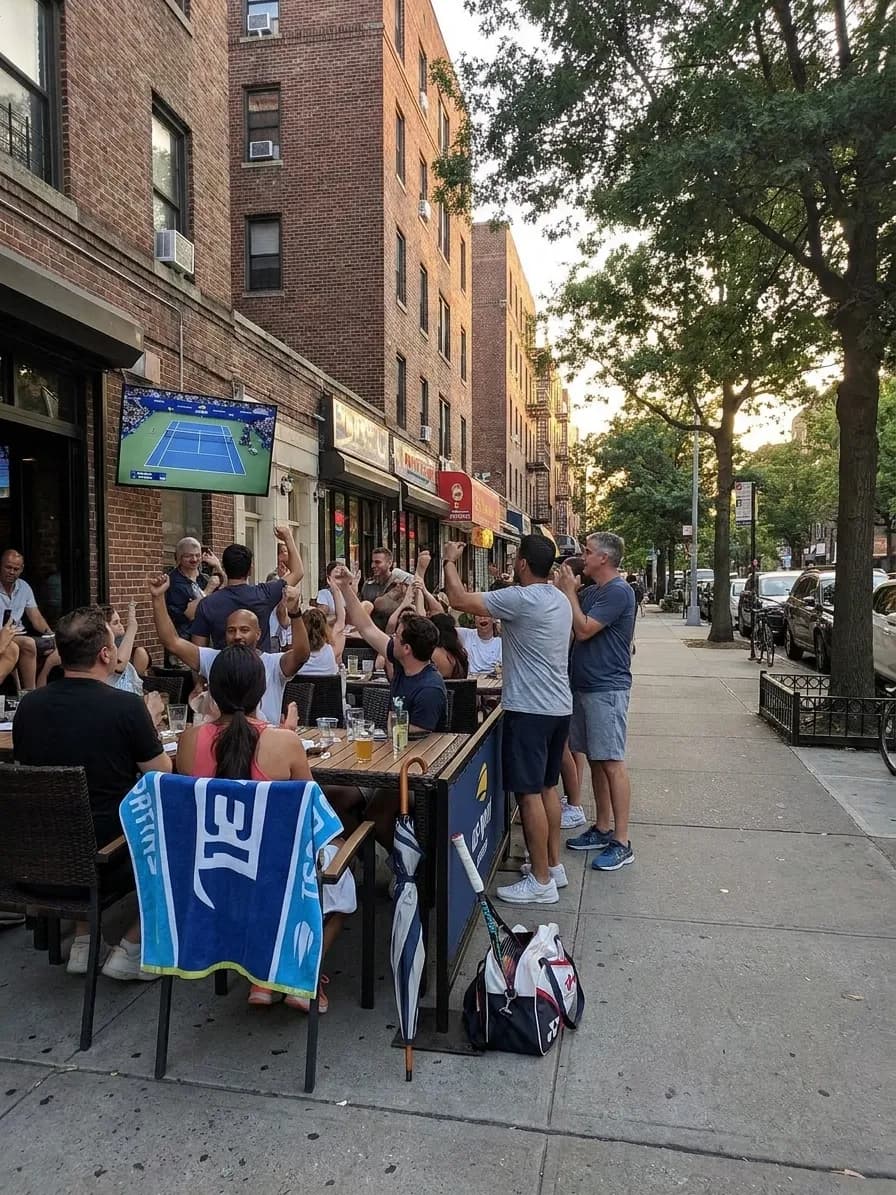
Beyond reliability, sports bars offer atmosphere. Watching a five-set thriller alone on a laptop is one experience; watching it in a room full of people who groan at double faults and cheer at passing shots is another. If you've spent the day at the tournament and want to catch the evening session without going back through security, or if you're hosting out-of-town guests who want the tennis vibe without the ticket requirement, a nearby bar becomes a practical middle ground.
Flushing and Corona: Closest to the Courts
The neighborhoods immediately surrounding the Billie Jean King National Tennis Center—Flushing and Corona—are the most obvious starting points. These areas see the heaviest foot traffic during the tournament, and local bars and restaurants are accustomed to the annual influx. Look for establishments along Roosevelt Avenue, Main Street, and the blocks near the Mets-Willets Point subway station. Many of these spots cater to diverse crowds year-round, so you'll find menus that reflect the neighborhood's international character alongside the standard bar food.
Timing matters here. Arrive early if you're planning to watch a popular match—seating fills quickly when a marquee player is on screen. If you're coming directly from the tournament grounds, consider calling ahead to confirm the bar is showing tennis rather than baseball or soccer, especially if multiple events overlap that day. The official US Open schedule on usopen.org helps you plan around session times and anticipate when crowds will peak.
The 7 Train Corridor: Flexibility and Variety
If you're willing to travel a few stops west on the 7 train, you open up more options in Jackson Heights, Woodside, and Sunnyside. These neighborhoods have their own sports bar cultures, often with regulars who follow tennis closely and bartenders who know how to navigate channel conflicts. The advantage here is flexibility: if one spot is packed or not showing the match you want, another is usually a short walk away. The 7 train runs frequently during US Open weeks, and the ride from Mets-Willets Point to Jackson Heights is brief.
Jackson Heights in particular offers a mix of bar styles, from traditional Irish pubs to Latin American sports lounges. Some venues have outdoor seating, which can be a relief during the late-summer heat. Check the MTA service status before you travel, especially during evening hours when planned work or delays can affect your return trip to Flushing or Manhattan.
Long Island City and Astoria: Waterfront and Neighborhood Vibes
For visitors staying in or exploring western Queens, Long Island City and Astoria provide sports bar options with different neighborhood textures. Long Island City's bars tend to cluster near the waterfront and the Court Square transit hub, drawing a mix of local residents and Manhattan commuters. Astoria's sports bars are more neighborhood-focused, with loyal crowds and bartenders who remember your order. Both areas are accessible via the N, W, or R trains, and the trip from Flushing requires one transfer.
These neighborhoods are less saturated with US Open traffic, so you're more likely to find seating without a wait. The trade-off is that tennis may not be the default channel—you might need to ask staff to switch from baseball or football, especially if the match you want is on a secondary court. Arriving during a changeover or between sets gives staff a natural moment to make the switch without disrupting other patrons.
What to Expect: Screens, Sound, and Seating
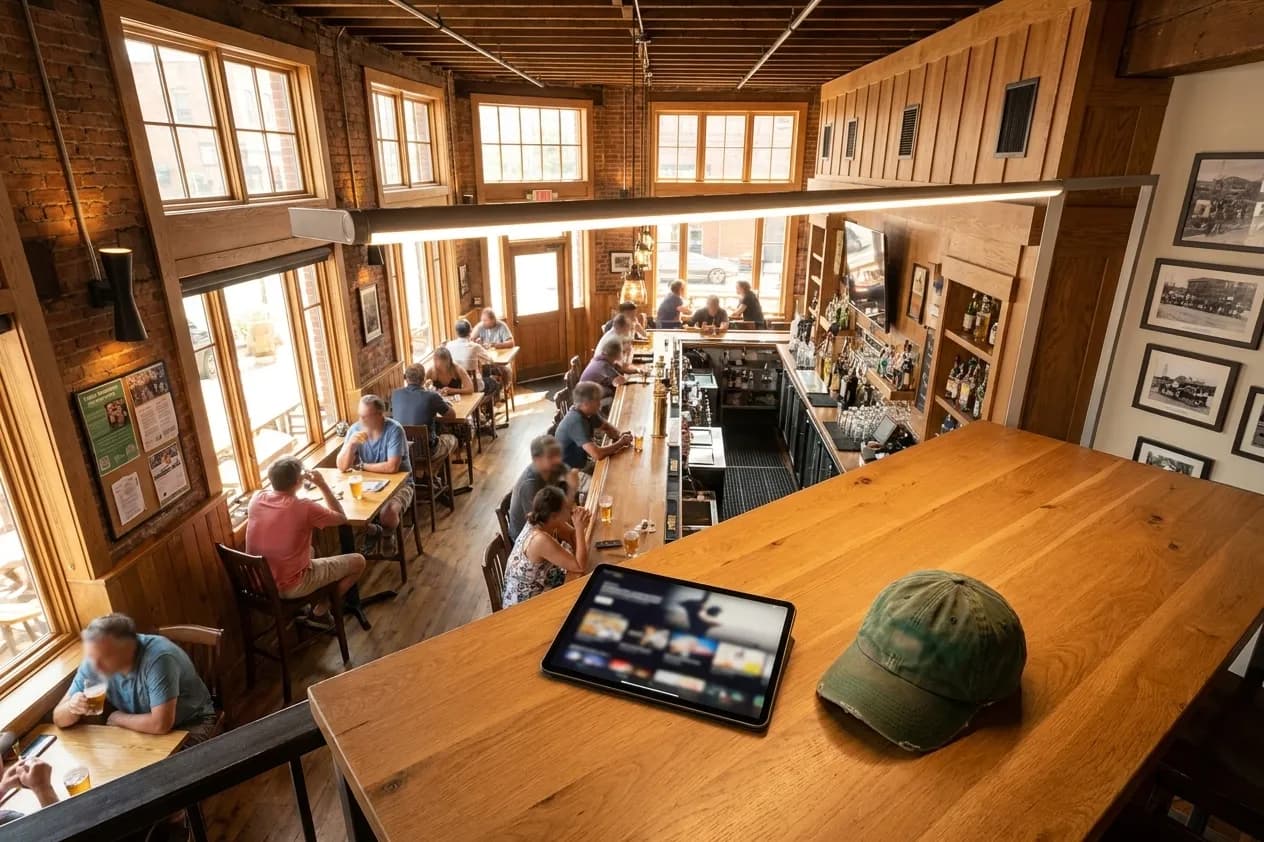
Not all sports bars are set up the same way. Some have a single large screen with stadium seating, while others scatter smaller screens throughout the space. If you care about audio—hearing the commentators and the on-court sounds—ask about sound when you arrive. Many bars mute tennis in favor of music or other sports, especially during early rounds when casual viewers dominate the crowd. If you're watching with a group, mention your preference early; staff can often accommodate if the request is reasonable and the bar isn't at capacity.
Seating strategy depends on your priorities. Bar seats give you the best sightlines and the easiest access to staff, but they fill first. Tables offer more space for food and conversation, but you may be farther from the main screen. High-top tables near the bar are often the sweet spot—close enough to see and hear, with room to settle in for a long match. If you're planning to stay for multiple hours, order food early; kitchens can get backed up during peak times, and you don't want to wait during a tiebreak.
Practical Notes for Sports Bar US Open Viewing
- Confirm the bar is showing tennis before you travel—call ahead or check social media for posted schedules during tournament weeks.
- Bring cash for tips and smaller tabs; some neighborhood bars in Queens still prefer cash or have card minimums.
- Plan your arrival around match start times listed on the official US Open schedule to avoid missing the first set.
- Check the MTA service status before your return trip, especially late in the evening when service patterns change.
- If you're watching with a group, consider splitting up to scout multiple nearby bars if your first choice is full—regroup once you've found seating.
- Respect house rules about outside food and drink; most bars are flexible about water bottles, but don't bring in takeout from the restaurant next door.
- Review the official US Open transportation directions if you're combining a bar visit with a trip to the tournament grounds—verify shuttle and parking details for the current year.
When Streaming Fails, Queens Delivers
Streaming technology will continue to improve, but it will never be immune to outages, login errors, or the frustration of a spinning buffer wheel at match point. Queens sports bars offer a low-tech, high-reliability alternative that also happens to be more social, more atmospheric, and more connected to the energy of the US Open itself. Whether you're a local resident tired of troubleshooting your setup or a visitor looking for a way to experience the tournament without a grounds pass, the bars near Flushing Meadows provide a practical solution that's been working long before streaming existed.
The 2026 US Open will bring two weeks of world-class tennis to Queens, and the neighborhood bars will be ready. Plan your backup, know your options, and when the stream inevitably falters, you'll know exactly where to go.
Tags: #USOpen2026 #Queens #FlushingMeadows #KarpoFinds #Karpo #isappletvdown #NewYorkLocal #TennisTravel
Sources consulted: usopen.org — Official event schedule · usopen.org — Official visitor A-Z guide · usopen.org — Official transportation directions · usopen.org — Official prohibited-items guide · Queens Public Library · MTA — Official service status
All trademarks are the property of their respective owners.