 Long Island City Art Walk Near Me in Queens
Free Things to Do

Inwood Hill Park's Old-Growth Forest in Peak Leaf Season
Manhattan's northernmost park harbors a secret: two hundred acres of untouched woodland where tulip trees tower above rocky outcrops and trails wind past salt marshes toward the Hudson.
Most visitors to New York expect their nature in tidy rectangles—lawns edged with benches, paths that never stray far from a hot-dog cart. Inwood Hill Park delivers something else entirely: a genuine forest, the only old-growth woodland left on Manhattan Island, where the canopy is dense enough to muffle traffic noise and the terrain scrambles upward over glacial rock. Come in late October or early November, when the maples and oaks turn and the air sharpens, and you'll find trails that feel more Catskills than city. It's the kind of place that makes weekend plans feel less like obligation and more like discovery.
The Forest That Never Fell
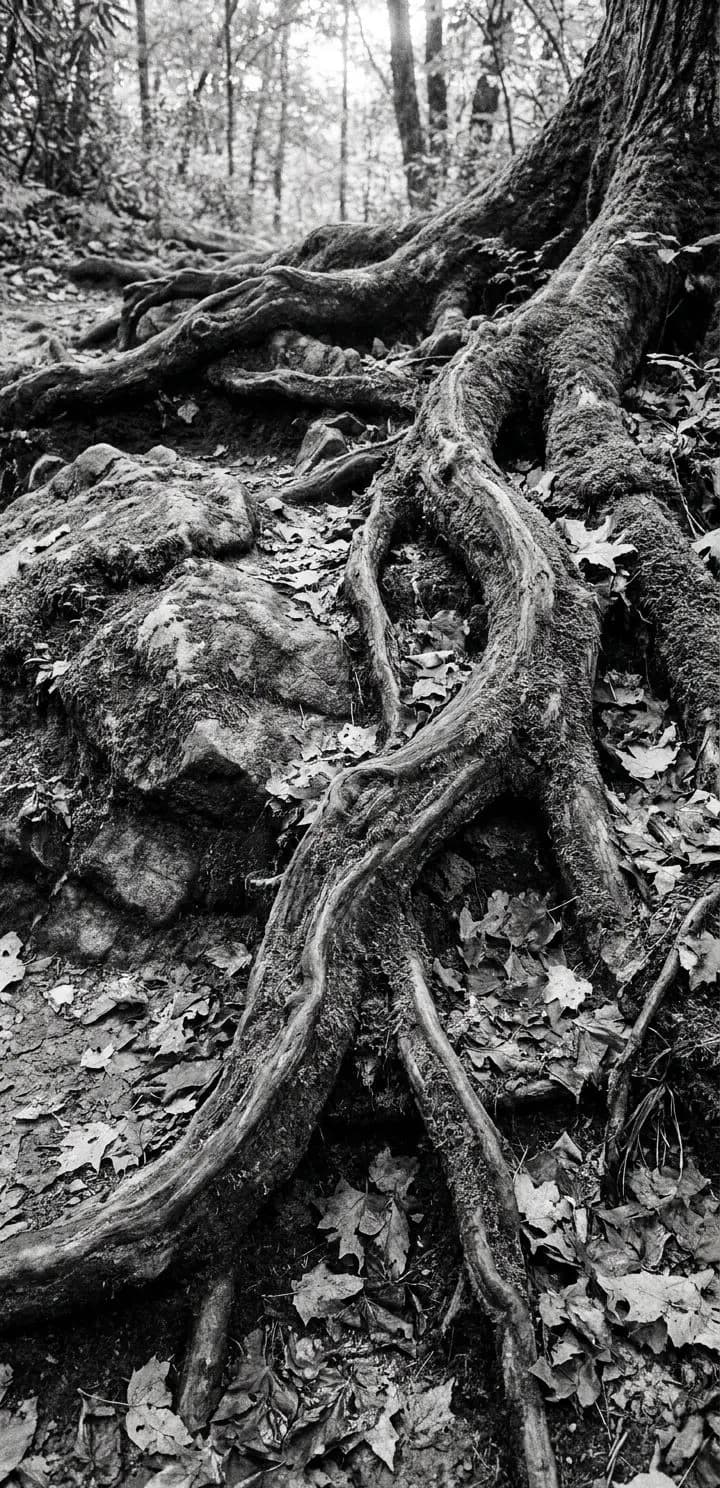
Inwood Hill escaped the axe not through preservation efforts—those came later—but through simple inaccessibility. The slopes were too steep, the rock too close to the surface for agriculture or development to take hold in the colonial era. By the time anyone thought to build here, the idea of a wild corner at Manhattan's northern tip had already taken root in the civic imagination. The park is 196 acres of tulip trees, black cherry, and red oak that have never been clear-cut, their trunks thick and gnarled in ways that cultivated parks never achieve.
The understory stays cool even in summer, and by fall the leaf litter is ankle-deep. You'll find witch hazel blooming late, its threadlike yellow petals an odd counterpoint to the rust and gold overhead. The forest floor smells like damp bark and mineral earth, particularly after rain, and the light slants low through the branches in that particular autumn way that makes every clearing feel like a stage set.
Climbing to the Overlook
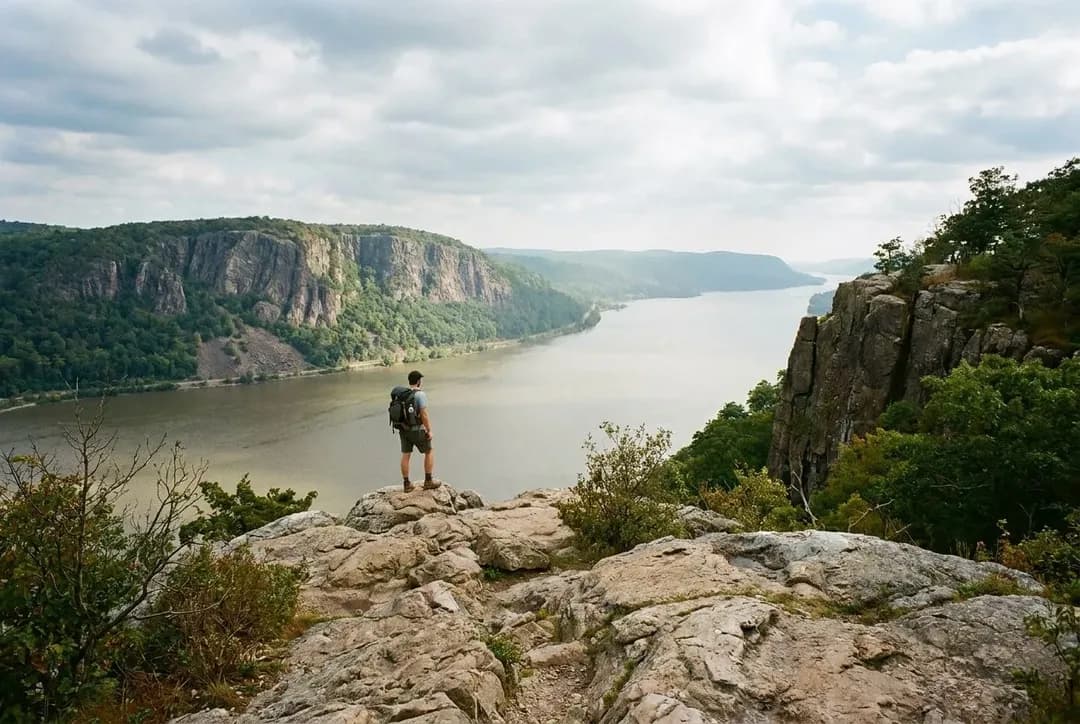
The trail to the overlook is steep and may vary by route, but avoid naming a specific blaze unless verified, gaining elevation quickly in the first quarter-mile as it switchbacks up the ridge. It's not technical—no scrambling required—but the grade is steady enough that you'll feel it in your calves. The payoff comes at the top: a rocky promontory with unobstructed views across the Hudson to the Palisades, the river wide and gray-green below, the cliffs on the New Jersey side striped with shadow.
On a clear day in late fall, the light has a particular crispness, the kind that sharpens edges and makes distances feel compressed. You can see the Henry Hudson Bridge downriver, its steel arch a tidy piece of geometry against the wooded chaos. The overlook itself is a flat shelf of schist, worn smooth by weather and visitors, big enough for a handful of people to sit without crowding. Bring water. The climb back down is easier on the lungs but harder on the knees.
Salt Marsh and Tidal Creek
The park's western edge follows Spuyten Duyvil Creek, where the Harlem River meets the Hudson and the water turns brackish. A network of boardwalks threads through the salt marsh here, past cordgrass and cattails, the ground spongy underfoot. It's a different ecosystem entirely from the upland forest—open, wind-scoured, full of birdsong. Egrets stalk the shallows in warmer months, and ospreys nest on platforms visible from the trail.
Timing matters here. The salt marsh area near the Spuyten Duyvil Creek remains buggy through September, but clears after the first hard frost in October, when the mosquitoes finally give up and the walking becomes pleasant again. By late fall the marsh grasses have turned tawny, and the whole landscape takes on a muted, watercolor quality. The air smells faintly of brine and decaying vegetation—not unpleasant, just unmistakably tidal. It's the kind of place that reminds you Manhattan is, after all, an island.
Trails That Reward Wandering
The park's trail system isn't extensive—maybe five miles total—but it's varied enough to feel larger. Some paths hug the ridge, others drop into hollows where streams trickle over stone. The blazes are mostly reliable, though intersections can be confusing if you're not paying attention. That's part of the charm: this is a park where you might genuinely lose your bearings for a few minutes, where the GPS signal drops out under dense canopy and you have to navigate by landmarks.
The red trail loops through the heart of the forest, past caves (really just deep overhangs in the schist) that local lore claims were used by Lenape communities centuries ago. Whether that's strictly true is a question for archaeologists, but the caves are atmospheric regardless—cool, dim spaces that feel older than the city around them. Sections of the trail are rocky enough that good shoes matter. Sneakers will get you through, but ankle support helps.
Getting There and Getting In
The A train to 207th Street is the closest subway stop, followed by a fifteen-minute walk through the neighborhood to the park entrance—up Isham Street, past bodegas and row houses, the gradient gentle until you reach the park's edge. There's street parking along Seaman Avenue if you're driving, though spots fill up on weekends when the weather turns crisp and everyone remembers the park exists. Once inside, the sense of transition is immediate: pavement gives way to dirt, the soundscape shifts, and within two hundred yards you're enveloped.
The trails themselves are free and open sunrise to sunset, though the park feels most itself in the morning when the light is soft and the dog-walkers haven't yet arrived in force. Dress in layers—the overlook can be breezy even when the forest floor is still—and bring water. There are no facilities once you leave the playing fields near the entrance, and the trails don't loop conveniently back to food or restrooms.
Why Now
Peak leaf season in Inwood runs later than in Central or Prospect Parks, the elevation and exposure stretching color into early November some years. The forest responds slowly to temperature shifts, holding green longer and then turning all at once in a rush of yellow and red. Late-October weekends draw crowds to the overlook, but midweek the trails empty out, and you can walk for an hour without seeing another soul. It's that kind of solitude—the unplanned, unscripted kind—that makes the trip north worthwhile.
Practical notes
Inwood Hill Park is at Manhattan’s northern tip, bordered by the Hudson River, Harlem River, and Dyckman Street The main entrance is near the intersection of Seaman Avenue and Isham Street. By subway, take the A train to 207th Street. By car, look for street parking along Seaman or Payson Avenues. The park is open daily from dawn to dusk; trails are unpaved and can be muddy after rain. Bring water, wear sturdy shoes, and pack out what you bring in. The terrain is hilly; accessibility is limited on forested trails, though paved paths exist near the sports fields. Verify current conditions before heading out, especially after storms.
Tags: #InwoodHillPark #NYCHiking #OldGrowthForest #ManhattanTrails #HudsonRiverViews #FallFoliage #FreeAndFine #UrbanNature #WeekendPlans #NYCParks #InwoodNYC #AutumnInNYC #HiddenNewYork #CityTrails #NYCOutdoors
All trademarks are the property of their respective owners.
Ask Karpo for more information.
Keep reading
- Long Island City Art Walk Near Me in Queens
 Bushwick Collective Art Walk Near Me in Brooklyn
 Lower East Side Art Walk Near Me in Manhattan