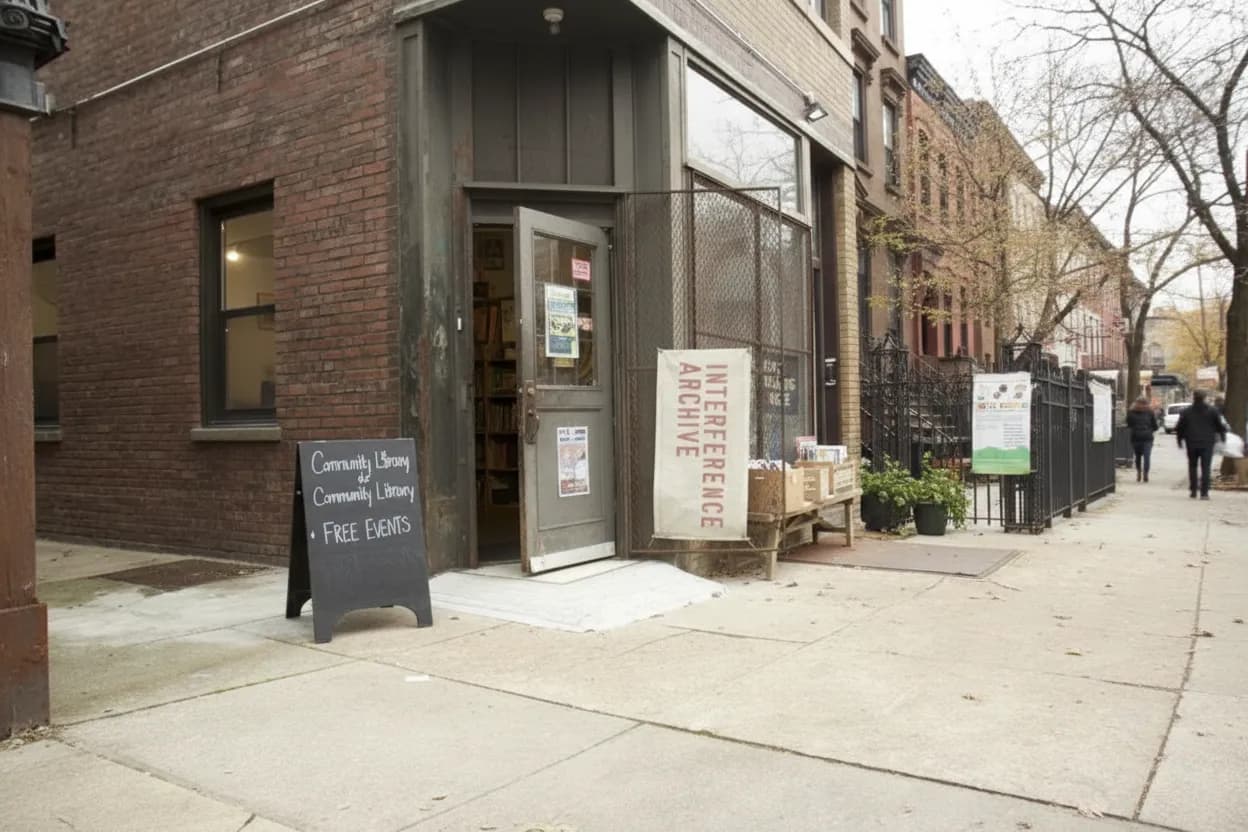
Interference Archive is the Brooklyn stop to choose when a humid or rainy afternoon needs texture rather than polish. As of July 21, 2026, the volunteer-run archive lists 314 7th Street in Brooklyn, open stacks, public programs, and a current exhibition, "an unbreakable human thread," running June 12 through September 13, 2026. This is not a big museum with timed tickets, a cafe, or a guaranteed spectacle. It is better for visitors who like posters, zines, buttons, flyers, wall text, and the politics of printed matter. Go with a friend who reads closely, keep expectations practical, and verify the same-day calendar before you leave.
Want a sharper rainy-day Brooklyn plan around protest graphics, open archives, and dinner nearby? Text Karpo before you go and ask for the current Interference Archive timing check.
Use Interference Archive When the Afternoon Needs Printed Evidence
Interference Archive’s own mission frames the place around cultural production and social movements, with an open-stacks archival collection, publications, a study center, exhibitions, workshops, talks, and screenings. That matters for deciding whether it fits your afternoon. You are not going for a polished institutional survey. You are going because flyers, posters, zines, T-shirts, audio, buttons, and other movement materials can make local history feel handled, argued over, and still active.
The odd-find value is strongest for a Brooklyn visitor who likes political graphics and informal archives. Bring someone patient enough to compare slogans, paper choices, and captions. Skip it if your companion wants architecture, shopping, a guaranteed guided tour, or a conventional museum route. The space rewards slow looking more than checklist tourism, so treat it as a focused stop before dinner, not a full-day plan or a background activity.
Time Interference Archive Around Its Volunteer-Run Hours
The official visit page lists regular public hours as Mondays 6-9pm, Fridays 1-6pm, and Saturdays and Sundays 12-5pm. The archive also notes that appointments are generally unnecessary during open hours, but it is a 100 percent volunteer-run space and does not accommodate individual appointments outside those hours. That is the main planning constraint: the place can be easy, but only if your timing matches the published window that day.
For July 2026, add one extra check before treating Friday as routine. The archive’s homepage and visit footer said it would open late at 3pm on Fridays July 17, July 24, and July 31 because of partner programming. If your late-afternoon plan falls on one of those Fridays, build the archive after 3pm, not at lunch. If the site changes again, use the posted update over saved notes.
Check the Interference Archive Exhibition Before You Commit
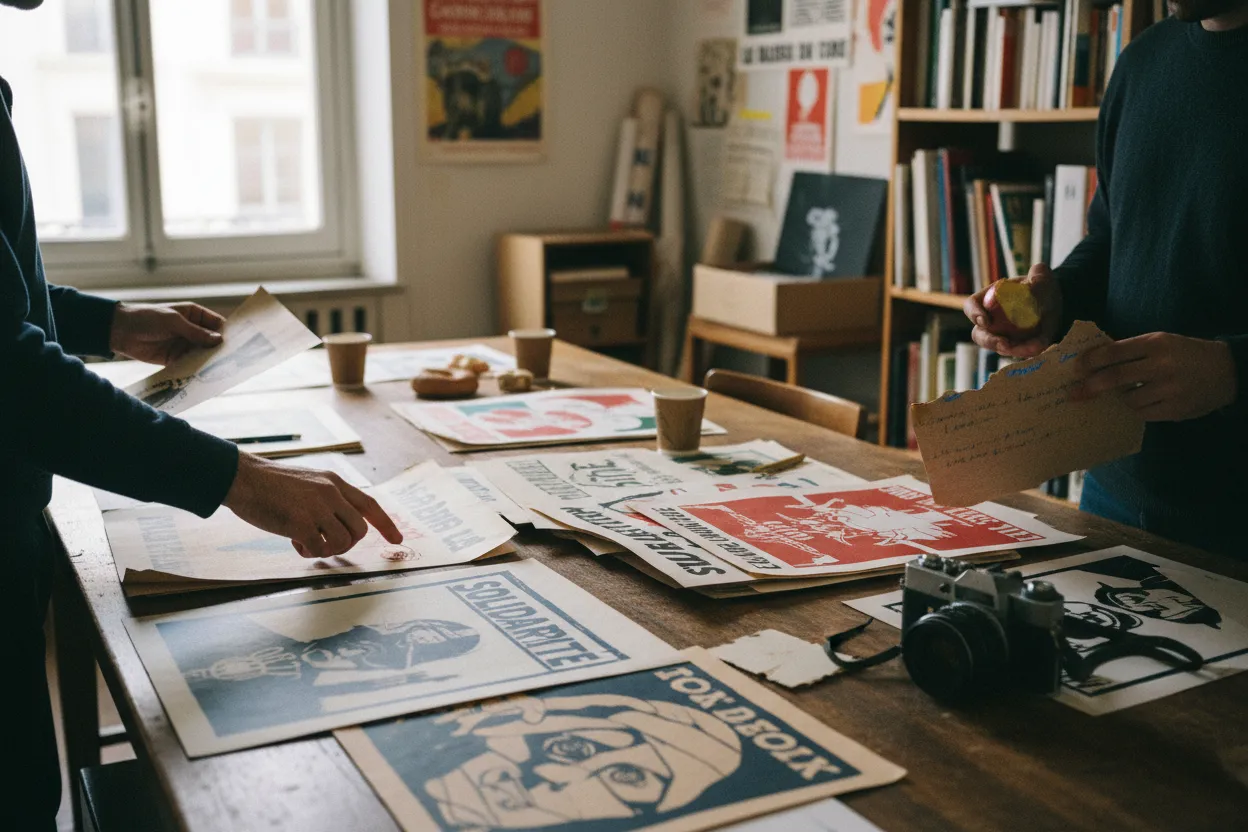
As of July 21, 2026, Interference Archive’s homepage listed the current exhibition as "an unbreakable human thread," dated June 12 through September 13, 2026. The preview text connected the show to colonial history involving Puerto Rico and the United States, so visitors should expect a historically and politically specific exhibition rather than a general protest-poster sampler. That specificity is useful if you want depth; it can disappoint if you expected a greatest-hits wall of graphics.
The archive’s exhibition policy explains why the shows can feel different from commercial political art displays. It says exhibitions often grow from collection materials, community organizing, collaborative working groups, and public programming, with most shows running for two or three months. It also says exhibitions and events are free and open to the public, with donations supporting overhead. Read the exhibition page before going if subject matter, language, or event context affects your choice.
Route to 314 7th Street Without Overcomplicating Park Slope
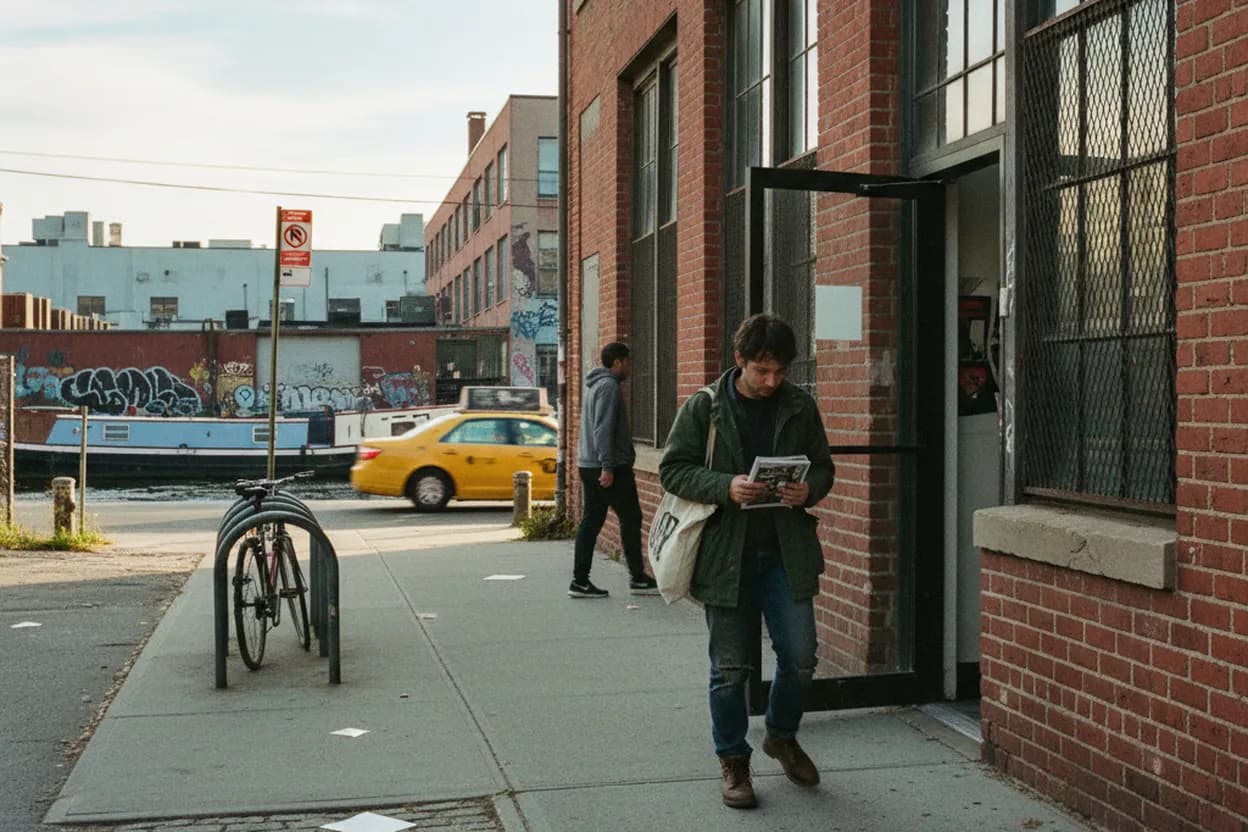
The official address is 314 7th Street, Brooklyn, NY 11215. Interference Archive describes the location as three blocks from F, G, and R trains at 4th Avenue and 9th Street. That makes it workable for a wet late afternoon because the transit-to-door portion is short, but not invisible. Bring a small umbrella, assume curb puddles near Fourth Avenue, and leave enough time to arrive calmly before the final hour of public access.
Transit reliability and accessibility can change faster than venue pages. The MTA app help center says riders can use Accessibility mode to identify fully and partially accessible subway stations and should check elevator status before going. Use that step if stairs are a problem, because the archive being wheelchair accessible does not make every subway path step-free. If rail service or elevator status is off, rideshare, bus routing, or postponing may be the better move.
Know What Interference Archive Can and Cannot Provide
Interference Archive lists wheelchair access and an ADA bathroom, and it asks visitors to avoid perfumes or heavily scented items because of chemical sensitivities. Masks are encouraged but not required, with masks available at the front during open hours and events. These details make the visit more predictable, but they also signal a community space with shared expectations. If you have access questions, the venue asks visitors to email info@interferencearchive.org in advance.
Groups need more care than pairs. The visit page asks groups of five or more to give advance notice, and says tours may be possible with notice, with donations appreciated. Do not arrive with a class, club, or content crew and expect staff capacity on demand. For two people, the better rhythm is quiet browsing, short questions when volunteers are free, and leaving room for researchers or program attendees using the same space.
Give Interference Archive a Tight, Label-Reading Pace
Plan for a compact visit that still leaves mental space. Forty-five to seventy-five minutes is a sensible working range for a first stop, especially if you and your friend read wall labels, scan printed matter, and browse without trying to decode every object. The archive’s collection is broad enough to slow you down, but the venue’s scale and hours argue against a sprawling itinerary. Arrive closer to opening than closing.
The best pacing strategy is to pick a thread rather than consume the room. Start with the current exhibition, then look for recurring materials: posters, flyers, zines, buttons, books, audio, or other formats listed by the archive. Ask yourself what changed when a message moved from street distribution into an archive. That turns the visit from passive viewing into a practical reading exercise, which is where Interference Archive becomes memorable.
Make the Interference Archive Go-or-Backup Call Same Day
The main failure mode is arriving outside the real opening window. On July 21, 2026, the archive homepage showed the day’s status and upcoming events, including a volunteer orientation at 7pm that evening, a collections work party on July 22, and an audio collage workshop on July 26. Those listings are useful, but they can shift. Check the homepage, visit page, and event page on the same day before crossing Brooklyn.
If the archive is closed, crowded for a program, or mismatched to your companion’s mood, do not force it. Keep the decision simple: verify hours, confirm the current exhibition, check transit access, and decide whether a free volunteer-run archive is still the right late-afternoon stop. If yes, go lightly and read closely. If no, save it for a posted event when the subject, timing, and room energy are already confirmed.
Tags: #InterferenceArchive #Brooklyn #ParkSlope #NYCArchives #ProtestGraphics #Zines #PoliticalPosters #HiddenGems #OddFinds #RainyDayNYC #NYCArt #AskKarpo #BeforeYouGo #KarpoNYC
Sources consulted: Source 1: interferencearchive.org · Source 2: interferencearchive.org · Source 3: interferencearchive.org · Source 4: intercom.help · Source 5: access.nyc.gov
All trademarks are the property of their respective owners.
Ask Karpo first
Tell Karpo your date, group size, budget, and starting neighborhood. We’ll check current access, timing, transit, and the cleanest plan for Interference Archive before you head out.