Hunter’s Point South Park works best as a backup plan when the goal is not novelty, but a calm waterfront reset that does not require stairs, reservations, or a long Queens detour. For a wheelchair user and one friend meeting after a hot weekday, the practical center is the NYC Ferry stop listed on the Astoria route as Long Island City, the adjacent park paths, the lawns, the picnic terraces, and the skyline-facing seating. The main friction is not distance; it is timing. Ferry schedules, service alerts, crowding, restroom access, and wind along the East River should be checked before you commit to carrying food across town.
Want a same-day route check before you leave? Text Karpo with your starting point, mobility needs, and target sunset time, and ask for the simplest backup plan.
Start With The Ferry, Not The Lawn
Treat the ferry as the appointment and the picnic as the flexible part. NYC Ferry’s Astoria route connects East 34th Street, Long Island City, Roosevelt Island, Astoria, East 90th Street, Brooklyn Navy Yard, and Wall Street/Pier 11, with the route page directing riders to real-time schedules. For this plan, confirm the Long Island City landing code and the return direction before buying food, because missing one boat can turn an easy reset into a long wait.
The fare is a real planning detail. NYC Ferry currently lists a $4.50 adult one-way ticket, a $29 ten-trip pass, and a $1.45 discount fare for eligible riders, with tickets sold through the app or landing machines. Transfers inside the ferry system are valid for 120 minutes, but a one-way ticket is not a same-route round trip. Do not activate a mobile ticket until you are at the slip and likely to board.
Why Hunter’s Point South Fits This Use Case
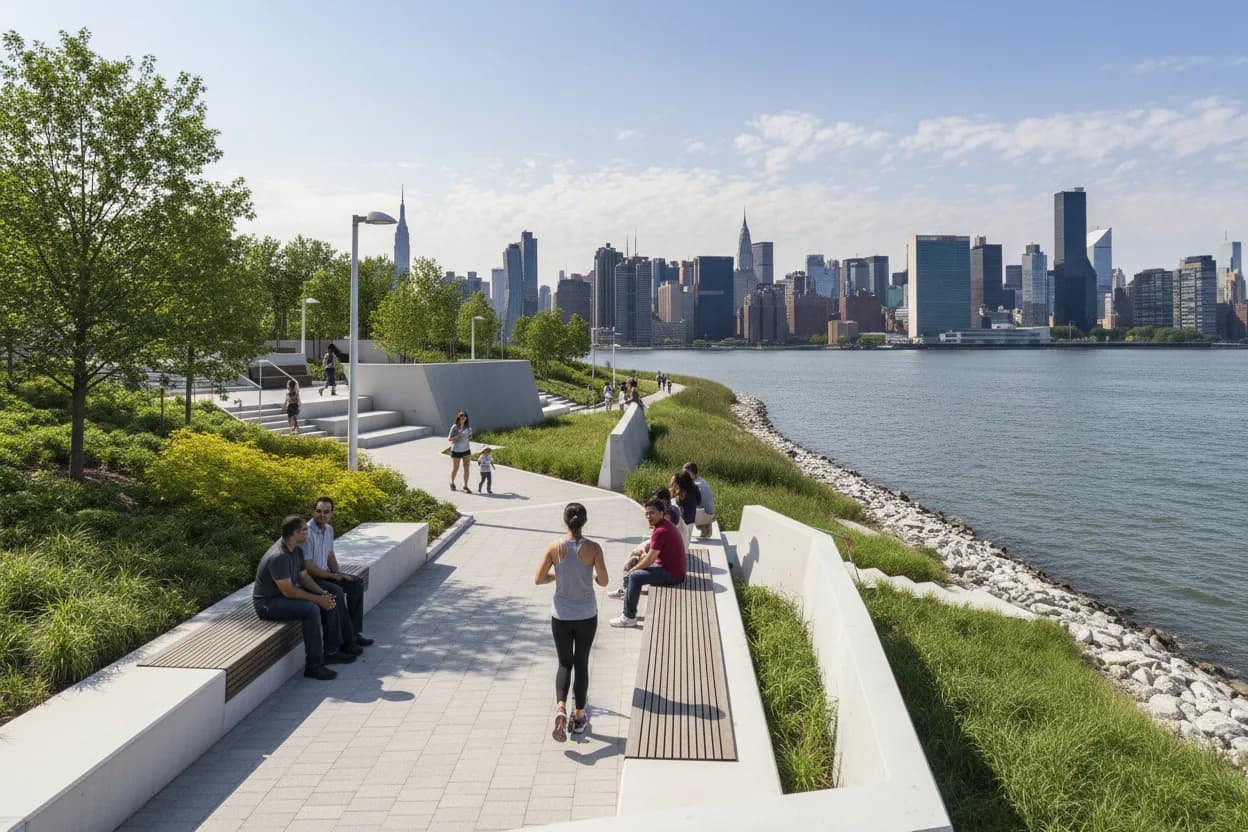
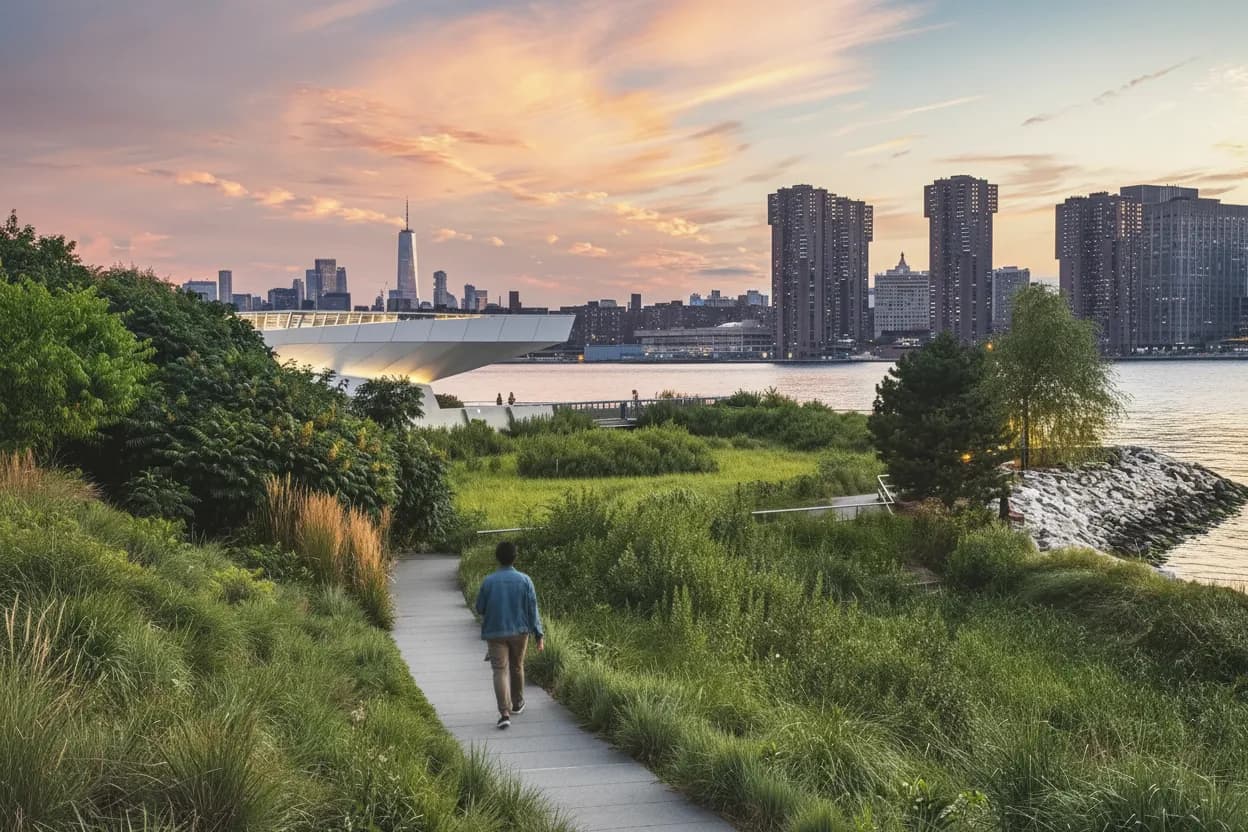
Hunter’s Point South is not just a viewpoint beside Gantry Plaza. NYCEDC describes the completed waterfront park as 11 acres of open space built from a former post-industrial waterfront, with pedestrian and bicycle pathways, picnic terraces, wooden seating areas, wetlands, a playground, adult fitness equipment, a kayak launch, and a cantilevered platform facing Manhattan. That mix matters because a pair can adjust the stop without changing neighborhoods or crossing busy blocks repeatedly.
The audience fit is specific: Queens and Midtown residents who want a low-cost weekday meet-up after heat has broken, especially when one person needs a step-free route and both people want the water to do most of the work. It is less ideal for a large group, a formal meal, or anyone depending on guaranteed shade. The park gives space and views, but the comfort level changes quickly with wind, crowds, and restroom availability.
The Step-Free Route To Aim For
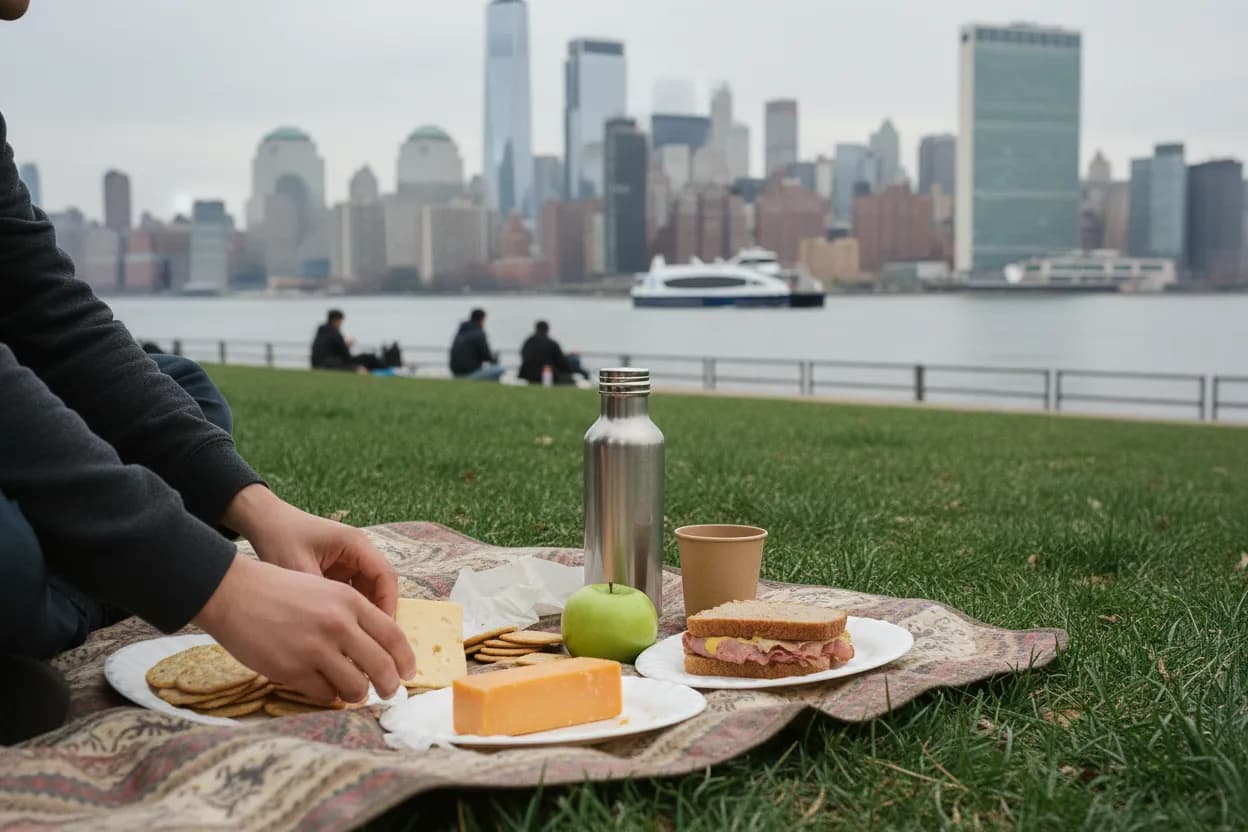
Arrive through the ferry landing and stay on the waterfront paths before choosing a picnic spot. The Hunters Point Parks Conservancy identifies two accessible ferry stops serving the connected waterfront parks, including one in Hunter’s Point South Park, and notes the area sits along Center Boulevard in Long Island City. Keep the first decision simple: roll from the landing toward the open lawn, seating edges, or picnic terraces rather than hunting for a perfect hidden corner.
The route is easiest when you avoid over-planning scenic detours. Use the smooth waterside paths, pause where benches or wooden seating give transfer options, and keep bikes, scooters, and faster foot traffic in mind near shared paths. If the park feels too crowded near the ferry, continue within Hunter’s Point South rather than drifting into a separate Gantry plan. This article’s backup logic depends on a compact loop: ferry, lawn or terrace, skyline, restroom check, return.
Food, Seating, And Bathroom Reality
Bring food that can survive a breeze and a delayed boat. This is a picnic backup, not a restaurant plan. NYC Parks has listed a Hunter’s Point South snack bar concession, but menus, operating days, and service windows can change, so do not build the evening around it unless you verify it that day. A flat-packed meal from LIC or Midtown is safer: closed containers, napkins, water, and nothing that requires balancing multiple open trays.
Bathrooms are the most important uncertainty. NYC311 says public restrooms are located in parks and directs users to the city restroom map for locations, hours, and maintenance reporting; broader city data notes park restroom hours often vary by season. For golden hour, assume the restroom may not match your arrival window until confirmed. Check the map before boarding, and have a nearby indoor backup only if it is genuinely step-free and still open.
Best Pacing For Golden Hour
Aim to arrive before the light gets good, not during the exact peak. A comfortable version is ferry arrival, restroom confirmation, food setup, then a slow move toward the skyline-facing seating or overlook as the sun lowers. NYCEDC highlights the park’s 30-foot-high cantilevered platform and Manhattan views, but that feature can draw people. If your companion needs predictable space, choose a less dramatic seat with clear turning room over the busiest photo position.
A breezy clear evening after a hot day is exactly when this park feels useful, but it also raises small failure modes. Wind can make blankets awkward, waterfront temperatures can drop faster than inland blocks, and glare can make east-west movement tiring. Pack one extra layer, use clips or a weighted bag for food wrappers, and keep the route short enough that leaving early does not feel like defeat. The goal is restoration, not completion.
When To Switch Plans
Switch plans before frustration accumulates. If real-time ferry information shows a long gap, if service alerts affect the Astoria route, or if the landing crowd looks too dense for comfortable boarding, choose a land route or delay the picnic instead of gambling on the next boat. NYC Ferry also states boarding is first come, first served, so step-free access does not remove every capacity problem. The lower-stress decision is often the earlier one.
Weather can also cancel the mood without closing the park. Strong wind, nearby storms, poor air quality, or heat that has not actually broken should push the plan toward a shorter waterside sit or a verified indoor stop. If the restroom cannot be confirmed, shorten the visit. If food pickup requires stairs or tight aisles, skip it. The backup works because it stays modular: ferry ride, accessible path, simple food, skyline pause, easy exit.
What to verify for Hunter’s Point South Park
Before leaving, verify five items in order: NYC Ferry Astoria route status, Long Island City landing timing in both directions, ticket purchase method, public restroom location and hours on the city restroom map, and the weather at the East River edge rather than only your starting neighborhood. If any answer is missing, reduce the plan. A 35-minute waterfront reset with certainty is better than a two-hour outing built on assumptions.
On arrival, do one more scan: confirm the path from landing to seating is clear, identify the nearest usable restroom or decide the visit is short, choose a spot with turning room, keep the return ferry time visible, and avoid blocking paths for photos. For a wheelchair user and one friend, Hunter’s Point South is a strong Queens waterfront backup when the logistics remain honest and the route stays compact.
Tags: #HuntersPointSouth #LongIslandCity #QueensNYC #NYCFerry #AstoriaRoute #AccessibleNYC #StepFreeNYC #WaterfrontNYC #NYCParks #QueensGuide #GoldenHourNYC #AskKarpo #BeforeYouGo #KarpoNYC
Sources consulted: Source 1: edc.nyc · Source 2: ferry.nyc · Source 3: ferry.nyc · Source 4: nyc.gov · Source 5: portal.311.nyc.gov · Source 6: hunterspointparks.org
All trademarks are the property of their respective owners.
Ask Karpo first
Tell Karpo your date, group size, budget, and starting neighborhood. We’ll check current access, timing, transit, and the cleanest plan for Hunter’s Point South Park before you head out.