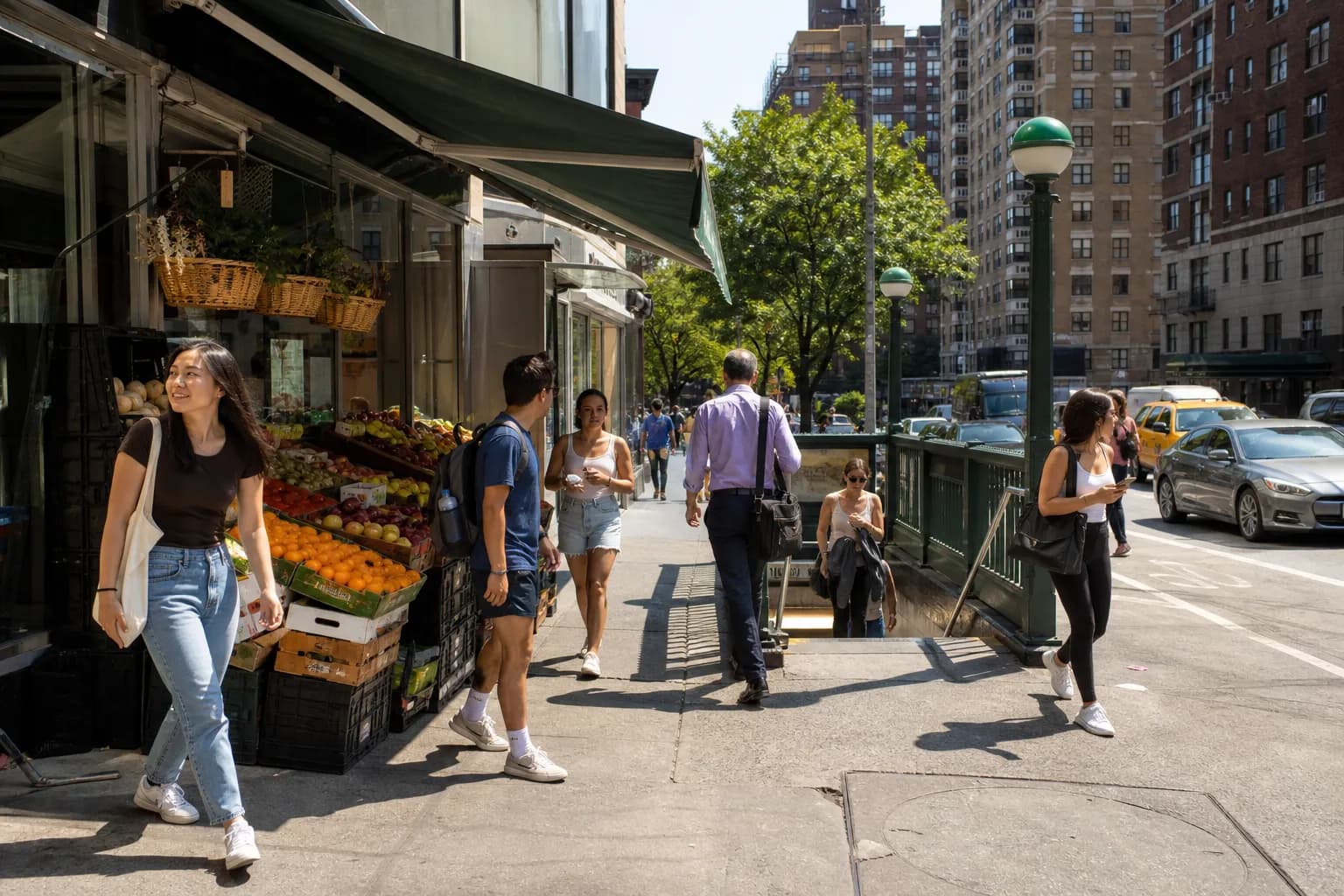
Start with the campus radius, not the listing photo
The search term is Hunter College housing, but the real question is whether an apartment can survive the semester. For Hunter College students around 68th Street and Lexington Avenue, the best room is not automatically the closest or the prettiest. It is the one that makes class, groceries, laundry, late trains, and a bad-weather day feel manageable.
This guide uses official school housing resources, public transit maps, and current NYC rent-market sources as directional context. Rents move quickly, so treat any market number as a timing signal rather than a promise. The stronger decision is comparative: Upper East Side versus East Harlem, walking distance versus subway buffer, solo room versus roommate math.
Neighborhood one: Upper East Side is the convenience premium

Upper East Side is the neighborhood students check first because it feels most connected to 68th Street and Lexington Avenue. That convenience has a cost. The closer you get to campus, the more you are paying for time, predictability, and the option to go home between classes. For students with long studio hours, labs, rehearsals, or evening seminars, that time can be worth real money.
The risk is overpaying for a room that looks close on a map but fails daily life. Before committing, test the walk at the hour you will actually use it. Check whether the grocery run is practical, whether the block feels workable after dark, and whether the bedroom has enough separation from the living room to make roommate life sustainable.
Neighborhood two: East Harlem is the student-budget compromise
East Harlem usually enters the search when the first round of listings feels too expensive. That does not make it a backup. For many students, the better value is a slightly longer commute paired with a larger room, a calmer block, or a roommate setup that does not turn the apartment into a hallway with beds.
The practical test is commute reliability. Use MTA maps to compare not just the best-case train, but the second-best route. A neighborhood is student-friendly only if it still works when one line is delayed or when a class ends later than expected. If the backup route requires two transfers and a fifteen-minute walk, factor that into the rent.
Neighborhood three: Yorkville works when roommate math is honest

Yorkville can be the smartest option when the roommate agreement is clear. The mistake is treating a shared apartment as one rent number. Students need to split utilities, Wi-Fi, cleaning supplies, broker fees if any, deposits, furniture, and the uneven cost of who gets the bigger room. Put the numbers in writing before anyone falls in love with the listing.
New York leases also reward boring diligence. Read the start date, renewal language, guarantor requirement, sublet policy, and what happens if one roommate leaves. NYC HPD tenant resources are useful for understanding basic tenant responsibilities and rights, but students should still verify the exact lease terms before paying money.
Neighborhood four: Astoria is the commute tradeoff
Astoria is the option that asks students to be honest about energy. A longer commute can unlock better space or a lower share, but it also changes the day. A train ride that feels fine during orientation can feel very different during finals, winter rain, or a week when work shifts stack against classes.
The best way to evaluate Astoria is to run a door-to-door test: apartment entrance to classroom building, not station to station. Include the stairs, elevators, crosswalks, and the last five minutes. If the route still feels acceptable with a backpack and a tired brain, the rent discount may be real.
What to verify before sending money
Before paying an application fee, deposit, or first month's rent, verify the address, the legal name of the landlord or management company, the full monthly payment, and what is included. Ask for the lease in writing and avoid pressure to wire money before seeing the unit or confirming the broker's role. If a deal sounds far below market, slow down.
For Hunter College students, official school housing pages are the first credibility check. They may not solve the apartment hunt, but they show the language the school uses for housing, residence life, and off-campus resources. Pair that with public rent reports and real-time listing checks before making a decision.
One last test helps: ask whether the apartment still works on the least glamorous school day. For Hunter College, that means checking the route when rain slows the sidewalks, when a night class ends after the dinner rush, and when the nearest grocery store is not the one with student-friendly prices. A listing can look reasonable in isolation and still fail the weekly pattern. Compare the room as a system: sleep, study, laundry, food, train, light, noise, package delivery, and one quiet place to reset. If the plan depends on perfect weather, perfect train service, or every roommate staying perfectly coordinated, the apartment is weaker than it looks. Good student housing is rarely dramatic. It is repeatable enough for Monday morning.
Practical notes
Build a three-option housing shortlist for Hunter College: closest practical option, best roommate-value option, and best commute-value option. Check the route on MTA maps, compare current asking rents on at least two listing platforms, and read the lease before paying. Treat rent data from StreetEasy, Apartments.com, and Zumper as market context, not a guarantee. The safest student setup is boring on paper: clear budget, clear commute, clear roommate agreement, and one backup plan if the first listing disappears.
Tags: #BackToSchool #NYCStudentHousing #OffCampusHousing #NYCRent #StudentApartments #CollegeHousing #NYCStudents #Roommates #LeaseChecklist #MTA #StudentBudget #KarpoFinds
Sources consulted: Hunter College · CUNY Housing and Residence Life · StreetEasy Data Dashboard · Apartments.com NYC rent trends · Zumper New York rent research · MTA Maps · NYC HPD Tenant Resources
All trademarks are the property of their respective owners.


