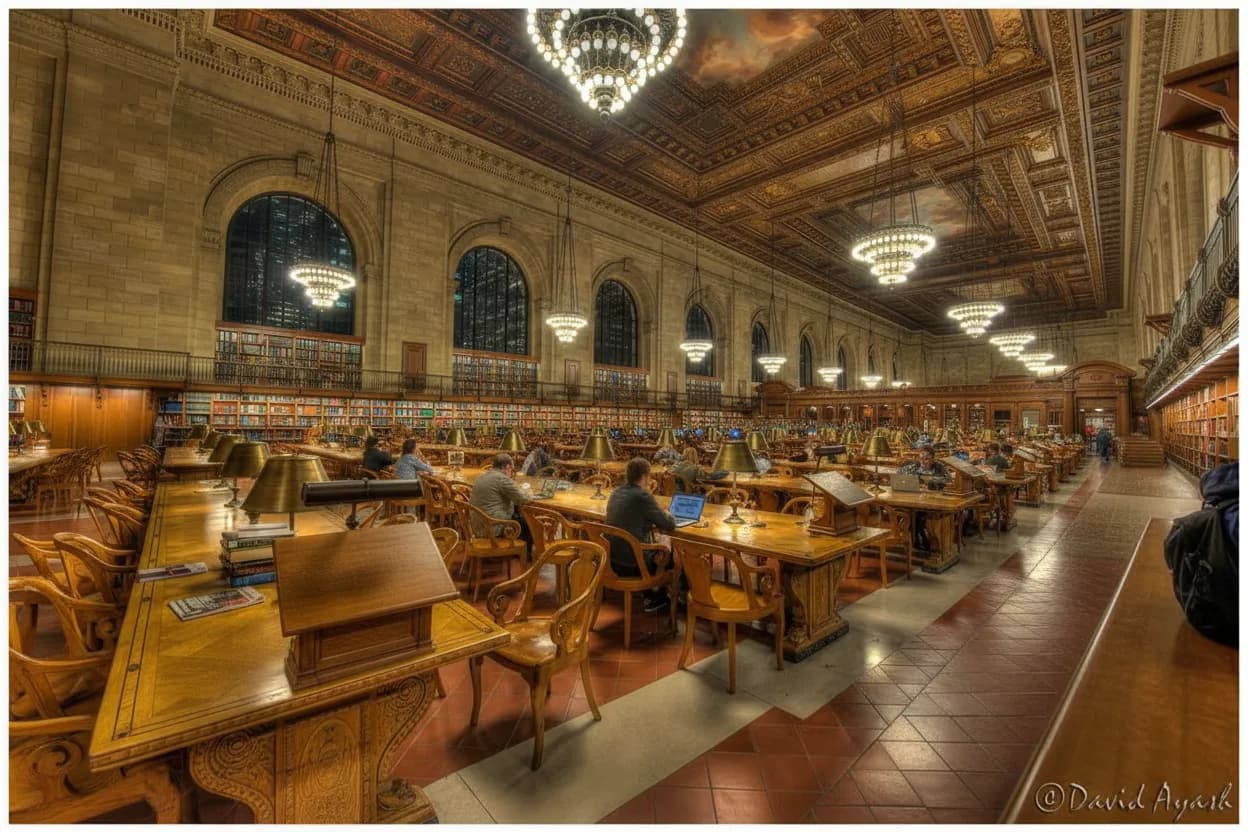
When a true-crime documentary trends, the useful first question is not whether it is gripping. It is what can be verified, what is edited for narrative speed, and what should stay unshared until checked. For New Yorkers searching “a toxic love story netflix,” the Stephen A. Schwarzman Building at The New York Public Library is a practical indoor setting for a slower read. NYPL’s official page lists the flagship building at Fifth Avenue and 42nd Street as a fully accessible research center with public service spaces, catalog access, and Ask NYPL support. Treat this as a daytime verification visit, not entertainment tourism.
Want a claim-by-claim fact-check plan before you spend a library day on the film? Text Karpo with the title, borough, time window, and what you most need verified.

Anchor the Search at NYPL’s Schwarzman Building
Use the Schwarzman Building because it gives the task a defined container: one seated research session, one source log, and one decision about what can responsibly be repeated. NYPL lists regular hours on its location page, but also says last entry is 15 minutes before closing. Check the page the morning you go, especially because building work and public-service adjustments can affect comfort, noise, or circulation.
This workflow fits a solo visitor who is curious, patient, and willing to separate story from evidence. The tradeoff is pace: you may confirm fewer details than a social thread claims, but the details you keep will be cleaner. Bring a charger, ID if needed for your library account, and a short claim list. The goal is not to rewatch the film in a reading room; it is to test its factual spine.
Use Netflix’s Listing as the Baseline, Not the Verdict
Start with Netflix’s official Media Center page because it can confirm the title, format, and platform description. Netflix describes A Toxic Love Story as a film about a California scandal involving an arrest, an alleged violent fantasy plot, and a hidden web of deception. That is useful framing, but it is not independent proof of every allegation, timeline detail, or legal interpretation presented onscreen.
The failure mode is treating a platform synopsis as a public record. Write down only what Netflix directly supports: the work exists, how Netflix frames it, and the basic subject. For arrests, court outcomes, interviews, or prior coverage, mark each item as needing outside confirmation. If a claim cannot be supported by a court source, reputable reporting, or library database trail, your honest conclusion is that it remains unverified in your review window.

Search NYPL’s Research Catalog for Context Lanes
NYPL’s Research Catalog covers research collections at the Schwarzman Building, Schomburg Center, and Library for the Performing Arts, and also surfaces partner collection material. Use it for context rather than instant answers: cyberstalking, coercive control, documentary ethics, media manipulation, or criminal procedure. Search exact phrases first, then broaden to subject terms. A missing result does not make a claim false; it may be too recent or better documented in articles.
Keep this portion bounded to 30 or 40 minutes. Your output should be a small bibliography, not a sprawling reading list. If an item has a Request button, NYPL says researchers can request it through the catalog with an active library account, but research materials are used onsite and delivery times vary. If the item is restricted or slow to retrieve, log it as a follow-up rather than forcing a weak answer today.
Check NYPL Databases Before Trusting Recaps
NYPL’s online resources page points researchers to databases, Articles Plus, e-journals, research guides, and the Research Catalog. That matters because quick recaps often recycle the same source without adding reporting. Compare publication dates, named sources, corrections, and whether the article predates the Netflix release. A useful source log labels each entry clearly: platform description, reported interview, agency record, court document, scholarly context, or secondary recap.
A common mistake is counting five articles that all cite the same earlier story as five confirmations. They are not. Confidence rises when independently reported details align across time, especially before and after the documentary release. If you have NYPL card access, check whether a database is available from home; if you are onsite, ask staff what access applies that day. When access rules are unclear, note the access problem instead of paraphrasing a headline you cannot read.

Ask NYPL Staff a Narrow Research Question
NYPL lists Ask NYPL as a virtual reference service available by phone, chat, email, and text, answered by trained information specialists. Use it when the trail becomes procedural: which database helps with older local news, how to locate legal reporting, whether a catalog item can be requested, or how to cite a licensed source. Ask a narrow question such as, “Which NYPL resource can help verify this criminal-case timeline?”
This is also the accessibility move for attention and stamina. A staff route can reduce repetitive searching when the material is emotionally heavy or technically confusing. The tradeoff is timing: Ask NYPL notes a minimum 24-hour turnaround for submitted questions Monday through Friday, and it does not provide detailed research or bibliographies. If you need an answer the same day, use staff help as guidance, then leave with a source map and one unresolved question.
Plan the Bryant Park Arrival Around Accessible Routes
For many riders, the Bryant Park area is convenient, but accessibility details should be checked before leaving. NYPL lists accessible Schwarzman Building entrances at 40th Street and 42nd Street, with public service units wheelchair accessible and elevator access to all levels. The adjacent subway network is dense, but station access can change by route, entrance, and outage status, so do not assume the closest stop is the best stop.
Transit is the easiest detail to underestimate because the library is central. MTA’s app help says the Status tab shows subway and bus service, planned service changes, and elevator or escalator outages. Check close to departure, not the night before. If a disruption makes the trip inefficient, switch to a remote first pass: Netflix baseline, NYPL online resources if available to you, and a short onsite list for a later visit.
Leave NYPL With a Dated Three-Column Decision
Before you close the laptop, sort every claim into three columns: confirmed, plausible but not independently confirmed, and do not repeat. Confirmed claims need a source URL, database citation, catalog record, or documented staff guidance. Plausible claims may help private understanding but should be phrased carefully. The third column is where screenshots, dramatic comments, unsourced timelines, and emotionally satisfying but unsupported details belong.
Your final step is a dated note: “Checked July 28, 2026,” followed by what you used and what could still change. Include NYPL hours, database access, Netflix listing details, and transit accessibility only if you verified them that day. If a practical fact cannot be confirmed, make that part of the recommendation. For this topic, the responsible share is a short sourced explanation of what you know, how you know it, and what remains unresolved.
Tags: #AskKarpo #BeforeYouGo #NYPL #NewYorkPublicLibrary #MediaLiteracy #TrueCrime #Netflix #Documentary #FactChecking #ResearchWorkflow #HiddenGemsNYC #BryantPark #MidtownNYC #SoloNYC
Sources consulted: Source 1: nypl.org · Source 2: nypl.org · Source 3: nypl.org · Source 4: nypl.org · Source 5: media.netflix.com · Source 6: intercom.help
All trademarks are the property of their respective owners.
Ask Karpo first
Tell Karpo your date, group size, budget, and starting neighborhood. We’ll check current access, timing, transit, and the cleanest plan for New York Public Library before you head out.