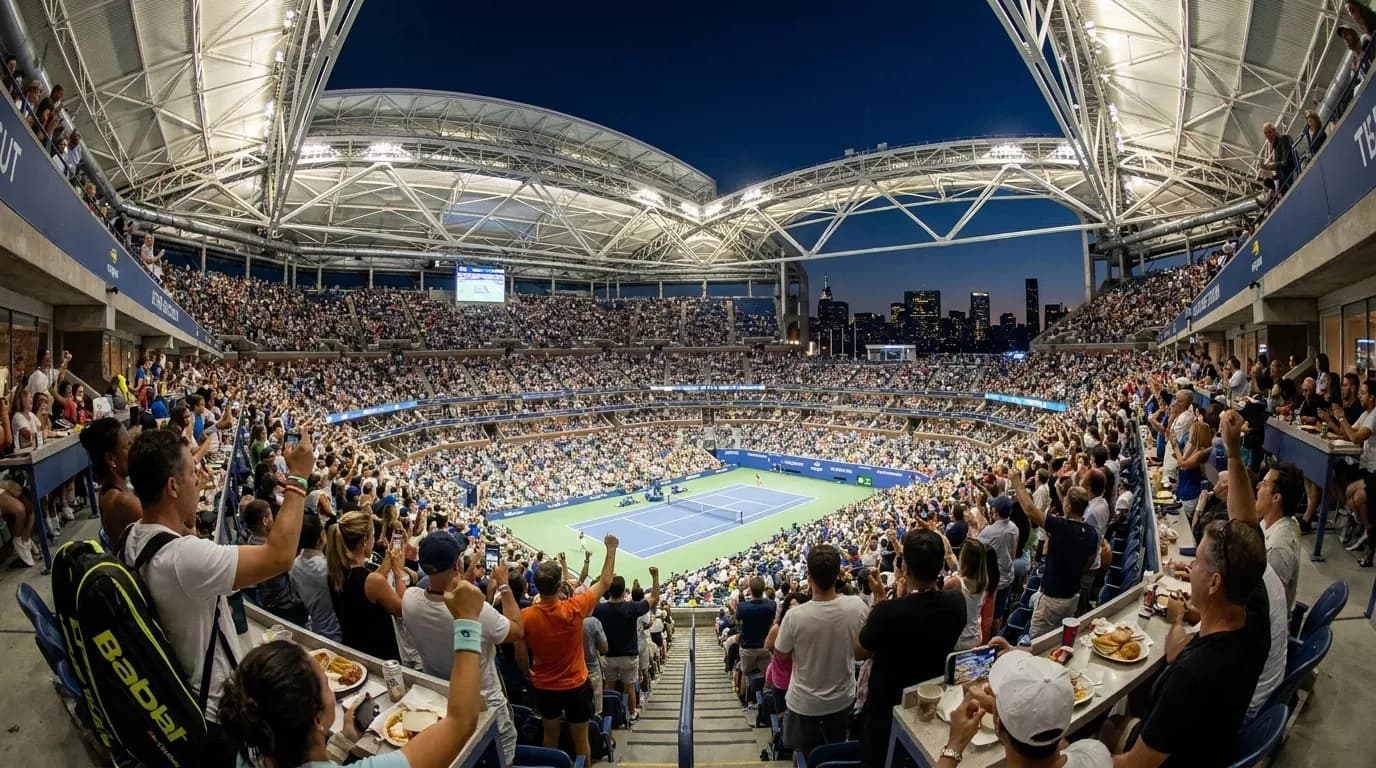
If you are planning a 2026 US Open night session, treat sound as part of the ticket, not a side effect. The official 2026 calendar runs August 23 through September 13, with singles main-draw play scheduled to begin August 30, but the exact matchups, court assignments, roof decisions, and daily conditions should be checked on the US Open’s official schedule and visitor pages before you go. A night match can feel intimate or thunderous depending on where you sit, whether the roof is open or closed, how the crowd gathers its reactions, and how players use their between-point routines. You do not need a sound meter to notice it. You will hear the ball differently, sense applause rolling through the bowl, and feel how a tight tiebreak can make thousands of people behave like one organism.
Text Karpo during a night match to decode why the stadium feels louder or calmer point by point.

Why night matches feel different from the first changeover
Night tennis arrives with a different kind of attention. During a day session, people are often arriving, stretching, comparing courts, checking the grounds, and managing the sun. At night, the stadium becomes the destination. The lights sharpen the court, the surrounding seating darkens, and the eye is pulled toward the rectangle of play. That visual focus can make every sound seem more important: the ball off the strings, a shoe squeak before a slide, the umpire’s call, or the low murmur that spreads after a bold second serve.
The energy also builds in waves. Early in the evening, the sound may have a social texture as people settle into seats and react to the first long rallies. Later, if the match tightens, the same space can feel dramatically more compressed. The crowd learns the players’ patterns, begins to anticipate pressure points, and reacts faster. A routine hold at 2-2 may receive polite applause; a hold from break point down at 5-5 can feel like a release valve opening.
The roof as part of the room
Arthur Ashe Stadium’s retractable roof is not merely a weather feature from a fan’s perspective. When a large roof structure is overhead, the stadium can feel more like an enclosed room than an open bowl. In general physics terms, hard surfaces can reflect sound, while open air allows more sound to disperse. That does not mean every closed-roof night will sound the same, or that anyone should assume a specific loudness level. It does mean fans may notice applause, music, and collective reactions lingering differently depending on the roof position and weather.
Roof operation is a venue decision and can depend on conditions and tournament procedures, so visitors should not build a plan around a guaranteed open-air or covered experience. Instead, think of the roof as one of the variables that gives each night its fingerprint. A closed or partially sheltered feeling can make crowd noise seem to gather above the court. An open night can feel broader, with sound rising and thinning into the sky. Both can be memorable; they simply frame the match differently.
Crowd bursts, lulls, and the rhythm of attention
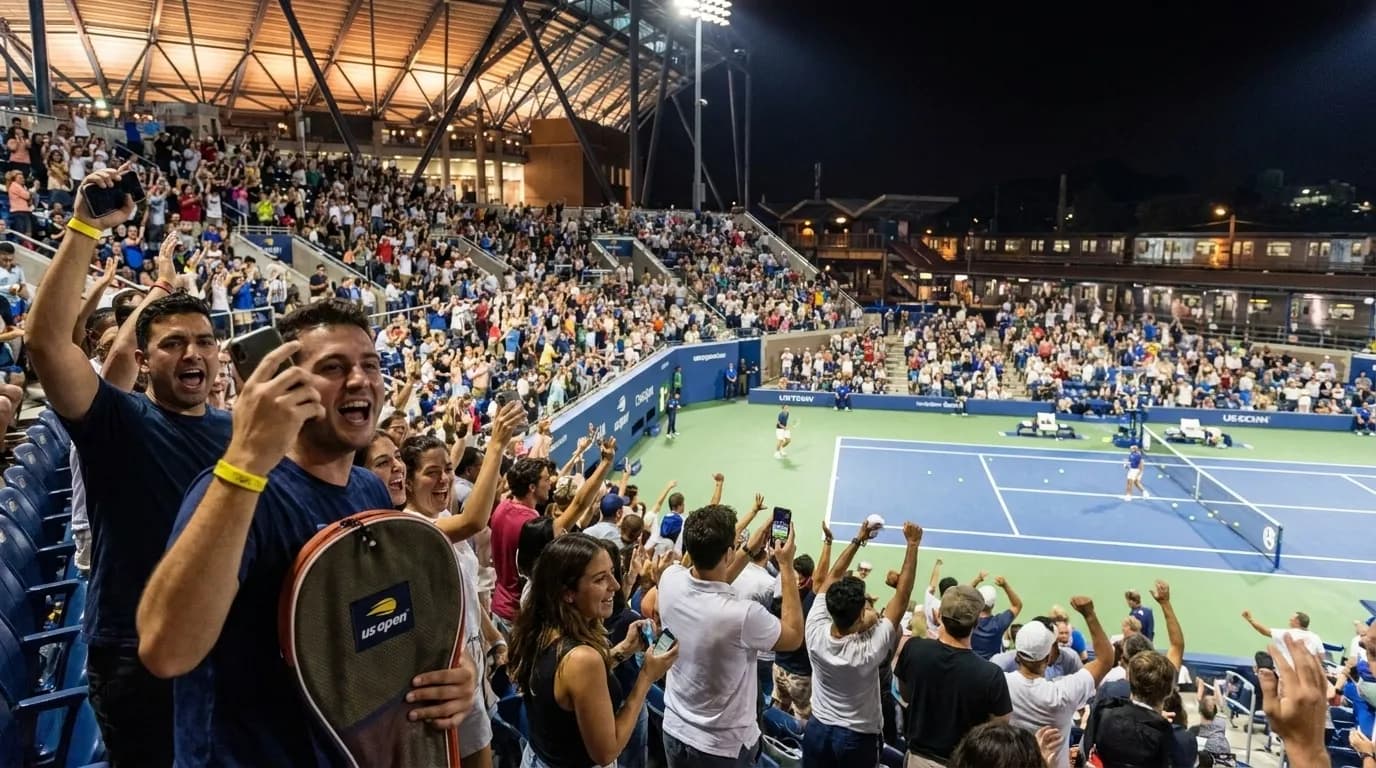
Tennis crowds are not loud in a constant way. They pulse. The silence before a serve is part of the drama because it creates room for the burst afterward. When a player saves a break point, the reaction is not just applause; it is the sudden conversion of restraint into sound. That is why a night match can feel more theatrical than many other sporting events. The audience is repeatedly asked to hold back, then allowed to respond all at once.
Those bursts have their own geography. A cluster of fans behind one baseline may start a chant or rise after a spectacular defensive point. The opposite side may answer when the next rally swings the other way. The upper sections can add a rolling quality because reactions travel visibly and audibly around the bowl. In a close match, people who arrived as neutral observers may begin to lean toward a comeback, a local favorite, or simply the player extending the night.
The lulls matter too. Between changeovers, a crowd can become conversational and restless; between first and second serve, it can become intensely still. Fans who are sensitive to noise may find the rhythm more manageable than a permanently loud event, while those seeking atmosphere should understand that the electricity comes from contrast. The quiet is not a failure of energy. It is the match inhaling.
Player routines you can hear from the seats
At night, small routines often become part of the soundtrack. A player bouncing the ball before serve, tapping shoes with a racquet, exhaling after a sprint, or adjusting strings after a heavy exchange can be surprisingly noticeable, especially during tense games. These sounds do not tell you exactly what a player is feeling, and fans should be careful not to turn every gesture into a diagnosis. Still, they add texture. They remind you that the match is being built point by point, not only through winners and errors.
Returners have routines too. Some step forward and back, some stare down the server, some reset their grip in the same sequence. When the stadium is quiet, these repeated movements help the crowd sense time. A long pause before a second serve can stretch the entire building. A quick serve after a let can catch the audience still settling. Even without knowing the players personally, spectators can feel how routines create tempo.
This is one reason tennis rewards attentive watching. The scoreboard shows pressure, but the soundscape reveals pacing. You may hear when rallies become heavier, when a player’s footwork grows louder on defensive points, or when the crowd begins reacting before the ball has landed because the angle is obvious. None of this guarantees an outcome. It simply makes the evening richer.
Choosing seats for the sound you want
There is no single best seat for acoustics because fans want different experiences. Some prefer the grand scale of the upper bowl, where the full shape of the stadium and the crowd’s collective movement are easier to sense. Others prefer lower sections, where the strike of the ball and the players’ movement can feel more immediate. Seats near enthusiastic groups can make a routine game feel lively; seats in calmer areas can help you follow tactics with fewer distractions.
- For a bigger, more panoramic atmosphere, consider higher seating where you can see crowd reactions ripple around the stadium.
- For a closer feel to the ball, shoes, and player routines, lower seating may make the match sound more immediate, though sightlines and price categories vary.
- If you are bringing someone sensitive to noise, think about aisle access, break timing, and whether you may want to step out during changeovers.
- If you love crowd energy, a night session with a compelling matchup can be special, but specific players and court assignments should be verified on the official schedule.
Also remember that your personal sound experience is shaped by neighbors, late arrivals, weather, roof position, and the match itself. A straight-sets match with few momentum swings may never reach the same roar as a five-set struggle or a tense women’s third set. The architecture can frame the energy, but the tennis supplies the spark.
The fan etiquette that protects the atmosphere
The best night-match atmosphere depends on shared restraint. Tennis asks spectators to participate with timing: cheer fully after points, then quiet down before the next serve. That pattern is not stuffy; it is what allows the smallest sounds to carry and the biggest moments to land. When fans talk through points, shout during service motions, or move at the wrong time, they flatten the very tension they came to enjoy.
Good etiquette also makes the stadium feel more welcoming. Wait for appropriate moments to leave or return to your seat, follow instructions from ushers, and check the US Open’s official A-Z guide and prohibited-items page before packing. Venue policies can change, and security rules are not something to improvise at the gate. A smoother arrival means you are less likely to miss the opening mood of the session, when the stadium is filling and the night’s sound is just beginning to form.
For families or first-time visitors, it helps to explain the rhythm in advance. Children who know that tennis alternates between quiet and release often enjoy the drama more. New fans who understand why the crowd hushes before serve are less likely to feel policed and more likely to feel included in the ritual.
Practical Notes
- Check the official US Open event schedule close to your visit for session dates, match assignments, and any updates; the 2026 tournament calendar runs August 23 through September 13, with singles main-draw play scheduled to begin August 30.
- Review the official A-Z guide and prohibited-items page before leaving, since bag rules, entry procedures, and venue policies can change.
- Do not assume the roof will be open or closed. Treat roof position as part of the live conditions of the night, not a guaranteed feature of your ticket.
- Arrive early enough to settle in before the match begins. The first games often establish the evening’s rhythm, and late movement can be distracting to others.
- Bring patience for pauses. Night-session sound is built from silence, applause, crowd murmurs, and sudden surges; the contrast is the point.
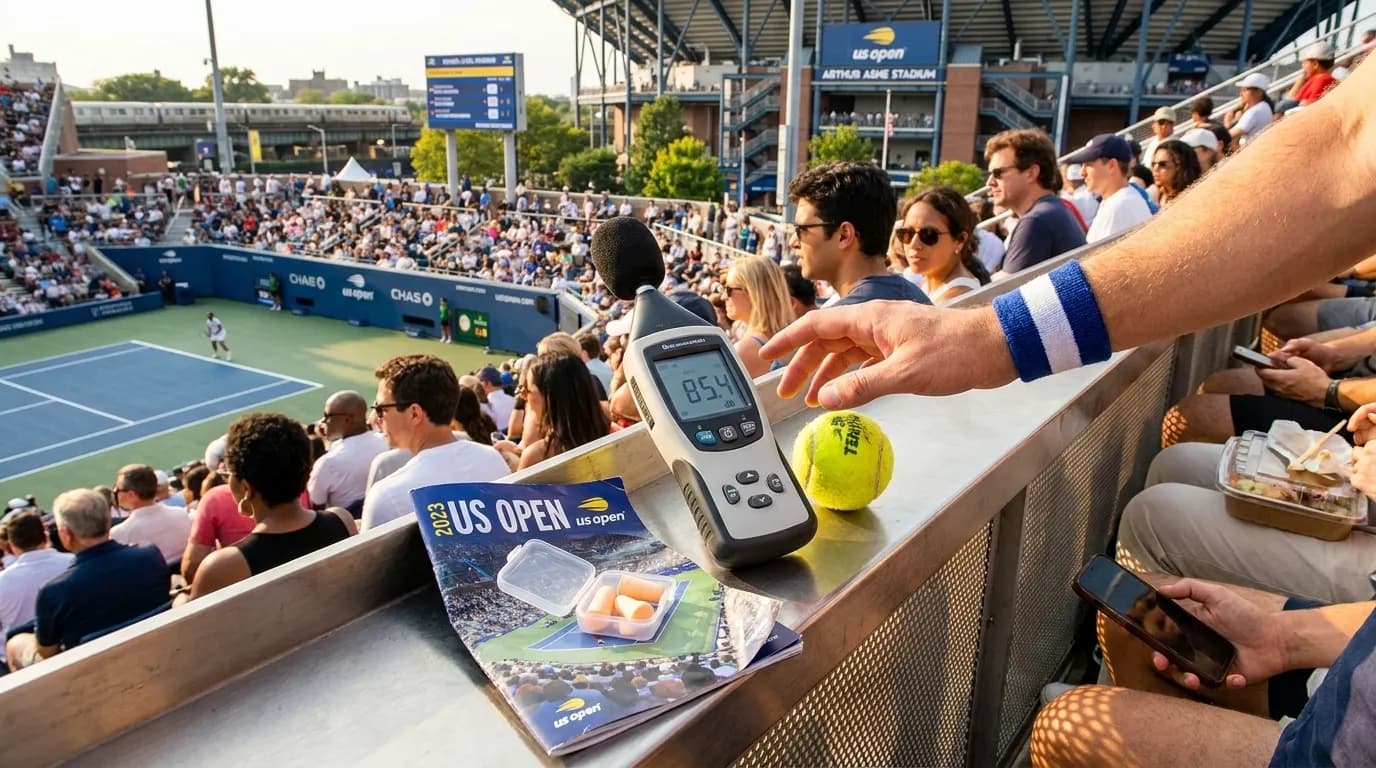
- If sound comfort matters, consider ear protection, seat location, and easy concourse access, especially for children or noise-sensitive guests.
The most memorable US Open nights are not always the loudest from start to finish. They are the ones where the stadium seems to listen, react, and breathe with the match. Plan with the official information, then let the building, the crowd, and the players do the rest.
Tags: #USOpen2026 #Tennis #NewYork #ArthurAsheStadium #StadiumAcoustics #USOpenNights #KarpoFinds #Karpo
Sources consulted: usopen.org — Official reference · usopen.org — Official reference · usopen.org — Official reference
All trademarks are the property of their respective owners.
Ask Karpo first
Ask Karpo how acoustics, crowd timing, and player routines combine to create US Open night-session energy.