When a blueberry or strawberry recall hits the news, the first question isn't whether you bought the brand—it's whether the specific container in your refrigerator matches the lot code in the recall notice. Those alphanumeric strings stamped on the clamshell lid are the only way to know if your berries are implicated, and most shoppers have never learned to read them. Los Angeles shoppers have two advantages when restocking after a recall scare: direct-from-farm certified markets where traceability is built into the permit system, and a county health department that posts recall updates within hours of federal announcements. Knowing how to verify a lot code and where to find recall-safe produce turns a confusing alert into a 20-minute fix.
Karpo tracks live recall alerts from USDA and FDA databases and can instantly tell you whether specific vendors or markets have cleared affected inventory.
Understanding lot codes and UPC numbers
Every packaged berry container carries two critical identifiers: a UPC barcode and a lot code, usually printed near the use-by date. The UPC tells you the product type and brand; the lot code traces the batch back to the packing facility and harvest date. When a recall notice goes out—like the recent Moonlight Companies peach recall that LA County flagged—it lists specific lot codes and UPC ranges. Your container must match both identifiers exactly to be part of the recall.
Lot codes vary by producer. Some use a Julian date system (a three-digit number representing the day of the year), others print a facility code followed by a packing shift. Moonlight's recall notice, for instance, clarified UPC codes after initial confusion, demonstrating why you need the full recall text. If even one digit differs, the product isn't affected. The LA County Department of Public Health posts these details at publichealth.lacounty.gov/eh/safety/food-recalls.htm, updating the page within hours of federal announcements.
For loose berries sold at farmers markets, ask the farm stand directly about their packing date and origin. Certified farmers markets in California require vendors to grow what they sell, so you're often buying same-day or next-day harvest. That traceability becomes your safety net—if a recall targets a specific packing house in Fresno, a Santa Monica farm that grows and packs on-site in Oxnard isn't implicated.
What to do if your berries match a recall
Don't open the container. Recalled produce can harbor Salmonella, Listeria, or other pathogens that spread through contact. The LA County health department's protocol is straightforward: return the product to your purchase location for a refund, or dispose of it in a sealed bag so no one else can retrieve it. If you've already handled the berries, wash your hands, then sanitize any surface the container touched—countertops, refrigerator shelves, the crisper drawer.
Mix one tablespoon of unscented liquid chlorine bleach into a gallon of water for sanitizing. Wipe down shelves and let them air-dry; don't rinse immediately, as the solution needs contact time to kill bacteria. Cutting boards and utensils that touched the berries go into hot soapy water, then get a bleach-solution wipe. This matters even if no one in your household has symptoms—cross-contamination can linger for days.
If you or anyone who ate the recalled berries develops diarrhea, fever, or vomiting, file a report with LA County by calling 1-888-397-3993. The Environmental Health Division tracks illness clusters to catch outbreaks early. Your call might connect a handful of cases to a single retailer, prompting a faster shelf audit across the county.
Restocking at Santa Monica's Saturday market
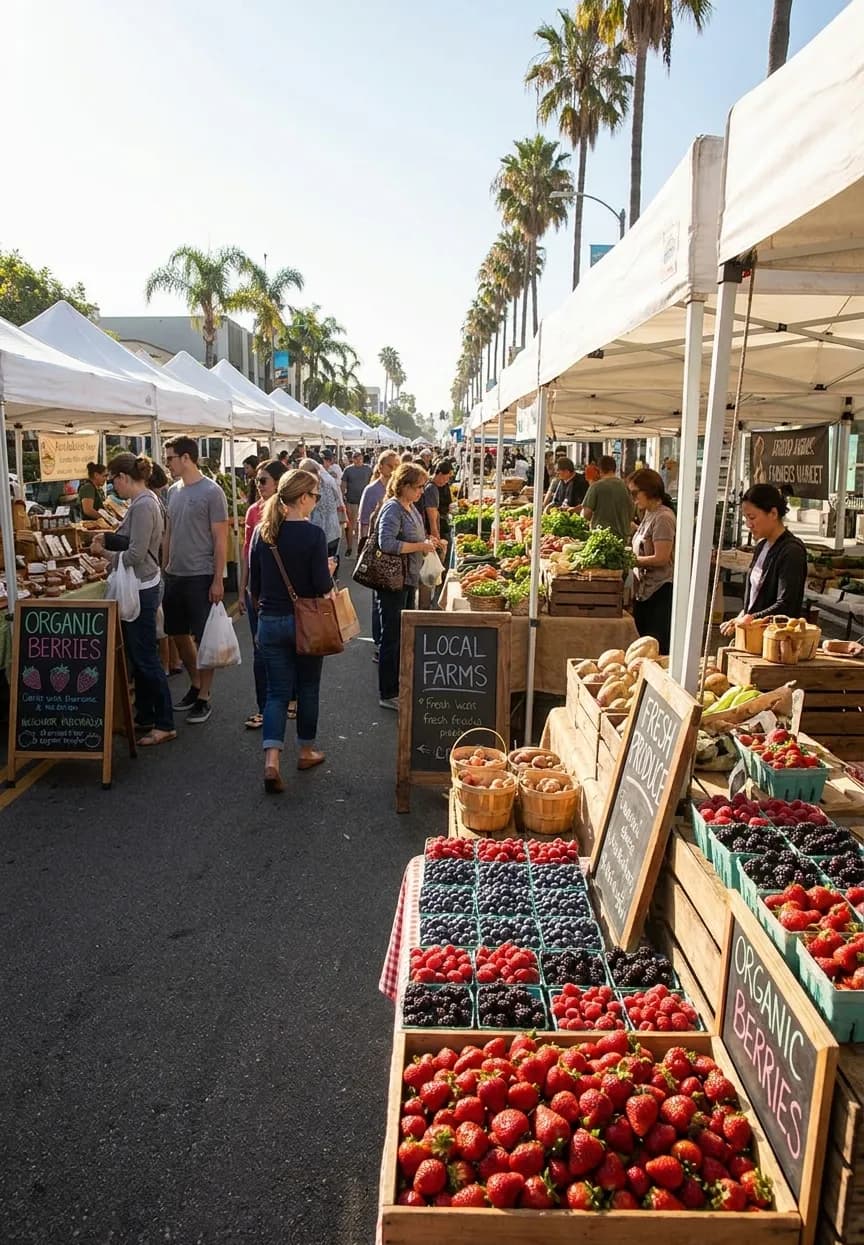
The Saturday Downtown Farmers Market runs year-round at Arizona Avenue between Second and Third Streets, 8am to 1pm, rain or shine. It's the smallest of Santa Monica's four markets by vendor count—just over 40 stands—but it boasts the highest concentration of certified organic growers. That certification means the farm has passed a USDA audit of its soil, pest management, and record-keeping, giving you an extra verification layer when recalls rattle confidence.
Arrive before 9am if you want first pick of berries. By 10am on summer Saturdays, the best flats of strawberries and blackberries are gone, and by noon vendors start packing up their less-popular items. The market accepts CalFresh EBT, and several stands offer bulk discounts—buy two pint containers, get a third at half price. Parking is tight; the closest public lot sits one block east on Second Street, or take the Metro E Line to Downtown Santa Monica station and walk four blocks north.
Ask vendors where their farm is located and when they picked the berries. Most Santa Monica regulars harvest Wednesday evening or Thursday morning for the Saturday market. If a recall targets a specific California region, you'll know immediately whether that stand is clear. Vendors are used to these questions—after the 2024 Salmonella outbreak tied to cantaloupe, shoppers got into the habit of asking for packing-house names.
Finding produce vendors inside Grand Central Market
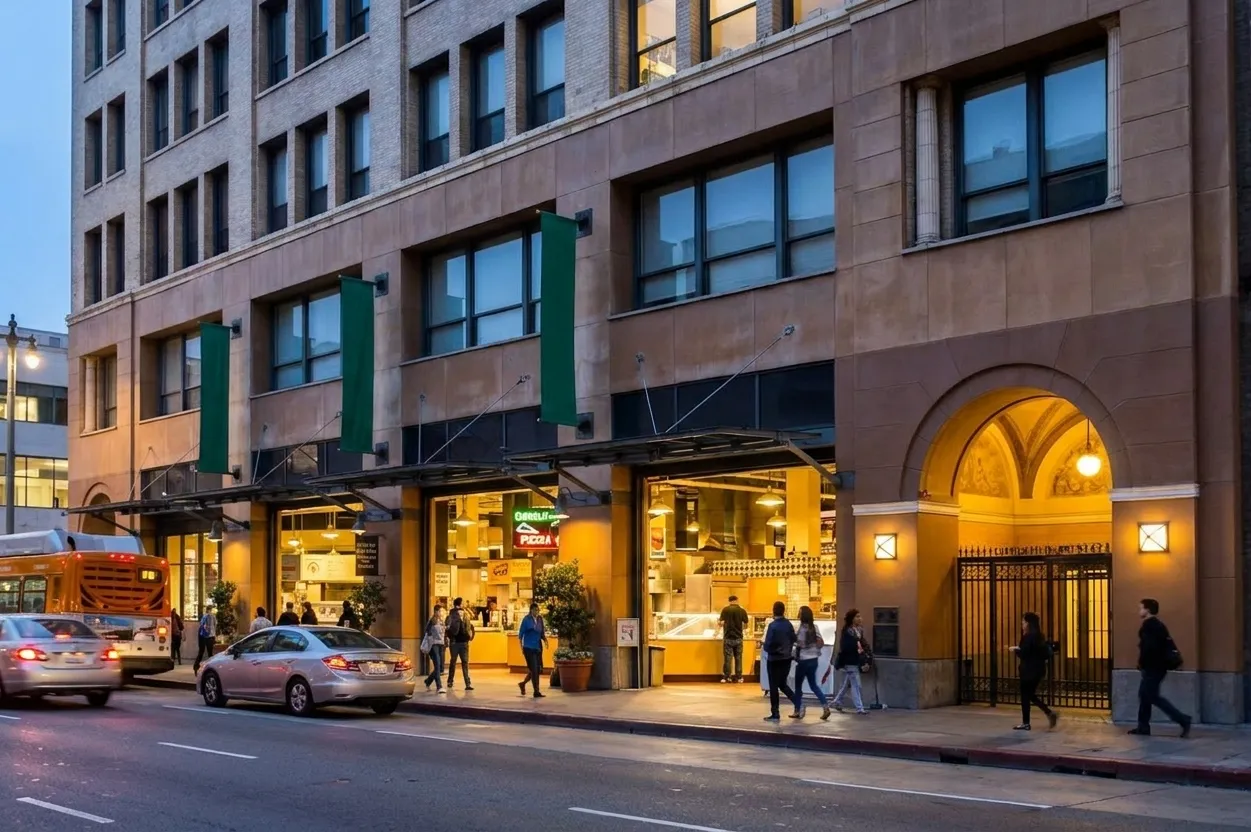
Grand Central Market occupies the ground floor of the Homer Laughlin Building at 317 South Broadway in Downtown LA, open daily 8am to 9pm. It's primarily a prepared-food destination—over 40 vendors selling tacos, ramen, oysters, coffee—but a few produce and specialty-grocery stalls operate near the Hill Street entrance. Vendor hours vary; some open at 10am, others keep the full market schedule. The Info Desk near the Broadway entrance, staffed 10am to 6pm, can point you to whichever produce vendors are open that day.
The market's strength isn't volume—you won't find the flat-by-the-dozen berry selection you'd see at a farmers market—but it's a reliable stop if you're already Downtown and need a small quantity of verified-safe fruit. The vendors here source from LA's wholesale terminals, which are required to pull recalled lots within 24 hours of a notice. That speed matters when you're trying to restock quickly after tossing a contaminated batch.
Parking costs $5.50 for the first 90 minutes in the Hill Street garage at 308 South Hill Street, accessible from Hill between Third and Fourth. The garage maxes out at $40 for the day, but if you're only grabbing produce, you'll be in and out in half an hour. Alternatively, the Metro B and D lines stop at Pershing Square, one block east, and the new A/E Line Historic Broadway Station is even closer. Metro Bike Share has a dock at 303 South Broadway, directly in front of the Million Dollar Theater next door.
Why direct-from-farm sourcing reduces recall risk
Large-scale recalls typically trace back to co-packing facilities that handle fruit from multiple farms, mixing batches in a single processing line. If one farm's strawberries carry contamination, the entire day's output from that facility gets flagged. Farmers markets bypass that system. The grower who picks the berries also packs them, labels them, and sells them. There's no middleman packing house, no cross-contamination from another farm's harvest.
Certified farmers markets in California enforce this model. To get a permit, vendors must prove they grow what they sell—the state checks property records and conducts farm inspections. Santa Monica's Wednesday and Saturday markets are both certified, meaning every piece of produce came from the farmer standing behind the table. When you ask about harvest date and location, you're talking to the person who made those decisions.
That transparency doesn't eliminate risk—farms can still have contamination events from irrigation water or wildlife—but it makes tracing and containing a problem faster. If a recall does hit a farmers-market vendor, public-health officials can walk that single farm's fields and packing shed within hours. At a co-packer supplying 50 grocery chains, the investigation takes days and the recall notice covers a dozen states.
Practical notes
Check the LA County 60-day recall page before you shop; it updates faster than national news sites and includes local retailer follow-up audits. Save the lot code and UPC from any berries you buy—snap a photo with your phone so you can cross-reference if a recall drops later that week. Santa Monica's Saturday market is cash-friendly but all vendors take cards; Grand Central Market vendors set their own payment policies, so carry a card and small bills. If you're filing a foodborne-illness report, have your receipt and the product packaging ready when you call the county hotline. Both markets are accessible year-round, but the Saturday farmers market can close for extreme weather or holidays—check santamonica.gov the morning of your visit if there's unusual weather.
Tags: #BlueberryRecall #LAFoodSafety #ProduceSafety #SantaMonicaFarmersMarket #GrandCentralMarket #FoodRecalls #LosAngelesShopping #FarmersMarketLA #DTLA #OrganicProduce #FoodSafetyTips #LAPublicHealth #ShopLocal #CaliforniaFarms #RecallAlerts
All trademarks are the property of their respective owners.
Ask Karpo first
Need to verify a specific lot code or find the nearest recall-cleared vendor? Ask me to pull the latest FDA and USDA updates for your neighborhood—I'll show you which Santa Monica or Downtown LA markets have restocked with verified-safe inventory and what their vendor hours are today.