You're threading through Astoria after the sun drops behind the brick rowhouses, and suddenly there's a roar—not from a bar, not from someone's apartment, but from a knot of people standing in a pedestrian plaza watching basketball flicker across a screen hung between lampposts. No bouncer, no cover, no drink minimum. Just the game, the crowd, and the smell of souvlaki drifting over from a cart parked at the corner.
When the Community Board Becomes the Living Room
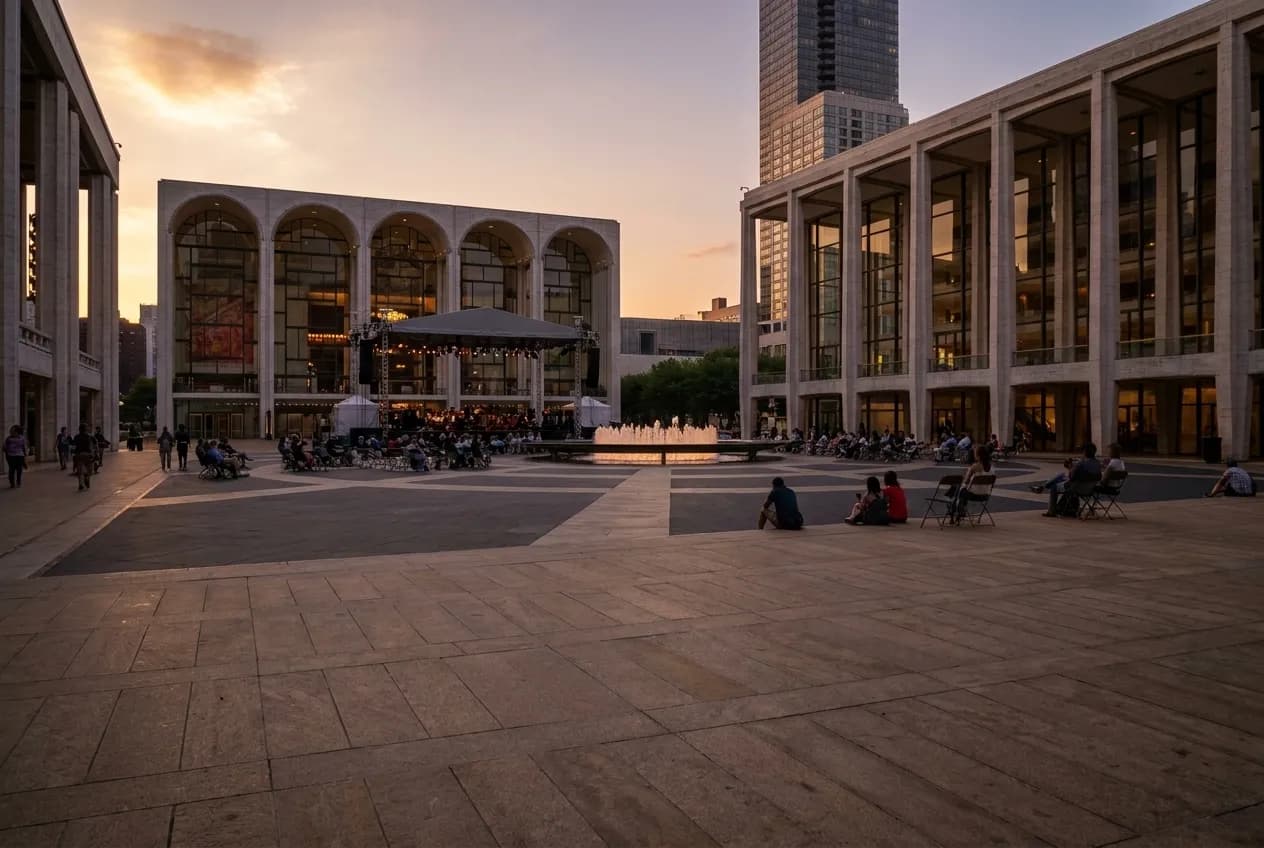
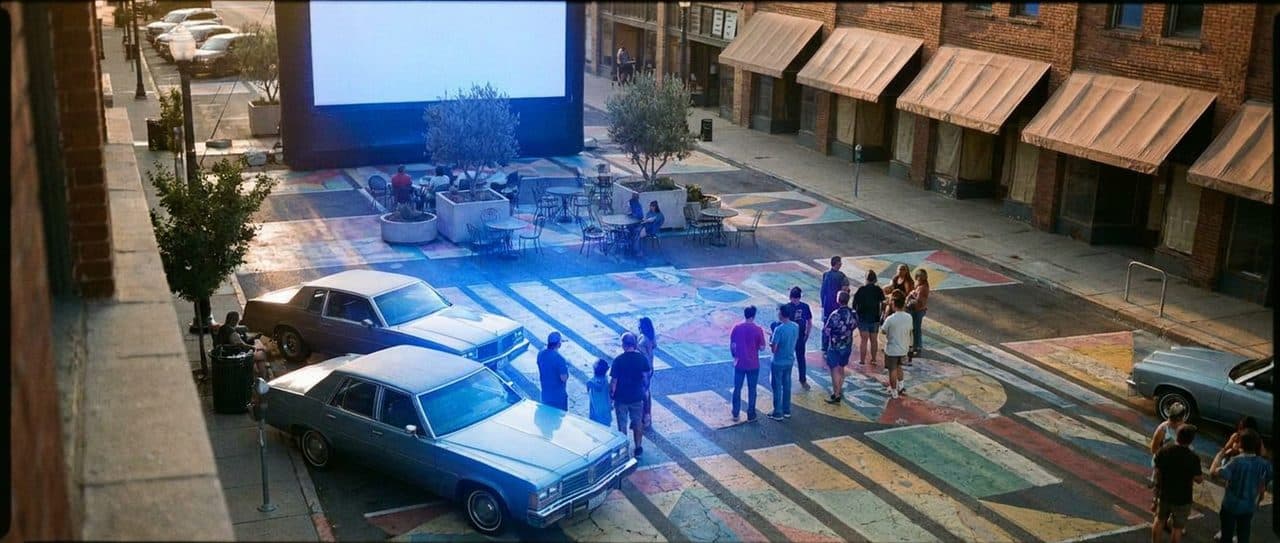
The plaza near the library transforms on game nights. Someone from the neighborhood association strings up a projector screen between two light poles, runs an extension cord through a ground-floor office window, and suddenly you've got courtside seating on repurposed park benches. The image wobbles slightly when the breeze picks up, and the sound comes through a Bluetooth speaker duct-taped to a folding chair, but nobody's complaining. You hear the sneaker squeaks, the ref's whistle, the commentator's voice cutting through the ambient hum of Steinway Street traffic. People bring their own camp chairs, lean against bike racks, sit cross-legged on the painted asphalt. The crowd skews older than you'd expect—retirees in Mets caps, middle-aged women in scrubs still wearing their hospital badges, a few teenagers killing time before their restaurant shifts start.
The Bodega Window That Became a Broadcast Hub
There's a corner store that leaves its front window TV angled outward on playoff nights. The owner doesn't make a big deal of it, but by tipoff there's always a semi-circle of people on the sidewalk, backs against parked cars, watching through the glass. The fluorescent store lights create a strange double exposure—you see the game and the reflection of the street simultaneously, headlights sliding across fast breaks, your own silhouette layered over the key. The owner props the door open so the audio spills out, and occasionally someone ducks inside to grab a beer or a bag of chips, but most people just stand there, arms crossed, swaying slightly with each possession. When someone hits a three, the whole sidewalk erupts, and drivers slow down to see what's happening before they realize and honk their way past.
The String-Light Plaza Where Stoop Culture Meets Screening
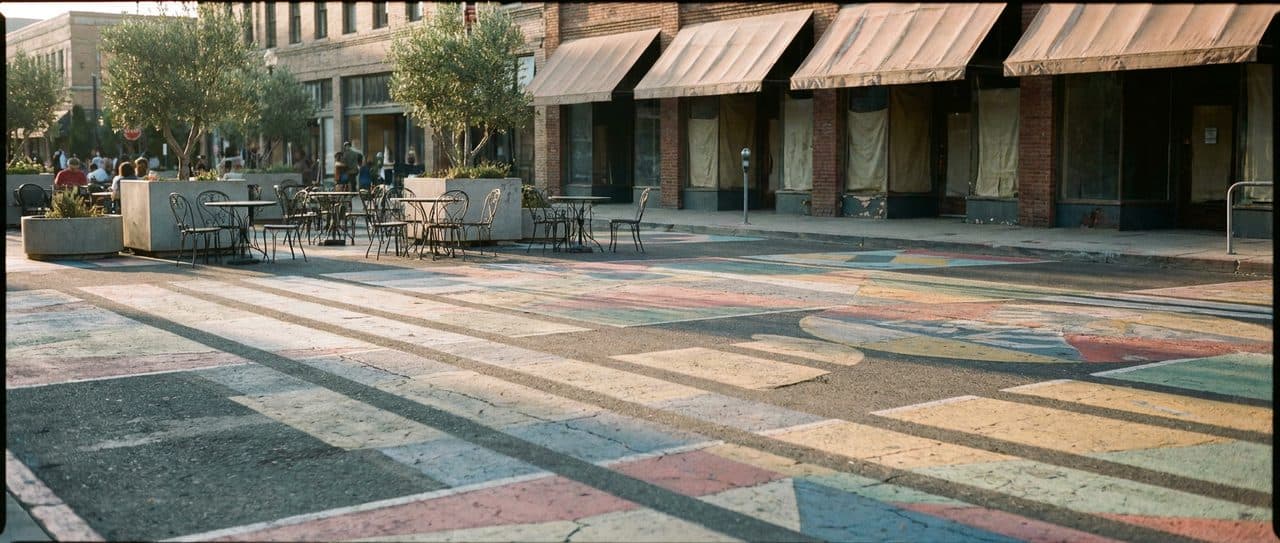
The pedestrian zone off Ditmars has string lights year-round, the kind that make every night feel faintly celebratory. On game nights, the lights stay on even after the screen goes up, casting everyone in warm amber while the game flickers cold blue. It's the closest thing to a backyard party you'll find in this part of Queens—people bring thermoses of coffee, leftover rice and beans in Tupperware, sometimes a six-pack they're willing to share. The benches fill first, then the steps of the raised planter boxes, then people just stand in clusters, shifting weight from foot to foot. You start recognizing faces by the third quarter: the guy in the Knicks jersey who groans theatrically at every missed free throw, the woman who keeps score on a napkin, the couple who argue strategy in Greek loud enough that you start following their logic even if you don't speak the language.
After-Work Crowds and the Rhythm of Rotation
The crowd composition shifts in waves. Right before tipoff it's mostly people who planned to be there—they left work early, they're wearing team colors, they've staked out prime viewing real estate. By the second quarter, the after-work wave hits: people still in office clothes, loosened ties, makeup fading, stopping on their way to the train because they heard the noise and got curious. They stand in the back, check their phones, drift away during commercial breaks. But some stay, and by halftime they've worked their way closer, committed now, texting someone that they'll be late. The third quarter brings the restaurant workers on break—line cooks smelling like fryer oil, servers still wearing aprons, grabbing ten minutes before the dinner rush. They watch with the focus of people who know they can't stay long, soaking up every possession like it might be their last.
The Unspoken Etiquette of Free Viewing
There's a social choreography that emerges without anyone discussing it. Tall people automatically drift to the back or crouch when the action heats up. If you're on your phone, you angle the screen downward so the glow doesn't distract. When someone's kid gets restless and starts running around, a few people smile but nobody complains—this is public space, after all, and the whole point is that everyone belongs. During timeouts, strangers debate calls, argue about rotations, predict what's coming next quarter. Someone always knows someone who knows someone who played college ball, and that person's analysis carries extra weight even if they're wrong half the time. When the game's close in the fourth quarter, a hush settles over the plaza that feels almost sacred, broken only by the involuntary gasps and groans that escape when a shot rims out or drops through.
What the Plazas Offer That Bars Don't
The bars are packed on game nights, obviously, but the plaza experience is different in ways that matter. You can leave whenever you want without closing out a tab. Kids are welcome, which means families show up—fathers holding toddlers on their shoulders, mothers explaining the shot clock to curious eight-year-olds. The sound isn't competing with a dozen other screens showing different games. And there's something about watching outside, under the sky, with the city's ambient soundtrack layered underneath the broadcast, that makes the game feel less like entertainment and more like a shared civic event. When it's over, people don't scatter immediately—they linger, rehashing key plays, checking their phones for highlights, slowly dispersing into the night like a crowd leaving a concert they're not quite ready to admit is finished.
Practical Notes
The larger pedestrian plazas tend to have screens up for major playoff games, usually starting around game time and running through the final buzzer. Transit-wise, you're looking at various train lines that serve Astoria—get off anywhere along the main commercial strips and walk toward clusters of people. No reservations needed, obviously, but showing up at least twenty minutes before tipoff gets you decent positioning. Bring layers; spring evenings in Queens can shift from mild to chilly once the sun's fully down. Some plazas have public seating, others don't, so a folding chair isn't a terrible idea if you're planning to stay the whole game. The community board websites sometimes list which plazas are hosting screens, but honestly, the best strategy is just following the noise.
Tags: #AstoriaQueens #FreeNYC #PlayoffBasketball #PedestrianPlaza #NeighborhoodViewing #StreetCulture #QueensNights #CommunityScreen #StoopLife #PublicSpace #NYCBasketball #AstoriaLife #OutdoorViewing #NoBouncer #LocalGathering
Sources consulted: timeout.com · ny.curbed.com · nycgovparks.org
All trademarks are the property of their respective owners.