# How Do Kingdom Hearts 4 Fans Spend All-Night Sessions at Koreatown Restaurants?
You walk into a Koreatown restaurant at 3 a.m. and half the tables are occupied by people who aren't eating dinner—they're in the middle of something that started eight hours ago and might not end until sunrise. Laptops glow between banchan plates. Someone's sketching character designs on a napkin while their friend scrolls through Japanese forums on their phone. The servers know not to rush these tables, because the real revenue comes from the steady stream of soju bottles and the fact that every two hours, someone orders another round of soft tofu stew.
The Geography of a Theory Session
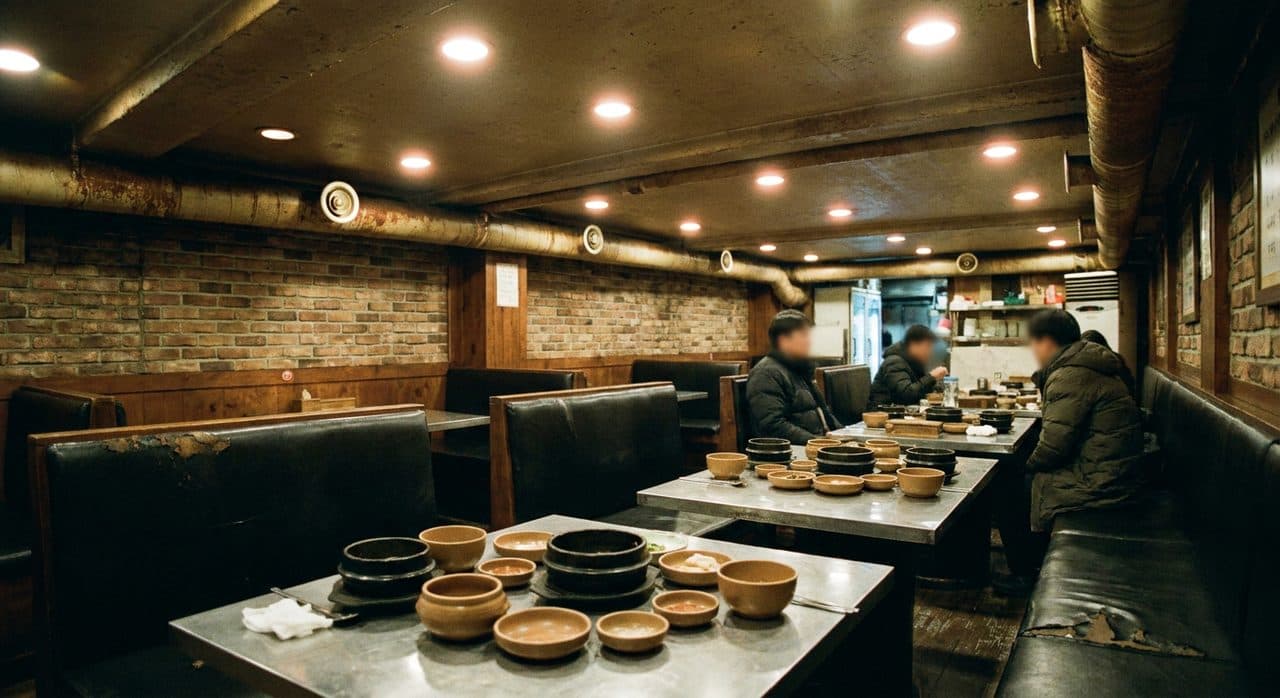
The best spots sit on the second or third floor, above the street-level chaos where tourists photograph bibimbap. You want the places with booths deep enough that four people can spread out without elbows touching, where the vinyl upholstery has that broken-in softness that means you can sit for six hours without your back screaming. The lighting runs warm and dim—not romantic-date dim, but tired-eyes-at-4-a.m. dim. Korean dramas play silently on wall-mounted screens, and the air smells like sesame oil and the particular sweetness of gochujang that's been simmering since the dinner rush. These restaurants don't advertise their all-night hours with neon signs. You just know because you've seen the same tables occupied at midnight and again at dawn, the faces changed but the energy identical. The servers move through the room with the practiced efficiency of people who've seen every possible configuration of late-night human behavior.
What You Actually Eat Over Eight Hours
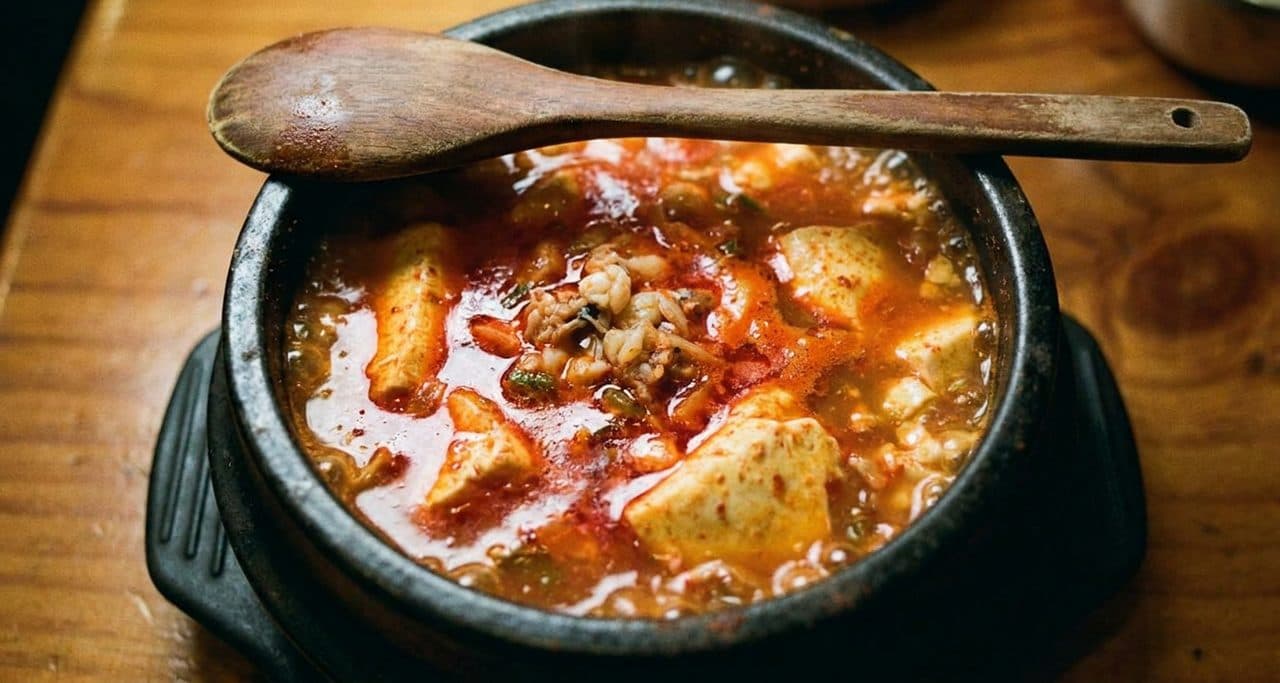
Nobody orders a single meal and calls it done. You start with something substantial—galbi-jjim or a bubbling pot of army stew—because you need the foundation. Then the banchan rotation begins. You eat through the kimchi and the pickled radish and the seasoned spinach, and when the server brings the second round, you've moved from eating to grazing. Somewhere around hour three, someone orders tteokbokki because the rice cakes soak up soju and give your hands something to do during heated debates about whether Sora's new outfit design hints at a time-skip or a parallel dimension. The soup orders come in waves. Soft tofu stew when someone needs comfort. Ox-bone soup when the conversation gets intense and you need something that feels medicinal. Cold noodles around 5 a.m. when the night has fully tipped into morning and your body can't process anything hot. The servers never question the pacing. They just keep the banchan coming and replace the grill paper when the scorch marks get too dense.
The Unspoken Etiquette of the Long Sit
You can't just occupy a table for ten hours on a single bowl of rice. Everyone at these sessions knows the math—you're essentially renting the space with food orders, and the restaurant tolerates marathon sits because the per-hour revenue actually works out. Someone in the group tracks the orders mentally, making sure something new hits the table every ninety minutes or so. Soju helps. So do the fried dishes—pajeon, fried chicken, those little fish-shaped pastries filled with sweet red bean that appear on late-night menus. You learn to read the room's rhythm. When the server starts wiping down nearby tables with more vigor than necessary, someone orders another round. When the kitchen sounds change—when you hear the shift from dinner prep to breakfast prep, the clatter of different pots—you know you're approaching the natural end point. The best groups rotate who's eating versus who's talking. One person works through a bowl of naengmyeon while two others debate trailer analysis, then they switch. It keeps the table looking active, keeps the orders flowing, keeps everyone fed enough to maintain coherent thought.
Why These Spaces Work for the Lore-Obsessed
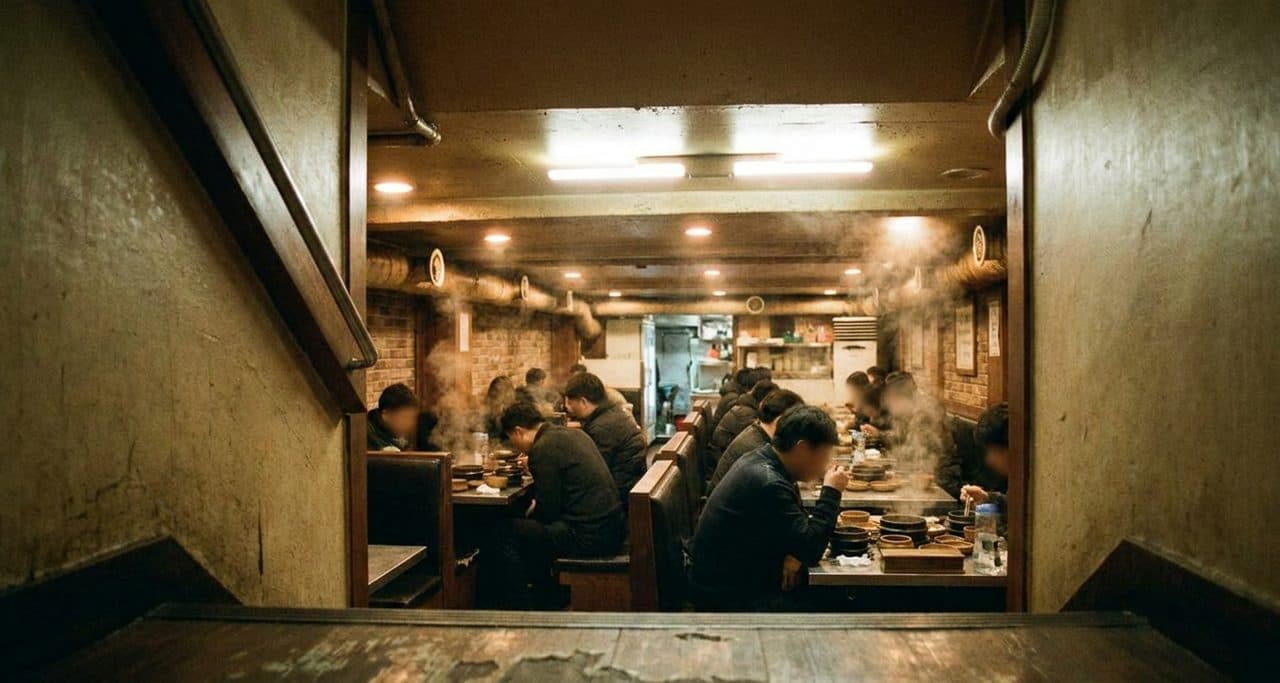
Gaming cafes close. Coffee shops kick you out. Your apartment has roommates who need to sleep. But a 24-hour Korean restaurant in the heart of Koreatown operates on a different temporal logic. The crowd around you is equally displaced from normal hours—shift workers eating late dinners, other friend groups deep in their own marathons, solo diners nursing hangovers with soup. Nobody judges the laptop setup or the fan art spread across the table. The ambient noise level stays consistent enough that you can have intense conversations without disturbing anyone, but varied enough that you're not sitting in oppressive silence. The booths create natural boundaries. You're in public but also in your own bubble, and that combination matters when you're trying to collectively decode a trailer that's been analyzed frame-by-frame by thousands of people across multiple time zones. You're adding your interpretation to a global conversation, and somehow doing it in a restaurant booth over cooling stew feels more legitimate than typing into the void of a Discord channel.
The 6 A.M. Crowd Shift
The energy changes completely when the first daylight workers start arriving. Suddenly you're surrounded by people in business casual ordering breakfast stews before their commute, and you're still wearing the same clothes from yesterday, still mid-argument about whether the new Keyblade design references Kingdom Hearts 1 or Union X. The servers change shifts. The breakfast crew moves faster, more efficient, less tolerant of the sprawl. This is when most groups finally pack up—not because anyone asks them to leave, but because the room's purpose has shifted and you can feel it. Some groups push through to 8 or 9 a.m., ordering breakfast proper, trying to normalize their presence among the morning regulars. But usually, the natural endpoint comes when someone looks up, sees actual sunlight through the windows, and realizes they've been in the same booth since dinner time. The check comes. The math gets done. Everyone's kicked in enough that the server gets a decent tip for tolerating the marathon. You walk out into a Koreatown that's already fully awake, blinking against the light, your phone full of screenshots and your brain full of theories that seemed absolutely bulletproof at 4 a.m. and might not survive the clarity of actual sleep.
Finding Your Regular Spot
The first few times, you bounce between restaurants, testing which ones have the right booth depth, the right server patience, the right balance of food quality and tolerance for long sits. Then you find your place. Maybe it's the one where the servers started recognizing you, bringing extra banchan without asking. Maybe it's the one with the specific booth in the back corner where the outlet situation is perfect and you can plug in three laptops without daisy-chaining power strips. You become part of the ecosystem. The restaurant benefits from your consistent off-peak-hour revenue. You benefit from a space that doesn't make you feel like a burden for existing outside normal human hours. Other groups start recognizing you too—not speaking, just nodding, that acknowledgment between people who've chosen the same strange solution to the same strange problem. The Kingdom Hearts community is global and mostly digital, but in these specific booths, at these specific hours, it becomes physical and local and sustained by soup.
Practical Notes
Most of the 24-hour spots cluster in the blocks around Koreatown's core, easily reached by subway with service running all night on weekends. Call ahead if you're planning a weekday marathon—some places shift to limited overnight hours midweek. Expect to spend a moderate amount per person over a long session, more if you're drinking. The banchan is unlimited but the entrees aren't, so pace your ordering accordingly. Booth availability is first-come-first-served and gets competitive after midnight on Fridays and Saturdays. Bring a power strip if your group needs multiple outlets. The WiFi is usually solid but not always blazing fast—download your reference materials before you arrive. Bathrooms are typically one floor up or down from the dining area. If you're planning to stay past 6 a.m., order something breakfast-appropriate when the shift changes—it signals you're aware of the room's rhythm and you're not just squatting.
Tags: #KingdomHearts #KoreatownNYC #GamerCulture #LateNightEats #AllNightDining #KoreanFood #NYCNightlife #FanTheories #PullUpAChair #24HourRestaurants #ManhattanEats #GamingCommunity #KoreatownDining #NYCInsider #TheorySession
Sources consulted: eater.com · timeout.com · infatuation.com
All trademarks are the property of their respective owners.