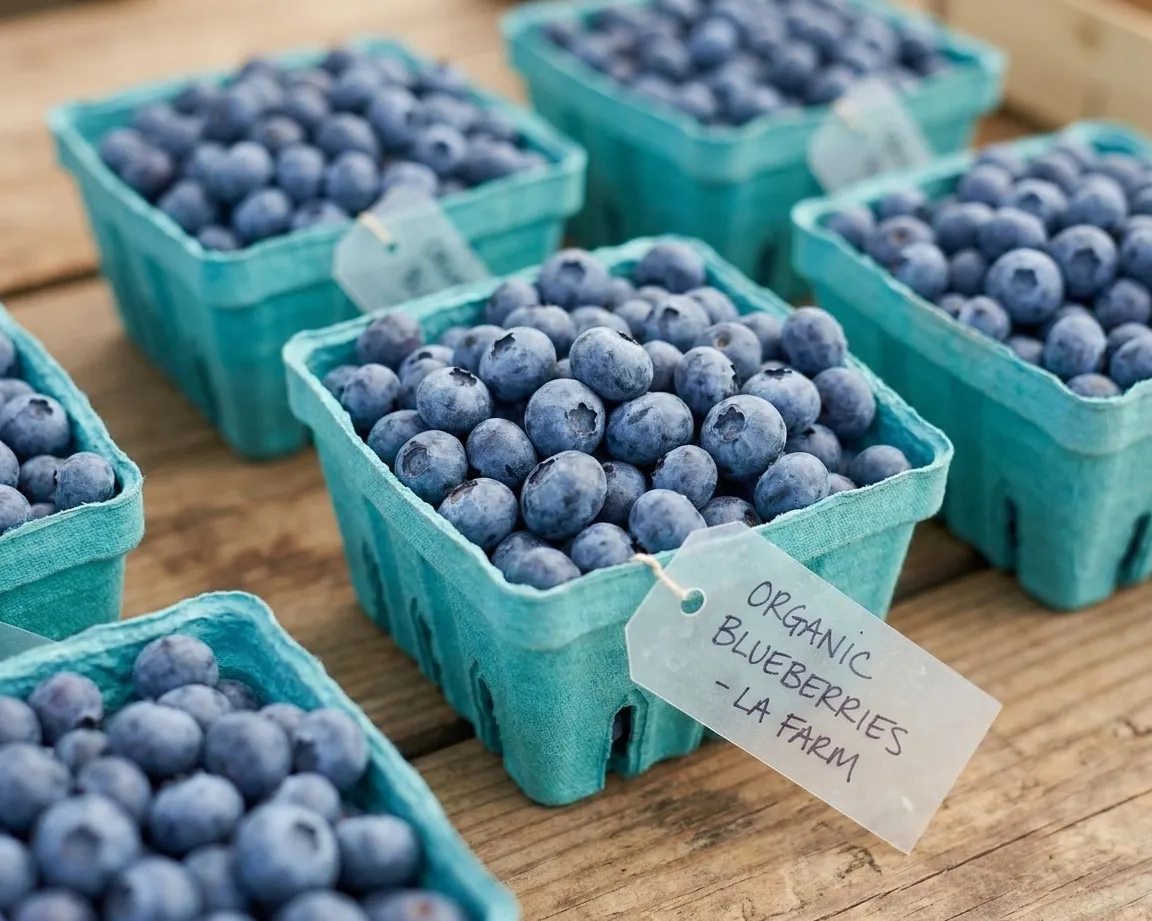
When a national blueberry recall sends shoppers digging through grocery-store clamshells for batch codes and packing-house stamps, the advantage of buying directly from the farmer becomes obvious. At the Hollywood Farmers Market, which convenes every Sunday morning on Ivar Avenue in the heart of Hollywood, that advantage is built into the entire operation. More than 160 California farmers, ranchers, and food artisans set up stalls between Selma and Sunset, selling produce they grew themselves on farms they can name and locate on a map. If you want to know whether the blueberries in your hand came from the same watershed as the recalled batch, you ask the person who picked them. They'll tell you.
Karpo tracks vendor schedules, parking validation spots, and which Hollywood farmers offer field-to-table sourcing you can verify in person.
The bugle call and the sourcing advantage
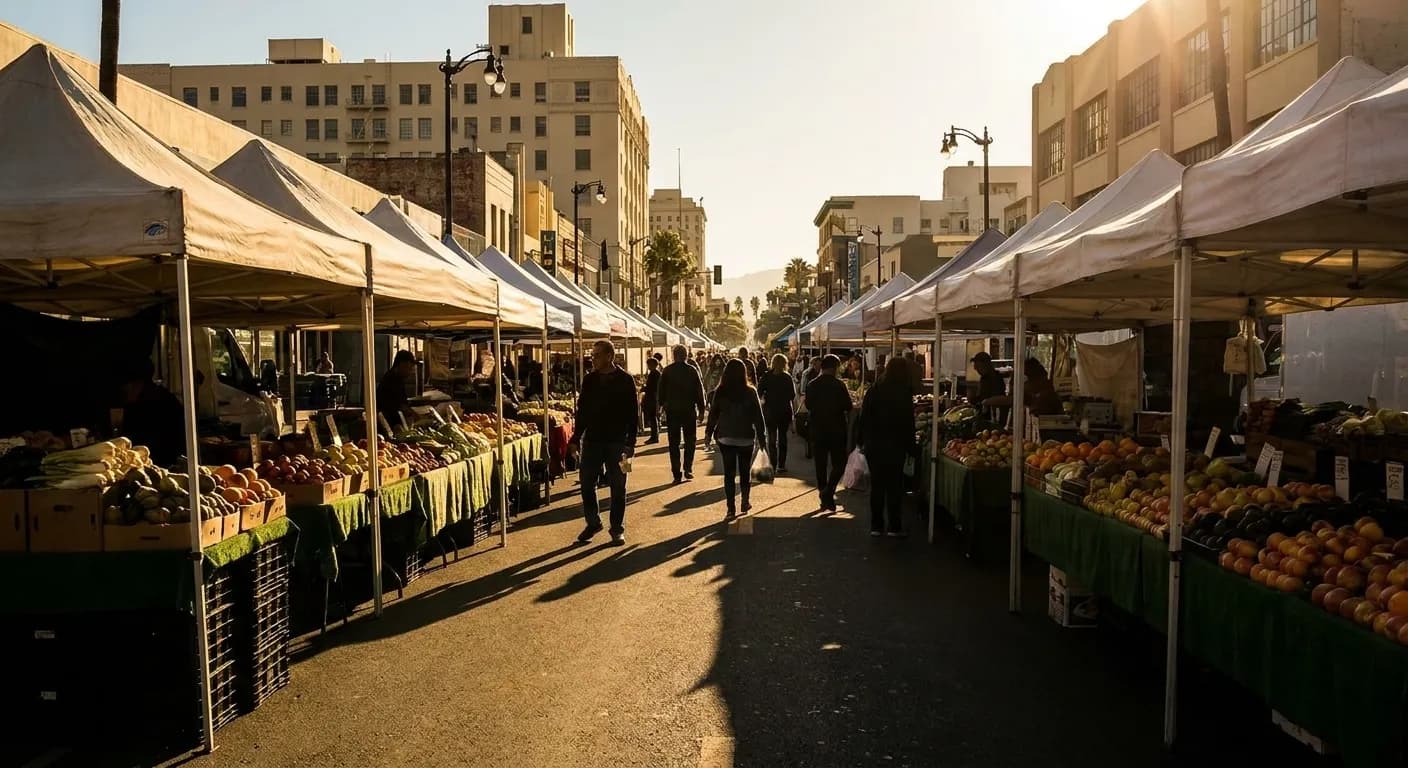
Every Sunday at 8:00 AM, a bugle announces the opening of the Hollywood Farmers Market, a tradition that dates to its 1991 founding when it was one of only a handful of certified farmers markets operating in California. Today it's Los Angeles's largest, stretching along Ivar Avenue between Selma and Sunset, with more than 160 vendors selling everything from stone fruit to lamb to almond flour. The market's scale isn't just impressive—it's functional. When national produce recalls hit the headlines, shoppers here can walk up to a farmer and ask exactly which field their blueberries came from, which packing house processed them, and when they were picked.
That direct line matters more than ever. Recent blueberry recall alerts tied to contamination concerns have sent grocery shoppers scrambling to check batch codes on clamshells, often with incomplete information. At the Hollywood market, vendors like Forbidden Fruit Orchards—who appear seasonally—can tell you their farm's location, their harvest schedule, and whether their berries were anywhere near the affected distribution channels. Autonomy Farms, which rotates in on first, third, and fifth Sundays, does the same for its chicken, beef, pork, and lamb. Finley Farms brings organic vegetables with full provenance. The transparency isn't a marketing angle; it's a structural feature of certified farmers markets, where California law requires vendors to grow what they sell within the state and to register their farm locations with the county agricultural commissioner.
One hundred sixty stalls, zero ambiguity
The vendor list reads like a regional agriculture almanac. Arnett Farms hauls in citrus, stone fruit, nuts, and dried fruit. Fat Uncle Farms mills its own almond flour on-site at the farm, then brings bags to Hollywood. Adam's Olive Ranch appears on alternating Sundays—second and fourth—with olives, olive oil, and sometimes vinegar. The market's size means you're not choosing between two or three farms; you're comparing a dozen citrus growers, half a dozen berry operations, and multiple olive oil pressers, each with a different microclimate and harvest timeline shaping their crop.
This abundance creates real choice during recall seasons. If one blueberry farm's distributor is flagged, you can walk three stalls down and buy from a completely different watershed. If a lettuce recall traces back to a specific Salinas Valley packer, you can ask the Finley Farms crew whether their greens came from the same area or a different plot entirely. The Food Access LA information booth, stationed near the market entrance, keeps updated vendor lists and can point you toward farms with specific growing practices—organic certification, pesticide-free protocols, or regenerative soil methods.
The market also runs a "Take A Bag, Leave A Bag" program at the info booth, so if you forgot reusables, you're not stuck buying plastic. LA Compost accepts drop-offs on Cosmo Street during market hours, and the market separates recyclables from compost and trash to minimize contamination. These aren't feel-good gestures—they're infrastructure that supports the kind of supply-chain transparency that makes recall navigation possible in the first place.
Timing, cash, and the early-bird calculus
The market opens at eight, but the real shopping window runs until about 10:30 AM. After that, popular items disappear. Baked goods from the various bread and pastry vendors sell out first, often by nine. Forbidden Fruit Orchards' blueberries—when they're in season—rarely last past ten. If you're hunting for a specific farm's produce, especially something tied to a recall-avoidance mission, arriving closer to eight gives you the full roster. By noon, vendors start packing up even though the official close is one o'clock.
Most stalls remain cash-only, though some accept cards and a few take mobile payments. ATMs are nearby on Sunset and Vine, but lines form after ten. The smarter play: stop at your bank Friday or bring enough cash to avoid the scramble. The market accepts EBT benefits, matched up to fifteen dollars per week for fresh fruits and vegetables through the GUSNIP and LA County ARP Market Match programs. WIC and Senior Farmers Market Nutrition Program checks also work. All of that processing happens at the Food Access LA booth, so budget a few extra minutes if you're using those programs.
Parking validation is the other early-morning detail worth mastering. Three nearby structures participate: Sunset & Vine (accessible from Morningside Court off Sunset, six dollars with validation until 2:30 PM), the LA Film School lot at Sunset and Ivar (seven dollars with validation until 2:00 PM), and Arclight/The Dome (three dollars for two hours with validation). All three require you to stop at the Food Access LA booth to get your ticket stamped. If you skip that step, you're paying full commercial rates. Street parking exists but fills fast, and meters run all day Sunday in this part of Hollywood.
The chef circuit and the neighborhood baseline
The Hollywood market has become a Sunday ritual for many of Southern California's restaurant kitchens. Chefs show up early, often before the bugle, to lock in produce allocations with their preferred farms. That professional presence raises the bar—vendors know their tomatoes or peaches will be scrutinized by people who cook for a living, so the quality floor is high. For home cooks, that means you're shopping the same bins that supply some of LA's best-regarded restaurants, with the same transparency about sourcing and harvest dates.
But the market isn't just a chef's playground. Local families from the surrounding Hollywood neighborhoods—Los Feliz, Thai Town, East Hollywood—treat it as their weekly grocery run. You'll see multi-generational shopping crews, retirees comparing stone fruit ripeness, and parents juggling toddlers while negotiating bulk deals on citrus. The market hosts live music most Sundays, occasional book signings by food writers, and kids' activities that turn the shopping trip into a longer outing. Pupusa and other prepared-food stalls offer a greasy-spoon breakfast option if you arrive hungry, and oyster vendors sometimes set up raw bars on ice for midmorning snacking.
The mix of professional and neighborhood traffic creates a self-regulating quality check. Farms that show up with subpar produce or opaque sourcing don't last long when both chefs and experienced home cooks are comparing notes. That peer pressure becomes especially valuable during recall seasons, when a vendor's willingness to answer detailed questions about packing dates and distribution chains can make or break their Sunday sales.
Practical notes
The Hollywood Farmers Market operates every Sunday from 8:00 AM to 1:00 PM, rain or shine, at 1600 Ivar Avenue at the corner of Selma. The market entrance is on Selma at Morningside; the entire market stretches north along Ivar. Metro B Line riders exit at Hollywood/Vine and walk two blocks south. Bus lines 180, 2/302, 210, 217, and 222 all stop nearby. Parking validation is available at three structures—bring your ticket to the Food Access LA booth before you leave. Most vendors accept cash only; a few take cards. Bring reusable bags or grab one from the "Take A Bag, Leave A Bag" station. EBT, WIC, and FMNP benefits are accepted with up to fifteen dollars in weekly produce matching. The market has been operating since 1991 and features over 160 certified California farmers, producers, and artisans. For current vendor lists and seasonal availability, check with the info booth on arrival.
Tags: #HollywoodFarmersMarket #BlueberryRecall #DirectFarmSourcing #TraceableProduce #CaliforniaFarmers #IvarAvenue #SundayMarket #FarmToTable #LosAngelesMarkets #ProduceSafety #HollywoodEats #FarmersMarketLA #LocalGrowers #SeasonalProduce #FoodTransparency
All trademarks are the property of their respective owners.
Ask Karpo first
Need to know which Hollywood vendors are at the market this Sunday, or whether a specific farm's blueberries are part of the recall batch? Ask Karpo in iMessage for real-time vendor rosters, parking validation updates, and sourcing details you can verify before you shop.