What Was Built in 1848
The High Bridge is older than the Civil War. It was built between 1839 and 1848 as the Harlem River crossing of the Old Croton Aqueduct — the engineering project that first brought fresh water from Westchester reservoirs forty-one miles south into Manhattan, ending two centuries of New Yorkers drinking from polluted wells. The aqueduct's masonry pipes ran across the river inside the bridge's deck. Water actually flowed across the High Bridge from May 1848 until 1958.
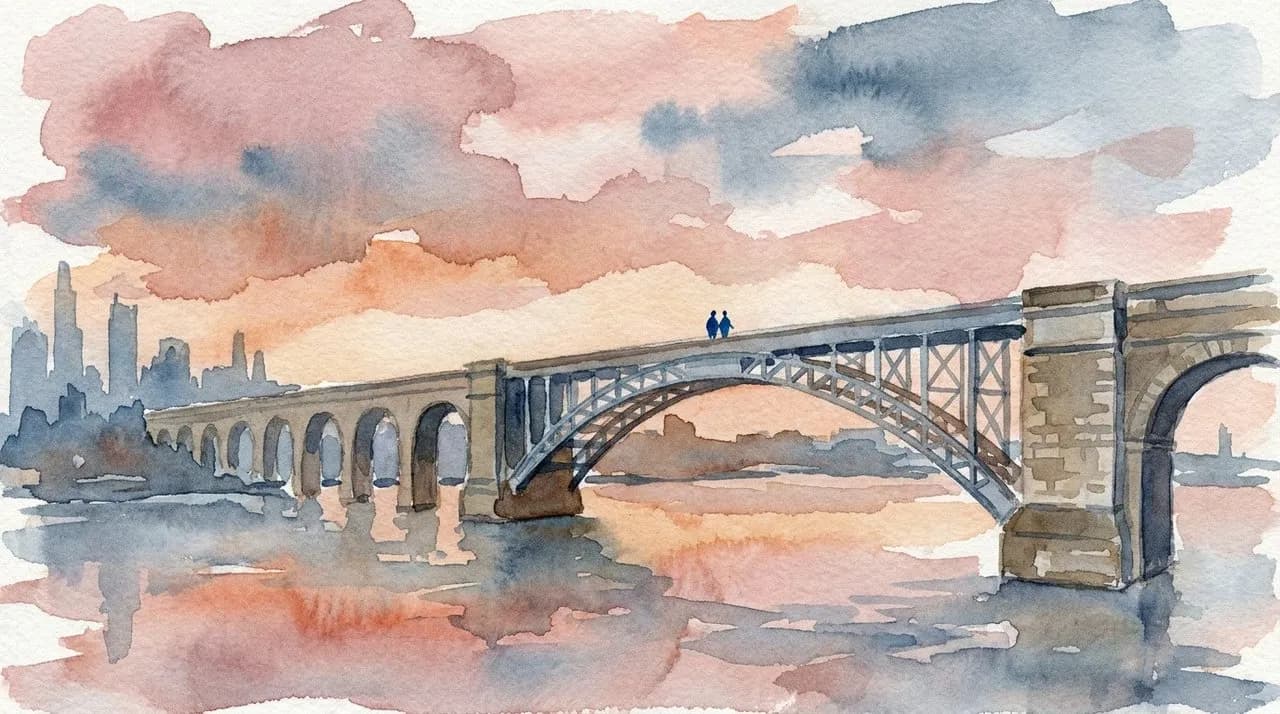
The bridge was designed in the manner of a Roman aqueduct — fifteen original semicircular stone arches, rising 140 feet above the water. The center arches over the navigable river channel were replaced in 1928 by a single longer steel arch, after the Army Corps complained that the original piers blocked ship traffic. That hybrid is what you walk across today: stone piers on the approaches, one modern arch in the middle.
A pedestrian walkway was added in 1864, and for the rest of the nineteenth century the High Bridge functioned as the city's most fashionable promenade — closer to a Parisian quai than anything in Manhattan today. By the 1900s the city had built the Williamsburg, the Manhattan, the Hellgate, and a dozen others, and the High Bridge stopped being fashionable. It just stayed.
Why It Closed for Forty-Plus Years
The water stopped flowing across the bridge in 1958, after the city completed a newer aqueduct under the river. The walkway hung on for another fifteen years on neglect alone. By the early 1970s, with the city in fiscal collapse, both Highbridge Park on the Manhattan side and the Highbridge neighborhood in the Bronx had been written off. After a series of debris-throwing incidents, the city closed the bridge to all traffic, including foot traffic.
It sat empty for the rest of the century. The masonry piers were intact. The deck rusted. Plants grew between the brick paving. From below, you could see it through the trees from the Major Deegan; from above, no one was looking.
The Bloomberg-era PlaNYC strategic plan flagged the High Bridge for restoration. Construction began in 2013. Roughly $61 million and two years later, on June 9, 2015, the bridge reopened to pedestrians and bicycles after a closure of roughly forty-five years. There was a ribbon-cutting and a small crowd. Most of the city didn't notice. That's still mostly the case.
What the Walk Is Actually Like
The bridge is 1,450 feet long. Walking it end to end takes eight to ten minutes if you're moving steadily, twenty if you stop. It is the quietest crossing of the Harlem River — the cars are on the Macombs Dam, Washington, and University Heights bridges to either side, and the High Bridge carries only feet and tires.
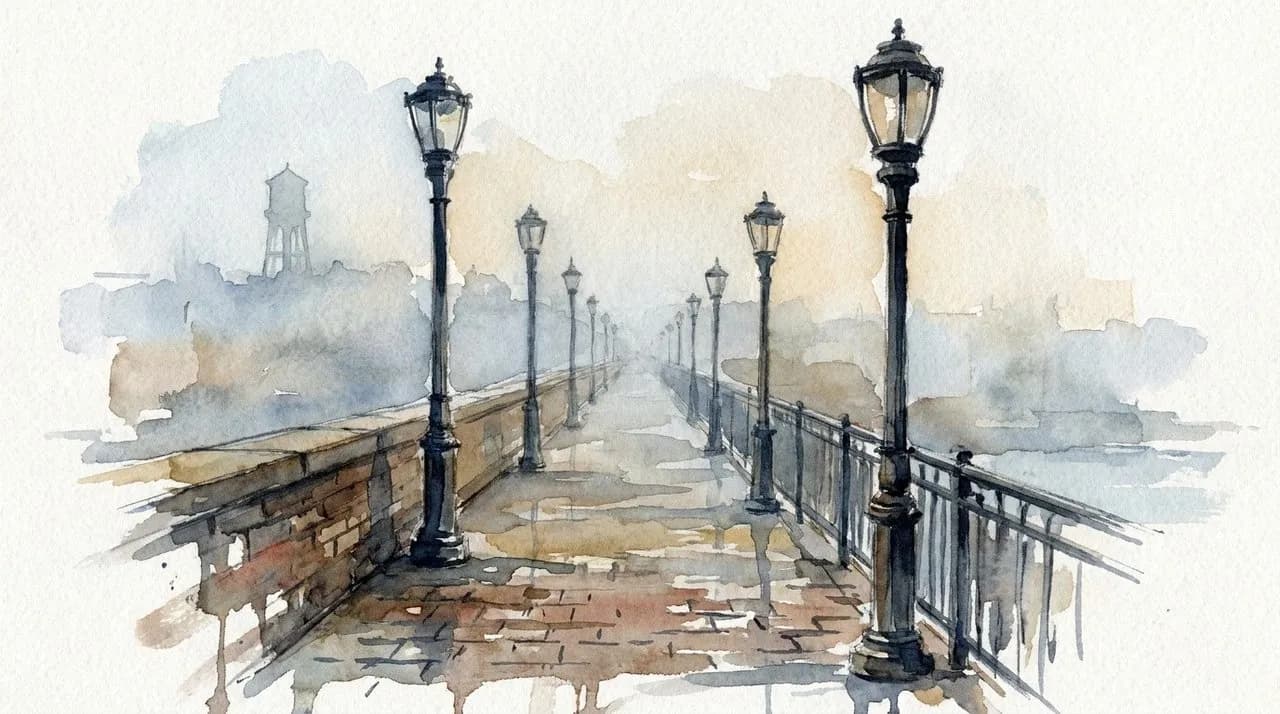
What you see from the middle is uncommon. To the south, the river runs out toward the East 138th Street wastewater plant. To the north, a wide flat stretch ends at the Hudson and the Palisades cliffs in New Jersey. Below your feet, the river is roughly 140 feet down — close enough to see boat traffic, far enough that the wind sound is mostly trees, not water. The original cast-iron lamp posts have been restored; the brick paving is original where it survived, replaced-to-match where it didn't.
It's a walk that rewards going slowly. The whole point of the deck is that, for ten minutes, you are not in any neighborhood at all.
The Manhattan Side: Highbridge Park and the Water Tower
The Manhattan end sits inside Highbridge Park — a long, narrow, mostly-forested park that runs along the cliff above the Harlem River from West 155th Street to Dyckman. The bridge entrance is near 174th, but most people come in at 172nd and Amsterdam, walk east through the park to the High Bridge Water Tower, then descend the staircase to the deck.
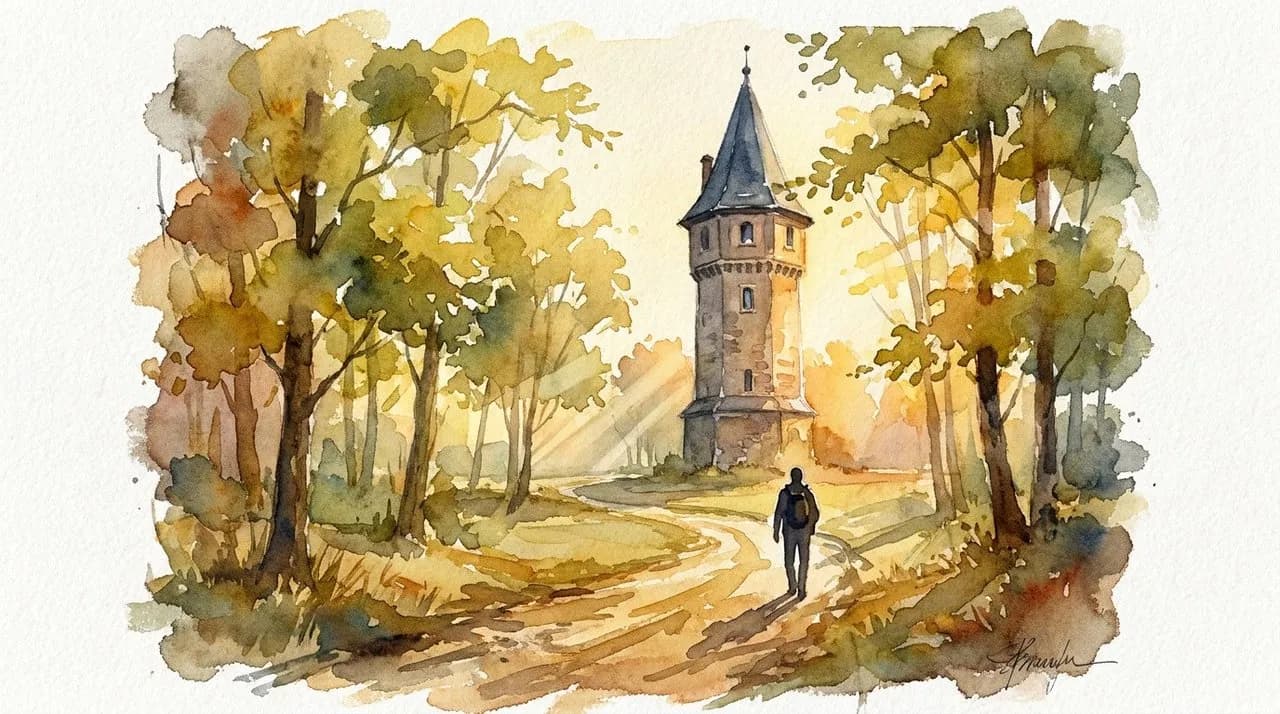
The Water Tower is worth a stop. Built in 1872 of granite, octagonal, two hundred feet tall, it pressurized the Croton water so it could reach the upper floors of buildings in upper Manhattan. Like the bridge, it stopped working in the late 1940s and has since been restored. It's stunning from the outside.
This is the segment where the warning is necessary. Highbridge Park is dense with trees, has a steep grade, and after dusk the foot traffic drops sharply. Beautiful in afternoon light. Not a park to wander alone after dark.
The Bronx Side: Highbridge Neighborhood and University Avenue
The east end lands you on University Avenue (officially Dr. Martin Luther King, Jr. Boulevard) at West 170th Street, in the Highbridge neighborhood of the Bronx. The neighborhood is named after the bridge, not the other way around. It's a quiet, residential stretch — apartment blocks, the 4 train on Jerome Avenue two blocks east.
The closest landmark is Yankee Stadium, twelve blocks south on River Avenue. The walk down is straightforward: south on Jerome under the elevated tracks, fifteen minutes, no surprises. If there's a home game running you'll know it; if not, the area around the stadium is calm enough to walk through.
How to Make a Whole Afternoon of It
The cleanest route is Manhattan to Yankee Stadium. Take the 1 train to 168th Street, walk east to St. Nicholas, up to 172nd, enter Highbridge Park at 172nd and Amsterdam, ten minutes to the Water Tower terrace, descend to the bridge deck, walk the bridge in eight to ten minutes, exit on University Avenue, fifteen minutes south on Jerome under the 4 train to the stadium. End-to-end: about ninety minutes with stops, sixty without. Just over two miles.
The other direction works too — start at the 4 train's 170th Street stop, cross to Manhattan, finish at the 168th Street 1. Manhattan-to-Bronx gets the better sunset view from the deck, because you're walking east into a sky that's still light to your right.
Practical notes
- Address (Manhattan side): Highbridge Park, enter at West 172nd Street and Amsterdam Avenue; walk east through park to High Bridge Water Tower and descend to bridge deck
- Address (Bronx side): West 170th Street and University Avenue (Dr. Martin Luther King, Jr. Boulevard)
- Hours: the bridge and connecting greenway are open daily 7 a.m. to 10 p.m., though hours can shift seasonally — check NYC Parks before late visits
- Getting there: to Manhattan side, 1 train to 168th Street–Washington Heights, or A to 175th Street; to Bronx side, 4 train to 170th Street on Jerome Avenue
- What to see: the bridge deck itself (1,450 feet, 140 feet above the Harlem River); the High Bridge Water Tower (1872) on the Manhattan side; the restored cast-iron lamp posts and brick paving
- Walking solo: the bridge deck is well-lit during daylight and foot-traffic-friendly on weekend afternoons, but Highbridge Park on the Manhattan side is heavily wooded and goes quiet after dusk. Walk it before sundown. Keep your phone charged. If you want to shorten the route in either direction, the 1 train at 168th Street (Manhattan) and the 4 train at 170th Street (Bronx) are each within ten minutes of the bridge ends.
- Best window: late spring through early fall, weekend afternoons between 3 and 6 p.m. — peak foot traffic, best light, and the Water Tower's outline catches the longest sun
- What to do after: in the Bronx, walk twelve blocks south to Yankee Stadium and a 4-train ride back; in Manhattan, stop at the Hispanic Society Museum on 155th Street (also free) before going home
The point
Most of the city's "famous walks" are loud — the Brooklyn Bridge in summer is a moving river of selfie sticks. The High Bridge is the opposite: an old bridge that almost no one knows about, in the city's two most overlooked boroughs-within-a-borough, with a 140-foot drop under your feet and the wind doing most of the talking. The forty-five-year closure was not the point. The reopening was. Walk it once and the rest of the city's bridges get noisier on the return.
Tags: #highbridge #highbridgenyc #oldestbridgenyc #manhattantobronx #crotonaqueduct #highbridgepark #washingtonheights #bronxwalk #harlemriver #nycwalks #historicnyc #karpofinds #thelongwayhome #pedestrianbridge #nycparks
Sources consulted: en.wikipedia.org · nycgovparks.org · nycgovparks.org/planyc · aqueduct.org · untappedcities.com · atlasobscura.com
All trademarks are the property of their respective owners.