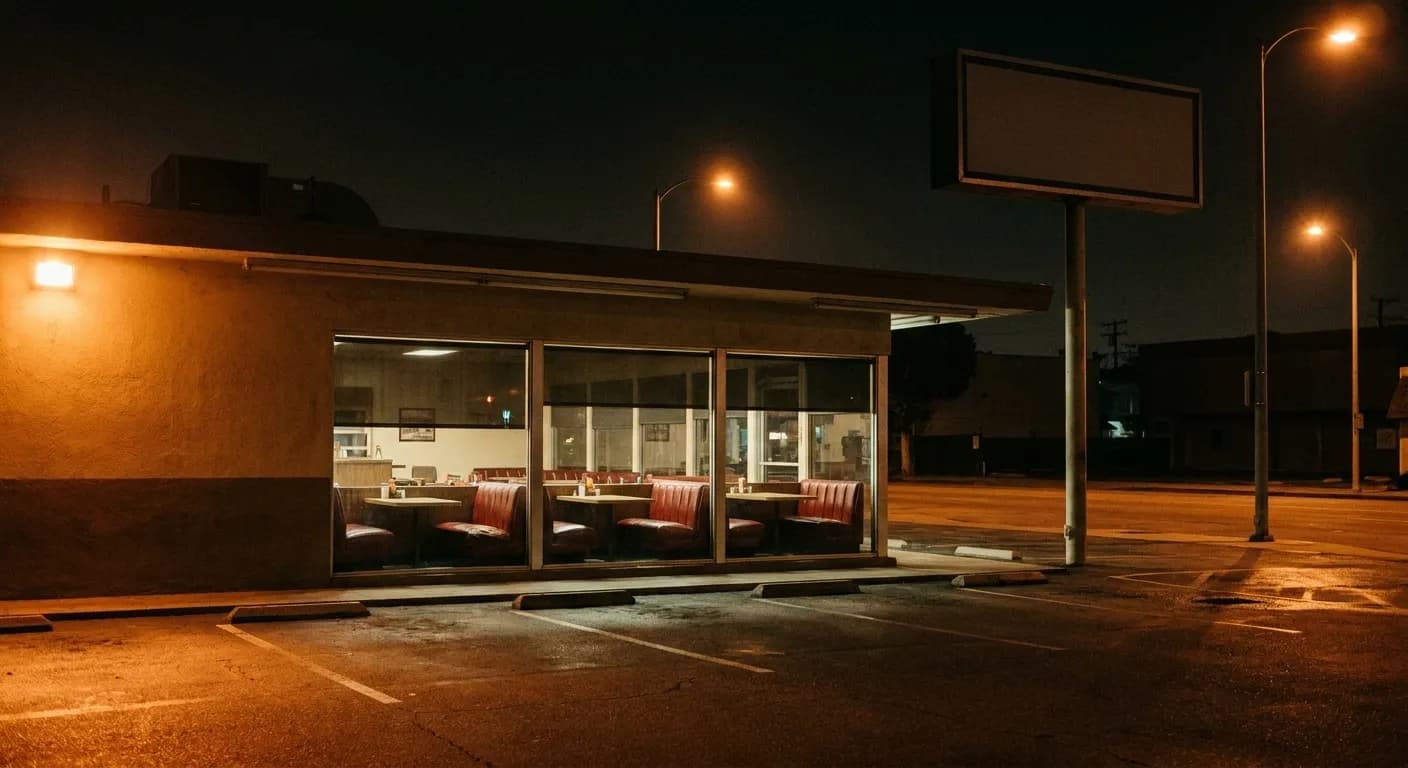
The single most reliable rule about eating in Los Angeles is that the quality of a restaurant is uncorrelated with the quality of the building it is in. This is not a quirk. It is a direct product of how the city was built — cheap commercial space distributed along boulevards rather than concentrated in a centre, which meant an immigrant kitchen could open anywhere there was parking. A visitor scanning for somewhere that looks like a restaurant will walk past most of the best food in the county.
The best rooms in LA are the ones with no exterior to speak of and no interest in being found. Ask Karpo which ones are near you and what to order when you get there.
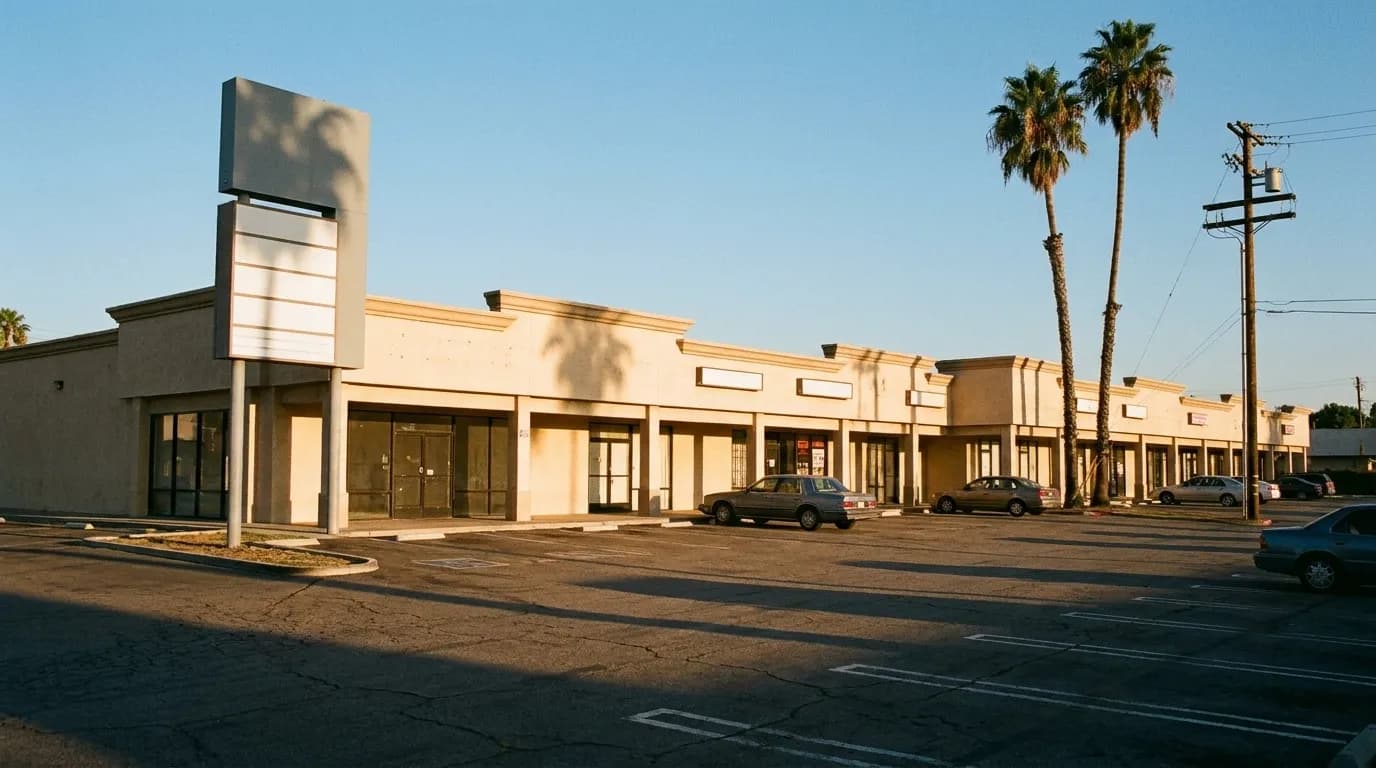
The strip mall is the format
An L-shaped single-storey building around a parking lot, with six to twelve units and a pylon sign listing them, is the default architecture of the San Gabriel Valley, the west San Fernando Valley, Koreatown and much of the Westside. Inside those units are some of the most specialised restaurants in the United States — regional Chinese kitchens cooking one province's food, Thai rooms with a separate menu in Thai, Armenian bakeries, Oaxacan counters, Filipino turo-turo. The building tells you nothing. The pylon sign tells you a great deal.
The reading skill is simple once you know it. A unit with handwritten specials taped inside the window is cooking things that are not on the printed menu. A unit whose signage is primarily in a language other than English is aimed at a community that will notice if the food slips. A unit that has been in the same strip mall for fifteen years, next to a laundromat and a nail salon that have also been there fifteen years, has survived on repeat custom rather than discovery.
The San Gabriel Valley
The stretch of the San Gabriel Valley running east from Alhambra through Monterey Park, San Gabriel, Rosemead and Arcadia is the densest concentration of regional Chinese food outside China, and it is the clearest example of the pattern. Monterey Park became the first majority-Asian city in the continental United States in the 1990s, and the food economy that grew around that is now four decades deep. Cuisines that exist in one or two restaurants in most American cities have twenty here, and they compete.
For a visitor the practical approach is to pick a regional cuisine rather than a restaurant — Shaanxi hand-pulled noodles, Hunan, Dongbei, Chaozhou seafood, Taiwanese breakfast — and then find the strip mall that has it. Valley Boulevard and Garvey Avenue are the two spines. Nothing on either of them looks like anything, and that is the point.
Trucks, lots and the taco question
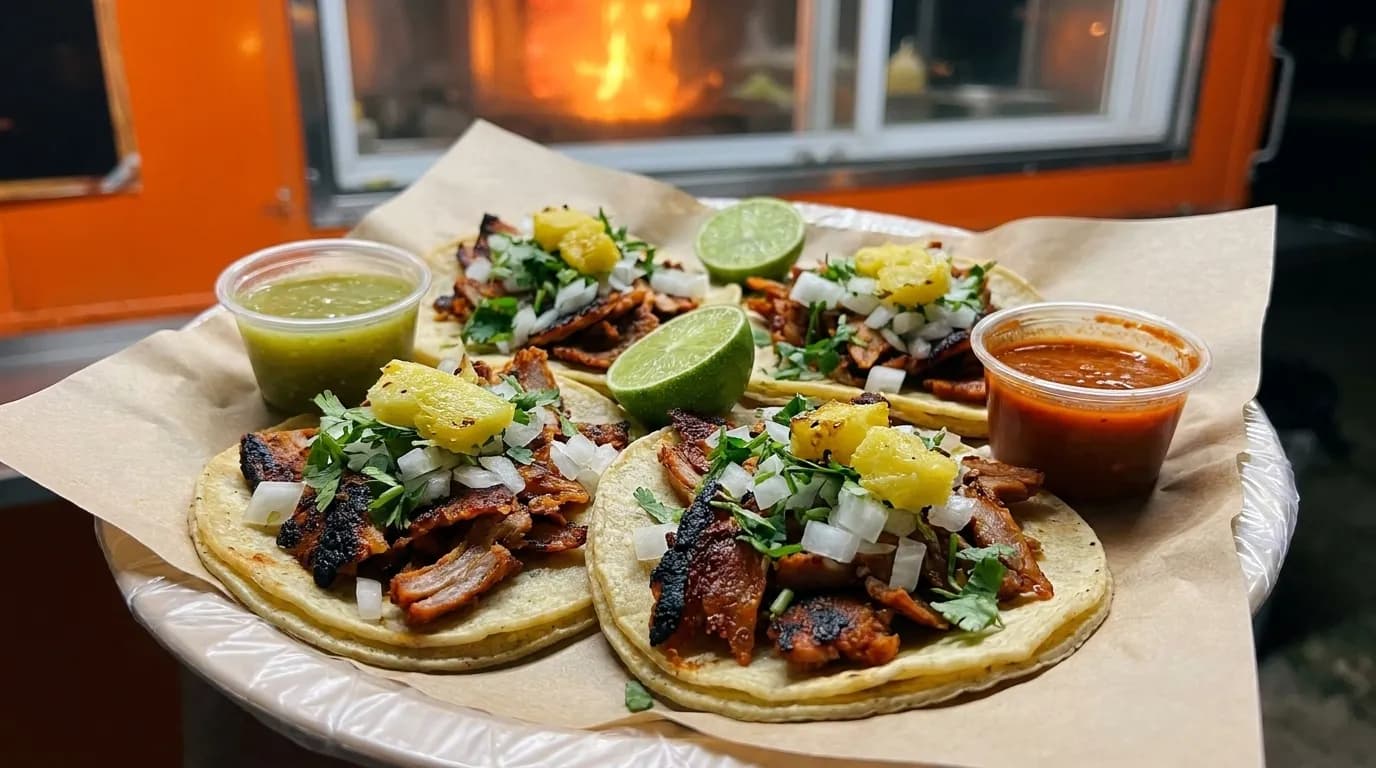
Los Angeles County has thousands of permitted mobile food vendors and the best taco in any given neighbourhood is more likely to come from one than from a restaurant. The formats are distinct and worth telling apart: the truck, which parks in the same spot nightly and has a following; the trailer, usually stationary outside a business that lets it use the lot; and the puesto, a stand on a folding table with a comal, which appears after dark outside a bar or a bus stop.
Al pastor from a vertical trompo, carved to order, is the dish to use as a benchmark, because it cannot be faked and cannot be held. If a stand has a trompo turning and a queue of five, that is as strong a signal as exists anywhere in the city's food. The corollary is also true: a taqueria with a trompo that is not turning is reheating, and you should order something else.
Food courts and mini-malls
The other overlooked format is the indoor food court attached to an Asian supermarket. Ranch 99, H Mart, Zion Market and the Japanese chains all anchor centres with a dozen independent counters around shared seating, and those counters are frequently one-family operations that have been there for years. They are cheap, fast, and almost entirely invisible to anyone not already shopping there.
Koreatown adds a third layer that visitors miss entirely: the second-floor and basement restaurant. Because the neighbourhood built vertically in the 1980s, an enormous amount of its food is above or below street level, reachable through a lobby with a directory board rather than through a door on the pavement. Walking Sixth Street or Olympic and only looking at ground level means seeing perhaps a third of what is there.
What the signals actually are
Four signals are worth more than any rating. A menu in another language with no translation, which means the room is not courting outsiders. A queue of people who look like they live nearby at an hour when tourists are elsewhere. A single specialism stated plainly on the sign — noodles, birria, rotisserie — rather than a list of cuisines. And longevity: a restaurant that has kept the same unit in the same strip mall for a decade in a market with rent this volatile has done it on repeat custom. Any two of those together is a stronger recommendation than four and a half stars.
Practical notes
Parking in the San Gabriel Valley strip malls is free and plentiful, which is the one genuine convenience of the format; Koreatown parking is validated by the building rather than the restaurant, so keep the ticket. Many San Gabriel Valley kitchens close between lunch and dinner, roughly three to five, and several of the best are closed one weekday. Cash still matters at trucks and stands even where cards are taken. Traffic is the real cost of eating well in LA — downtown to Monterey Park is fifteen minutes at nine at night and forty at six in the evening — so eat early or eat late, and never plan a crosstown dinner at the wrong hour.
Tags: #LosAngeles #LAFood #HiddenGems #StripMall #SanGabrielValley #MontereyPark #Koreatown #TacosLA #AlPastor #FoodTruck #FoodNearMe #LAEats #ValleyBoulevard #EatLikeALocal
All trademarks are the property of their respective owners.
Ask Karpo first
Want to know which strip mall near you has the good one, which trucks are parked tonight, and whether the drive is fifteen minutes or forty right now? Ask Karpo for a route before you leave the house.