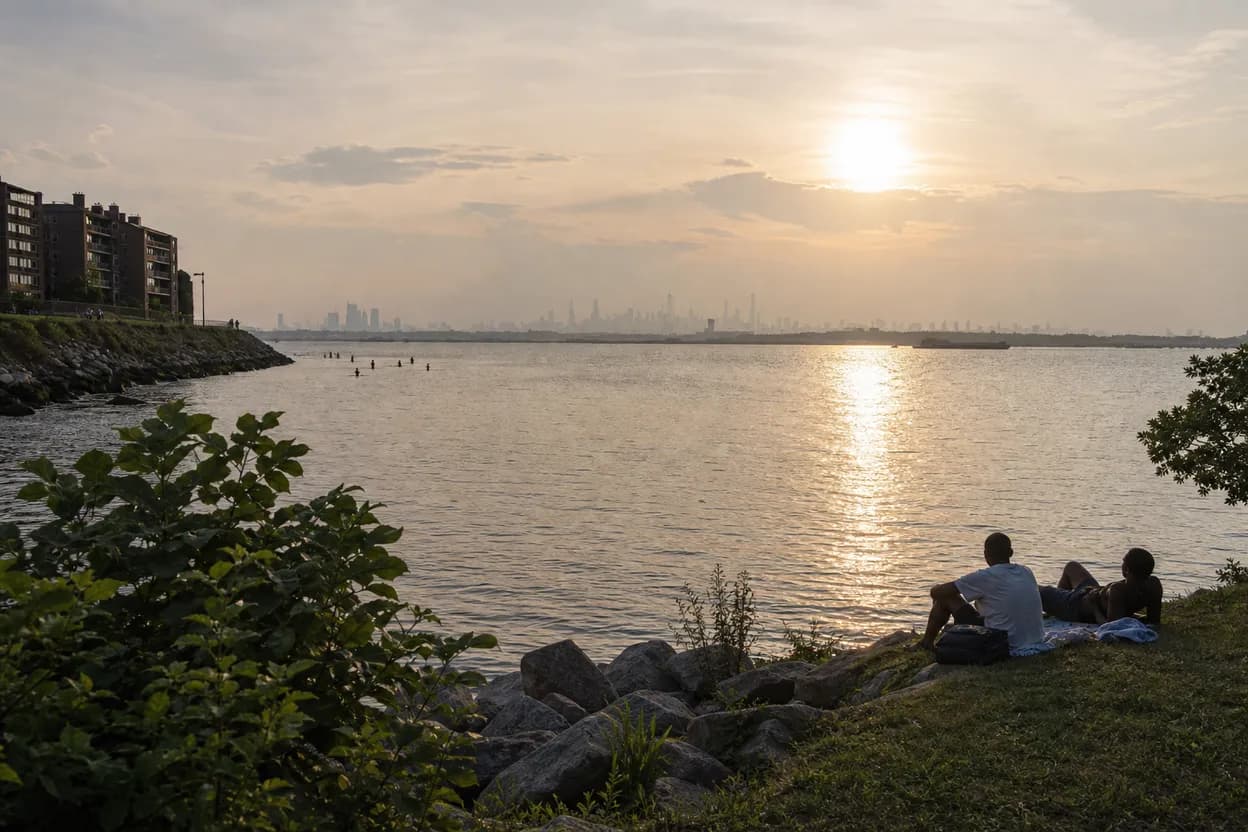
Hermon A. MacNeil Park works best as a quiet neighborhood route, not a destination that tries to fill a whole day. Set on the College Point waterfront in Queens, the park is useful for families who want a late-afternoon walk with room for playground time, short pauses, and a low-pressure exit before children get overtired. NYC Parks and neighborhood references identify the park with waterfront views, a playground, courts, and ballfields, while College Point itself has no subway service, making bus planning part of the trip. Treat the visit as a flexible loop: arrive with snacks, check current transit and park conditions, and keep the route short enough to leave while everyone is still comfortable.
Want a calmer Queens waterfront plan before you head out? Text Karpo with your children’s ages, stroller needs, and starting point for a route that fits the day.
Start With A Short Waterfront Goal
Make the waterfront the anchor, but keep the objective modest: a walk, a bench pause, and playground time if the equipment is open and comfortable. MacNeil Park is not the kind of place where families need a packed itinerary. Its value is the quieter College Point setting, the open river edge, and enough recreation features to let children reset without turning the outing into a long park crawl.
For late afternoon, aim for a route that can be shortened at any point. Children may want to stay at the playground, adults may want the benches, and weather off the water can change the feel quickly. Build the visit around visible comfort, not distance covered. If wind, heat, or fatigue arrives early, the successful version is a shorter loop plus an easy exit toward the nearest confirmed bus stop.
Plan Around Buses, Not The Subway
College Point is a bus-first neighborhood for most visitors. Public neighborhood references note that no New York City Subway line was built into College Point, so families should not assume a quick train fallback nearby. Before leaving, check MTA’s live bus information for the exact route, stop, and service status from your starting point. That matters more with strollers, tired children, or a post-playground departure near dinner time.
The practical tradeoff is simple: MacNeil Park can feel calmer than more central waterfront parks, but the transit margin is thinner. Leave extra time for the return bus, and identify a backup stop before entering the park. If a bus is delayed, that advance planning prevents the outing from turning into an improvised walk through unfamiliar residential blocks while children are hungry, cold, hot, or ready to be done.

Use The Playground As The Pacekeeper
The playground should set the rhythm, not sit at the end as a reward. NYC Parks-related listings and local park descriptions identify MacNeil Park with a full playground, which makes it useful for children who need movement before they can enjoy a waterfront pause. Start there if attention is low, then shift toward the benches and views. This order reduces bargaining and gives adults a calmer second half.
Check the playground on arrival before promising a long stay. Equipment, surfacing, shade, crowding, and nearby maintenance can change, and none of those details should be assumed from older listings. If the play area is too busy or uncomfortable, convert the visit into a shorter waterfront walk. Families with toddlers should also keep the route compact, because the distance back to transit can feel much longer after active play.
Read The Waterfront Conditions Early
The park’s shoreline setting is the main appeal, with neighborhood references describing waterfront views toward the East River area and nearby islands. That same setting also means wind, glare, and temperature can shape the visit more than the map suggests. On a late-afternoon family walk, check sun angle, breeze, and how children are responding within the first few minutes, then decide whether to linger or keep moving.
A waterfront bench is useful only if the group can actually relax there. Bring layers when the forecast suggests cooler air near the water, and avoid treating sunset timing as a fixed promise unless visibility and transit still work. If the edge feels exposed, use the park’s interior recreation areas as a break instead. The best version of this outing is quiet and adaptable, not stubbornly scenic.
Match The Park To The Right Family
MacNeil Park fits families who like low-key neighborhood space, short walks, and simple outdoor time. It is less ideal for visitors expecting a major attraction, indoor backup, scheduled programming, or subway-adjacent convenience. The park’s mix of playground, courts, ballfields, benches, and waterfront views can support multiple ages, but the experience depends on ordinary city conditions: weather, maintenance, sports use, and how quickly children tire.
For a family with children, the sweet spot is a visit long enough to feel like a change of scene but short enough to avoid logistics taking over. Pack water, snacks, and a bathroom backup plan rather than assuming every need will be solved on site. If one child needs playground time and another needs stroller rest, split the visit into nearby zones instead of trying to tour every corner.
Know The Failure Modes Before Arrival
The most common failure mode is overplanning. A quiet waterfront park can become stressful if the adult goal is a perfect loop, a long photo stop, or a tightly timed return. Another risk is arriving without current transit information and discovering that the easiest bus option is delayed. A third is assuming park features are available exactly as described online, when conditions can change without much notice.
Use backup logic before you need it. Pick a latest departure time, a nearest confirmed bus stop, and a simple food or restroom option outside the park area if your family requires one. If the playground is closed, the weather turns, or sports activity makes a field edge feel crowded, shorten the visit. A calm exit is more valuable than completing a route that no longer fits the group.
What to verify for Hermon A. MacNeil Park
Verify the current NYC Parks page for Hermon A. MacNeil Park, including any alerts, closures, restroom information, or maintenance notices, before relying on a specific feature. Check MTA live bus status shortly before departure and again before leaving the park. Confirm the weather for College Point, paying attention to wind and temperature near the water, not just the citywide forecast. Bring stroller-appropriate expectations if pavement conditions matter.
On arrival, confirm three things: where the children can play safely, where adults can pause comfortably, and how everyone will leave if the visit needs to end early. Keep the late-afternoon plan easy: playground, waterfront bench, short walk, transit exit. If any piece is missing, adapt immediately. MacNeil Park’s strength is not spectacle; it is a manageable Queens waterfront break when the details are checked first.
Tags: #HermonAMacNeilPark #CollegePoint #QueensNYC #NYCParks #QueensWaterfront #FamilyWalk #KidsInNYC #PlaygroundNYC #TransitPlanning #NeighborhoodGuides #LateAfternoon #AskKarpo #BeforeYouGo #NYCWithKids
All trademarks are the property of their respective owners.
Ask Karpo first
Tell Karpo your date, group size, budget, and starting neighborhood. We’ll check current access, timing, transit, and the cleanest plan for Hermon A. MacNeil Park before you head out.