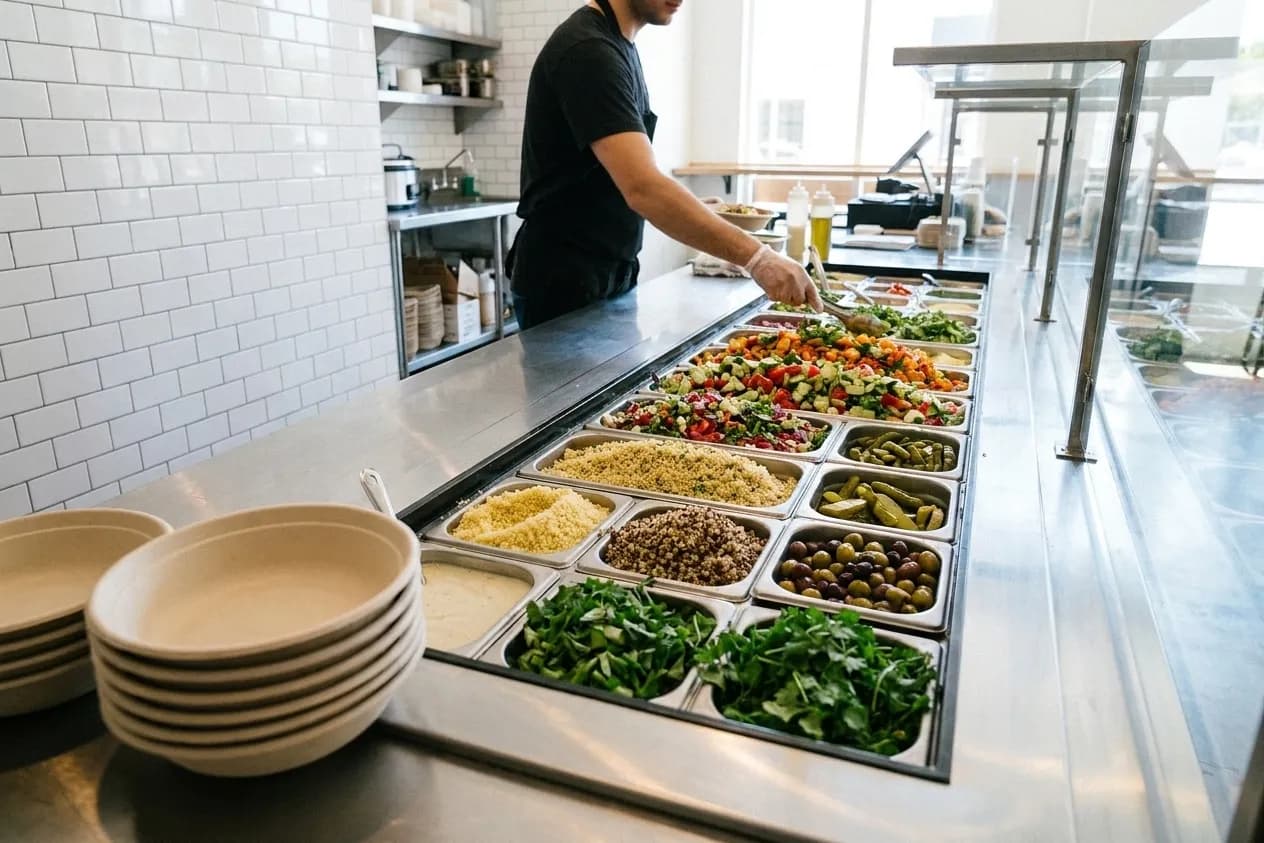
Mediterranean food near me is one of the few searches people run with a health goal already attached, and the assumption is roughly correct: the underlying pantry is vegetables, legumes, grains, yoghurt and olive oil. But a bowl from a Mediterranean counter in San Francisco can land anywhere between 500 and 1,200 calories depending on four decisions made in the sixty seconds you spend at the line, and none of those decisions is the restaurant's fault. Learning the four is more useful than a list of places, because it works at every counter in the city.
Healthy is not a property of the restaurant — it is a property of how the bowl gets built, and the same counter can produce either version. Tell Karpo what you are trying to avoid and it will suggest places where that is easy rather than a fight.
Decision one: the base is not the problem, the dressing on it is
Rice, couscous, freekeh, greens — the base is a modest share of the total and the difference between choices is smaller than people assume. What changes the arithmetic is whether the base arrives already dressed. A grain that has been sitting in oil and lemon carries far more than a plain one, and at most counters you can ask for it undressed without any fuss. Greens are genuinely lighter, but only if you then do not compensate with two sauces.
Decision two: falafel is fried and shawarma is not
This surprises people who order falafel specifically because it is vegetarian. Falafel is a fritter and the good versions are fried to order in deep oil; chicken shawarma is roasted on a vertical spit with the fat dripping away from it. If lightness is the goal, the vegetarian option is frequently the heavier one. Grilled chicken or lamb kofte, chickpeas, or a mixed vegetable plate get you where falafel is assumed to.
Decision three: pick one white sauce, not three
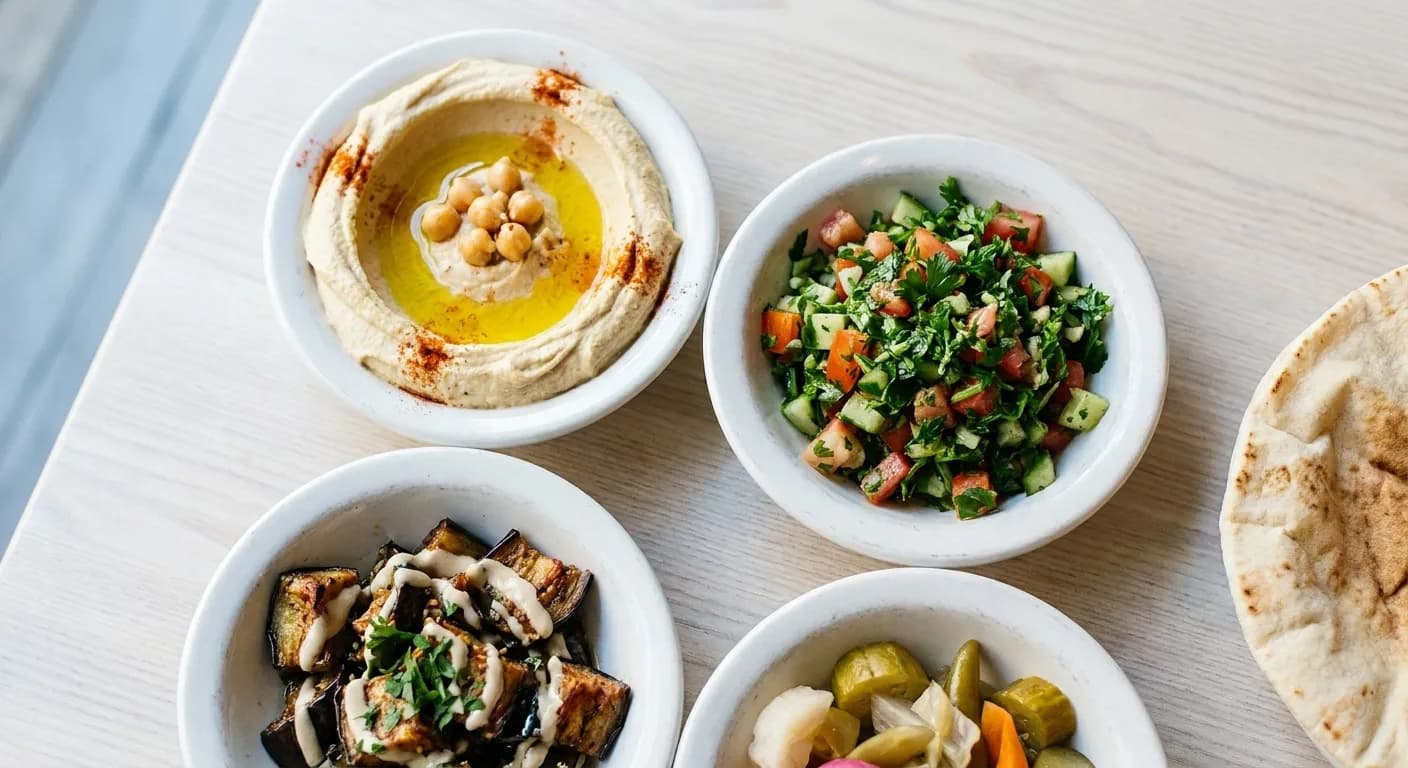
Tahini, garlic sauce, yoghurt and feta are all excellent and all fat-dense, and the default at a fast-casual counter is to add several because they are offered in sequence and each is a yes-or-no question. Answer yes once. Then take every acid on the line — pickled turnip, lemon, sumac onion, hot sauce, cabbage — because those cost almost nothing and do most of the work you actually wanted the sauces for.
Decision four: bread on the side or bread as the container
A wrap and a bowl with pita on the side hold roughly the same amount of bread, but the wrap gets eaten completely and the side bread frequently does not. That is the entire difference, and it is a real one. It also changes the meal socially: a bowl can be picked at while talking, a wrap cannot be put down halfway through without falling apart.
Where mezze beats a bowl outright
The fast-casual bowl is a single-person format. If there are two or more of you, San Francisco's sit-down Mediterranean rooms serve a genuinely better version of the same nutritional idea — a spread of small vegetable-forward plates eaten slowly, which is closer to how this food is actually eaten around the Mediterranean than any bowl is. Order four or five mezze, one grilled thing, and skip the mains. It is usually cheaper per person than two bowls and takes an hour instead of ten minutes, which is either the point or the problem depending on the evening.
Where to find each format in this city
The counters concentrate downtown, in SoMa and along the commercial spines that feed office lunch traffic, which is also where they are priciest. The sit-down rooms are spread through the neighbourhoods and are noticeably better value in the evening. In both cases the quality signal to look for is the same: how many vegetable preparations the kitchen makes itself rather than buys in. A counter with six house-made salads is doing real cooking regardless of what the sign says.
Menus and prices at this end of the market change often, so treat any specific detail as perishable and check on the day. The four decisions do not change.
Two orders that consistently work
If you want the light version, the reliable build is greens or half-and-half base, grilled chicken or chickpeas, every pickled and raw vegetable on the line, one spoon of tahini, lemon and sumac, no bread. That lands somewhere around a normal lunch and does not feel like a compromise, mostly because the acid and the pickles carry the flavour that people usually get from a second sauce.
If you want the satisfying version and still want it to be reasonable, take rice as the base, lamb or kofte, one white sauce, a hot sauce and a full load of salad. The difference between that and the heaviest thing you could build is mostly the second and third sauce and the bread — perhaps two hundred calories of decisions rather than a different meal. Framing it that way is more useful than avoiding the counter on the days you want the bigger version.
Tags: #SanFrancisco #SF #BayArea #Restaurants #WhereToEat #Dining #Mediterranean #SFEats #SFGuide #ExploreSF #SFLocal #SFWeekend #SFNights #SFFood
Sources consulted: sf.eater.com · sfchronicle.com · sfgate.com
All trademarks are the property of their respective owners.
Ask Karpo first
Karpo is a proactive AI assistant that lives in iMessage. Tell it how you want to eat and it will find counters that make that easy.