The default answer for the best lunch spots in San Francisco has quietly become a chain salad counter charging eighteen dollars for a bowl assembled by three people down a line. It is fine. It is also roughly double what the same meal costs two streets away, and slower, because the queue at half past twelve is the entire office. The alternatives are not hidden — they are just in shops that do not describe themselves as lunch.
The fast healthy option is rarely the one with the queue. Ask Karpo what is good near you right now and how long it will actually take.
The formats that beat the salad counter
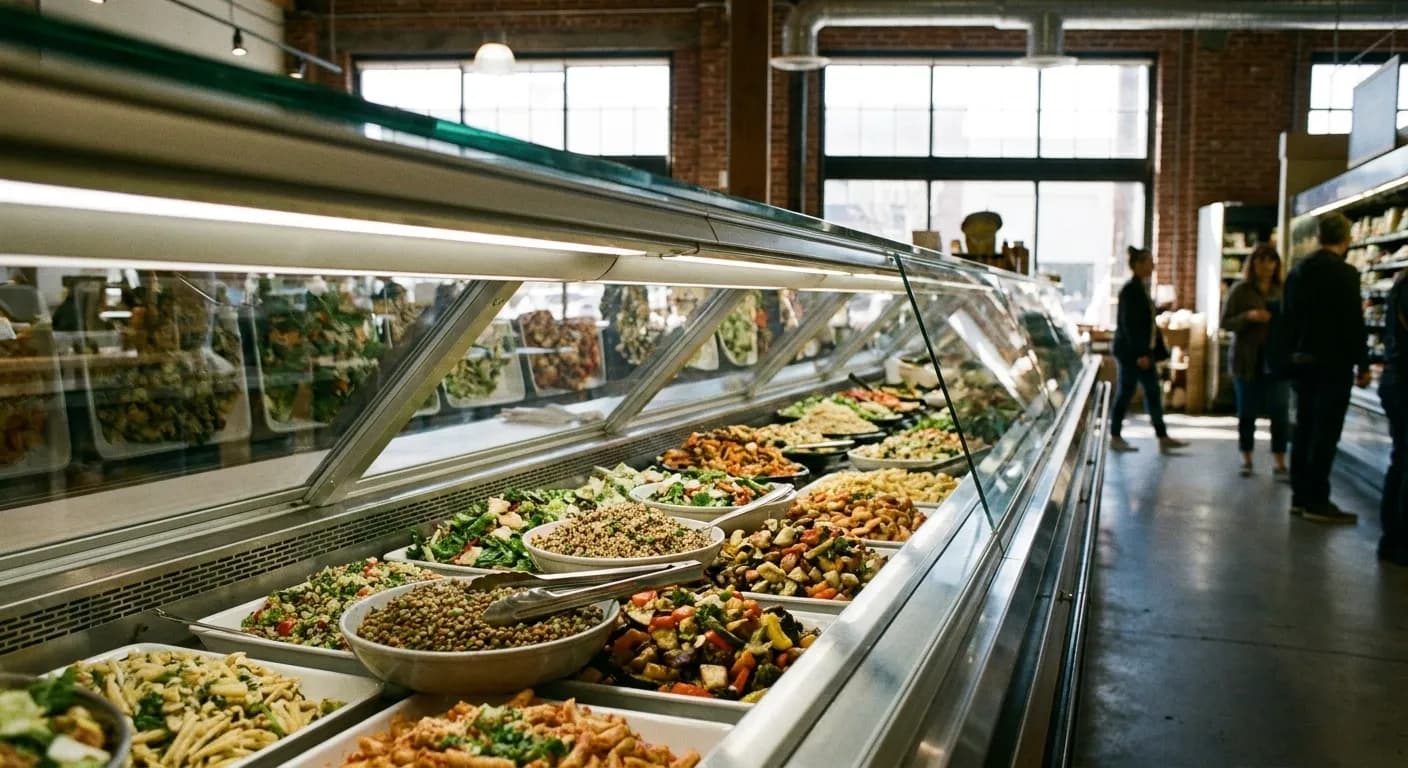
Four of them, and they exist in every district. The Japanese and Korean grocery deli, where the prepared case has rice, fish, pickles and vegetables at grocery prices rather than restaurant ones. The Middle Eastern grocery counter, where a mezze plate with bread runs to about ten dollars. The Chinese bakery and deli, which is the fastest of all. And the taqueria, where a plate without the tortilla is a completely ordinary order and an extremely good one.
These all share a structural advantage: the food is already made. The queue moves at the speed of a till rather than the speed of an assembly line, which is why a shop with fifteen people in it can be faster than a shop with five. Judging a lunch queue by its length is the single most common error people make in this city at midday.
Downtown and the Financial District
The densest lunch competition in the city, and the worst value, because the customer base is captive between twelve and one. The move here is to walk four blocks in any direction away from the towers, which reliably halves the price. The edges of Chinatown, the lower slopes toward the waterfront and the blocks south of Market all sit inside a ten-minute walk and are a different market entirely.
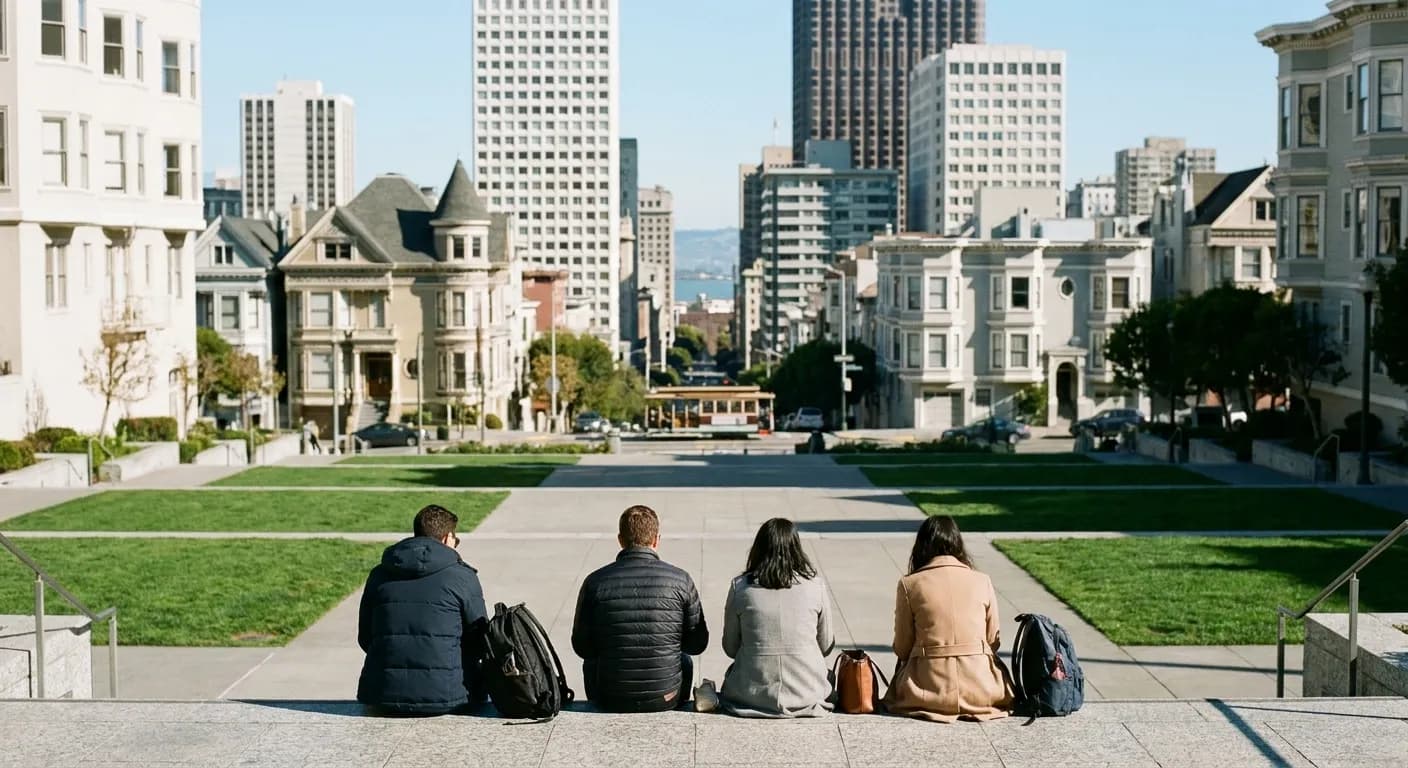
The other downtown-specific option is the food halls, which are better than they used to be and are genuinely fast if you know which counter you want before you walk in. Wandering one at half twelve is how twenty minutes disappear. Deciding first and walking straight to a stall is a different experience.
The Mission, the Richmond and the Sunset
The Mission has the best price-to-quality ratio for a fast lunch in the city, and not only from taquerias — the produce markets sell prepared food, the bakeries do savoury, and the newer counters have pushed the quality up without pushing the prices as far as they have downtown. Twelve dollars buys a serious lunch here.
The Richmond and the Sunset are where the grocery-deli format is strongest, particularly along Clement, Geary, Irving and Noriega. These are neighbourhoods where a lot of people eat lunch at home or at a desk nearby, and the shops are set up for that. The trade-off is that the offering thins out after about two in the afternoon, because the model is built on a lunchtime rush rather than an all-day service.
Defining healthy usefully
Worth being precise, because the word is doing a lot of marketing work. If the criterion is vegetables, protein and not much refined starch, then the grocery-deli case, the mezze plate and the taqueria plate all beat the chain salad on nutrition as well as on price. If the criterion is a specific macronutrient target, the chains are genuinely more legible, because they publish the numbers.
The thing the chains actually sell is predictability — the same bowl, the same price, the same time, in any district. That has real value on a day with a meeting at one. It is just worth knowing that you are paying a premium for consistency rather than for quality, and that on an unhurried day the premium buys you nothing.
Timing is the other half
The rush in this city is unusually sharp: twelve fifteen to one. Going at eleven forty-five or at one fifteen changes a fifteen-minute wait into a two-minute one at the same shop. Hybrid working has made Tuesday to Thursday much busier than Monday and Friday, and the difference is now large enough to plan around.
The other timing note is that the best prepared-food cases are picked over by one o'clock and restocked unevenly after that. If you want the good version of the grocery-deli lunch, early is not just faster, it is better food. That is not true of the chains, which is part of why they win the late-lunch crowd by default.
The desk-lunch version
If the point is to eat at a desk, buying twice a week rather than daily changes the economics substantially. The grocery-deli case sells things that keep — pickles, grains, cooked greens, marinated fish — and a fifteen-dollar shop covers three lunches. This is what a lot of people who work in these neighbourhoods actually do, and it is invisible in any lunch guide because it does not involve a restaurant.
It also solves the weather problem. Eating outside is one of the better parts of a working day in this city on the roughly two hundred days it is pleasant, and having food already in a bag on the good days beats deciding at half twelve when the queue is long and the wind has come up.
The last thing worth saying is that none of this requires a system. Learning two shops near where you work — one fast, one good — covers about ninety per cent of weekday lunches and takes a fortnight of trying things to establish. That is a small investment against roughly two hundred and forty lunches a year, and almost nobody makes it.
Tags: #SanFrancisco #LunchSF #HealthyLunch #GrabAndGo #SFEats #FinancialDistrict #MissionDistrict #ClementStreet #IrvingStreet #DeskLunch #BayArea #QuickBites #SFFood
All trademarks are the property of their respective owners.
Ask Karpo first
Ask Karpo where to get a fast, good lunch near you in San Francisco right now, and whether the queue is worth joining.