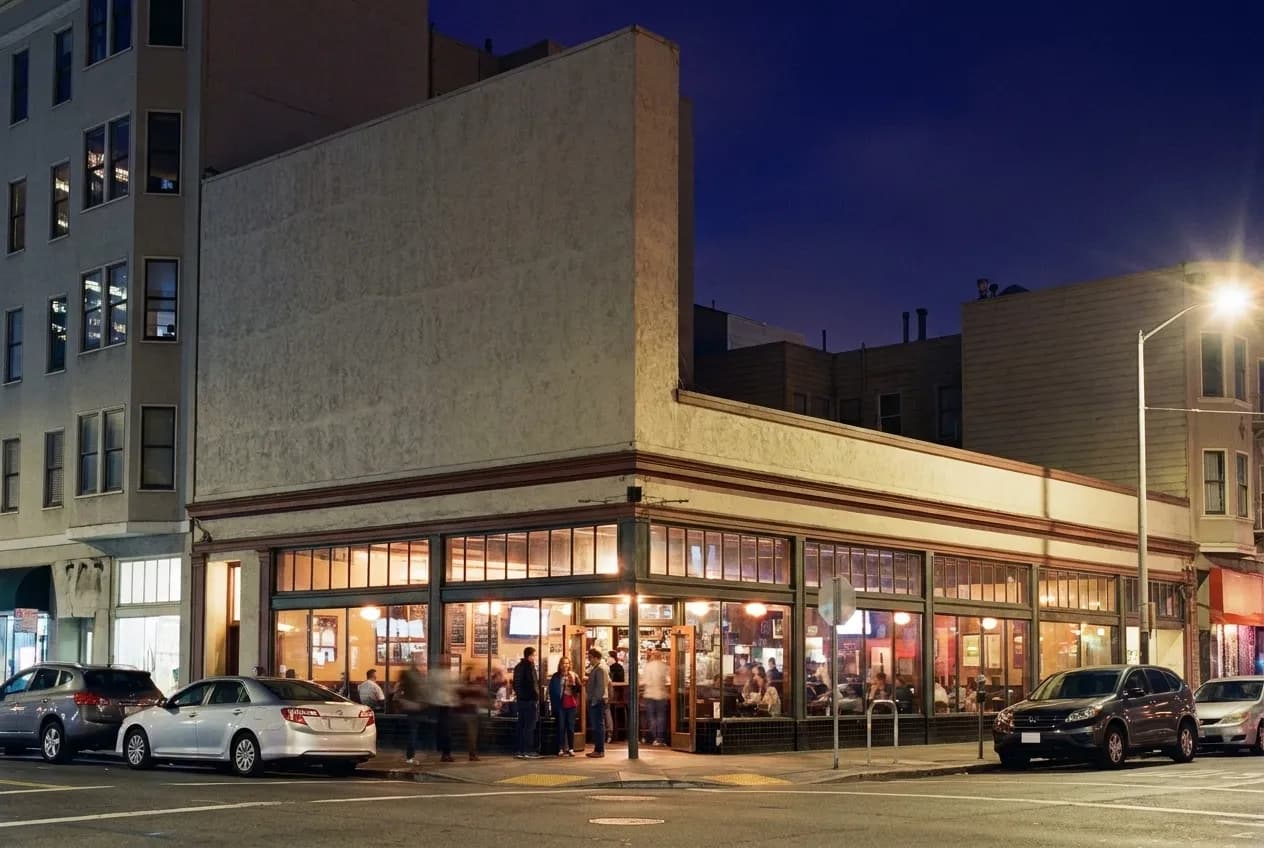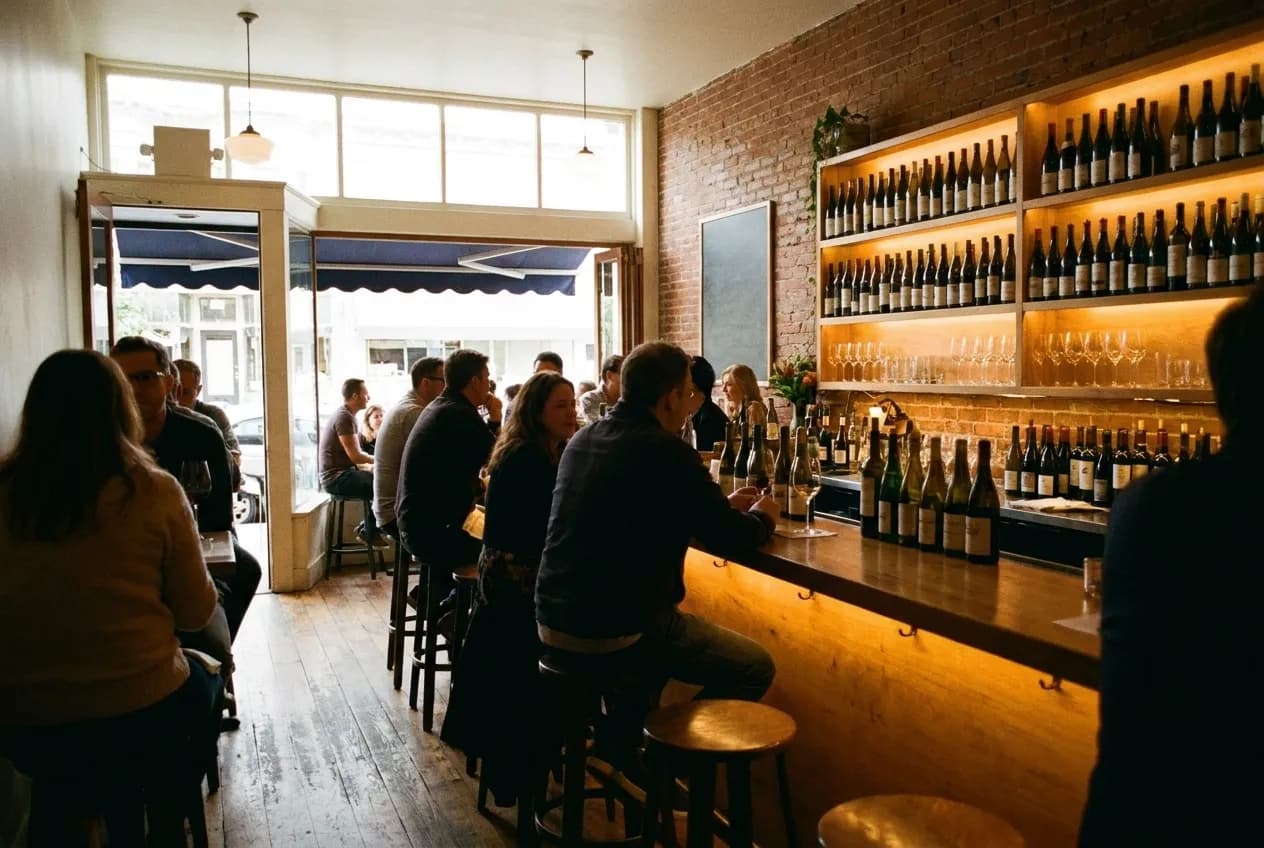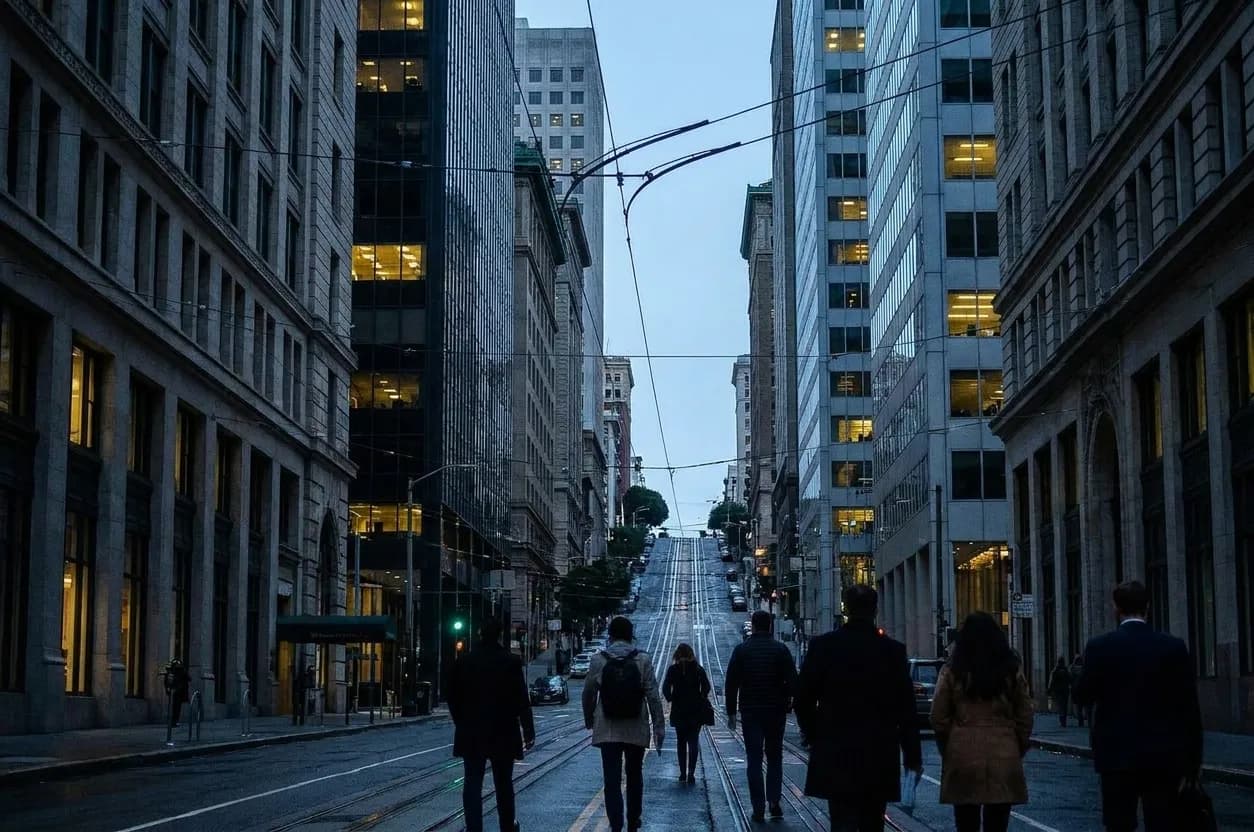
The after-work drink in downtown San Francisco has not disappeared, but it has compressed into a much narrower slot than it occupied a few years ago, and the people who still enjoy it are the ones who understand the new shape. The Financial District and SoMa now run on a hybrid working week, which means the crowd is concentrated into the middle three days and largely absent at either end. Bars have adapted by shortening hours, and a number now close early or shut entirely on Mondays and Fridays. Searching happy hour near me in SF from an office desk at five o'clock is fine; doing it on the wrong day is how you end up walking past three dark frontages.
Karpo can tell you which downtown San Francisco bars are open and busy right now, when each one's happy hour ends, and which are a short walk from your line.
Tuesday to Thursday is the week now
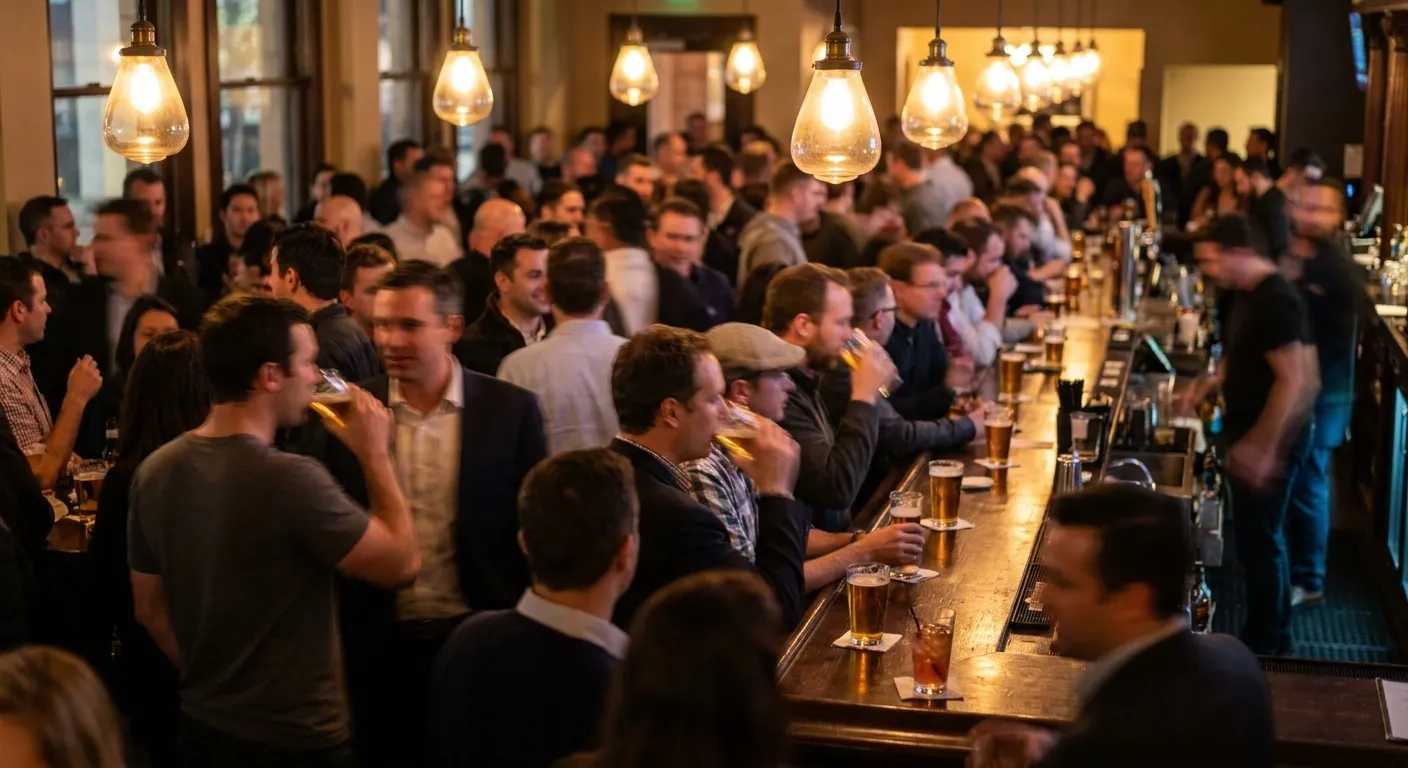
The single most important fact about downtown drinking in this city is that the office population is concentrated on Tuesday, Wednesday and Thursday. Those three evenings carry something close to the old atmosphere: full bars from five, queues at the good ones by six, and a genuine after-work crowd.
Monday and Friday are structurally different. Many bars either close, run reduced hours, or operate with a skeleton crowd. This is not a judgement on the bars — it is a rational response to demand — but it does mean that a Friday-evening plan downtown needs checking rather than assuming. If you want the classic experience, aim for Wednesday.
Bars close earlier than they used to, and that is the real trap
The shift that catches people out is not happy hour ending at six. It is the bar itself closing at seven or eight on a quiet night. A downtown bar with no residential neighbourhood around it has no second wave of customers after the office crowd leaves, so when the office crowd stops coming, the bar shuts.
The practical rule: if the plan runs past about eight-thirty, do not plan it in the Financial District. Move it. Which leads to the most useful piece of local knowledge in this whole category — the geography of where the evening should go next.
Where to go when downtown closes
The natural extensions from the Financial District are all within a short walk or one transit stop. North Beach is fifteen minutes on foot and runs late with a genuine bar culture. Jackson Square and the blocks around it hold the older, better cocktail rooms and stay open past the office hour. The Tenderloin edge has some of the city's most interesting bars and runs late. And SoMa's bars cluster around the ballpark and the event venues, which means they follow the events calendar rather than the office one.
Plan the second location before the first drink. A group standing on Montgomery Street at eight-fifteen with three closed bars nearby will go home, and the evening ends because of logistics rather than because anyone wanted it to.
The transit constraint that shapes everything
Downtown San Francisco's after-work drinking is organised around BART and Muni, because a large share of the crowd is heading to the East Bay or out along the Market Street corridor. The stations at Montgomery and Embarcadero are the two anchors, and the practical radius is a five-to-eight minute walk from either.
This matters for the end of the night more than the start. BART's service thins significantly late in the evening and the last trains are earlier than visitors expect, which is another reason the downtown crowd empties out sharply after seven. If you are staying later, know when your last train is before the second round, not after the fourth.
What the offers actually look like
The downtown standard is a weekday window in the four-to-six or five-to-seven range, usually a short flat-price list rather than a discount across the menu: a beer, a house wine, a well drink and perhaps one cocktail at a single number. Food discounts are less common here than in other cities, though bar snacks at reduced prices do appear at the rooms attached to restaurants.
Remember the San Francisco surcharge. Many venues add a percentage to the bill for healthcare or service, disclosed on the menu, and it applies to discounted items too. A round that looks like thirty dollars is thirty-six by the time it reaches you, so read the foot of the menu before you decide what the deal is worth.
Making the most of a compressed window
Go at five, not six. The gap between an empty bar and a three-deep bar downtown is about forty minutes, and everything about the experience — getting served, getting a seat, hearing anyone — is better on the early side of it. If you are meeting people, the person who arrives first should hold a table rather than the group trying to find one at six-fifteen.
And book if the group is more than four. Downtown rooms are small, midweek demand is concentrated into three nights, and a party of six turning up unannounced on a Wednesday at six is the group that ends up standing on the pavement. Most of these bars take a booking cheerfully and almost nobody asks.
It is also worth knowing that the office-adjacent bars now compete for a smaller crowd, which has made them noticeably better at hospitality than they used to be. Bartenders have time to talk, groups get looked after, and a booking for six on a Wednesday is welcomed rather than tolerated. The compressed week has thinned the crowd, but for the people still going out it has quietly improved the experience.
Tags: #SFHappyHour #FinancialDistrict #AfterWork #SanFranciscoBars #HappyHourNearMe #SoMa #NorthBeach #JacksonSquare #SFNightlife #BART #DrinkDeals #SFEats #Downtown #NightOut
Please drink responsibly. Must be of legal drinking age.
All trademarks are the property of their respective owners.
Ask Karpo first
Want to know which downtown San Francisco bars are open and serving right now, when the happy hour ends, and where to go when the Financial District shuts? Ask Karpo before you leave the office.