Happy hour in New York is more regulated than almost anywhere else in the country, and the regulation shapes what you are actually offered in ways that most drinkers never notice. There is a state rule that makes the all-you-can-drink model illegal in principle. There are bar-only restrictions that quietly exclude the table you just sat down at. There are food minimums attached to the good deals. And there is a widening gap between bars that have kept a genuine discount and bars that have kept the words. Knowing which is which takes about five minutes of understanding and saves a great deal of money over a year.
Karpo can find which bars near you are running a real happy hour right now, what the window is, and whether the price holds at a table or only at the bar.
The rule that makes bottomless technically illegal
New York State law prohibits selling an unlimited number of drinks during a set period for a fixed price. That is the statute, and it is the reason you will rarely see a straightforward all-you-can-drink offer advertised in those words. New York is one of roughly two dozen states with a rule of this kind.
The reason bottomless brunch nevertheless exists all over the city is a limited exception where the service of alcohol is incidental to an event, and brunch has generally been treated as fitting that description. The rule is not aggressively enforced. But it explains a lot of the odd phrasing you see on menus — offers framed around a set number of drinks, or around a package with food, rather than around the word unlimited. When a deal is described in a slightly convoluted way in New York, this is usually why.
Bar-only is the restriction that catches most people
The single most common happy hour disappointment in New York is sitting at a table, ordering from the happy hour list, and being told politely that it applies at the bar only. This is standard practice and it is almost never announced at the door.
Ask before you sit. If the bar is full and the deal is bar-only, either wait for a stool or accept full price knowingly. Some rooms extend the offer to high-tops near the bar but not to the dining room; a few extend it everywhere. It takes one question and it is the difference between a twelve-dollar and a twenty-two-dollar drink.
Read the window, and read the days
New York happy hours are typically weekday-only and typically narrow — somewhere in the 4pm to 7pm band, with plenty of rooms cutting it at 6pm. The Friday version is the one to check most carefully, because a meaningful number of bars either shorten it or drop it entirely on the busiest night of the week.
The genuinely valuable and underused windows sit at the edges. Some bars run a late happy hour, often from 10pm or 11pm until close, which is a much better deal than the early one and attracts a fraction of the crowd. And Sunday and Monday offers are common because those are the hardest nights to fill, and they tend to be more generous than the Tuesday-to-Thursday standard.
Dollar oysters and how their economics work
The dollar oyster is a New York institution and it is a genuine loss leader — the bar is not making money on the oyster and does not intend to. It is making money on the drink you buy alongside it, which is very often not discounted at all.
Two things to check. Whether there is a per-person limit on how many you can order at the deal price, which is common. And what the drinks cost, because a dozen dollar oysters with two eighteen-dollar cocktails is not a cheap evening. The offer is usually restricted by day and by time, is frequently bar-only, and the oyster on offer is the house selection rather than your choice from the list — all of which is fine, provided you know it before you sit down.
Food minimums, and when a deal is not one
Some of the better New York happy hours are attached to a food minimum, either explicitly stated or informally expected. This is not a trick; it is how a bar makes a discounted drink viable. But it changes the calculation, and a deal requiring a fifteen-dollar food order is a different proposition from one that does not.
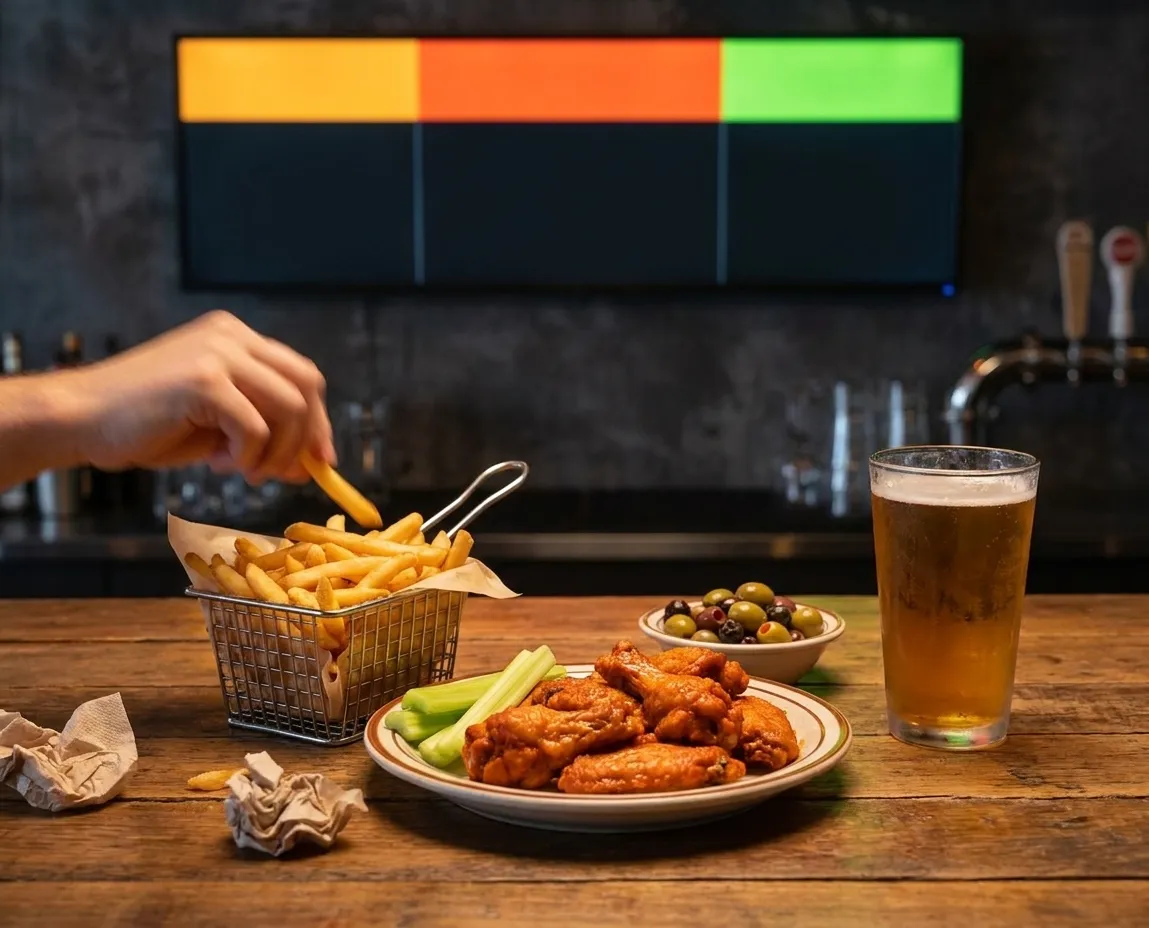
The related pattern is discounted bar food, which is often the better half of a New York happy hour. Half-price wings, discounted burgers and reduced small plates between four and six add up to a genuinely cheap dinner, and at plenty of bars the food discount is deeper than the drinks one. If the goal is value rather than drinking, order from the food side.
How to tell a real deal from a maintained one
Compare the happy hour price with the normal price on the same menu. A bar advertising happy hour cocktails at sixteen dollars when the standard price is eighteen is maintaining a tradition rather than offering a discount, and that pattern has become common as costs have risen. A real deal is usually a third off or more, or it is a specific list of drinks at a flat price.
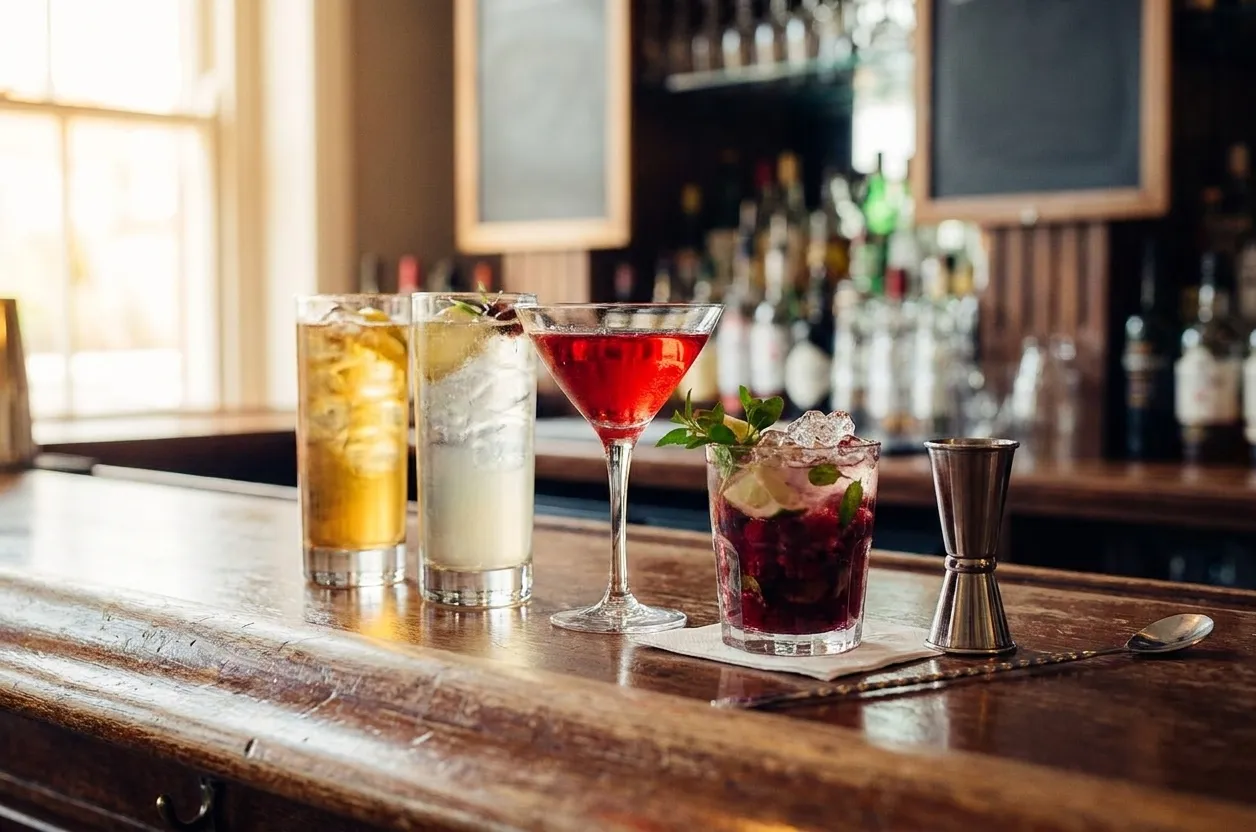
The flat-price list is the format that has survived best: a handful of beers, a wine, and one or two cocktails at a single number. It is less glamorous than a discounted version of the full menu, and it is almost always the better value. If a bar has a short list at a flat price and a busy bar at five o'clock, you have found the real thing.
Tags: #NYCHappyHour #HappyHourNearMe #NYCBars #DollarOysters #NewYorkNightlife #DrinkDeals #BarOnly #NYCEats #AfterWork #LateHappyHour #NYCGuide #Manhattan #Brooklyn #NightOut
Please drink responsibly. Must be of legal drinking age.
All trademarks are the property of their respective owners.
Ask Karpo first
Want to know which bars near you are running a genuine happy hour right now, when the window closes, and whether it counts at a table? Ask Karpo before you order.