Los Angeles happy hour is a 3pm-to-6pm institution in a city where almost nobody is free at 3pm. Koreatown is the exception, and it is not a small one: this is the one part of the county where the discounts, the kitchens and the crowd all run past midnight, and where turning up at 10:30pm makes you early rather than late.
Koreatown runs on a different clock, and the deal that exists at 11pm may not exist at 9pm or at 1am. Ask Karpo which rooms are still serving food right now, where the late window applies, and which parking structure nearby is still staffed.
Why the clock is different here
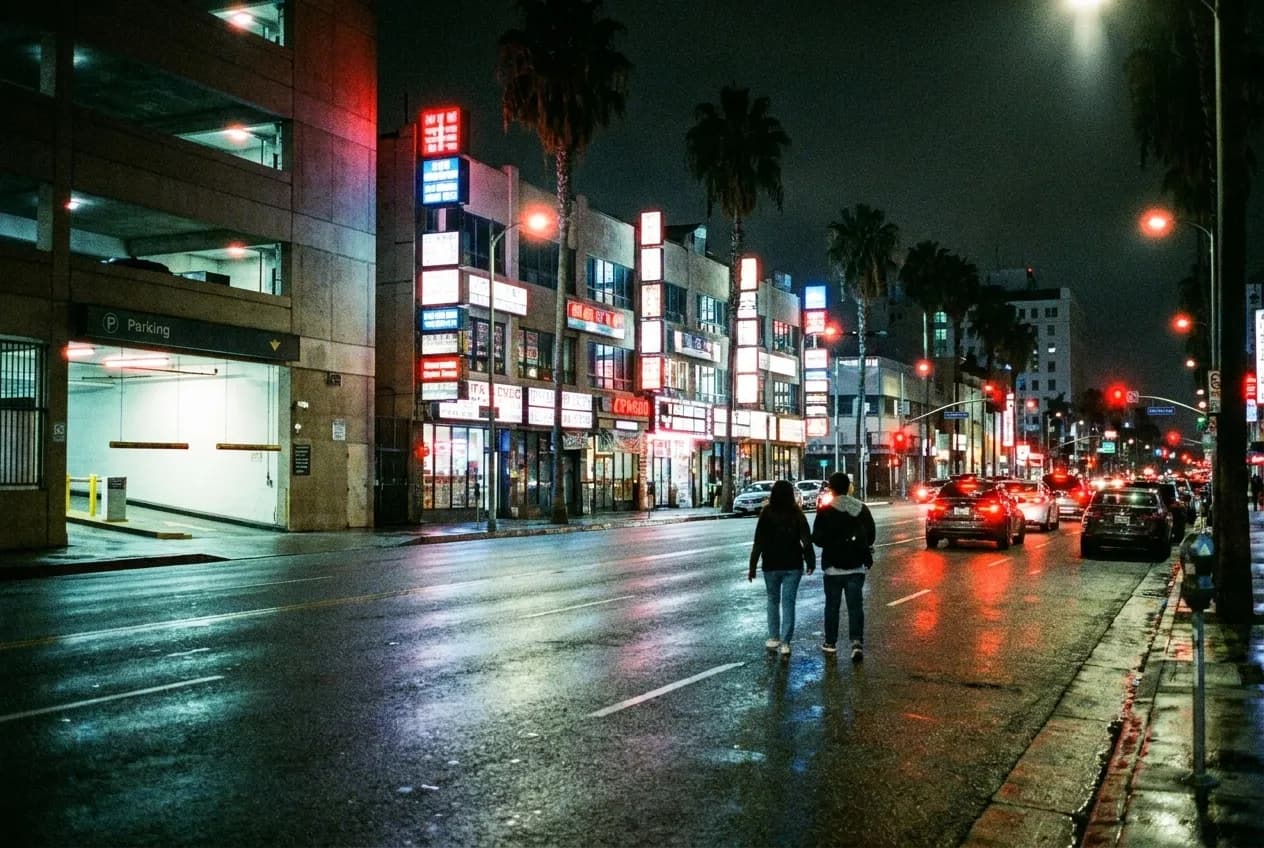
Koreatown's density is the reason. It is one of the most densely populated neighborhoods in the United States, stacked with second-floor and basement businesses in buildings that hold six operations each, and it serves a population that eats after work rather than instead of it. A restaurant here does two full seatings a night, and the second one starts at nine. The bars downstairs from those restaurants build their deals around the people coming out of them, which is why the discount window sits where it does.
The hard boundary is state law. California stops alcohol service at 2am, everywhere, no exceptions, which compresses the entire night into a defined shape: dinner at nine, drinks from ten, last call at 1:40am in practice, and then either a 24-hour kitchen or home. Every plan in this neighborhood is built around that.
What a late deal actually looks like
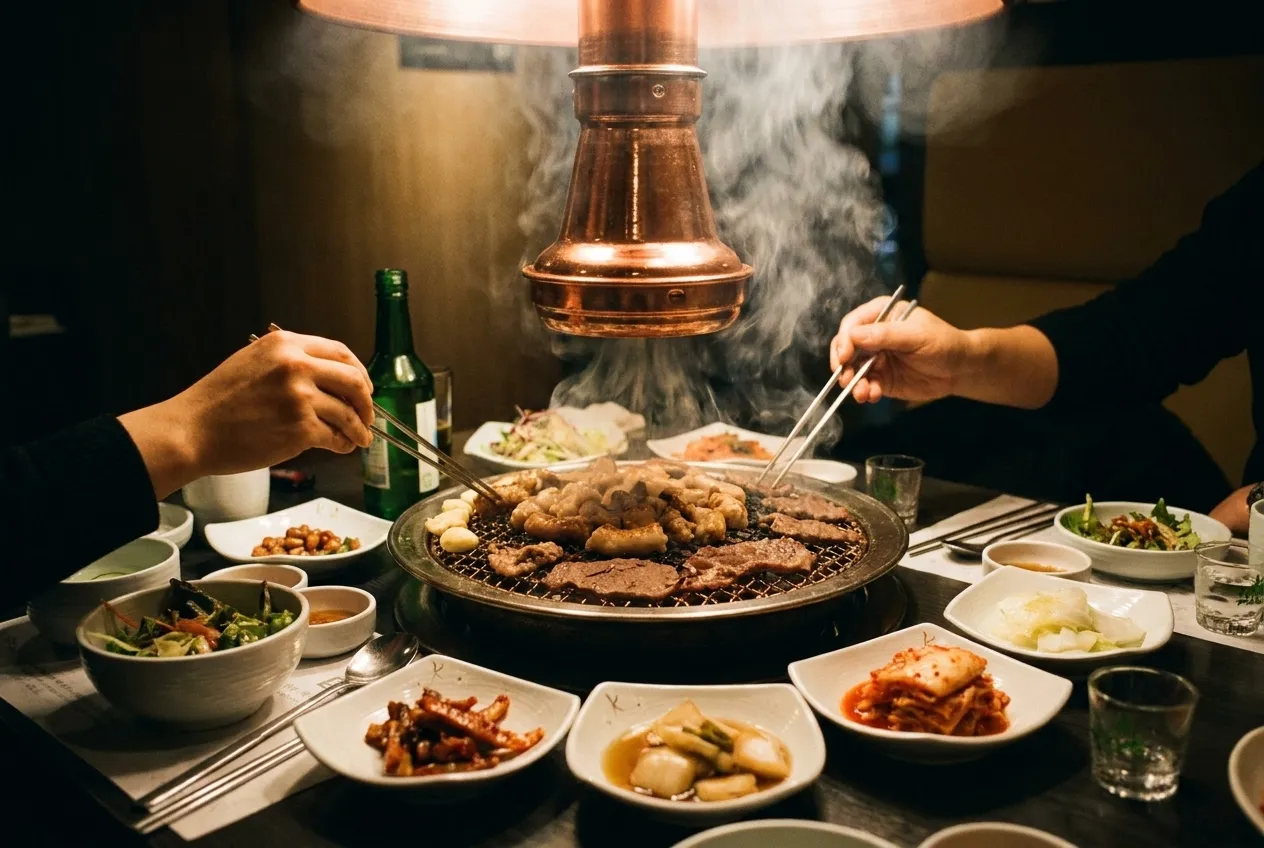
Three shapes recur. The reverse happy hour: a bar or restaurant that opens a second discount window at 10pm or 11pm to fill the room after the dinner rush. The soju-and-beer set: a fixed price for a bottle plus a shared plate, which is less a promotion than the standard unit of a Korean night out. And the late-night menu: a shortened food list at lower prices after a cutoff, which exists because the kitchen wants to keep selling without keeping the full brigade on.
None of these are advertised the way a Westside happy hour is advertised. There is rarely a sandwich board. The information lives on the restaurant's own social account, on a printed insert at the table, or in the head of the person at the door.
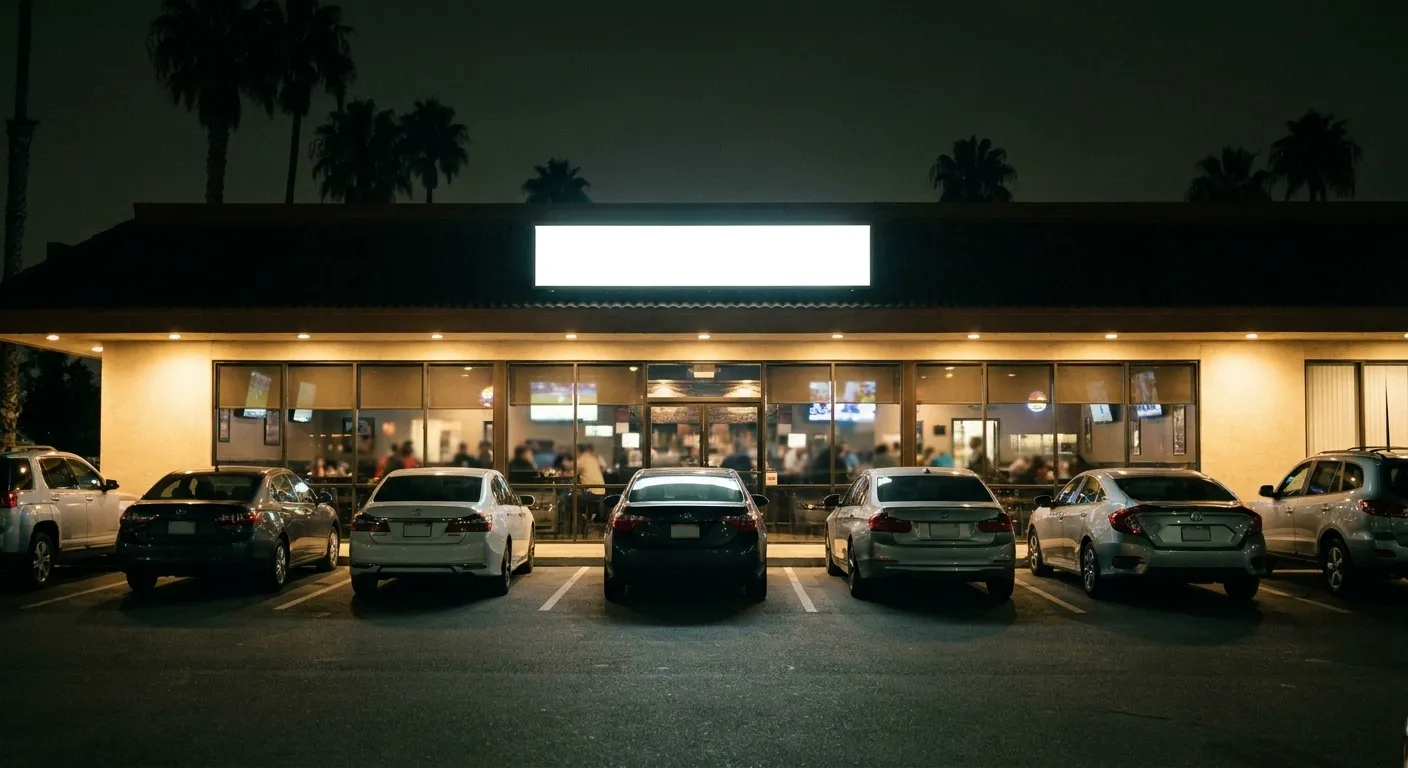
A fourth pattern shows up in the plazas: the multi-level buildings on Wilshire, 6th and Western hold a bar, a restaurant, a dessert café and a karaoke room in one structure, with one valet stand serving all of them. That is the efficient way to run a Koreatown night — park once, move vertically, and let the group split and reconvene without anyone getting back in a car.
The rooms to know
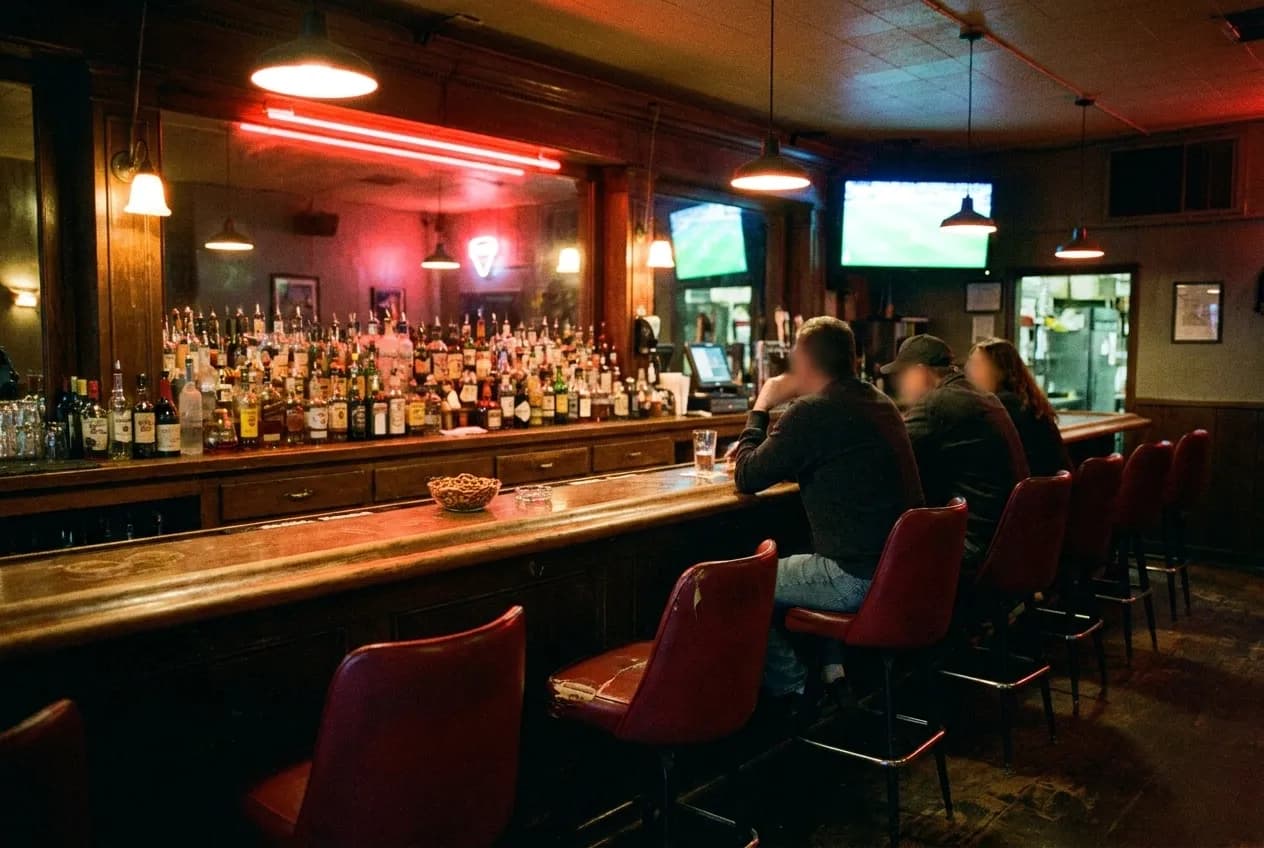
The Prince, in the Windsor building on 7th Street, is the neighborhood's most photographed room — dark red booths, decades of history, and a location that has stood in for other places in more films than anyone can count. HMS Bounty on Wilshire is the old-Los-Angeles bar that has outlasted everything around it. Dan Sung Sa is the wood-panelled pojangmacha-style room where the format is skewers, soju and noise until very late, and it is as close to the neighborhood's core experience as a visitor can get.
For food that keeps going, the 24-hour and near-24-hour kitchens are the backbone: the soondubu counters, the galbi-jjim rooms and the barbecue houses that seat until the small hours. A bowl of soft tofu stew at 1am in this neighborhood is a civic institution, not a novelty.
The watch-party dimension
Time zones make Koreatown the best neighborhood in Los Angeles for watching sport at unreasonable hours. Korean baseball and football broadcasts land in the middle of the Los Angeles night or early morning, and the bars and restaurants that carry them are open and serving when they do. During international tournaments the whole neighborhood turns into a single venue — screens in every room, streets full at hours when the rest of the city is asleep. If you want to watch a match with a crowd at 4am, this is the only realistic answer in Southern California.
The rooftop bars along Wilshire are the other late option and they behave differently again — hotel bars keeping hotel hours, with views over the whole basin and prices to match. They are worth one drink at the start of a night rather than the whole of it, and they are the only places in the neighborhood where a dress code is a real possibility.
Karaoke is the second half of the night
Norebang — private karaoke rooms rented by the hour — is where a Koreatown night usually ends. You book a room rather than a table, the rate is per hour and rises at peak times, and many rooms let you bring your own alcohol for a corkage-style charge, though the ones with a full licence do not. Book ahead on a Friday or Saturday. Walking in at midnight and expecting a room for eight is optimistic.
Practical notes
Valet is the norm rather than the exception here, and it is usually a few dollars plus a tip — the plazas on Wilshire, 6th and Western have structures, and the street parking rules run late. Many second-floor and basement rooms have no visible street presence at all, so trust the address rather than the frontage. Bring cash for valet and for the smaller rooms. Service ends at 2am statewide, so the last order is earlier than you think. And if you are driving, the 24-hour kitchens are the point: eat at the end of the night, not just at the start of it.
Tags: #LosAngeles #HappyHourNearMe #Koreatown #KTown #LateNightLA #ReverseHappyHour #KoreanBBQ #Norebang #WatchParty #LANightlife #SojuNight #24HourEats #DTLA #NightOut #EatLocal
All trademarks are the property of their respective owners.
Ask Karpo first
Want to know which Koreatown kitchens are still serving at this hour, where the late window applies tonight, and which karaoke rooms have space? Ask Karpo for current hours, the parking situation and a room that fits the size of your group.